


























Best Things to Do in Granada: Alhambra, Albaicín & Cultural Highlights
Explore Granada's essential sights, from the Nasrid Palaces and Generalife gardens to Albaicín sunset viewpoints, Renaissance royal tombs, and Sacromonte caves.
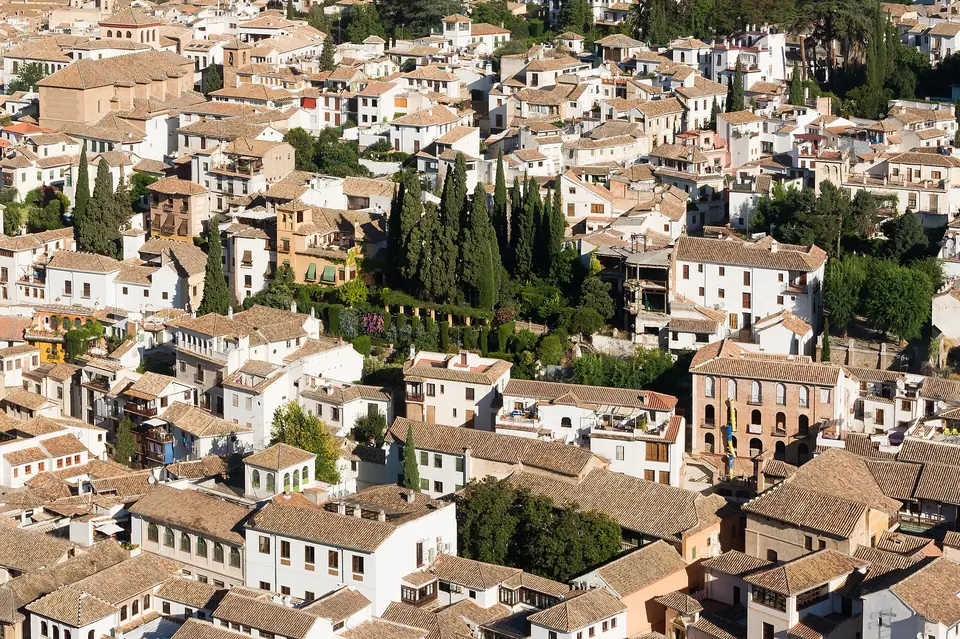
Granada packs over seven centuries of Islamic Iberian artistry and Spanish Renaissance monumentalism into a compact, walkable radius of less than three kilometres. Other Andalusian capitals absorbed their Moorish palaces inside Christian cathedrals after the Reconquista. Granada, by contrast, preserves an entire standalone royal city on the Sabika hill facing intact medieval residential quarters across the valley. To help you organise your days without climbing the same 150-metre hills twice, we have grouped Granada's essential experiences below with exact walking distances, time commitments, and dated November 2026 ticket tariffs. Pair this overview with our Alhambra and Nasrid Palaces guide and our Albaicín and Mirador de San Nicolás route.
| Attraction / Experience | District & Elevation | Approx. Entry Fee (Nov 2026) | Suggested Duration |
|---|---|---|---|
| 1. Nasrid Palaces & Alcazaba (Alhambra) | Sabika Hill (790 m) | €19.09 General Ticket (online advance booking required) | 3.5 to 4.5 hours including Generalife |
| 2. Generalife Palace & Escalera del Agua | Cerro del Sol (835 m) | Included in €19.09 General or €10.61 Gardens Ticket | 60 to 90 minutes |
| 3. Paseo de los Tristes & El Bañuelo Baths | Lower Darro Canyon (725 m) | Promenade free; El Bañuelo €7.07 Dobla de Oro pass (free Sun) | 60 to 75 minutes |
| 4. Mirador de San Nicolás & Mezquita Mayor | Upper Albaicín (805 m) | Viewpoint and adjacent mosque garden free | 45 to 60 minutes near sunset |
| 5. Royal Chapel (Capilla Real) & Cathedral | Centro Catedral (685 m) | €7.00 per monument (includes audio guide) | 90 to 120 minutes combined |
| 6. Sacromonte Cave Museum & Zambra Flamenco | Valparaíso Valley (810 m) | Museum ~€5.00. Evening cave zambra show ~€25.00 to €35.00 | 1 hour daytime; 1.5 hours evening |
Walk through the Nasrid Palaces, Court of the Lions, and Alcazaba
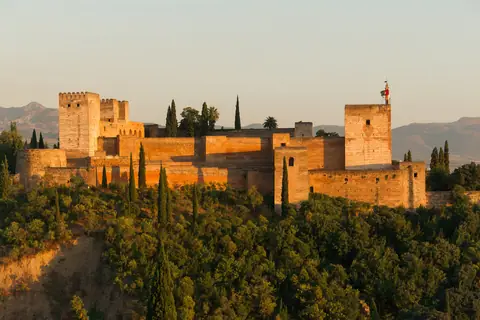
The architectural climax of southern Spain is the trio of 14th-century royal residences inside the Alhambra. You walk sequentially through the Mexuar council chamber, the Palace of Comares built by Sultan Yusuf I, and the Palace of the Lions created under Muhammad V. Stepping from the austere stone exterior into the Patio de los Arrayanes (Court of the Myrtles), you see the crenellated Comares Tower mirrored in a 34-metre rectangular emerald pool flanked by clipped myrtle hedges.
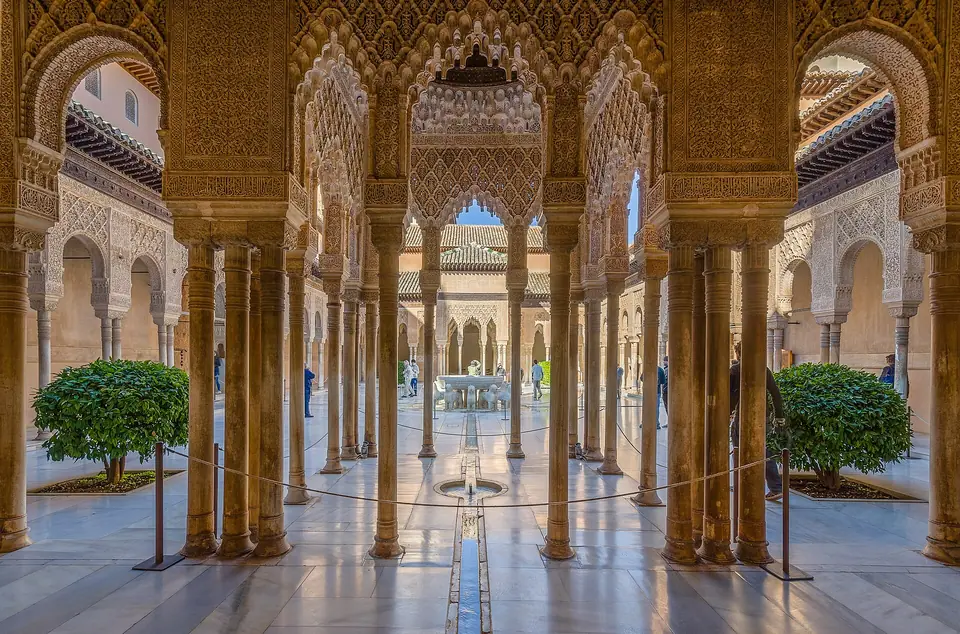
Next door, the Patio de los Leones surrounds an alabaster basin resting on twelve white Macael marble lions. Four water channels flow outward into chambers crowned by three-dimensional muqarnas stucco domes, including over 5,000 prisms in the Hall of the Two Sisters. Before or after your palace slot, climb the 9th-to-13th-century Alcazaba citadel at the western tip of the spur. Its Torre de la Vela watchtower commands a 360-degree panorama over the Cathedral dome, the Albaicín rooftops, and the Vega plain.
Stroll the Generalife water gardens and the Palace of Charles V
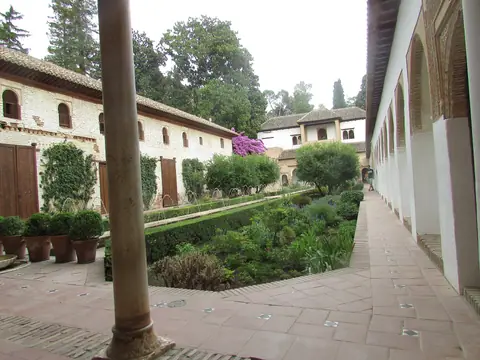
A cypress-lined walkway and medieval footbridge over the Cuesta del Rey Chico ravine connect the Alhambra to the Generalife. Known in Arabic as Jannat al-Arif (Architect's Garden), it served as the summer leisure estate of the Nasrid sultans. Its central Patio de la Acequia channels snowmelt from the Darro via the six-kilometre Royal Canal through fountains bordered by myrtles and orange trees. Above it, the Escalera del Agua (Water Stairway) sends cold water rushing down hollowed tile handrails.
Back inside the walled medina, visit the circular courtyard of the Renaissance Palace of Charles V (entry to the ground courtyard and upper colonnade is free, even without an Alhambra ticket). Designed by Pedro Machuca in 1527, its 30-metre-wide two-tiered Doric and Ionic circular patio houses the Museum of the Alhambra on the ground floor (free entry, It displays the celebrated Nasrid blue-and-gold Alhambra Vase and carved marble lion fountain basins) and the Fine Arts Museum upstairs (€1.50 for non-EU visitors, free for EU citizens as of November 2026).
Follow Carrera del Darro to Paseo de los Tristes and El Bañuelo
Walking east from Plaza Nueva along the cobbles of Carrera del Darro is the most atmospheric 700-metre stroll in Granada. The lane passes two medieval stone footbridges (Puente del Espinosa and Puente del Cadí), Renaissance noble mansions, and the Church of San Pedro y San Pablo. It then opens onto Paseo de los Tristes ("Promenade of the Sad Ones"), named after the 19th-century funeral cortèges that passed here toward the San José cemetery.
Halfway along Carrera del Darro at number 31 stands El Bañuelo, an 11th-century Zirid public bathhouse (hammam) that survived demolition after 1492 because a Christian dwelling was built directly over its brick vaults. Inside, star-shaped and octagonal skylights pierce the thick ceilings above the cold, warm, and hot rooms, supported by reused Roman and Visigothic marble columns. For full details on tickets and opening hours, see our El Bañuelo and Dobla de Oro guide.
Watch sunset from Mirador de San Nicolás and Mirador de San Miguel Alto
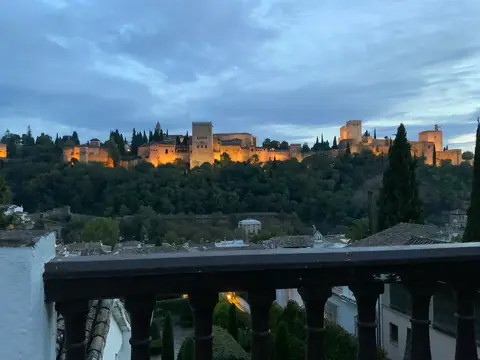
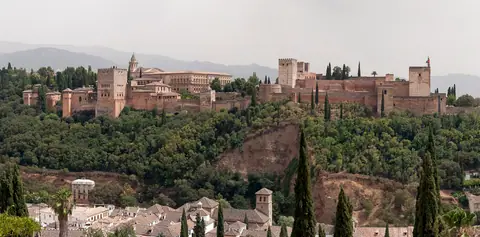
Crowning the Albaicín at 805 metres, Mirador de San Nicolás faces the entire northern flank of the Alhambra head-on. During the final hour before dusk, the Comares Tower, Partal galleries, and Alcazaba glow terracotta red against the snowfields of 3,396-metre Pico Veleta. Acoustic flamenco guitarists and artisans gather along the stone parapet each afternoon. Just thirty paces to the right, the gardens of the Mezquita Mayor de Granada (opened in 2003) offer an equally striking and much quieter viewing terrace.
If you prefer more space and a higher bird's-eye angle over the medieval Zirid defensive wall (Muralla Zirí), walk fifteen minutes further uphill to Mirador de San Miguel Alto at 865 metres. Bring a windproof jacket and a bottle of water, as the exposed ridge cools rapidly once the sun drops behind the Vega plain.
Visit the Royal Chapel (Capilla Real), Granada Cathedral, and La Madraza
Down in the flat historic centre, the Gothic-Isabelline Royal Chapel (Capilla Real, €7.00 as of November 2026) stands off pedestrian Calle Oficios. Inside rest the Carrara marble tombs of Queen Isabella I and King Ferdinand II carved by Domenico Fancelli, next to the mausoleum of Joanna and Philip the Handsome. Short stone steps beneath Master Bartolomé's gilded iron choir screen (reja) lead down to five plain lead coffins in the royal crypt. Next door, the Sacristy museum displays Isabella's silver crown, Ferdinand's sword, and Flemish panels by Rogier van der Weyden and Hans Memling.
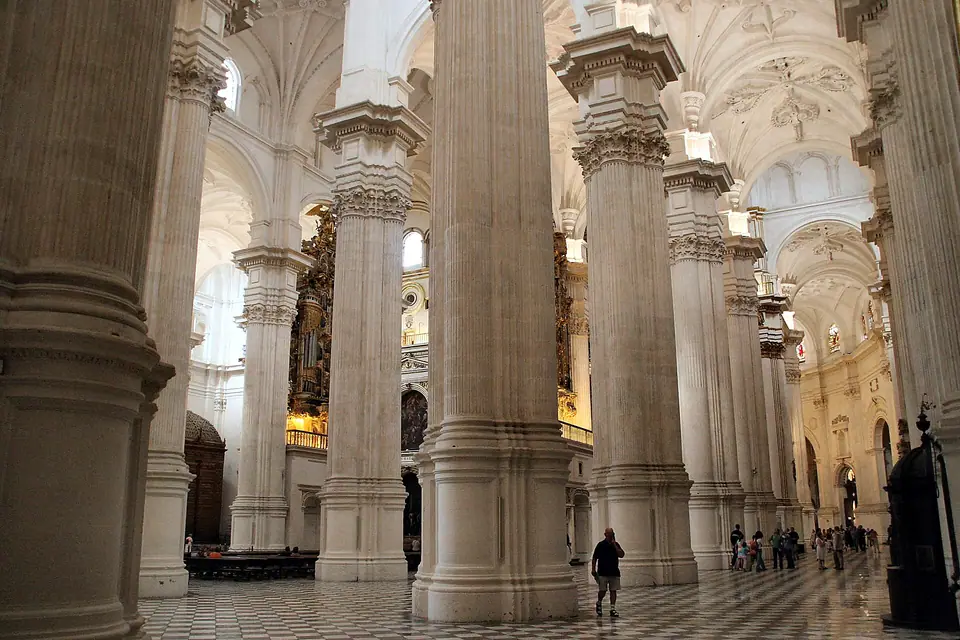
Immediately adjoining the chapel stands Granada Cathedral (€7.00 as of November 2026), begun in 1523 and redesigned by Diego de Siloé. Its soaring white stone piers lead to a circular Renaissance high-altar rotunda flooded with light from stained-glass windows. Directly across narrow Calle Oficios stands the Palacio de la Madraza (€2.00 as of November 2026). Founded by Sultan Yusuf I in 1349 as Granada's first Islamic university, it still preserves a splendid polychrome stucco octagonal prayer hall (mihrab).
Experience a cave Zambra in Sacromonte and the Alcaicería bazaar
East of the Albaicín, the whitewashed caves hollowed into the chalky slopes of the Valparaíso valley in Sacromonte have been home to Granada's Roma (Gitano) community since the 16th century. During the day, visit the open-air Museo Cuevas del Sacromonte at Barranco de los Negros (~€5.00 as of November 2026) to inspect eleven restored cave rooms equipped with traditional ceramic workshops, looms, and forged copperware. After dark, attend an intimate zambra flamenco show inside historic caves such as Cueva de la Rocío, Venta El Gallo, or María la Canastera (~€25.00 to €35.00 with one drink). Dancers perform just feet from your chair beneath copper-hung vaulted ceilings.
Traveller tips
- Take advantage of Sunday free monument slots. Several Dobla de Oro monuments (including El Bañuelo, Casa de Zafra, and Dar al-Horra) offer free admission every Sunday. In addition, the Royal Chapel and Cathedral release free afternoon slots on the Archdiocese portal (archidiocesisgranada.es) 48 hours ahead.
- Photograph the Alhambra at two different light angles. Morning light illuminates the interior courtyards of the Nasrid Palaces and the eastern gardens of the Generalife, whereas late afternoon sunlight hits the western Alcazaba towers and northern facade viewed from the Albaicín.
- Walk the Darro bridges from Puente del Espinosa to Puente del Aljibillo. Two historic stone footbridges cross the Darro River along Carrera del Darro: the 16th-century Puente del Espinosa and the 17th-century Puente del Aljibillo leading up to Cuesta del Chapiz. Pausing on both bridges at blue hour lets you frame the brick bell tower of San Pedro y San Pablo directly beneath the floodlit Alcazaba watchtowers.
- Visit the House-Museum of Manuel de Falla below the Alhambra. Immediately adjacent to the Carmen de los Mártires at Calle Antequeruela Alta 11 stands the Casa-Museo Manuel de Falla (~€3.00 entry as of November 2026; closed Mondays). Preserved exactly as the composer left it when he departed for Argentina in 1939, this whitewashed hillside carmen displays his upright Pleyel piano, original scores, and terraced garden overlooking the Vega plain.
Where it is
- 1Granada
- F.G.L. Airport Granada-Jaén Airport (GRX) · about 17 km from Granada in a straight line
- Directions in Google Maps
Traveller tips
Real advice from people who have been to Granada. Every tip is read by our team before it goes live.
No tips yet. Been here? Yours could be the first.
Thank you! Your tip will appear here after a quick review.
More in Granada
Continue exploring Granada with related neighbourhood, food, and planning guides
Granada 3-Day Itinerary: Alhambra, Albaicín, Sacromonte & Tapas Route
Granada, Spain
Alhambra & Nasrid Palaces Guide: Booking Tickets, Gates, Palaces & Timing
Granada, Spain
Generalife Gardens & Palace Guide: Patio de la Acequia, Water Stairway & Silla del Moro
Granada, Spain
Albaicín & Mirador de San Nicolás Guide: Darro Walk, Carmen Gardens & Viewpoints
Granada, Spain
