


























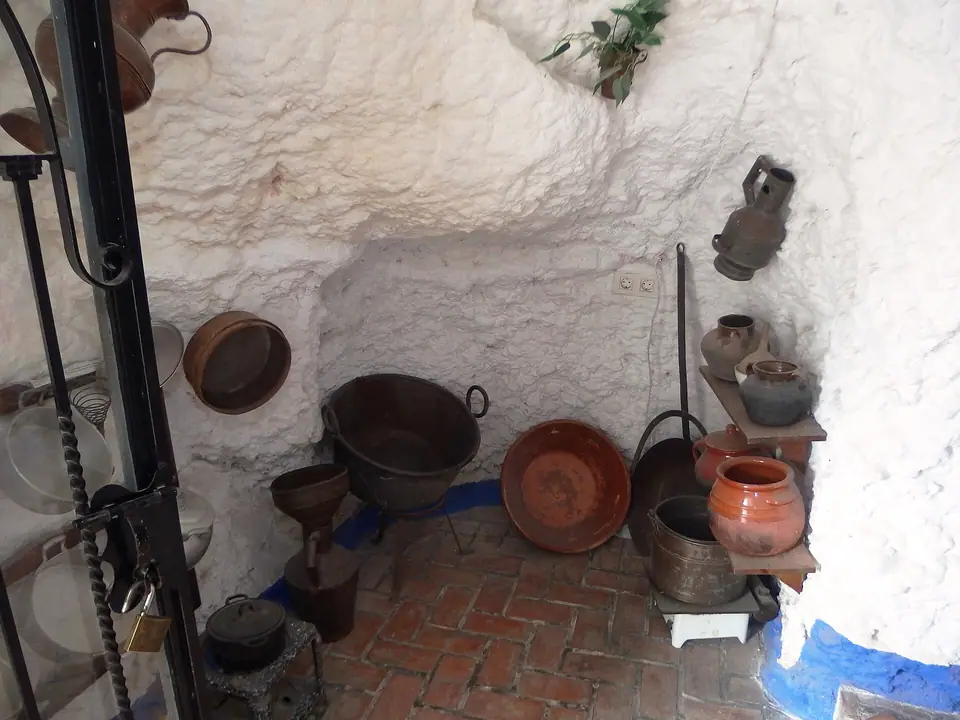
Sacromonte Cave Quarter Guide: Zambra Flamenco, Cave Museum & Abbey
Explore Granada's troglodyte valley of Sacromonte, from the open-air Museo Cuevas del Sacromonte and the 17th-century Abbey to evening Gitano zambra flamenco caves.
Stretching east from the Cuesta del Chapiz along the sun-baked northern slopes of the Valparaíso valley, Sacromonte is one of the most distinctive historic neighbourhoods in Spain. Starting in the 16th century after the 1492 Reconquista, Roma families (Gitanos), displaced Moriscos, and artisans settled along this valley. They excavated hundreds of whitewashed troglodyte dwellings (cuevas) directly into the clay conglomerate cliffs facing the Generalife and the Alhambra. Today, Sacromonte combines living cave homes, an open-air ethnographic museum, a 17th-century hilltop abbey housing the mysterious Lead Books of Granada, and the birthplace of the zambra flamenco tradition. Connect this walk with our Albaicín and Mirador de San Nicolás guide and our Granada 3-day itinerary.
| Sacromonte Site / Venue | Distance from Plaza Nueva | Approx. Entry / Ticket (Nov 2026) | Visit Focus & Timing |
|---|---|---|---|
| Cuesta del Chapiz & Statue of Chorrojumo | 900 m (12 min walk via Paseo de los Tristes) | Free public thoroughfare and viewpoint | Gateway junction between the Albaicín and Camino del Sacromonte. Served by C32 and C34 buses |
| Museo Cuevas del Sacromonte (Barranco de los Negros) | 1.4 km (20 min walk or C34 bus) | ~€5.00 general admission (~€4.00 reduced) | 11 restored cave dwellings showcasing traditional kitchens, pottery, looms, and flamenco history (open daily) |
| Traditional Zambra Flamenco Caves (Camino del Sacromonte) | 1.1 km to 1.8 km along the valley road | ~€25.00 to €35.00 (1 drink + optional bus transfer, Dinner packages ~€55.00 to €70.00) | Evening 1-hour performances (typically 20:00, 21:15, and 22:30 slots) inside historic family caves |
| Abadía del Sacromonte (Sacromonte Abbey & Holy Caves) | 3.1 km east at the top of the valley (C34 terminus) | ~€5.00 to €7.00 including audio guide | 17th-century catacombs, Baroque cloister, Goya painting, and the historic Plomos del Sacromonte |
How Sacromonte's troglodyte cave houses were dug and lived in
Unlike natural karst caverns, Sacromonte's caves were dug entirely by hand by master excavators (picores). They cut vertical facades (frentes) into the hillside and hollowed out vaulted rooms perpendicular to the cliff. Compacted earth and lime mortar provide natural underground thermal insulation. A well-built Sacromonte cave stays at 18°C to 20°C year-round, remaining cool during 36°C July afternoons and warm on 2°C January nights.
Every cave interior is coated in breathable white slaked lime (cal). This reflects daylight deep into the living room (sala) and bedrooms while sealing the earthen vault against dust. Outside each door sits a paved terrace (placeta) planted with prickly-pear cacti (chumberas) whose roots prevent soil erosion. Hung with red geraniums and hammered copper cauldrons, these terraces look straight across at the Alhambra.
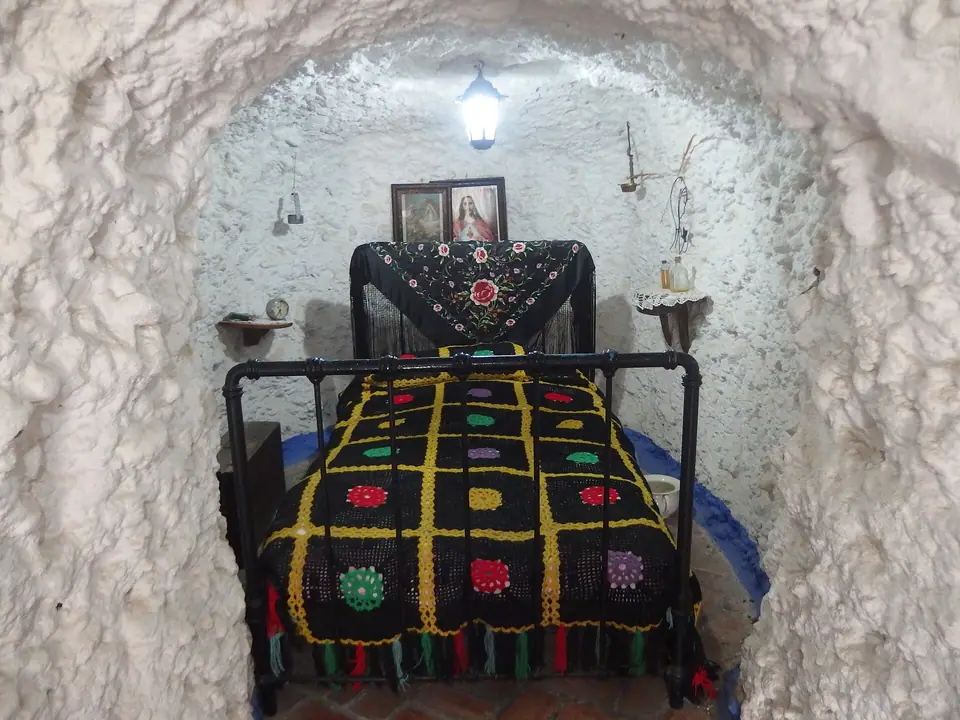
Visiting the Museo Cuevas del Sacromonte by day
Historic flamenco caves along lower Camino del Sacromonte open only for evening performances. To inspect authentic cave architecture by day, visit the Museo Cuevas del Sacromonte at Barranco de los Negros (~€5.00 entry as of November 2026, open daily 10:00 to 18:00/20:00).
Spread across a terraced hillside with sweeping, unobstructed views of the Generalife, the Partal, and the red walls of the Alhambra, the museum restores eleven distinct cave interiors. You can walk through a traditional living cave with earthen alcove beds, an esparto-grass weaving room, a blacksmith's forge, and a Fajalauza pottery kiln. A dedicated history cave also documents Sacromonte's Gitano flamenco dynasties and the 1963 winter floods.
The Zambra Gitana: Choosing an evening cave flamenco show
Sacromonte is the cradle of the zambra, from the Arabic zamra (nocturnal musical celebration). Granada's Roma families have passed down this flamenco wedding ritual since the 16th century. Unlike stage flamenco performed on raised wooden boards (tablaos) in Seville, a Sacromonte zambra unfolds right on the stone floor down the central aisle of a cave. Guests sit in a single row along the whitewashed walls just inches from the dancers' ruffled skirts (batas de cola).
- distinctive Zambra Dances. A traditional Sacromonte show preserves three ritual wedding dances rarely seen outside Granada: the Alboreá, the Cachucha, and the Mosca. Dancers perform them with brass finger cymbals (chinchines) and fiery tangos del Sacromonte.
- Historic Family Caves on Camino del Sacromonte. Long-established family caves along Camino del Sacromonte include Cueva de la Rocío, founded in 1951 by the Maya dynasty. Neighbouring highlights include María la Canastera (studio-home of bailaora María Cortés Heredia), Venta El Gallo, and Cuevas Los Tarantos. For a smaller acoustic guitar-and-voice recital, check lower Albaicín venues like Peña La Platería (founded in 1949, Spain's oldest flamenco club) or Jardines de Zoraya.
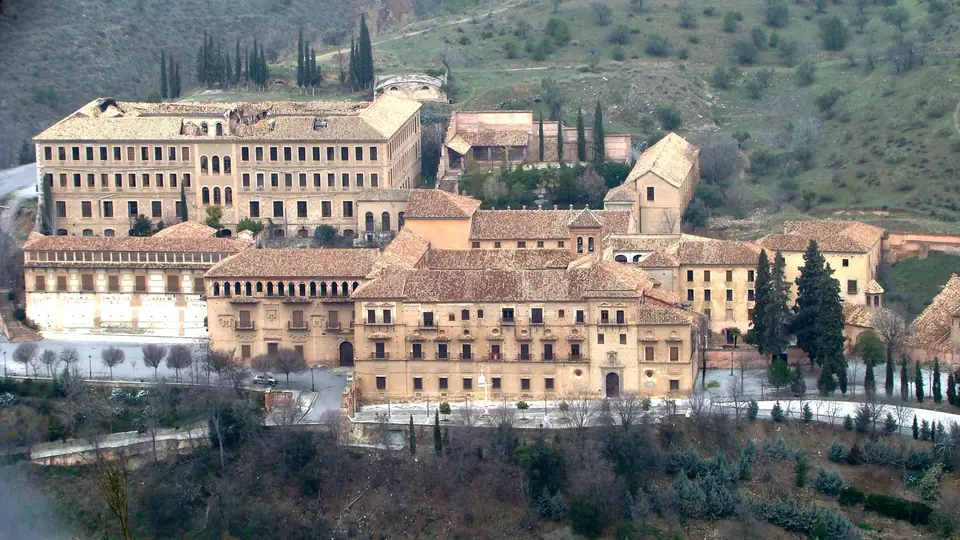
Abadía del Sacromonte and the 16th-century Lead Books
Riding the C34 minibus to the very end of its route (~15 minutes from Plaza Nueva) brings you to the Abadía del Sacromonte (Sacromonte Abbey), crowning the Monte de Valparaíso at 850 metres. In 1595, diggers working in Roman galleries on this hill uncovered relics attributed to Saint Cecilius, patron saint of Granada. With them lay twenty-two circular lead discs inscribed in Salomonian Arabic script: the famous Libros Plúmbeos (Lead Books of Sacromonte).
Historians recognise the Lead Books as a 16th-century Morisco effort to reconcile Christian and Arabic traditions. At the time, the find sparked intense devotion and led Archbishop Pedro de Castro to found the Abbey in 1600. Guided tours (~€5.00 to €7.00 as of November 2026) visit the underground catacombs of the Santas Cuevas and the 17th-century cloister. Inside the Abbey museum hang the original lead discs, Arabic manuscripts, and a portrait by Francisco de Goya.
Traveller tips
- Book the drink-only Zambra ticket rather than full cave dinners. Enjoy your evening tapas in the historic centre first, then book a 21:15 or 22:00 show-plus-drink cave ticket (~€25.00 to €30.00 as of November 2026).
- Stay on paved Camino del Sacromonte and museum paths after dark. Camino del Sacromonte is paved and well-lit at night, whereas the upper unpaved hillside trails above Barranco de los Negros are best walked by day.
- The bronze statue of Chorrojumo and the Verea de Enmedio upper path. Where Cuesta del Chapiz meets Camino del Sacromonte stands a bronze statue of Mariano Fernández Santiago (1824 to 1906), known as Chorrojumo. Painted by Mariano Fortuny, he famously regaled 19th-century travellers with legends at the Alhambra gates. From behind the Cuevas del Sacromonte museum, daytime walkers can follow the upper path of Verea de Enmedio back to Plaza Larga with continuous views of the Generalife.
- Pilgrimage of San Cecilio (First Sunday of February). On the first Sunday of February, Sacromonte Abbey hosts the traditional Romería de San Cecilio pilgrimage. Thousands hike up the valley to visit the Holy Caves and share broad beans (habas), salt cod, and coarse-salted salaíllas olive-oil flatbreads.
- How the C34 Sacromonte minibus route operates. Line C34 departs from Plaza Nueva every 20 minutes between 08:00 and 22:30. It follows Carrera del Darro and Cuesta del Chapiz before climbing Camino del Sacromonte to the Abbey. Because the lane is only one vehicle wide in several stretches, traffic lights regulate alternating one-way passage along the cliffside.
- Respecting lived-in residential caves in the upper barrancos. While the venues along Camino del Sacromonte and the Museo Cuevas del Sacromonte welcome visitors daily, the whitewashed caves climbing the side ravines above the road are private family homes. Always ask permission before photographing residents on their front placetas and never step past closed garden gates.
- Combining Sacromonte with the Cuesta del Chapiz viewpoints: Halfway up Cuesta del Chapiz, pause at the public viewpoint balustrade opposite Casa del Chapiz. It frames the entire eastern wall of the Generalife and the red towers of the Alhambra above the green Darro canopy.
- Photography inside evening zambra caves. Most family caves in Sacromonte permit non-flash smartphone photos during the final fiesta dance of the show. Avoid using bright video lights or camera flashes during intimate solo guitar and vocal cante jondo numbers.
- Visiting the Abbey library and Baroque cloister. Guided tours of the Abadía del Sacromonte run every 30 to 60 minutes from Tuesday to Sunday. The tour ends on an open stone terrace overlooking the entire Valparaíso valley down to the Alhambra.
- Evening return taxis from Camino del Sacromonte. After the 22:00 zambra show ends, licensed white Granada taxis wait outside the main caves to drive you back to Plaza Nueva (~€7.00 to €9.00 as of November 2026).
Where it is
- 1Sacromonte Cave Quarter
- F.G.L. Airport Granada-Jaén Airport (GRX) · about 17 km from here in a straight line
- Directions in Google Maps
Traveller tips
Real advice from people who have been to Granada. Every tip is read by our team before it goes live.
No tips yet. Been here? Yours could be the first.
Thank you! Your tip will appear here after a quick review.
More in Granada
Continue exploring Granada with related neighbourhood, food, and planning guides
Best Time to Visit Granada: Seasonal Weather, Festivals & Crowd Calendar
Granada, Spain
What to Wear in Granada: Footwear for Empedrado Cobbles, Cathedral Dress Code & Packing
Granada, Spain
Where to Stay in Granada: Best Areas by Elevation, Alhambra Views & Transport
Granada, Spain
Granada 3-Day Itinerary: Alhambra, Albaicín, Sacromonte & Tapas Route
Granada, Spain
