




















Realejo Quarter & Free Tapas Guide: Sephardic History, Murals & Best Bars
Explore Granada's southern hillside district of the Realejo, from its medieval Jewish heritage and El Niño de las Pinturas murals to how Granada's free-tapas bars work.
Spreading across the southern foothills of the Alhambra between Plaza Isabel la Católica and the Genil River, the Realejo-San Matías district contrasts sharply with the crowded lower Albaicín. Known in early Islamic times as Garnata al-Yahud ("Granada of the Jews"), it later took the name Realejo from the royal camp (real) of the Catholic Monarchs. Today this sunny residential quarter blends 16th-century palaces, contemporary street art, and Granada's most relaxed tapas plazas. Pair this district walk and food guide with our Granada 3-day itinerary and our where to stay in Granada guide.
| Tapas Zone / Street | Atmosphere & Crowd | Drink + Free Tapa Price (Nov 2026) | Signature Specialties & Style |
|---|---|---|---|
| 1. Realejo (Campo del Príncipe, Calle Molinos & Varela) | Relaxed neighborhood plazas, sunny outdoor tables, and local families | €2.80 to €3.60 per beer (caña) or house wine | Grilled meats, habas con jamón, fried aubergines with cane molasses, and generous hot dishes |
| 2. Calle Navas & Calle Rosario (Centro / Town Hall) | Classic historic tavern strip. Lively standing bars and high beams | €3.00 to €4.00 per drink | Fried seafood (pescaíto frito), cured Trevelez ham, and montaditos (Bar Los Diamantes) |
| 3. Calle Elvira & Plaza Nueva Fringe | Energetic student and traveller scene. Open late into the night | €2.70 to €3.50 per drink | Moorish spiced skewers (pinchos morunos), falafel/fusion tapas, and traditional tavern stews (Bodegas Castañeda) |
| 4. Zona Plaza de Toros & Gonzalo Gallas | Local university and bullring tavern hub (15 min walk north) | €2.60 to €3.30 per drink | Extra-large portions where you can often choose your tapa from a blackboard menu |
Walking the Realejo: Garnata al-Yahud, Casa de los Tiros, and Campo del Príncipe
Enter the Realejo down Calle Pavaneras past the bronze statue of Yehuda ibn Tibbon. Born in Granada in 1120, this Jewish physician and scholar is honoured as the "Father of Translators" for rendering Arabic medical and philosophical works into Hebrew. During the 10th and 11th centuries under Jewish viziers Samuel ibn Naghrillah (Shmuel ha-Nagid) and his son Joseph, this hillside was a major centre of Sephardic poetry, scholarship, and governance.
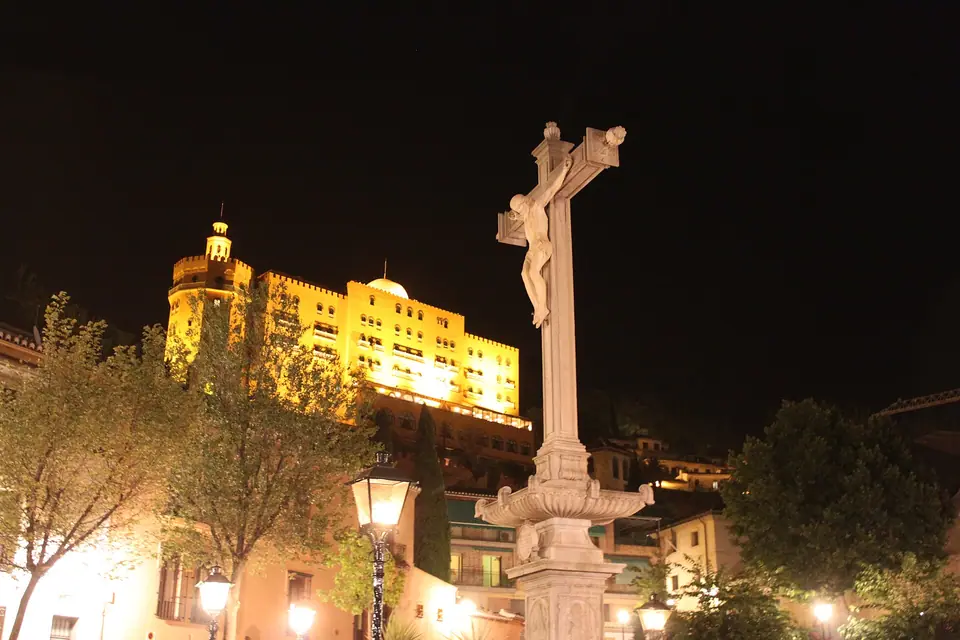
At Calle Pavaneras 19 stands the 16th-century Casa de los Tiros (free entry, closed Mondays), built by the noble Granada Venegas family of royal Nasrid lineage. Five mythological heroes and bronze muskets (tiros) adorn its battlements, while the upstairs Cuadra Dorada displays gilded ceiling portraits. Continue south through Plaza de Santo Domingo into the tree-lined expanse of Campo del Príncipe, laid out in 1497 for the wedding of Prince John. At its centre stands the stone crucifix of the Cristo de los Favores, where thousands of locals gather in complete silence every Good Friday at 15:00 to make three wishes.
Street art of El Niño de las Pinturas and Corrala de Santiago
Walking along Calle Molinos, Plaza de los Girones, Calle Solares, and Cuesta del Realejo reveals an open-air gallery of murals by Raúl Ruiz (El Niño de las Pinturas). A Realejo resident since the 1990s, Ruiz paints poetic large-scale murals of musicians, children, and calligraphies that harmonise with the historic ochre walls.
While exploring Calle Santiago, step inside number 5 to see the Corrala de Santiago (free daytime patio access, owned by the University of Granada). This preserved 16th-century casa de vecinos features four tiers of wooden balustraded galleries around a central stone fountain.
How Granada's free-tapas ritual works (and four rules to know)
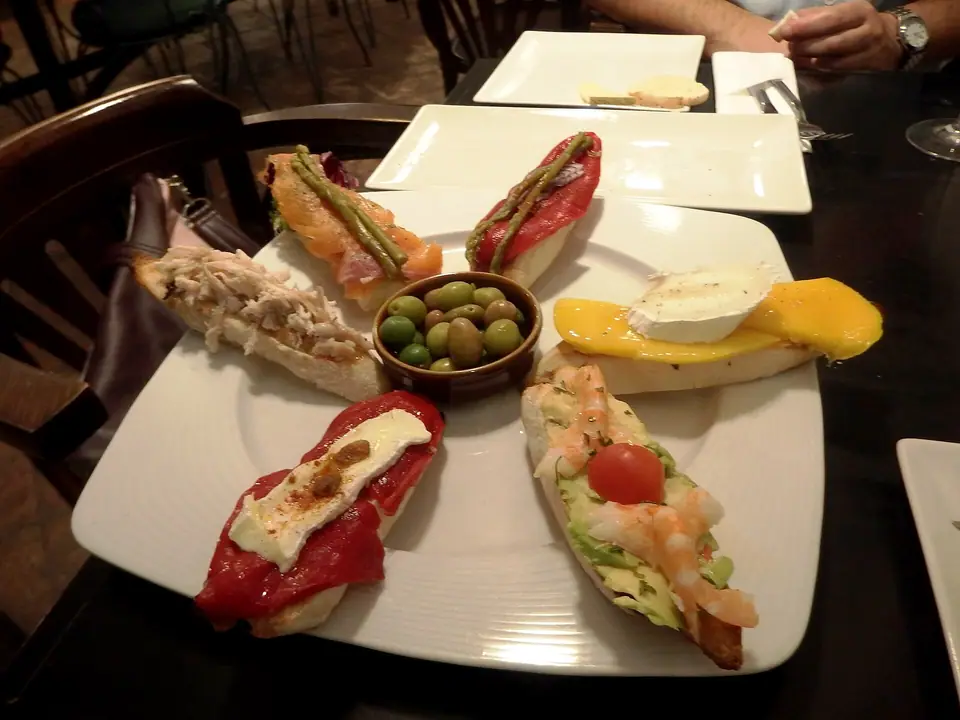
Granada's free-tapas tradition (el tapeo granadino) is a point of immense civic pride and follows unwritten customs that make an evening out both sociable and remarkably affordable if you know how to order:
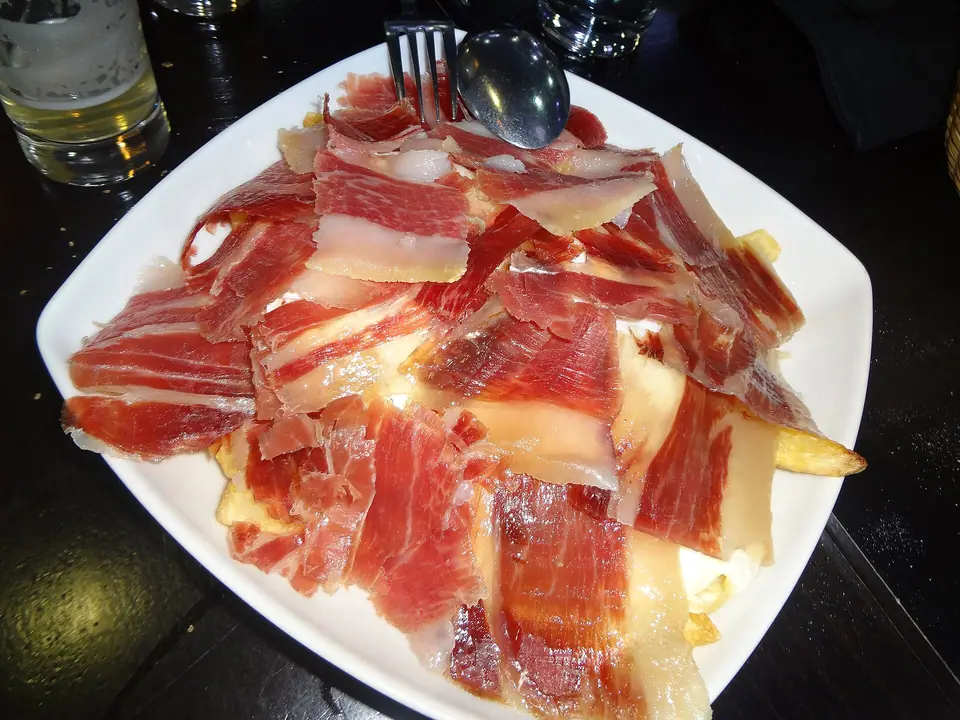
- Every cold beer, wine, or soft drink brings a free plate. When you order a caña of Alhambra draught beer, a glass of wine, a tinto de verano, or a soft drink (€2.80 to €3.80 as of November 2026), the waiter brings one complimentary hot tapa per drink. Notice that coffee, hot tea, and plain bottled water do not include a free tapa.
- The kitchen chooses the tapa, and each round escalates. In classic historic taverns (such as Bar Los Diamantes on Calle Navas or Plaza Nueva, founded in 1942 and famous for ultra-fresh fried prawns and baby squid; Bodegas Castañeda or La Tana near Calle Rosario, And Bar Avila or Los Altramuces in the Realejo), you do not pick the tapa from a menu. Round 1 brings a starter like cured ham or pork stew in bread (carne en salsa). Round 2 steps up to fried fish or migas with chorizo, and Round 3 brings another hot kitchen specialty.
- Move from bar to bar (ir de tapas). Locals rarely sit in one tavern for three hours. Locals stand at the counter or barrel tables for one or two rounds (30 to 40 minutes), pay the €6 to €7 bill, and walk to the next tavern.
- Sitting on an outdoor terrace vs standing at the bar: At most neighborhood spots in the Realejo, outdoor tables include the free tapa with a slight €0.20 to €0.40 terrace supplement per drink. In prime tourist squares like Plaza Bib-Rambla, outdoor tables may be reserved for full raciones (€10 to €16), so stand at the inside counter for free tapas.
Signature Granadino dishes and the Pionono pastry
Beyond free tapas, order a shared media ración to taste classic Granadino dishes. Start with berenjenas con miel de caña (crisp fried aubergine batons drizzled with dark sugarcane molasses from Salobreña) and habas con jamón (baby broad beans sautéed with cured Jamón de Trevélez). Pair them with remojón granadino, a Moorish-rooted salad of roasted salt cod, blood oranges, black olives, and egg, or a slice of tortilla del Sacromonte. For dessert, visit Pastelería López-Mezquita or Casa Ysla (founded in 1897) for a Pionono de Santa Fe (~€2.00 to €2.60 as of November 2026). This syrup-soaked sponge cylinder crowned with toasted cream was named in honour of Pope Pius IX (Pio Nono).
Traveller tips
- Arrive at 13:15 for lunch or 20:15 for evening tapas. Popular standing bars like Los Diamantes, La Tana, and Bar Poe fill to capacity by 14:15 and 21:15. Arriving fifteen minutes after the doors open gets you a prime spot at the bar or a corner barrel table without waiting.
- Ask for tapa vegetariana or sin cerdo when ordering your drink. When the kitchen chooses the tapa, simply say "vegetariana / sin carne, por favor" as you order your drink to receive aubergines, padrón peppers, or omelette instead of ham.
- Visit the Sephardic Museum and Lavadero de la Puerta del Sol. On Placeta Berrocal in the upper Realejo stands the compact private Museo Sefardí de Granada (~€5.00 entry as of November 2026), which reconstructs everyday life in medieval Garnata al-Yahud. Two minutes away on Placeta de la Puerta del Sol stands the 1609 Lavadero de la Puerta del Sol, a stone-columned laundry pavilion with a quiet sunset balcony.
- Climb from the Realejo to the Torres Bermejas and Carmen de los Mártires. From Campo del Príncipe, a cobbled footpath climbs past the 16th-century Church of San Cecilio and the crimson towers of Torres Bermejas. In twelve minutes it reaches the Alhambra woods and Carmen de los Mártires.
- Ordering alcohol-free drinks that still include a free tapa. If you prefer non-alcoholic drinks during a tapas crawl, order a 0.0% cerveza sin alcohol, a chilled white-grape mosto, or a lemon soda (~€2.60 to €3.20 as of November 2026). Every one of these includes the exact same complimentary hot tapa as beer or wine.
- Visiting the Convent of Santa Catalina de Siena on Plaza de Zafra. In the heart of the Realejo, the 16th-century Dominican nuns of Santa Catalina de Siena sell handmade almond sweets and glorias through a traditional wooden turnstile on Calle Zafra.
- Best time for street art photography on Calle Molinos. Shoot the murals of El Niño de las Pinturas around Plaza de los Girones and Calle Molinos before 10:30 or between 15:00 and 17:00. At those hours, delivery vans have cleared the narrow lanes and soft light illuminates the ochre walls.
Where it is
- 1Granada
- F.G.L. Airport Granada-Jaén Airport (GRX) · about 16 km from Granada in a straight line
- Directions in Google Maps
Traveller tips
Real advice from people who have been to Granada. Every tip is read by our team before it goes live.
No tips yet. Been here? Yours could be the first.
Thank you! Your tip will appear here after a quick review.
More in Granada
Continue exploring Granada with related neighbourhood, food, and planning guides
Sacromonte Cave Quarter Guide: Zambra Flamenco, Cave Museum & Abbey
Granada, Spain
Granada Cathedral & Royal Chapel Guide: Catholic Monarchs, Alcaicería & Corral del Carbón
Granada, Spain
El Bañuelo Arab Baths & Dobla de Oro Guide: Casa de Zafra, Dar al-Horra & Horno de Oro
Granada, Spain
Best Day Trips from Granada: Las Alpujarras Villages, Sierra Nevada & Guadix
Granada, Spain
