


























Best Time to Visit Granada: Seasonal Weather, Festivals & Crowd Calendar
Plan around Granada's 738-metre mountain microclimate, spring jasmine blooms in the Generalife, Corpus Christi fiestas, and crisp winter days beneath snow-peaked mountains.
Granada sits at 738 metres in an inland mountain basin directly beneath the 3,400-metre peaks of the Sierra Nevada. As a result, its climate behaves very differently from coastal Málaga an hour away or low-lying Seville. Even in mid-May or October, when daytime temperatures in the Generalife gardens reach a comfortable 23°C to 25°C, night-time temperatures routinely drop by 12°C to 15°C once the mountain breeze descends along the Darro gorge. Choosing the best month for your visit balances three factors: flower bloom in the Alhambra's patio gardens, comfortable temperatures for climbing the cobbled hills of the Albaicín, and lead times for Nasrid Palaces tickets. Pair this seasonal calendar with our Granada packing and dress guide and our Generalife gardens walk.
| Season & Months | Avg. High / Low (°C) | Alhambra & Crowd Level | Key Seasonal Character & Events |
|---|---|---|---|
| Spring (April to early June) | 20°C to 27°C / 8°C to 14°C | Peak demand. Book Alhambra 6 to 8 weeks ahead | Roses, wisteria, and orange blossom in the Generalife; Semana Santa, Día de la Cruz (3 May), and Corpus Christi |
| Autumn (Late Sept to November) | 16°C to 26°C / 6°C to 13°C | High in Oct, moderate in Nov. Book 4 to 6 weeks ahead | Golden pomegranate leaves and cypress reflections in the Partal. Warm afternoons and crisp tapas evenings |
| Winter (December to March) | 12°C to 17°C / 2°C to 6°C | Low to moderate (except Christmas & 2 Jan). Book 2 to 4 weeks ahead | Snow-capped Sierra Nevada backdrop behind the red Alhambra walls. Clear midday sunshine and ski season |
| Summer (Mid-June to Mid-Sept) | 31°C to 35°C / 17°C to 20°C | High in morning slots. Book 08:30 or 22:00 Night Visits | Dry afternoon heat but noticeably cooler nights than Seville; International Festival of Music and Dance (June, July) |
Spring (April, May, and early June):Peak garden bloom and Andalusian festivals
Mid-April through the first week of June is the most visually rewarding window to visit Granada. Snow still blankets the high ridges of Mulhacén and Veleta above the city well into May. Below them, the terraced gardens of the Generalife, Partal, and Albaicín cármenes burst into bloom with roses, wisteria, and fragrant orange blossom (azahar). Daytime highs hover between 20°C in April and 26°C to 28°C in late May, making midday walks through the Albaicín and Realejo pleasant without intense glare.
Spring is also Granada's major festival season, which creates lively street life together with higher hotel rates and earlier Alhambra sell-outs. During Semana Santa (Holy Week, late March or April), candlelit brotherhood processions carry heavy baroque floats through Carrera del Darro. The most famous is the Cristo de los Gitanos procession, which climbs to Sacromonte Abbey past hillside bonfires on Holy Wednesday night. On 3 May, Día de la Cruz fills plazas and courtyards with red carnation crosses decorated with copperware and embroidered Manila shawls. In late May or June follows the week-long Feria del Corpus Christi, featuring the Wednesday Tarasca parade and open-access flamenco marquees (casetas).
Autumn (Late September, October, and November): Golden light and pomegranates
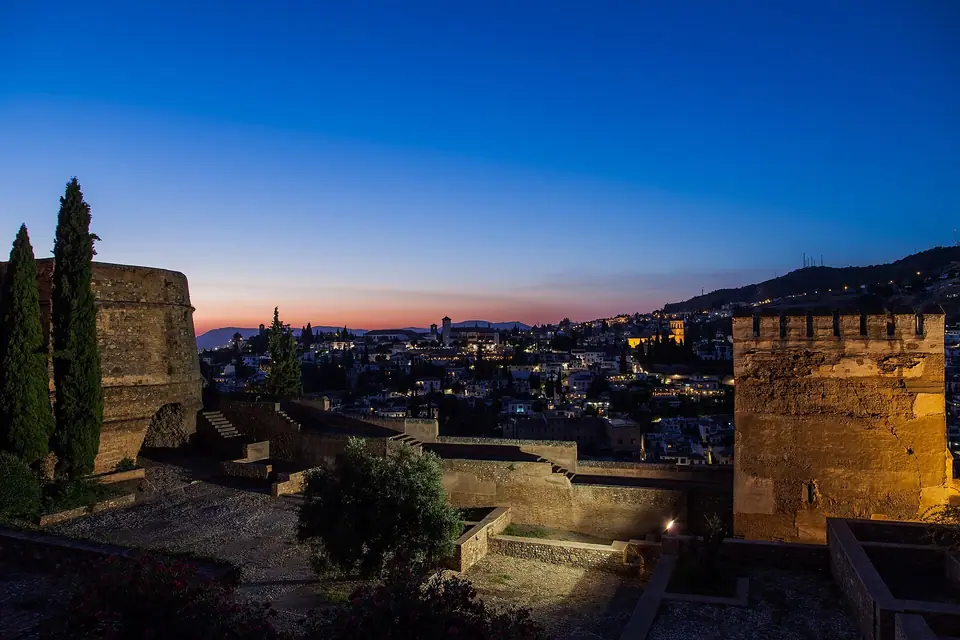
From the third week of September through mid-November, summer heat subsides into settled, crystal-clear autumn weather. October averages 22°C to 24°C in the afternoon with only five or six rainy days all month. Along the Bosque de la Alhambra and the Darro riverbanks, poplars, elms, and pomegranate trees (granados, the civic emblem of Granada) turn deep amber and gold.
November brings cooler 15°C to 17°C afternoons and brisk 6°C mornings, accompanied by the first winter snowfalls dusting the upper Sierra Nevada peaks. With university students back in class and summer tour coaches gone, November brings a lively local mood to tapas bars in the Realejo. Alhambra tickets also become much easier to secure three to four weeks in advance.
Winter (December to March): Snow-framed photography and Sierra Nevada skiing
Photographers seeking the classic postcard view of the red-brick Alhambra set against a gleaming white wall of 3,400-metre alpine peaks should visit between December and early March. Early morning temperatures dip to 2°C to 4°C in winter, requiring a warm coat and gloves for an 08:30 palace entry. Even so, Granada enjoys 2,900 hours of annual sunshine, and clear winter afternoons regularly warm to 14°C to 16°C in sheltered plazas.
In winter, Granada lets you tour medieval Moorish palaces in the morning and ski in the afternoon. The Sierra Nevada ski station at Pradollano (2,100 to 3,300 metres) sits just 32 kilometres away, reached in 45 minutes by the Tocina ski bus (~€5.00 to €6.00 return as of November 2026). Two winter dates stand out on the civic calendar. On 2 January (Día de la Toma), visitors climb the Torre de la Vela to ring its historic bell, and 5 January brings Spain's oldest Three Kings Parade (Cabalgata de Reyes).
Summer (Mid-June to Mid-September): Managing heat with early and night palace slots
July and August bring dry, cloudless afternoons with average highs of 34°C to 36°C (occasionally touching 39°C during Saharan calima heatwaves). However, thanks to Granada's 738-metre elevation and low humidity (around 30% at midday), summer evenings cool down to 18°C to 20°C after midnight, typically 5°C to 7°C cooler than Seville or Córdoba.
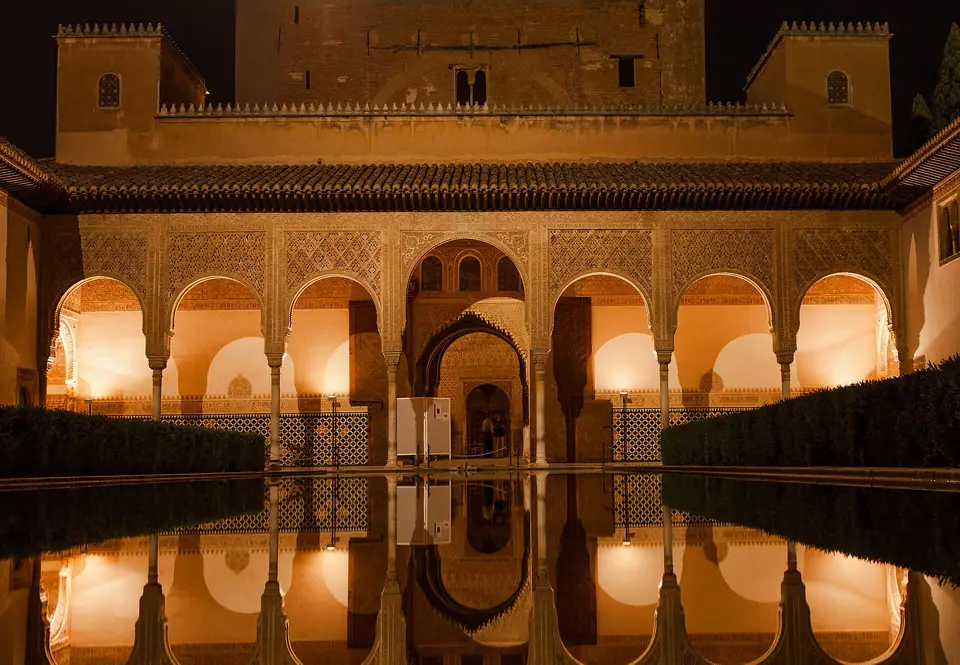
If visiting in summer, structure your day around the Andalusian rhythm. Book either the first 08:30 morning Nasrid Palaces slot or the 22:00 Night Visit (€10.61 as of November 2026). The evening session lets you admire the illuminated stucco arches and murmuring fountains in cool night air. Spend the hot 14:30 to 18:30 hours inside the cool stone nave of the Cathedral, the Museum of the Alhambra, or your hotel courtyard before climbing to the Albaicín at 20:30.
International Festival of Music and Dance (June and July)
Each year from mid-June to mid-July, the city hosts the Festival Internacional de Música y Danza de Granada. Founded in 1952, it traces its roots to the famous 1922 Concurso de Cante Jondo organised by Manuel de Falla and Federico García Lorca. Symphony orchestras perform inside the circular courtyard of the Palace of Charles V, while ballet and flamenco companies take the stage in the Generalife amphitheatre. Tickets go on sale in spring via granadafestival.org and offer a rare legal way to experience the Alhambra courtyards after dark.
Traveller tips
- Check Alhambra daytime closing hours by season. From 1 April to 14 October, daytime Alhambra hours run from 08:30 to 20:00 (Night Visits 22:00 to 23:30 Tuesday to Saturday). From 15 October to 31 March, daytime hours shorten to 08:30 to 18:00 (Night Visits 20:00 to 21:30 Friday and Saturday only).
- Avoid Spanish bridge weekends (puentes) without early bookings. Around 12 October (National Day), 1 November (All Saints), and 6 to 8 December (Constitution and Immaculate Conception), domestic Spanish demand spikes sharply and Alhambra tickets sell out two months ahead.
- Autumn Jazz Festival and Patron Saint Day in September. Every November, Granada stages the prestigious Festival Internacional de Jazz de Granada at the Teatro Isabel la Católica (one of Europe's longest-running jazz festivals since 1980, tickets ~€18.00 to €35.00 as of November 2026). Earlier in autumn, on the last Sunday of September, Granadinos celebrate the Procession of the Virgen de las Angustias. During the festival, Carrera de la Virgen fills with stalls selling pomegranates, quinces, chestnuts, and handmade pastry tortas de la Virgen.
- Daylight hours and sunset times across the year. Because Mirador de San Nicolás and the Alhambra Alcazaba are timed around golden hour, note how sharply Granada's sunset shifts: in late December and January, sunset occurs around 18:00 to 18:20. By late April it reaches 21:00. In late June and early July dusk stretches past 21:45, and by mid-October it falls around 19:40. Always arrive at hillside viewpoints 40 minutes before official sunset to catch the alpenglow on the Sierra Nevada snowfields.
- Check the Patronato's 2 January and 16 November special monument days. On 2 January (Día de la Toma), the bell of the Torre de la Vela inside the Alcazaba rings continuously from morning until dusk, while on 16 November (International World Heritage Day), the Alhambra and the Dobla de Oro monuments hold an annual open-door lottery with free guided specialist visits booked via the Patronato website.
Where it is
- 1Granada
- F.G.L. Airport Granada-Jaén Airport (GRX) · about 16 km from Granada in a straight line
- Directions in Google Maps
Traveller tips
Real advice from people who have been to Granada. Every tip is read by our team before it goes live.
No tips yet. Been here? Yours could be the first.
Thank you! Your tip will appear here after a quick review.
More in Granada
Continue exploring Granada with related neighbourhood, food, and planning guides
Where to Stay in Granada: Best Areas by Elevation, Alhambra Views & Transport
Granada, Spain
Granada 3-Day Itinerary: Alhambra, Albaicín, Sacromonte & Tapas Route
Granada, Spain
Alhambra & Nasrid Palaces Guide: Booking Tickets, Gates, Palaces & Timing
Granada, Spain
Generalife Gardens & Palace Guide: Patio de la Acequia, Water Stairway & Silla del Moro
Granada, Spain
