





















El Bañuelo Arab Baths & Dobla de Oro Guide: Casa de Zafra, Dar al-Horra & Horno de Oro
Unlock six preserved Zirid and Nasrid palaces, baths, and courtyard houses across the Albaicín using the Patronato's €7.07 Dobla de Oro monument pass.
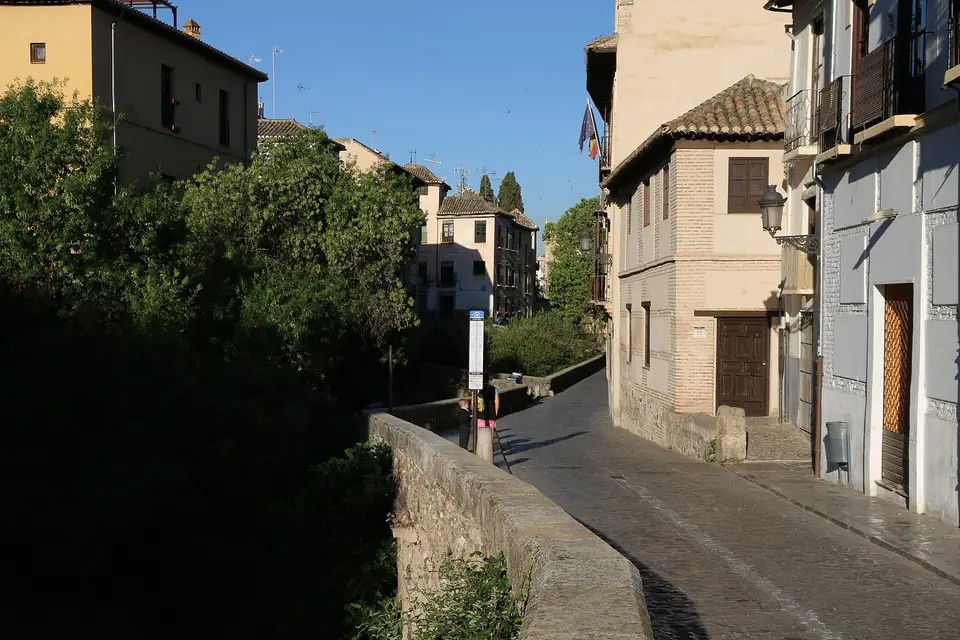
While thousands of visitors queue daily on the Sabika hill for the Alhambra, six intimate 11th-to-15th-century Zirid and Nasrid monuments lie tucked behind unassuming wooden doors along Carrera del Darro and the Albaicín. Managed jointly by the Patronato de la Alhambra and the Albaicín Agency, this circuit takes the name Dobla de Oro after the high-purity gold dinar minted by the Nasrid sultans. It lets you explore an 11th-century steam bathhouse, a queen mother's palace, a medieval Islamic hospital, and three noble courtyard mansions without crowds. Pair this architectural route with our Albaicín walking guide and our Granada travel guide.
| Dobla de Oro Monument | Street Address & Zone | Century & Function | Pass / Single Price (Nov 2026) |
|---|---|---|---|
| 1. El Bañuelo (Hammam al-Yawza) | Carrera del Darro 31 (River Canyon) | 11th-century Zirid public steam baths (hammam) | €7.07 all-in Bono (or €5.00 single, free on Sundays) |
| 2. Casa de Zafra (Albaicín Centre) | Calle Portería de la Concepción 8 (Lower Albaicín) | 14th to 15th-century aristocratic Nasrid residence & Museum | Included in €7.07 Bono (or €3.00 single, free on Sundays) |
| 3. El Maristán de Granada | Calle Bañuelo (just behind El Bañuelo) | 1365 to 1367 royal Nasrid hospital founded by Muhammad V | Included in €7.07 Bono (free on Sundays) |
| 4. Casa Morisca Horno de Oro | Cuesta del Chapiz 14 (Paseo de los Tristes) | Late 15th-century Nasrid courtyard house with 16th-c. gallery | Included in €7.07 Bono (free on Sundays) |
| 5. Palacio de Dar al-Horra | Callejón de las Monjas (Upper Albaicín) | 15th-century royal palace of Sultana Aixa (mother of Boabdil) | Included in €7.07 Bono (free on Sundays) |
| 6. Corral del Carbón | Calle Mariana Pineda (Historic Centre) | Early 14th-century Nasrid merchant exchange and inn | Free entry daily for all visitors |
How the €7.07 Bono Monumentos Andalusíes works
You can visit these monuments in three ways as of November 2026 (subject to official Patronato tariff revisions). First, to visit the Albaicín and Darro monuments separately from the Alhambra, buy the standalone Bono Monumentos Andalusíes for €7.07. You can purchase it online at tickets.alhambra-patronato.es or at ticket kiosks inside Corral del Carbón and Casa de Zafra. This single QR code grants entry to El Bañuelo, Casa de Zafra, Dar al-Horra, Horno de Oro, and the Maristán. Second, if you are still booking your Alhambra visit, select the Dobla de Oro General (€27.09), which bundles the full daytime Alhambra and Nasrid Palaces with all six city monuments. Third, on Sundays, admission to the Dobla de Oro monuments is free of charge (reserve your €0.00 Sunday slot online via the Patronato website to guarantee entry capacity).
All six monuments share coordinated hours. From 15 September to 30 April they open daily from 10:00 to 17:00, while from 1 May to 14 September they operate split hours from 09:00 to 14:30 and 17:00 to 20:30.
El Bañuelo and the Maristán on Carrera del Darro
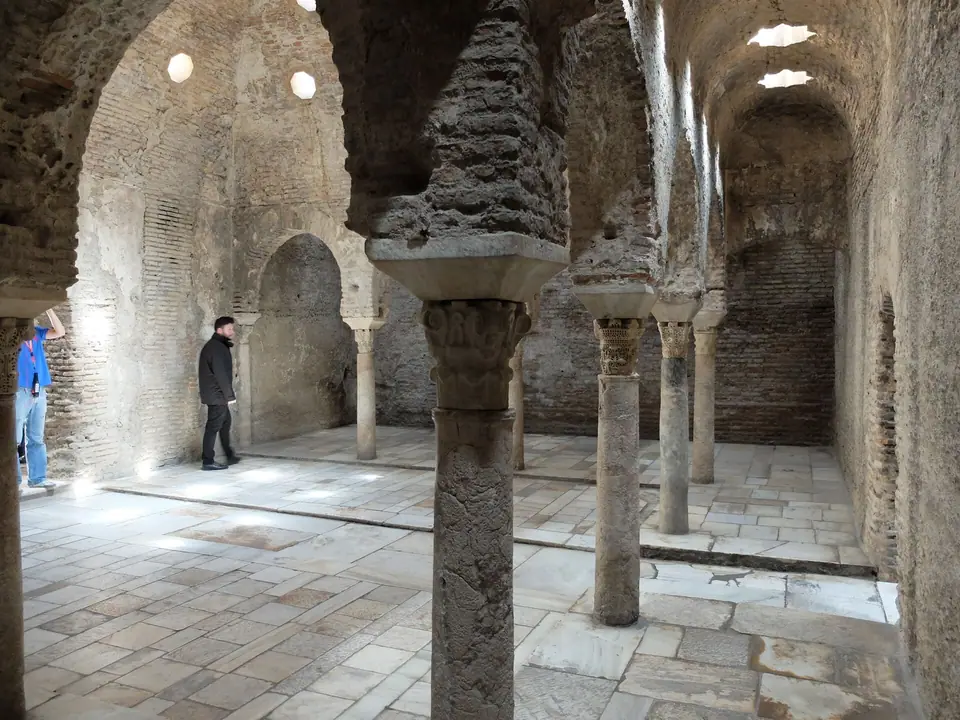
Located at Carrera del Darro 31 opposite the 11th-century Puente del Cadí, El Bañuelo (the Hammam al-Yawza, or "Bath of the Walnut Tree") is Spain's oldest surviving Arab bathhouse. Built in the 11th century under Zirid rule, it escaped post-1526 royal demolition decrees because a Christian dwelling was built directly atop its thick brick barrel vaults.
Entering through a small pool courtyard, a bent-axis privacy corridor leads through three vaulted bath chambers. First comes the cold dressing room (bayt al-barid), followed by the central warm room (bayt al-wastani) resting on Roman and Visigothic capitals. Beyond it lies the hot steam chamber (bayt al-sajun) above the wood-fired furnace. Overhead, thick brick vaults are pierced with octagonal and eight-pointed star skylights (lucernas) that once held coloured glass bells to vent steam and cast starlight across the wet marble.
Directly behind El Bañuelo stands the restored southern portico of the Maristán of Granada, founded in 1365 by Sultan Muhammad V as a charitable hospital. As one of Europe's earliest psychiatric and medical centres, it treated patients with herbal medicine, courtyard walks, and water flowing from two stone lion spouts.
Casa de Zafra and Casa Morisca Horno de Oro
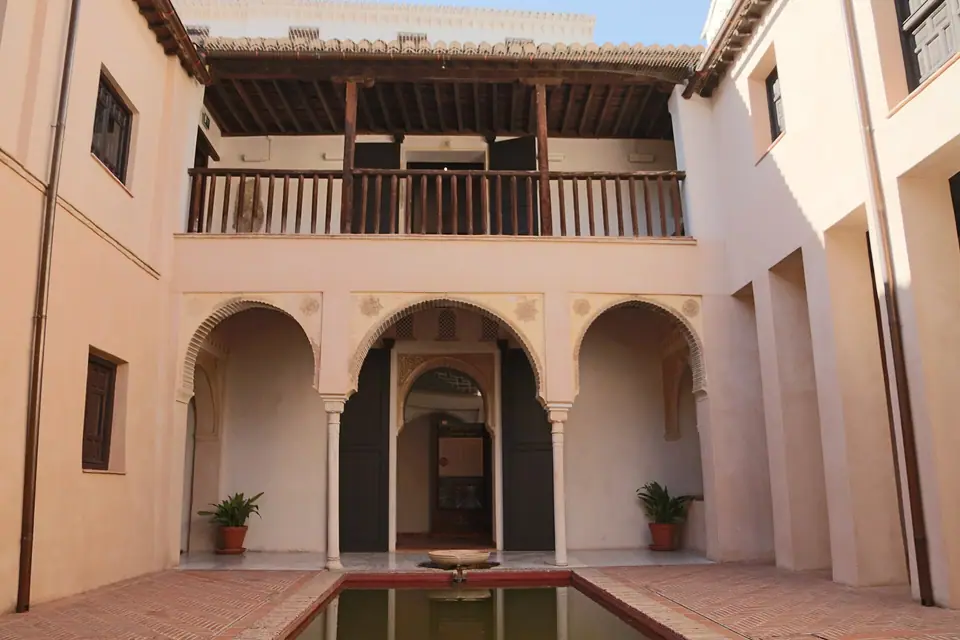
Two minutes uphill at Calle Portería de la Concepción 8 stands Casa de Zafra, a 14th-century aristocratic Nasrid residence. It takes its name from Hernando de Zafra, royal secretary to the Catholic Monarchs, who acquired the mansion after 1492. Its inner courtyard, centred on a marble pool mirroring triple horseshoe stucco arches, also houses the Albaicín Interpretation Centre with 3D models of medieval Granada.
Further east along Paseo de los Tristes at Cuesta del Chapiz 14, step inside the Casa Morisca Horno de Oro. Built in the late 15th century and expanded with a 16th-century Mudéjar upper gallery, it shows how Granadino builders blended Islamic and Christian courtyard styles after 1492.
Palacio de Dar al-Horra in the Upper Albaicín
At the top of the Albaicín on Callejón de las Monjas (two minutes from Plaza Larga) stands the Palacio de Dar al-Horra ("House of the Free Woman"). Built in the 15th century over the former Zirid palace of King Badis, this Nasrid court residence was the home of Sultana Aixa al-Horra, mother of Granada's last king Boabdil. Because Queen Isabella gifted the estate to Franciscan nuns without demolishing the palace, its stucco porticoes and upper wooden belvedere survive intact.
Traveller tips
- Walk the Dobla de Oro downhill from North to South. Ride the C31 or C32 bus up to Plaza Larga at 10:00 for Dar al-Horra, then walk downhill to Horno de Oro, Casa de Zafra, the Maristán, and El Bañuelo.
- Don't miss Casa del Chapiz if open. At the foot of Cuesta del Chapiz, the 16th-century Morisco palaces of Casa del Chapiz (School of Arabic Studies) feature a grand garden facing the Alhambra and are included on the pass.
- Look for the Bridge of the Qadi (Puente del Cadí) directly outside El Bañuelo. Outside El Bañuelo on Carrera del Darro, look across the river at the hexagonal stone tower and horseshoe arch of the 11th-century Puente del Cadí. Built under Zirid King Badis and repaired in 1055, this fortified water gate once spanned the Darro with an iron portcullis grate. It let river water pass while blocking enemy raiders and linking the Albaicín walls to the Sabika hill.
- Check the Cuarto Real de Santo Domingo in the Realejo. Architecture lovers should also visit the Cuarto Real de Santo Domingo on Plaza de los Campos (~€2.00 entry as of November 2026, free on Sundays). Built under Muhammad II in the late 13th century, this royal garden pavilion (qubba) predates the Comares Palace and preserves original tile dadoes and carved stucco.
- Comparing El Bañuelo with the Royal Baths of the Comares Palace. Comparing 11th-century El Bañuelo with the Alhambra's Comares Royal Baths reveals two sides of medieval life. El Bañuelo served neighbourhood residents for copper coins, whereas the tiled Comares baths served the Nasrid Sultan alone.
- Validating your Dobla de Oro QR code at each door. Keep your €7.07 Bono Monumentos Andalusíes QR code handy on your phone. Attendants scan it once at the entrance to El Bañuelo, Casa de Zafra, the Maristán, Horno de Oro, and Dar al-Horra.
- Photography light inside El Bañuelo. The star-shaped ceiling vents inside El Bañuelo cast their sharpest shafts of natural sunlight onto the brick vaults between 11:30 and 13:30 on sunny days. Tripods are not permitted, but modern smartphone night modes capture the columns clearly.
- Resting at the courtyard benches of Casa de Zafra. Casa de Zafra provides shaded benches, clean restrooms, and interactive English touchscreens explaining Zirid and Nasrid domestic life. Spend twenty minutes here to cool down after walking along Carrera del Darro.
- Locating the Horno de Oro entrance on Cuesta del Chapiz. Casa Morisca Horno de Oro sits at number 14 Cuesta del Chapiz, just fifty metres uphill from Paseo de los Tristes. Look for the discreet wooden portal marked with the bronze Patronato plaque on the left side of the cobbles.
- Combining Dar al-Horra with the Mirador de San Cristóbal walk: After leaving the Palace of Dar al-Horra on Callejón de las Monjas, walk five minutes west past the Church of San Cristóbal to inspect the 11th-century Zirid city gate of Puerta Monaita and its panoramic western terrace.
Where it is
- 1El Bañuelo Arab Baths & Dobla de Oro
- F.G.L. Airport Granada-Jaén Airport (GRX) · about 16 km from here in a straight line
- Directions in Google Maps
Traveller tips
Real advice from people who have been to Granada. Every tip is read by our team before it goes live.
No tips yet. Been here? Yours could be the first.
Thank you! Your tip will appear here after a quick review.
More in Granada
Continue exploring Granada with related neighbourhood, food, and planning guides
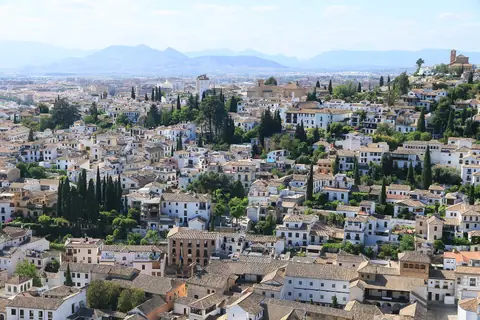
Where to Stay in Granada: Best Areas by Elevation, Alhambra Views & Transport
Granada, Spain
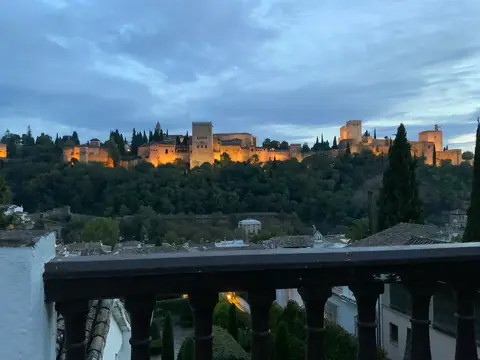
Granada 3-Day Itinerary: Alhambra, Albaicín, Sacromonte & Tapas Route
Granada, Spain
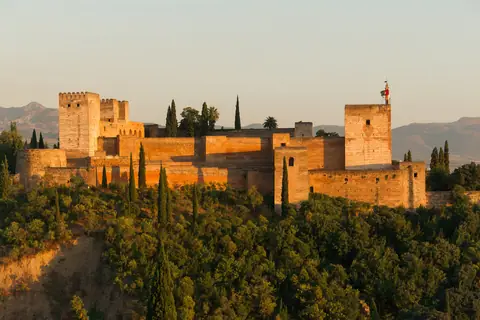
Alhambra & Nasrid Palaces Guide: Booking Tickets, Gates, Palaces & Timing
Granada, Spain
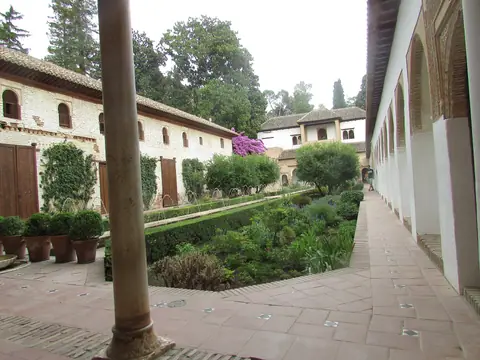
Generalife Gardens & Palace Guide: Patio de la Acequia, Water Stairway & Silla del Moro
Granada, Spain
