


























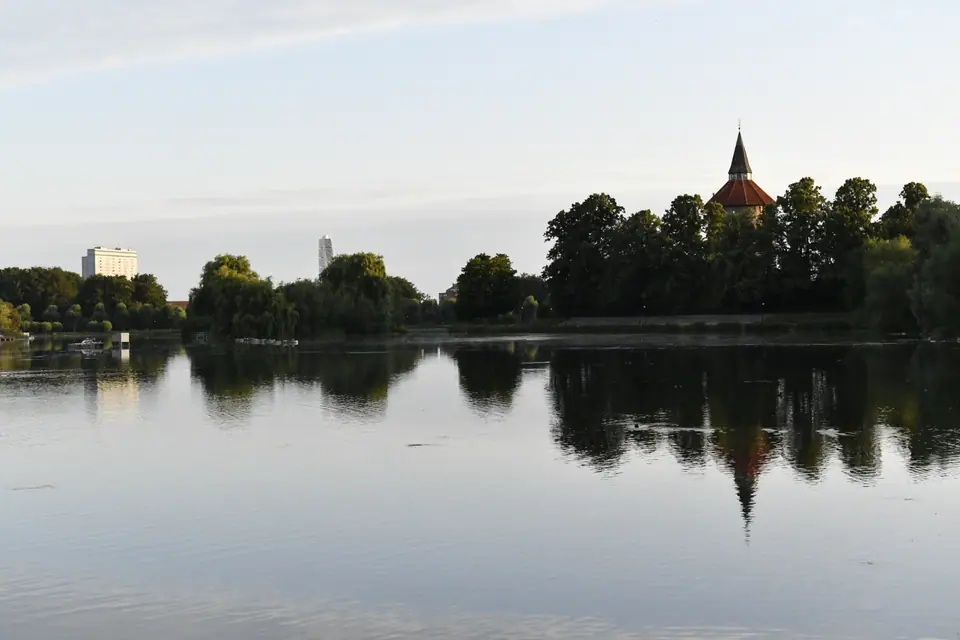
Malmö's Parks: Kungsparken, Slottsparken & Pildammsparken
Walk through the 'City of Parks': 1872 Kungsparken, 21-hectare Slottsparken and Slottsträdgården, and 45-hectare Pildammsparken from the 1914 Baltic Exhibition.
Long nicknamed Parkernas stad ("The City of Parks") for the green belt established during its 19th-century and early-20th-century expansion, Malmö links its historic castle moat directly to three major public parks. Footbridges connect Kungsparken, Slottsparken, and the organic gardens of Slottsträdgården around Malmöhus Castle, while a tree-lined avenue leads south to the 45-hectare expanses of Pildammsparken.
Because these parks were laid out on former military glacis fields, cavalry exercise grounds, and historic water reservoirs just outside the medieval ramparts, they form an almost continuous green corridor from the harbour canal to the southern neighbourhoods. Walkers and cyclists can move under mature tree canopies from the edge of Gamla Staden all the way to Triangeln with minimal road crossings in between.
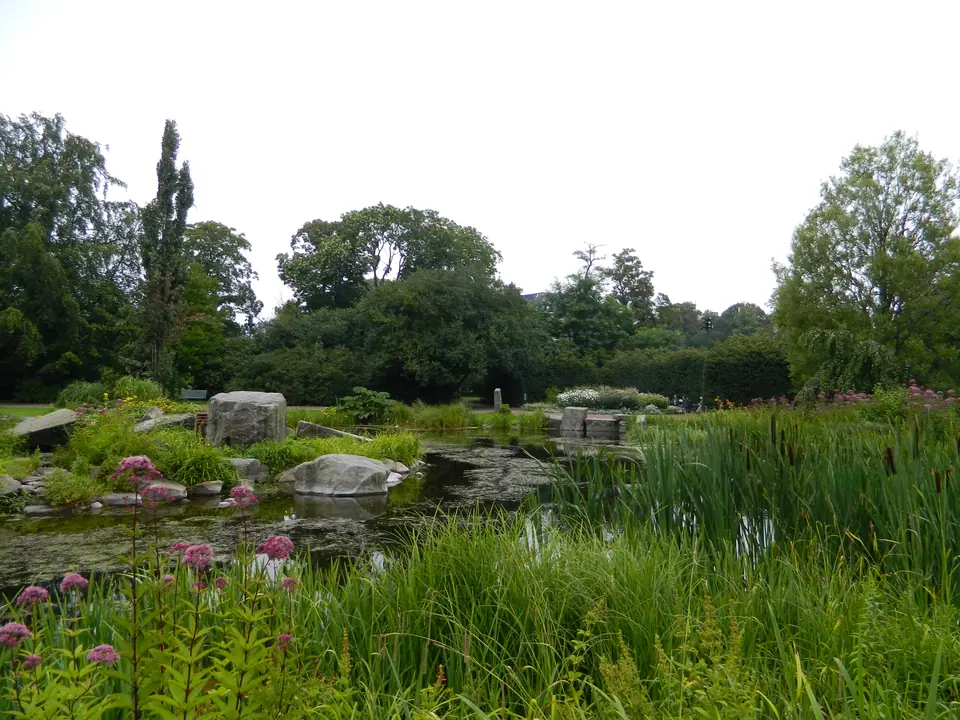
Kungsparken: Malmö's Oldest Public Park (1872)
Covering 8.4 hectares immediately east of Malmöhus Castle, Kungsparken was laid out between 1869 and 1870 on glacis land cleared of buildings in the 1660s to give the castle guns an open field of fire. Danish landscape architect Ove Høegh Hansen designed a romantic English-style arboretum that opened in 1872 as Slottsparken and was renamed King Oscar's Park (later shortened to Kungsparken) after King Oscar II inaugurated its restaurant pavilion during an agricultural congress in 1881. The park contains 120 tree species from three continents, an 1882 cast-iron fountain (Gjutjärnsfontänen) at its centre, rhododendron beds along the canal, and landscape architect Monika Gora's 1987 granite serpent fountain Ormet at Grottan, inspired by the Edda tale of Loki.
Curving gravel paths wind beneath towering plane trees, oaks, chestnuts, and exotic conifers, many of which are labelled with botanical plaques for curious visitors. Because water borders Kungsparken on two sides, with the wide castle moat to the west and the city canal to the east, the lawns feel secluded from street traffic despite sitting just steps from Gamla Väster. Benches along the water's edge watch pedal boats and sightseeing barges glide under the cast-iron and stone canal bridges.
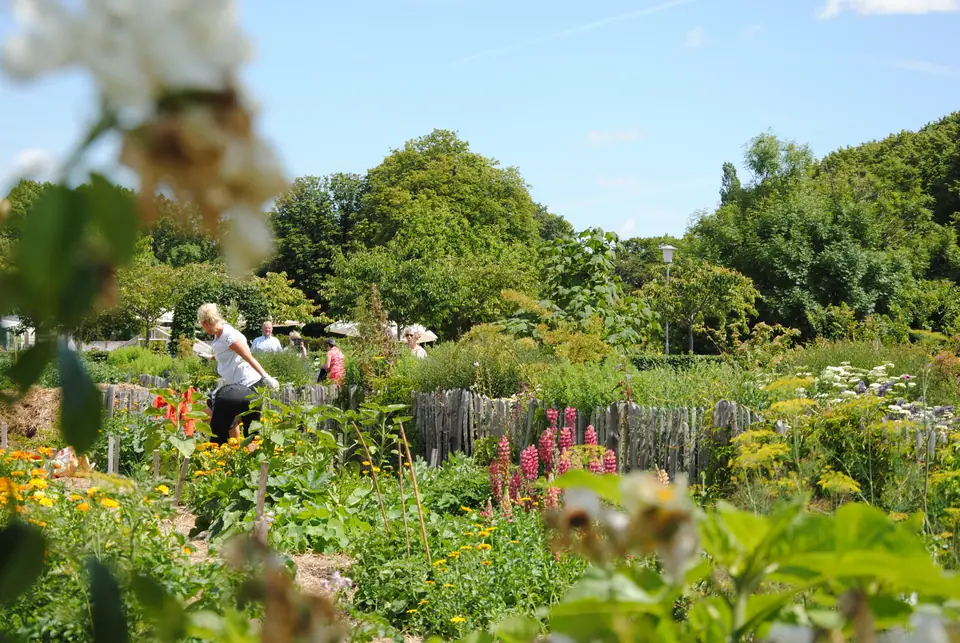
Slottsparken and Its Woodland Ponds
Across the canal bridges to the west and south lies the 21-hectare Slottsparken, created between 1897 and 1900 on former swampy cavalry exercise grounds of the Crown Prince's Hussar Regiment following the 1896 Nordic Industrial and Craft Exhibition. Designed by Danish landscape architect Edvard Glæsel in the spirit of Frederick Law Olmsted, the park wraps beech woods and open lawns around two ponds where Carl Milles's 1950 bronze sculpture Man and Pegasus (Människan och Pegasus) and Gerhard Henning's Reclining Girl stand.
Unlike the formal botanical character of neighbouring Kungsparken, Slottsparken was conceived as a folk park with broad grassy meadows where residents could walk on the turf, picnic beside the water, and watch ducks and swans glide under weeping willows. Shaded playgrounds, wooden footbridges over the narrows between the ponds, and wide cycle paths lead northwest through the trees toward the coastal lawns of Ribersborgsstranden.
Slottsträdgården and the 1851 Slottsmöllan Windmill
Between Slottsparken and the castle moat, the gardens of Slottsträdgården cultivate seasonal flowerbeds, organic vegetable plots, and themed display gardens beside the 1851 Slottsmöllan windmill on bastion Capricornus. Visitors stop at the garden's glasshouse café for coffee and lunches prepared with produce harvested straight from the surrounding beds, while volunteers tend perennial borders and fruit trees from spring through autumn. Small wooden bridges link the garden plots directly to the castle island of Slottsholmen and the western paths of Kungsparken, making the windmill lawn a favourite mid-walk resting spot for families and garden lovers.
Malmö City Library and the Calendar of Light
The eastern corner of Slottsparken anchors Malmö City Library (Malmö stadsbibliotek), whose 1997 glass hall The Calendar of Light (Ljusets kalender) by Danish architect Henning Larsen looks directly into the trees. Linking Larsen's soaring glass-and-concrete atrium with the red-brick castle-style library wing creates one of the most popular indoor reading rooms in the city, where multi-storey windows frame the changing foliage of the park across all seasons of the year. Stepping inside the library atrium on a breezy afternoon lets you admire how the daylight shifts across the reading balconies as the sun moves above the beech canopy outside, while a ground-floor café and newspaper lounge welcome visitors without requiring a library card.
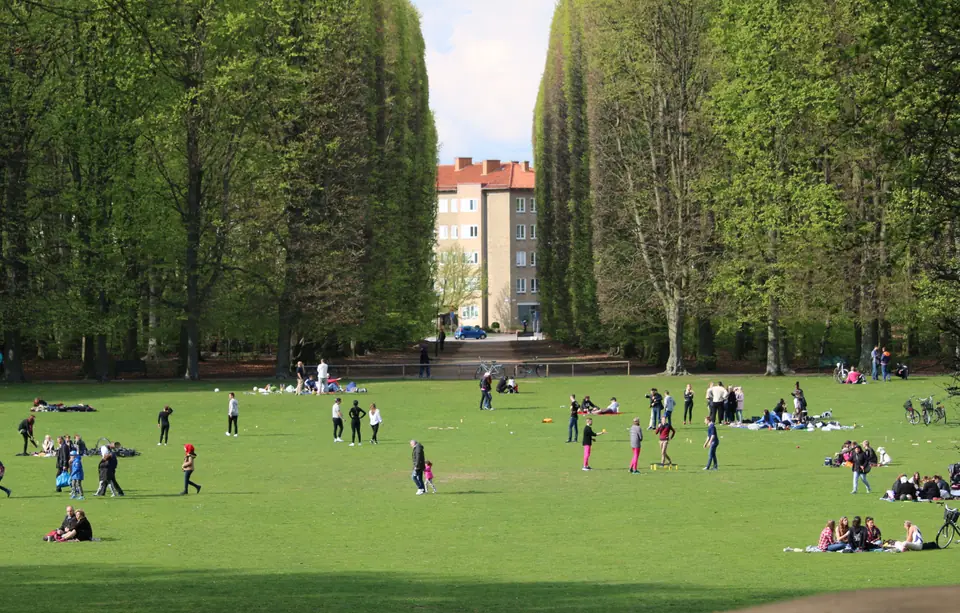
Pildammsparken and the 1914 Baltic Exhibition Grounds
One kilometre south near Triangeln station spreads Pildammsparken, Malmö's largest park at 45 hectares. Built around willow-banked water reservoirs (Pildammarna) dug at the end of the 16th century to supply the town's wooden water pipes, the grounds hosted the Baltic Exhibition (Baltiska utställningen) from 15 May to 4 October 1914. Following early 1915 sketches by Erik Erstad-Jørgensen, city planning director Erik Bülow-Hübe redesigned the neoclassical park in 1926 around a 1.5-kilometre lakeside running loop, the preserved 1914 Royal Pavilion (Margaretapaviljongen), the 1963 Pildammsteatern amphitheatre, and Tallriken ("The Plate"), a circular 165-metre-diameter lawn enclosed by tall clipped beech hedges.
Planning a Green Walk from the Canal to Pildammsparken
To link all three parks in a single outing, begin at the canal footbridge behind Gamla Väster, stroll past the cast-iron fountain of Kungsparken and the organic beds of Slottsträdgården, cross Slottsparken past Malmö City Library, and follow the tree-lined avenue of John Ericssons väg south to Pildammarna. Around the upper and lower reservoirs of Pildammsparken, granite balustrades, fountain jets, flower terraces, and long alleys of clipped lindens reflect the grand axial geometry of the 1920s landscape plan. In summer, locals gather on the circular turf of Tallriken for games and picnics or attend free outdoor theatre and concerts at Pildammsteatern, while runners and walkers circle the gravel paths around the water in every month of the year. From the eastern gates of Pildammsparken, you are a brief walk from Malmö Konsthall and the market stalls of Möllevången, making the green belt easy to weave into any day of sightseeing in Malmö. Visiting in spring when rhododendrons and cherry blossoms brighten the canal banks or in autumn when the beech alleys turn gold showcases Malmö's landscape heritage at its finest and provides a quiet refuge in the middle of the municipality.
Traveller tips
Real advice from people who have been to Malmö's Parks: Kungsparken, Slottsparken & Pildammsparken. Every tip is read by our team before it goes live.
No tips yet. Been here? Yours could be the first.
Thank you! Your tip will appear here after a quick review.
More in Malmö
Continue exploring Malmö with related neighbourhood, food, and planning guides
Things to Do in Malmö: Landmarks, Sea Baths & Architecture Walks
Malmö, Sweden
Västra Hamnen & Turning Torso: Malmö's Reborn Shipyard Waterfront
Malmö, Sweden
Öresund Bridge & Lernacken: Sweden's Fixed Link to Denmark
Malmö, Sweden
Stortorget, Lilla Torg & Gamla Väster: Malmö's Historic Heart
Malmö, Sweden
