


























Möllevången & Folkets Park: Open-Air Markets, Jugendstil & Nightlife
Explore Möllevången (Möllan), Malmö's 53-hectare Jugendstil quarter around Möllevångstorget's daily produce market, and 1891 Folkets Park.
Located immediately south of Triangeln station in the borough of Södra Innerstaden, Möllevången (universally known as Möllan) covers 53 hectares framed by Bergsgatan, Amiralsgatan, Nobelvägen, Spårvägsgatan, and Södra Förstadsgatan. Home to 10,904 residents in 2023, the district takes its name from the Scanian words mölla (windmill) and vång (open field), recalling the grain, rapeseed, and tobacco farmlands known in the 16th century as Österwången that surrounded Malmö until the late 19th century.
Today Möllevången and neighbouring Folkets Park form the most international and socially lively quarter of the city. While Gamla Staden preserves Danish-era merchant squares and Västra Hamnen showcases contemporary waterfront towers, Möllan reflects Malmö's turn-of-the-century working-class heritage and its modern multicultural street life.
Early-20th-Century Jugendstil Blocks and Anders Nilsson's Plan
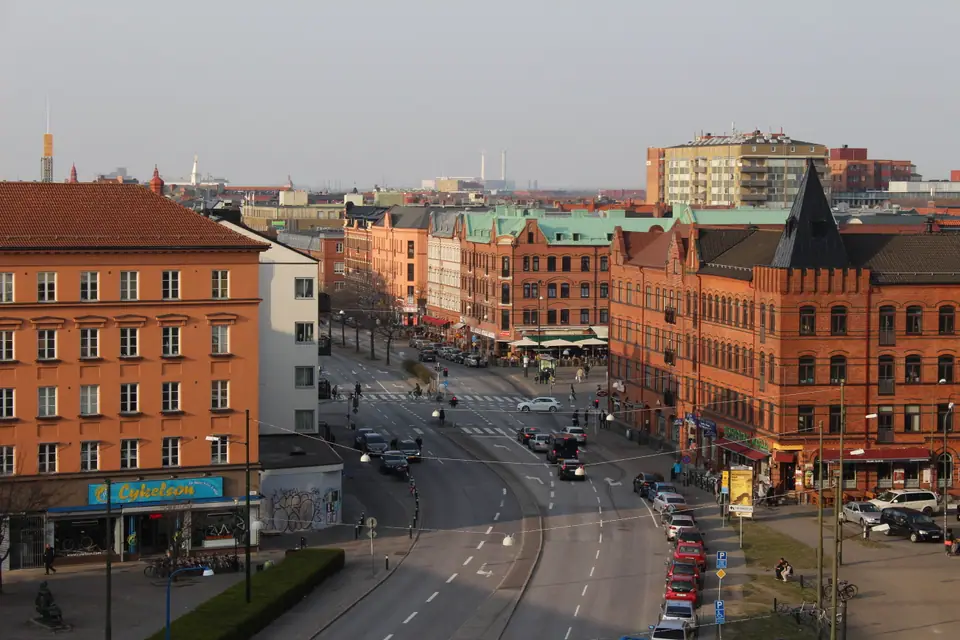
After city engineer Anders Nilsson drew up the first town plan for Möllevången in 1903, dense brick apartment blocks, many ornamented with Jugendstil (Art Nouveau) gables and bay windows, were built across the quarter to house Malmö's growing factory workforce. Walking along Bergsgatan, Ystadsgatan, and Claesgatan reveals richly detailed red-and-yellow brick facades, curved window surrounds, and enclosed residential courtyards that went up during the rapid urban expansion of the early twentieth century. Ground-floor storefronts that once housed neighbourhood dairies, cobblers, and workers' cooperatives now contain independent bookshops, record stores, coffee roasters, and family-run grocers.
Möllevångstorget and the Daily Open-Air Market
At the centre of the neighbourhood sits Möllevångstorget, laid out between 1904 and 1906. Every morning from Monday to Saturday, the cobbled square fills with open-air fruit, vegetable, herb, and flower stalls (torghandel), ringed by Middle Eastern, South Asian, East African, Latin American, and Balkan food shops, falafel counters, and indie bistros. Shoppers pile baskets with pomegranates, fresh mint, aubergines, Scanian apples, and root vegetables at prices well below standard supermarkets. By late afternoon, after the market vendors pack away their wooden trestles and scales and municipal street sweepers wash the cobbles, the surrounding pavement terraces fill with diners and evening crowds.
Axel Ebbe's 1931 Monument Arbetets Ära
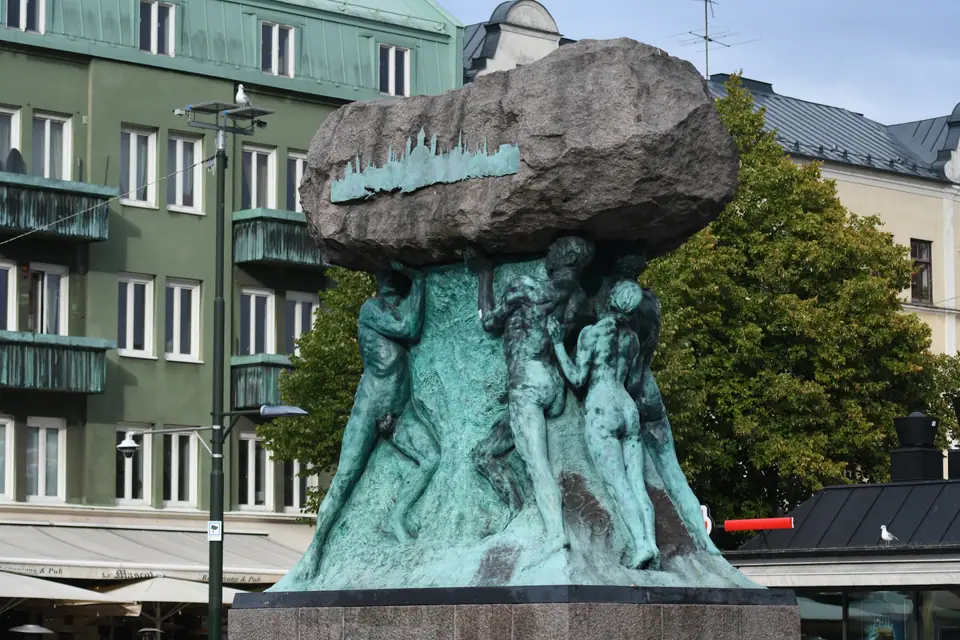
Anchoring the southern side of Möllevångstorget is sculptor Axel Ebbe's bronze monument Arbetets ära ("The Glory of Work"), unveiled in 1931 and depicting four muscular figures lifting a massive block of Scanian granite in tribute to the district's working-class and labour-movement heritage. The statue faces toward the former cooperative stores and union halls that shaped early-twentieth-century social life in Södra Innerstaden, serving as the traditional meeting point for friends heading out around the square. Nearby, director Bo Widerberg's classic Swedish film Kvarteret Korpen ("Raven's End") famously portrayed interwar working-class family life in these brick apartment blocks, capturing the tenements, courtyards, and labour struggles that defined old Möllan.
Kulturfabriken Mazetti, Sankt Johannes Kyrka, and Södervärn
On the northern edge of Möllevången along Bergsgatan stands the crenellated brick complex of the former Mazetti chocolate and cocoa factory, whose classic "Mazetti eyes" trademark is still remembered across Sweden; today the industrial halls operate as Kulturfabriken Mazetti, housing cultural venues, comics studios, and performance stages. Just west toward Pildammsparken rises the rose-windowed Jugendstil brick church Sankt Johannes kyrka alongside the towering brick water tower Södervärns vattentorn. Together, the church, the water tower, and the converted chocolate factory mark the transition from the quiet parklands of Pildammsparken into the brick street grid of Möllan, with cultural clubs such as Inkonst inside the old factory hosting electronic music, contemporary theatre, and international art nights.
Folkets Park: Historic Labour-Movement Park (1891)
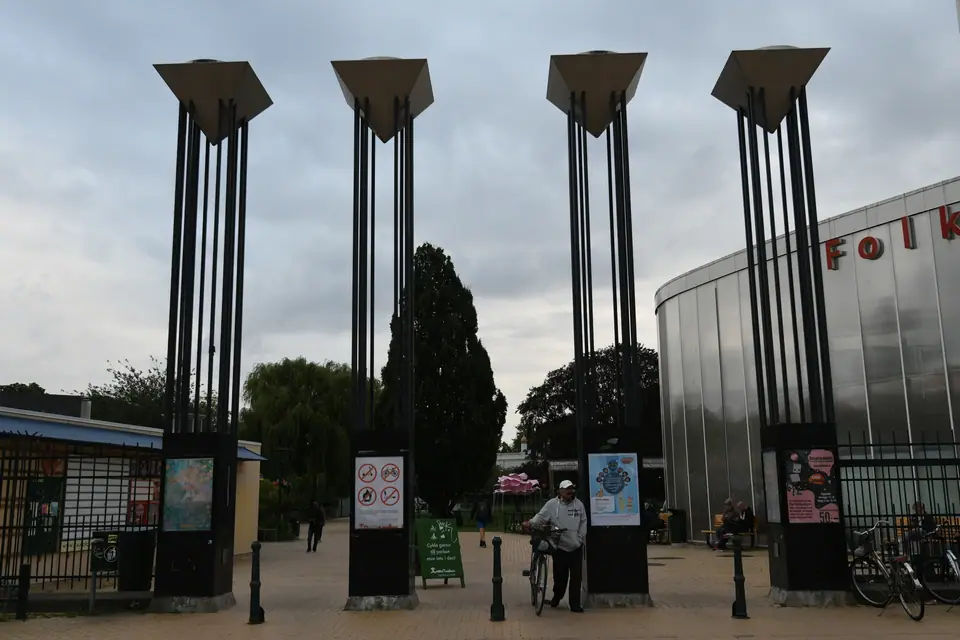
Two blocks east of Möllevångstorget at Amiralsgatan opens Folkets Park, the oldest public park in the world created by the organised labour movement. Its origins go back to 1796, when merchant Frans Suell the Younger and his wife Anna Cajsa af Trolle built their summer residence Möllevångsgården here across a 140-tunnland agricultural estate and planted an English-style landscape garden with winding paths and chestnut trees between 1806 and 1808. In March 1891, Malmö's Social Democratic movement leased and purchased the estate to give industrial workers a gathering ground of their own, drawing more than 13,000 striking workers in August 1909 and reaching a record 742,309 visitors in 1947; a century after its founding, in 1991, ownership passed to Malmö Municipality.
Moriska Paviljongen and Year-Round Park Life
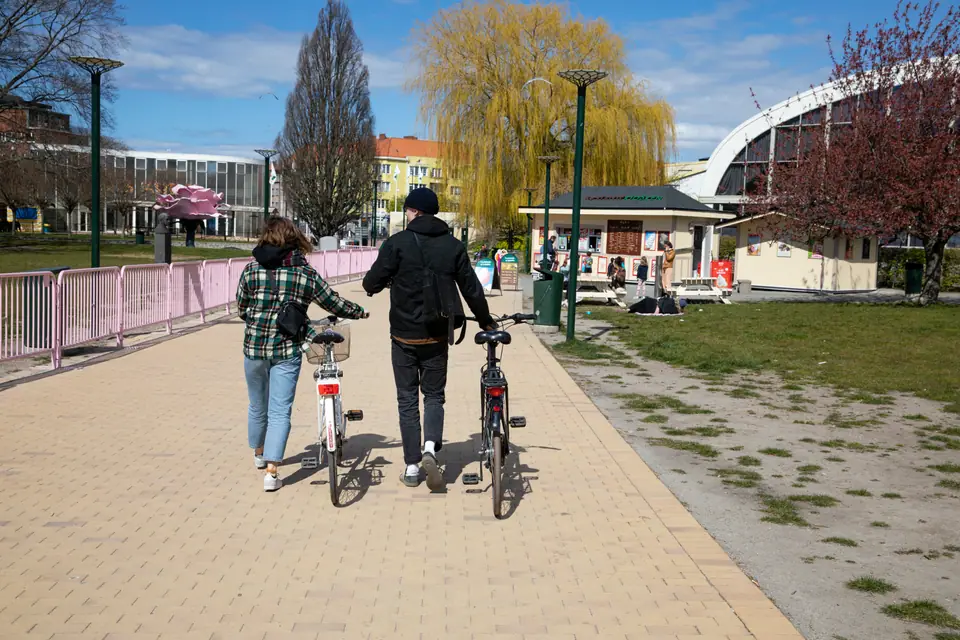
Open without admission charge every day of the year, Folkets Park blends historic pavilions with family playgrounds, wading pools, mini-golf, lawns for summer picnics, and winter ice skating on the main pond. Its architectural centrepiece is the 1902 Moorish-style palace Moriska Paviljongen (Moriskan), designed with horseshoe arches and domed towers that host concerts, club nights, lectures, and an outdoor bistro garden, alongside the children's theatre Barnens Scen, the science centre Cool Minds, and a tropical terrarium. Unlike gated amusement parks elsewhere in Scandinavia, Malmö's Folkets Park removed its turnstiles decades ago so that neighbourhood residents can cross the lawns freely on their daily walks, grab an espresso by the pond, or spread a blanket on the grass.
Visiting Möllan by Day and Evening
To experience both sides of the neighbourhood, arrive before midday on a weekday or Saturday when the produce stalls on Möllevångstorget are in full swing, stroll two blocks east through the gates of Folkets Park for coffee under the chestnut trees, and return along Bergsgatan in the evening for street food or live music at Moriska Paviljongen. Side streets such as Kristianstadsgatan and Simrishamnsgatan are lined with small neighbourhood restaurants, tapas bars, pan-Asian kitchens, and craft beer pubs that stay busy throughout the week. Because the northern exit of Triangeln underground station opens directly onto Sankt Johannes kyrka and Bergsgatan, reaching Möllevången from Malmö Central Station or Copenhagen Airport takes just a few minutes, making it a favourite evening stop on our three-day Malmö itinerary and a lively neighbourhood to explore alongside Malmö Konsthall and Malmö Opera or to consider when comparing bases in our accommodation guide.
Because Triangeln railway station on the underground City Tunnel rail link sits only a short walk northwest of Möllevångstorget, visitors can move easily between the open-air market stalls of Möllevången, the lawns and cultural stages of Folkets Park, and the historic squares of Gamla Staden or the waterfront promenades of Västra Hamnen.
Traveller tips
Real advice from people who have been to Möllevången & Folkets Park: Open-Air Markets, Jugendstil & Nightlife. Every tip is read by our team before it goes live.
No tips yet. Been here? Yours could be the first.
Thank you! Your tip will appear here after a quick review.
More in Malmö
Continue exploring Malmö with related neighbourhood, food, and planning guides
Moderna Museet, Malmö Konsthall & Malmö Live: Arts & Architecture
Malmö, Sweden
What to Eat in Malmö: Scanian Äggakaka, Spettekaka & Falafel
Malmö, Sweden
How to Get to Malmö & Get Around: CPH Trains, City Tunnel & Bikes
Malmö, Sweden
Where to Stay in Malmö: Best Areas from Gamla Staden to Västra Hamnen
Malmö, Sweden
