What to Eat in Malmö: Scanian Äggakaka, Spettekaka & Falafel
Taste Malmö's culinary specialities, from thick pan-fried Skånsk äggakaka with pork and EU-protected spettekaka to Möllevången falafel and Malmö Saluhall.
Positioned between the fertile agricultural plains of Scania (Skåne), often called Sweden's pantry, and the fishing waters of the Öresund strait, Malmö combines centuries-old Scanian farmhouse recipes with Sweden's most diverse street-food culture. Sitting down at a traditional wood-panelled inn near Stortorget, browsing the artisanal counters of Malmö Saluhall, or joining the late-night queues in Möllevången introduces three culinary traditions that define the city's table.
Because Skåne enjoys a longer growing season and richer soil than provinces further north, regional cooking has historically favoured generous use of butter, cream, eggs, smoked pork, root vegetables, orchard apples, and berries. At the same time, decades of international migration have made central Malmö a place where Middle Eastern flatbread ovens, Balkan grills, and Nordic sourdough bakeries operate side by side along the same streets.
Skånsk Äggakaka: The Classic Scanian Egg Cake
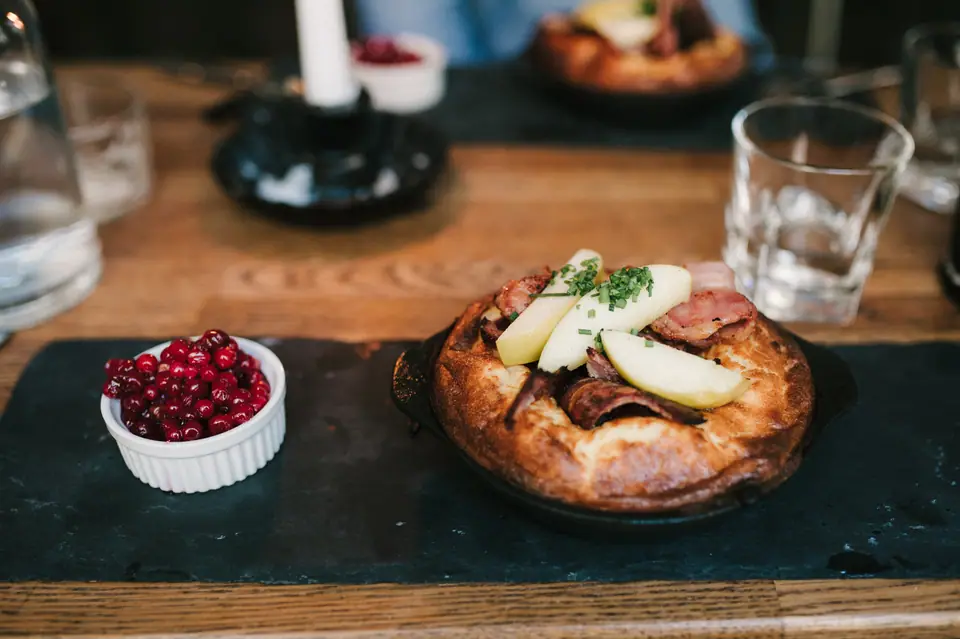
The signature savoury comfort dish of Malmö and Scania is Skånsk äggakaka, a thick, rich pan-fried egg cake that differs from a standard oven pancake by its high proportion of eggs, milk, and ground black pepper cooked on the stovetop in generous butter and pork fat. To reach the traditional thickness of at least five centimetres without burning the base, the cook continuously lifts the setting batter in a heavy cast-iron skillet before flipping the cake onto a large lid and sliding it back into melted butter until both sides form a crisp golden-brown crust.
It is served hot straight from the pan, topped with thick slices of smoky fried pork belly (stekt fläsk), melted pork drippings, and a bowl of tart stirred lingonberries (rårörda lingon) or butter-sautéed apple wedges. Originally prepared as a filling midday meal for farmhands working the Scanian fields, äggakaka remains a staple on traditional lunch and tavern menus across the Old Town, often accompanied by shredded red cabbage or pickled beetroot.
Skånsk Spettekaka: EU-Protected Spit Cake
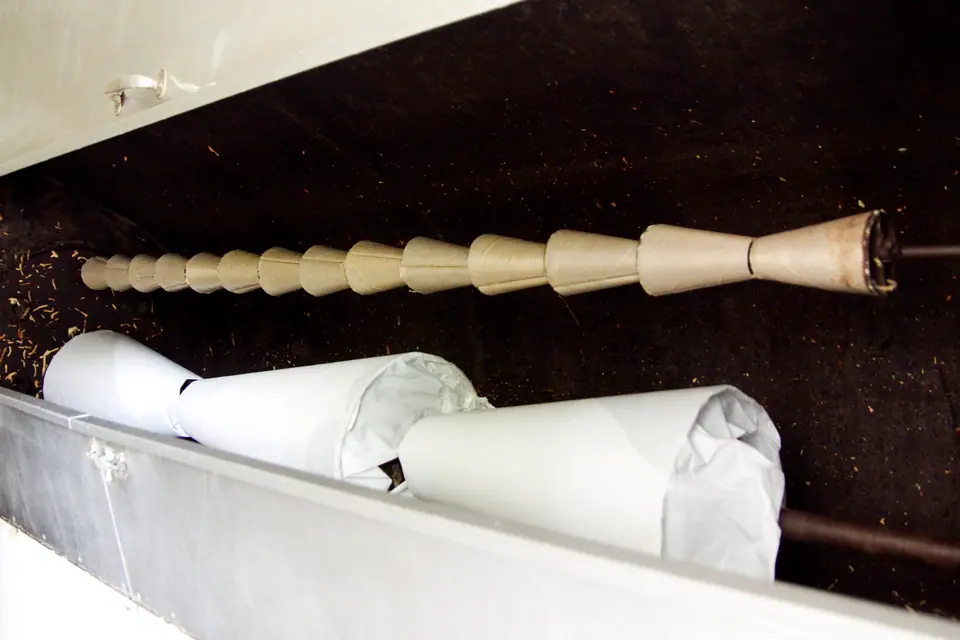
For dessert and festive occasions, look for Skånsk spettekaka (spiddekaga in Scanian dialect), a hollow, cone-shaped pastry that received European Union Protected Geographical Indication (PGI / SGB) status on 19 July 2000, meaning it must be baked inside Skåne to bear the name. Bakers slowly drizzle a batter of eggs, potato starch flour, and sugar onto a rotating conical wooden skewer over gas flames or an open fire for several hours, finishing the crisp, meringue-dry tower with piped white, pink, and green icing (kristyr).
Because a normal knife shatters the delicate lattice, a fine hacksaw blade (bågfilsblad) is traditionally used to saw out rectangular cuboids from the cone while leaving the supporting corners intact until the end, served alongside strong black coffee and vanilla ice cream. Specialty bakeries and market counters around the city sell smaller boxed cones that travel well as culinary souvenirs.
Möllevången and Malmö's Reputation as Sweden's Falafel Capital
Malmö is widely known across Sweden as the country's falafel capital. Around Möllevångstorget, Bergsgatan, and Amiralsgatan, neighbourhood stands and bakeries fry chickpea, parsley, and spice falafel balls to order, wrapping them in freshly baked Saj or pita flatbread with pickled turnip, shredded cabbage, tomato, parsley, and tahini, mild yoghurt, or spicy chilli sauce. Halloumi wraps, shawarma plates, hummus bowls, and warm Levantine pastries are equally easy to find from midday until late at night, making Möllan the most popular casual dining district in the city for students, families, and visitors alike.
Malmö Saluhall on Gibraltargatan
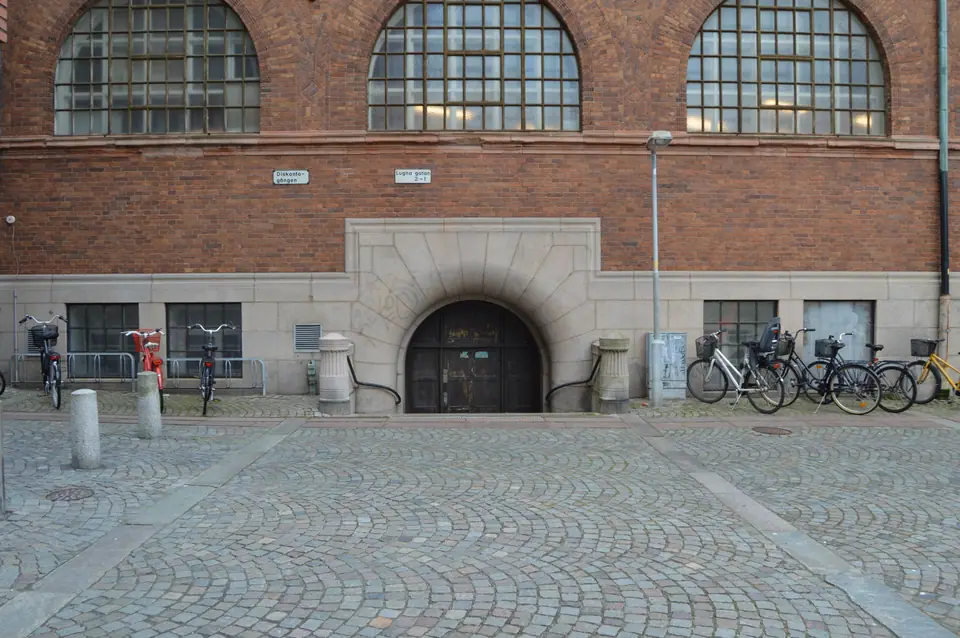
For indoor grazing across local and international producers, head to Malmö Saluhall on Gibraltargatan near Malmö Live and Västra Hamnen. Inaugurated in November 2016 inside a restored 19th-century brick freight depot, the market hall houses independent counters selling Scanian cheeses, charcuterie, fresh fish, handmade pasta, wood-fired pizza, ramen, artisan chocolates, and small-batch ice cream, with shared tables both indoors and on the sunny courtyard terrace. Its location between the central station and the Western Harbour makes it a natural lunch stop before an afternoon walk out to Turning Torso.
Historic Market Halls and Central Station Dining
Two older market halls complement Malmö Saluhall: the 2011 food hall inside the glass-roofed 19th-century central hall of Malmö Central Station, convenient for travellers stepping off cross-border trains, and the historic brick market hall Södra saluhallen on Föreningsgatan near Triangeln. Together with the open-air morning produce stalls on Möllevångstorget, these halls let visitors sample Scanian farm cheeses, smoked meats, and freshly baked sourdough bread under one roof, or pick up picnic provisions before walking through the nearby parks.
Scanian Herring, Goose Traditions, and Fika
Beyond egg cake and falafel, coastal menus feature fried Baltic and Öresund herring (stekt sill) with mashed potatoes and lingonberries, smoked eel and salmon in Limhamn, and the autumn feast of Mårtensgås (Saint Martin's Eve roast goose served with spiced black soup and Scanian apple cake) each November. Between meals, join locals for fika, a slow break for dark-roast coffee alongside cardamom buns (kardemummabullar) or cinnamon buns (kanelbullar), at courtyard bakeries in Gamla Väster, the pier café at Ribersborgs kallbadhus, or the greenhouse café of Slottsträdgården. Many third-wave coffee bars around Gamla Staden and Sankt Knut also roast their own beans and bake seasonal fruit tarts using apples, plums, and berries from local Scanian orchards.
Where to Plan Your Meals Across the City
To sample the full spectrum during a three-day stay, pair a traditional Scanian lunch around Stortorget or Lilla Torg with an afternoon coffee stop at Malmö Saluhall and an evening street-food walk around Möllevångstorget and Folkets Park. Most sit-down restaurants offer weekday lunch specials (dagens rätt) that include salad, bread, tap water, and coffee, while all food halls, bakeries, and street kiosks accept contactless cards without requiring local cash. Because distances between Gamla Staden, Universitetsholmen, and Södra Innerstaden are short, you can easily walk from a morning bakery in the Old Town to a market-hall lunch by the canal and an evening bistro table near Triangeln.
During the third week of August each year, Malmöfestivalen fills the central streets and squares from Stortorget to Gustav Adolfs torg with open-air food stalls representing the culinary traditions of a municipality whose residents trace their heritage to 179 different nationalities.
Traveller tips
Real advice from people who have been to What to Eat in Malmö: Scanian Äggakaka, Spettekaka & Falafel. Every tip is read by our team before it goes live.
No tips yet. Been here? Yours could be the first.
Thank you! Your tip will appear here after a quick review.
More in Malmö
Continue exploring Malmö with related neighbourhood, food, and planning guides