


























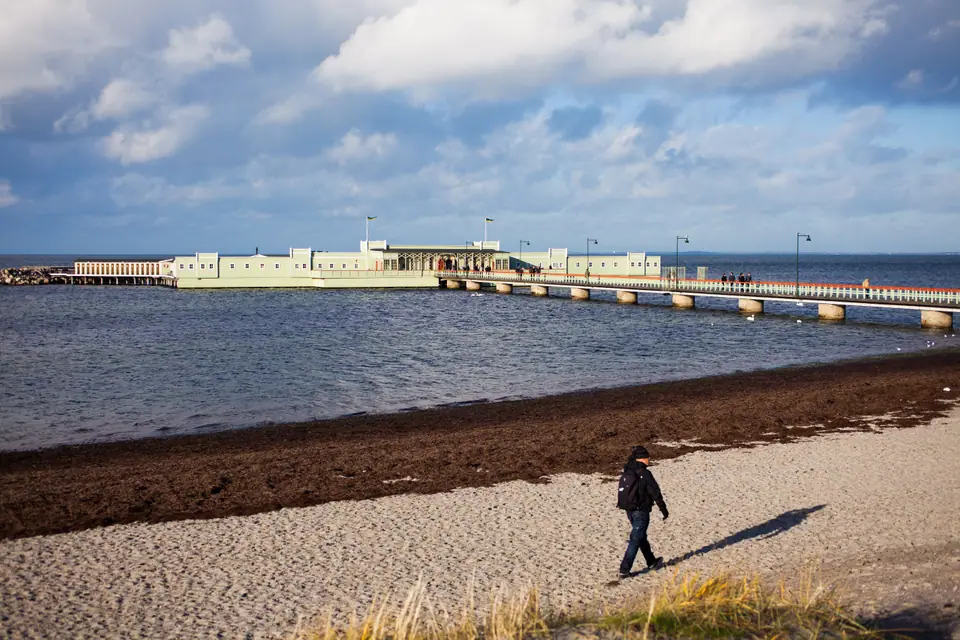
Ribersborg Beach & Kallbadhus: Malmö's 1898 Open-Air Sea Bath
Swim and sauna year-round at Ribersborgs kallbadhus (Kallis), built on stilts in 1898 off Malmö's 2.5-kilometre sandy Ribersborgsstranden beach.
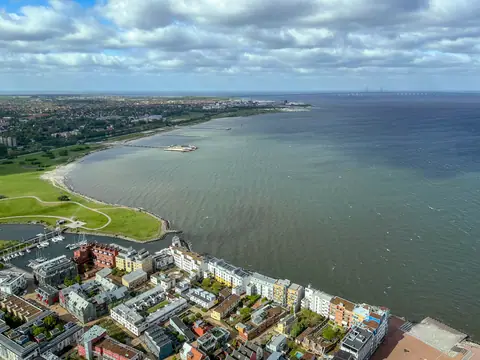
Stretching along the Öresund coast between Västra Hamnen and the marina suburb of Limhamn, Ribersborgsstranden (affectionately called Ribban by older residents) is a shallow, man-made sandy beach just two kilometres west of Stortorget. Backed by the grassy lawns of Öresundsparken, Limhamnsfältet, and a busy seaside cycling and inline-skating path, the shoreline looks directly across the strait toward Copenhagen and the pylons of the Öresund Bridge.
Because the 2.5-kilometre beachfront sits directly adjacent to central residential quarters and the parklands around Malmöhus Castle, locals treat the coast as an everyday extension of the city centre. Early risers cycle out before work for a sea dip and sauna, families picnic on the wide green lawns behind the sand dunes, and evening walkers follow the shoreline path as cargo ships and passenger ferries pass through the strait.
The History of Ribersborgs Kallbadhus ("Kallis")
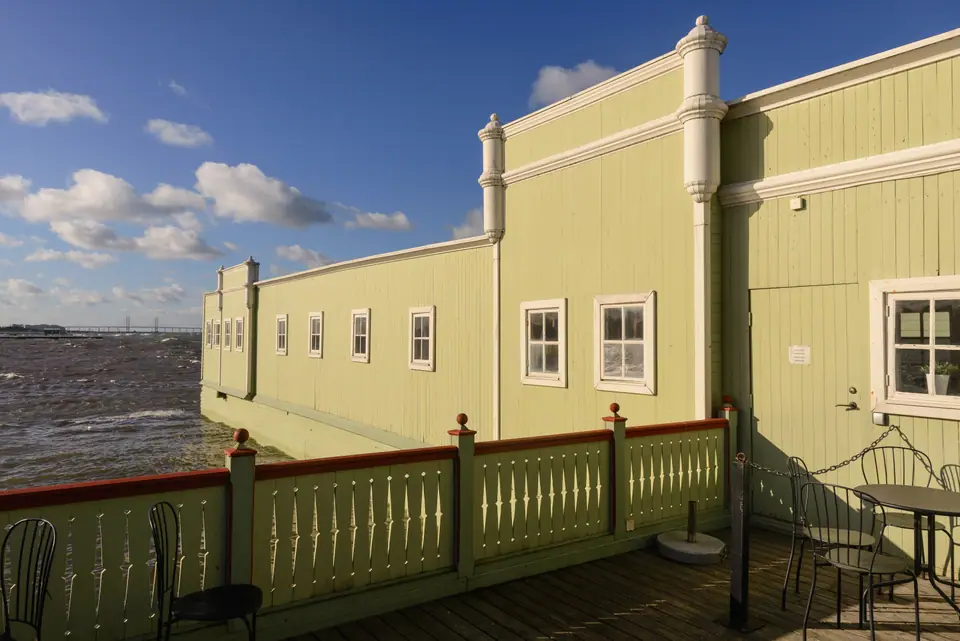
Extending out into the strait at the end of Bridge 1, approximately one kilometre southwest of Turning Torso, stands Ribersborgs kallbadhus (known as Kallis to younger locals). Stick manufacturer C. A. Richter inaugurated the bathhouse in June 1898 by purchasing and relocating Malmö Badhusaktiebolag's older 1867 timber bathhouse from Skeppsbron when the port expanded to build Nyhamnen. Four years later, the Christmas Hurricane of December 1902 smashed the wooden structure; financed largely by shipowner Johan Lorents Lundberg, it was immediately rebuilt with a diving tower and turreted Carpenter Gothic roofs.
During the 1914 Baltic Games held alongside the Baltic Exhibition, Ribersborgs kallbadhus hosted international swimming and water polo competitions, and its 33.3-metre lanes served as Malmö's official swimming stadium for the 1905, 1919, and 1944 Swedish Championships until Simhallsbadet opened in 1956. Purchased by the City of Malmö in 1966, declared a listed historic building (byggnadsminne) in 1995, and comprehensively restored onto new foundation piles in July 2009, it is today the largest and best-preserved open-air cold bathhouse in the Nordic countries, recording 175,000 annual visits.
Sauna Etiquette and Year-Round Sea Dipping
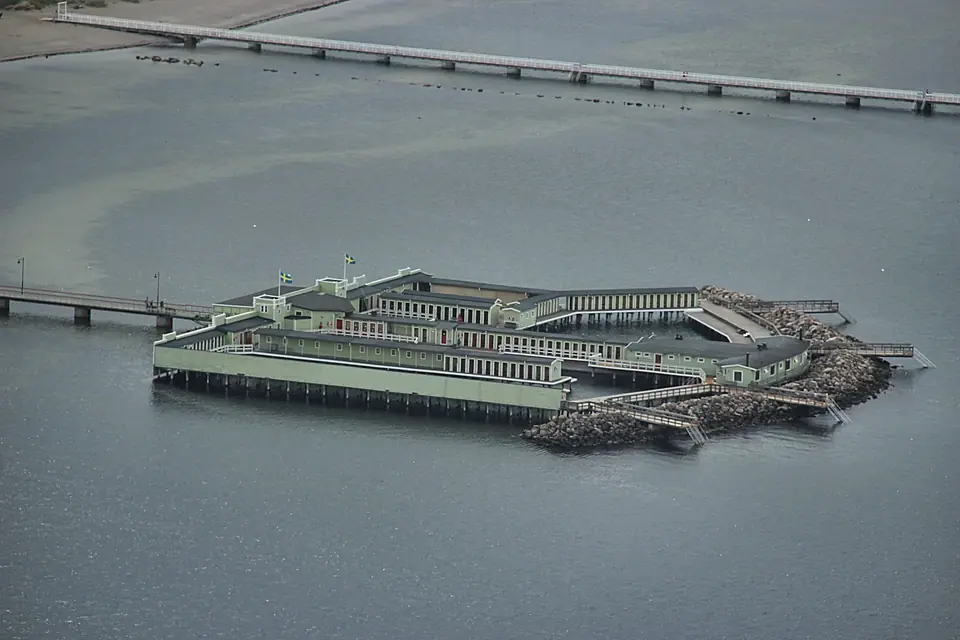
Ribersborgs kallbadhus operates year-round with separate open-air courtyards and seawater pools for men and women, plus a shared steam sauna between the two wings added in 2009. Each gender-separated wing contains two saunas, including a hot wood-fired sauna and an electric dry sauna, alongside a warm-water tub, sundecks, and wooden ladders descending straight into the Öresund. Inside the bathhouse sections, bathing is traditionally nude without swimwear, though sitting on a full-sized towel inside all sauna rooms is mandatory.
The ritual follows a simple rhythm across all seasons: bathers warm up thoroughly in the fragrant heat of the wood-fired stove, walk out across the timber decking, and climb down the wooden steps into the brisk waters of the strait before returning to the sauna or resting on the sheltered sun terraces. Remember to bring two towels, one to sit on inside the sauna and a dry one for after your swim, alongside a padlock if you wish to use the changing lockers. In winter, when frosty winds sweep across the Öresund, the contrast between the glowing birch-wood stove and the cold sea water makes the bathhouse one of the most memorable traditions in southern Sweden.
The Pier Café and Dining Over the Water
Visitors who prefer not to use the saunas can still walk out along the pier at Bridge 1 to the bathhouse café and restaurant, which welcomes clothed guests throughout the day without an admission ticket. Sitting at the wooden tables above the waves offers a close-up look at the pastel-green Carpenter Gothic pavilions while serving coffee, pastries, and casual lunches overlooking the strait. It is a welcoming spot to warm up after a windy walk along the sand or to watch the late afternoon light reflect off the water, and the outdoor deck facing the bridge provides unobstructed sunset views across the sound.
How Ribersborgsstranden Was Created
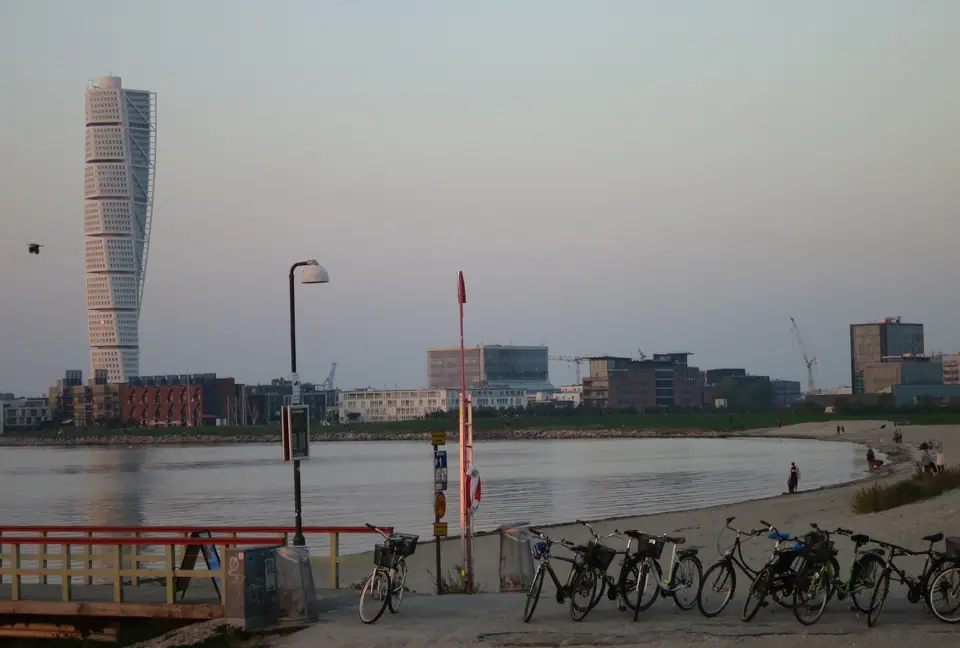
Outside the bathhouse, the beach itself was transformed from a marshy seaweed lagoon after the 1902 storm, when gravel embankments were reinforced outside the old 1889 Malmö-Limhamn railway ("Sillabanan", removed in 2009) and officially inaugurated as Ribersborgsstranden in 1926. Sand dredged from the seabed was pumped ashore to create a gently shelving coast where families could wade safely without strong currents, turning a formerly stony industrial foreshore into a wide recreational promenade that has served Malmö residents for generations.
Walking and Cycling the Ten Bathing Jetties
Every spring Malmö Municipality replenishes the fine sand along its ten stone-and-timber bathing jetties, numbered from Bridge 1 at the kallbadhus southwest toward Bridge 10 near Lagunen Marina. Along this stretch you will find a dedicated dog-swimming beach at the northeastern end near Västra Hamnen, shallow family swimming bays, an accessible bathing pier equipped with a ramp, outdoor showers, summer ice-cream kiosks, and a naturist swimming jetty at Bridge 10. Wide asphalt lanes separated for pedestrians and cyclists run the entire length of the beach, making it a favourite route for morning runners and sunset bike rides, with wooden benches positioned at regular intervals facing the sea.
Öresundsparken, Ribersborgsfältet, and Easy Access
Directly behind the coastal cycle path lie the wide green lawns of Ribersborgsfältet and the landscaped ponds of Öresundsparken, which buffer the beachfront from the early-twentieth-century apartment blocks along Tessins väg and Fridhem. On windy summer weekends, kitesurfers and windsurfers launch along the outer sandbars while families gather around the barbecue pits and outdoor gym stations dotted across the meadow. Because the coastal trail continues uninterrupted in both directions, you can easily start at the boardwalks of Västra Hamnen, pause at the kallbadhus for a sauna and lunch, and continue riding southwest toward the marinas of Limhamn. Reaching the beach takes just a few minutes by bike from Slottsparken or via green Skånetrafiken city buses detailed in our transport guide, and it fits naturally into the second day of our three-day Malmö itinerary. Even on a brisk afternoon when you have just an hour to spare, walking out to the end of Bridge 1 to watch the waves and the distant bridge pylons is a classic coastal experience.
Traveller tips
Real advice from people who have been to Ribersborg Beach & Kallbadhus: Malmö's 1898 Open-Air Sea Bath. Every tip is read by our team before it goes live.
No tips yet. Been here? Yours could be the first.
Thank you! Your tip will appear here after a quick review.
More in Malmö
Continue exploring Malmö with related neighbourhood, food, and planning guides
3 Days in Malmö Itinerary: Old Town, Västra Hamnen, Lund & Falsterbo
Malmö, Sweden
Malmö: Essential Planning for Sweden's Öresund Gateway
Malmö, Sweden
Things to Do in Malmö: Landmarks, Sea Baths & Architecture Walks
Malmö, Sweden
Västra Hamnen & Turning Torso: Malmö's Reborn Shipyard Waterfront
Malmö, Sweden
