


























Coyoacán, Frida Kahlo Museum (La Casa Azul) and San Ángel Guide
Booking the Frida Kahlo Museum, exploring Leon Trotsky's fortified house and Coyoacán's twin plazas, and walking the cobbled lanes of neighbouring San Ángel.
Roughly ten kilometres south of the Centro Histórico, the borough of Coyoacán (from Nahuatl Coyōhuahcān, "place of those who have coyotes") preserves the low-rise cobblestone streets, sixteenth-century Franciscan churches, and shaded plazas of a former lakeside Tepanec town. After the fall of Tenochtitlan in 1521, Hernán Cortés established his temporary headquarters and the first municipal council of New Spain here while the island capital was being rebuilt. Remained a separate village until twentieth-century urban expansion connected it to the wider metropolis, Coyoacán still feels markedly quieter and greener than central Mexico City.
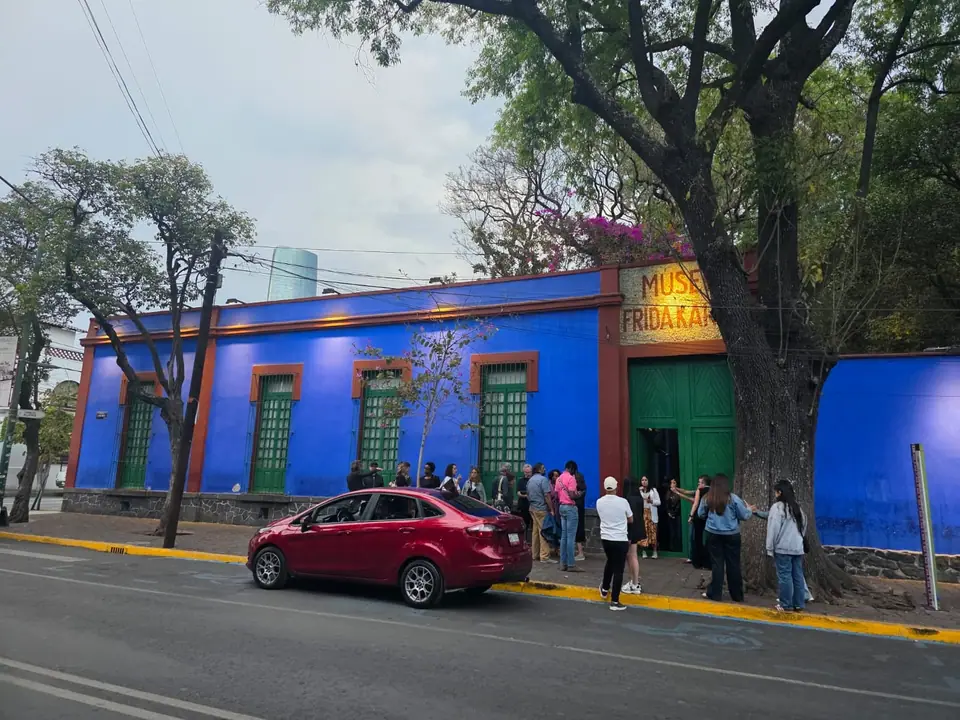
Frida Kahlo Museum (La Casa Azul): Booking and Highlights
On the corner of Calle Londres 247 and Calle Allende in Colonia del Carmen stands La Casa Azul (The Blue House), where painter Frida Kahlo was born on 6 July 1907, lived for much of her life with muralist Diego Rivera, and died on 13 July 1954. Built in 1904 by her father, German-born architectural photographer Guillermo Kahlo, and donated by Diego Rivera after Frida's death to open as a public museum in July 1958, the cobalt-blue courtyard house preserves the couple's personal art collection, pre-Hispanic terracotta figures, bright yellow-and-blue tiled Mexican kitchen, Frida's wheelchair and easel (gifted by Nelson Rockefeller) inside her glass-walled upstairs studio, and her painted plaster corsets and Tehuana dresses.
Crucial booking rule: The Frida Kahlo Museum does not have a ticket office at the entrance and never sells walk-up tickets on the day. Every visitor must purchase a date- and time-stamped digital ticket in advance via the official museum website (which also includes admission to Diego Rivera's volcanic-stone pyramid museum, the Museo Anahuacalli, a ten-minute ride south in San Pablo Tepetlapa). The museum is closed every Monday.
Leon Trotsky Museum, Jardín Centenario and Mercado de Coyoacán
Four blocks north-east of La Casa Azul on Avenida Río Churubusco 410 stands the Museo Casa de León Trotsky. Granted political asylum in Mexico by President Lázaro Cárdenas at the urging of Diego Rivera in 1937, exiled Russian revolutionary Leon Trotsky and his wife Natalia Sedova moved into this fortified residence on Calle Viena in May 1939 after falling out with Rivera. Bullet holes from the failed May 1940 machine-gun raid led by painter David Alfaro Siqueiros are still visible on the bedroom walls, alongside the study where Ramón Mercader mortally wounded Trotsky on 20 August 1940, brick watchtowers, and the garden stele holding Trotsky's ashes.
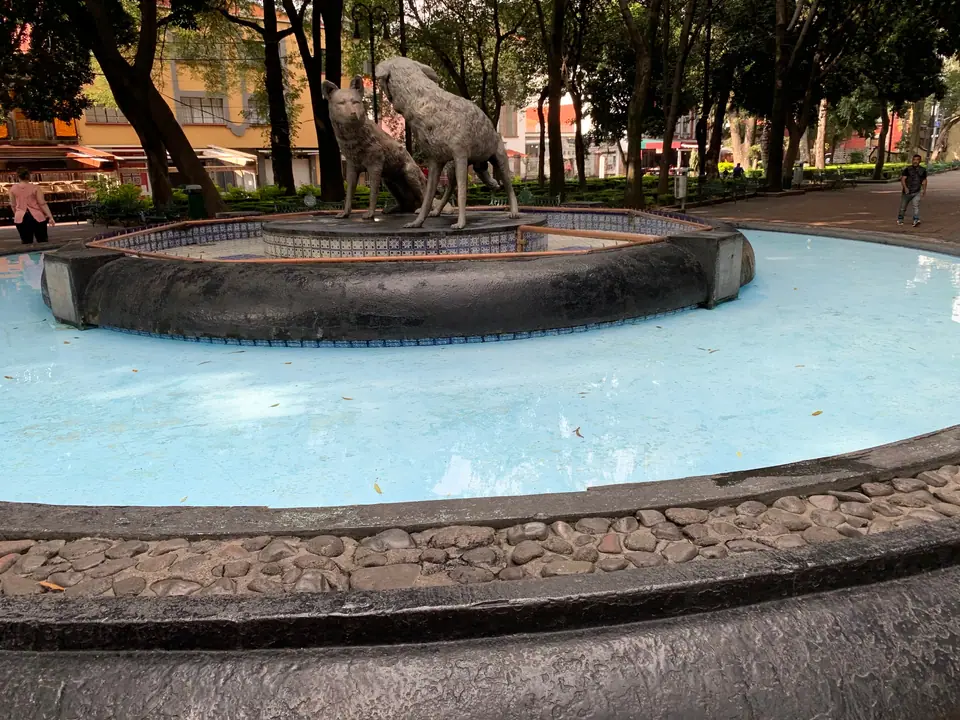
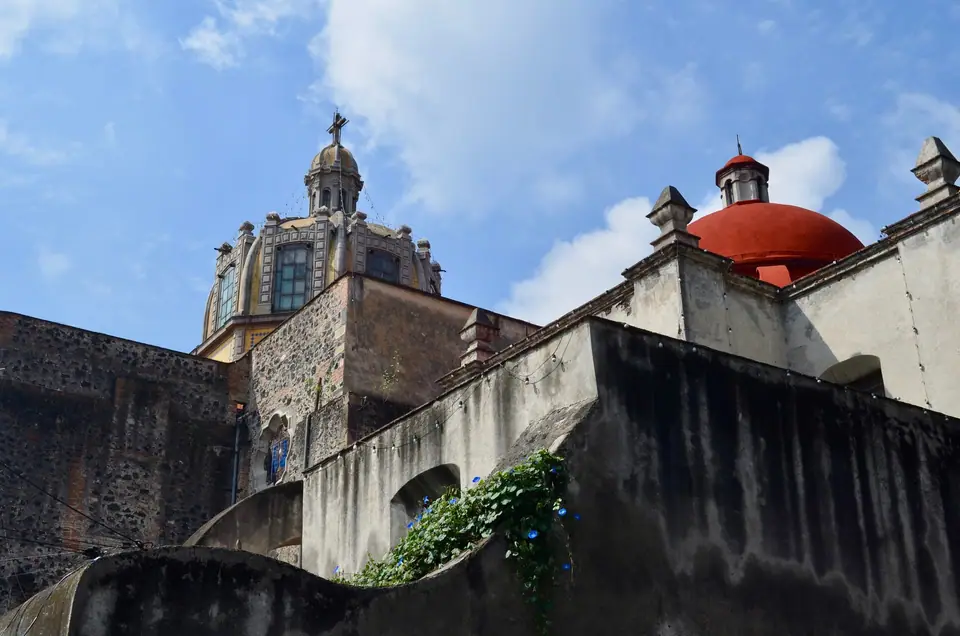
Walk ten minutes south down Calle Ignacio Allende past the food stalls of Mercado de Coyoacán (famous for crisp seafood and tinga tostadas and fried quesadillas) to the borough's twin central squares, Plaza Hidalgo and Jardín Centenario. Here Gabriel Ponzanelli's bronze Fuente de los Coyotes fountain faces the sixteenth-century former Franciscan convent and Parish Church of San Juan Bautista (built between 1522 and 1552), while three blocks east down Calle Francisco Sosa lies the Viveros de Coyoacán tree nursery park.
Combining Coyoacán with San Ángel and UNAM
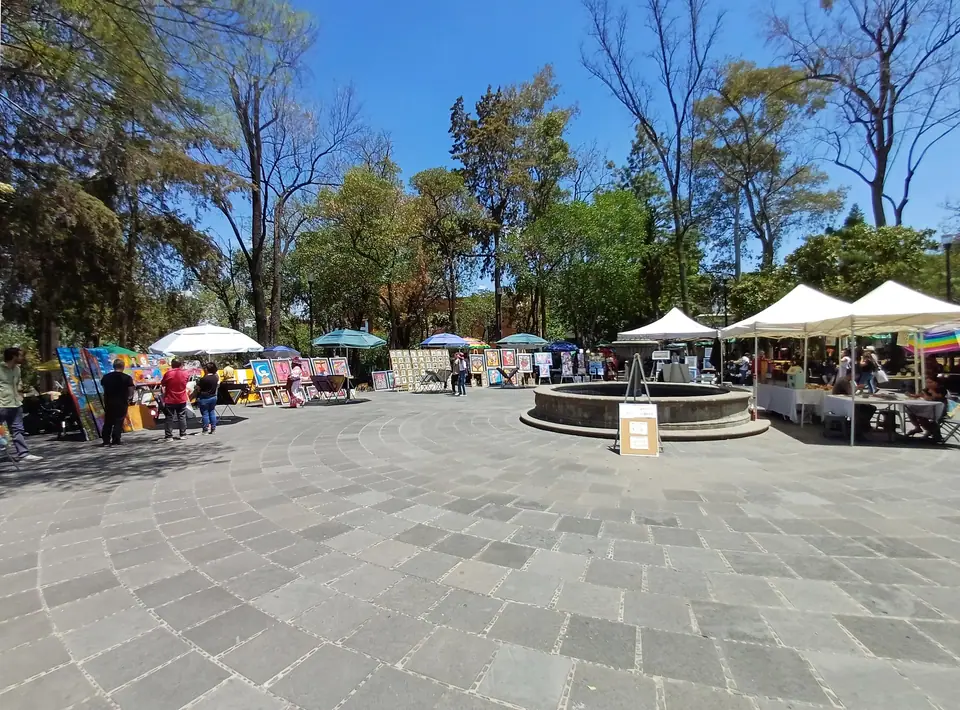
A twenty-minute walk west along tree-shaded Calle Francisco Sosa (or a short taxi ride across Avenida Insurgentes Sur) brings you into San Ángel in neighbouring Álvaro Obregón. Designed by Juan O'Gorman in 1931 to 1932, the Museo Casa Estudio Diego Rivera y Frida Kahlo pairs two functionalist concrete studio cubes, one red-orange for Diego and one blue for Frida, joined by a narrow rooftop bridge and fenced with live organ-pipe cacti. Nearby, the seventeenth-century Carmelite convent of the Museo de El Carmen displays colonial religious art and preserved crypt mummies, and every Saturday artists set up the open-air Bazar Sábado around Plaza San Jacinto. You can easily pair a morning here with the UNAM campus or an afternoon trip south to Xochimilco as outlined in the 3-day Mexico City itinerary.
Traveller tips
Real advice from people who have been to Coyoacán, Frida Kahlo Museum (La Casa Azul) and San Ángel. Every tip is read by our team before it goes live.
No tips yet. Been here? Yours could be the first.
Thank you! Your tip will appear here after a quick review.
More in Mexico City
Continue exploring Mexico City with related neighbourhood, food, and planning guides
Getting Around Mexico City: Metro, Metrobús, Tarjeta MI, Ecobici and Cablebús
Mexico City, Mexico
Zócalo and Centro Histórico: Tenochtitlan's Templo Mayor, Cathedral and Palaces
Mexico City, Mexico
Chapultepec Park, Chapultepec Castle and the National Museum of Anthropology
Mexico City, Mexico
Xochimilco Floating Gardens: Chinampas, Trajineras, Embarcaderos and Canal Fares
Mexico City, Mexico
