


























Roma Norte and Condesa Guide: Art Deco Parks, Porfirian Plazas and Café Streets
Walking Mexico City's two most popular inner neighbourhoods, from Plaza Río de Janeiro and Avenida Álvaro Obregón in Roma Norte to Parque México and Avenida Ámsterdam in Condesa.
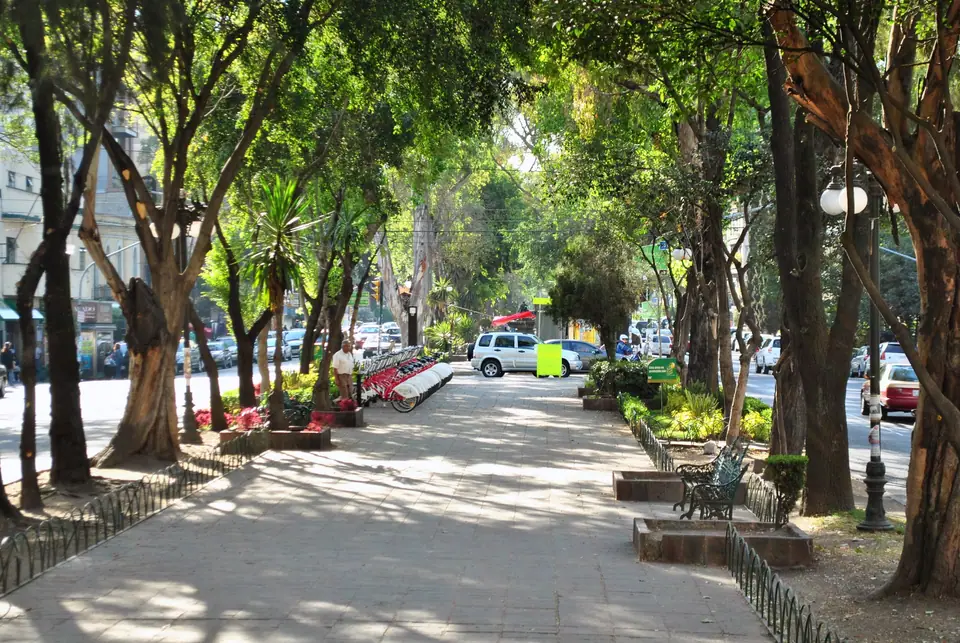
Separated only by the Metrobús corridor of Avenida de los Insurgentes, the adjoining neighbourhoods of Colonia Roma (especially its northern half, Roma Norte) and Colonia Condesa (comprising Condesa, Hipódromo, and Hipódromo Condesa) form the most walkable residential and dining district in Mexico City. Both were laid out during the early twentieth-century expansion westward from the Centro Histórico toward Bosque de Chapultepec, and both were designated official Barrios Mágicos Turísticos of the capital in 2011.
Colonia Roma Norte: Porfirian Boulevards and Plaza Río de Janeiro
Subdivided beginning in 1902 on the former pastures of the Potreros de la Romita by developer Edward Walter Orrin (owner of the famous Circo Orrin, who named the streets after Mexican cities where his circus had performed, such as Orizaba, Córdoba, Jalapa, Colima, and Tabasco), Colonia Roma was engineered with wide paved streets, double rows of trees, and central landscaped medians (camellones) inspired by late nineteenth-century Paris. Walk a three-stop loop through Roma Norte:
- Avenida Álvaro Obregón: Running east-west across the neighbourhood, this wide boulevard centres on a continuous tree-shaded pedestrian median lined with tiered stone fountains, weekend art and antique stalls, neoclassical mansions, and some of the city's best cocktail bars and bistros.
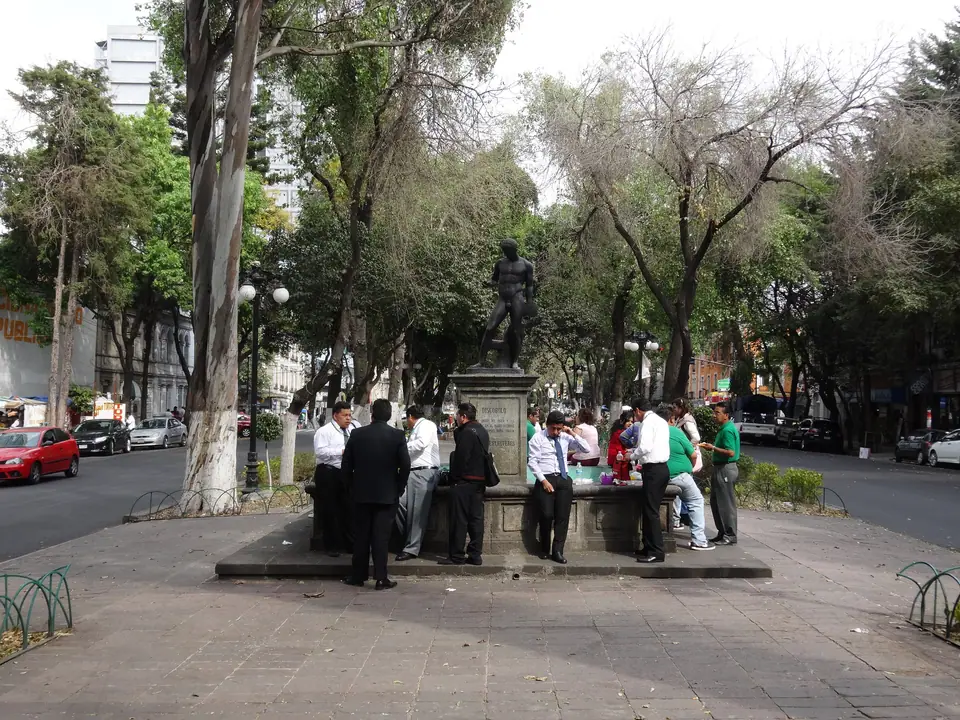
- Plaza Río de Janeiro: Two blocks north of Álvaro Obregón along Calle Orizaba, this leafy rectangular park is anchored at its centre by a bronze replica of Michelangelo's David (installed in 1976) and framed by early twentieth-century eclectic brick buildings, including the turreted, ivy-draped 1908 townhouse known locally as the Casa de las Brujas (House of the Witches).
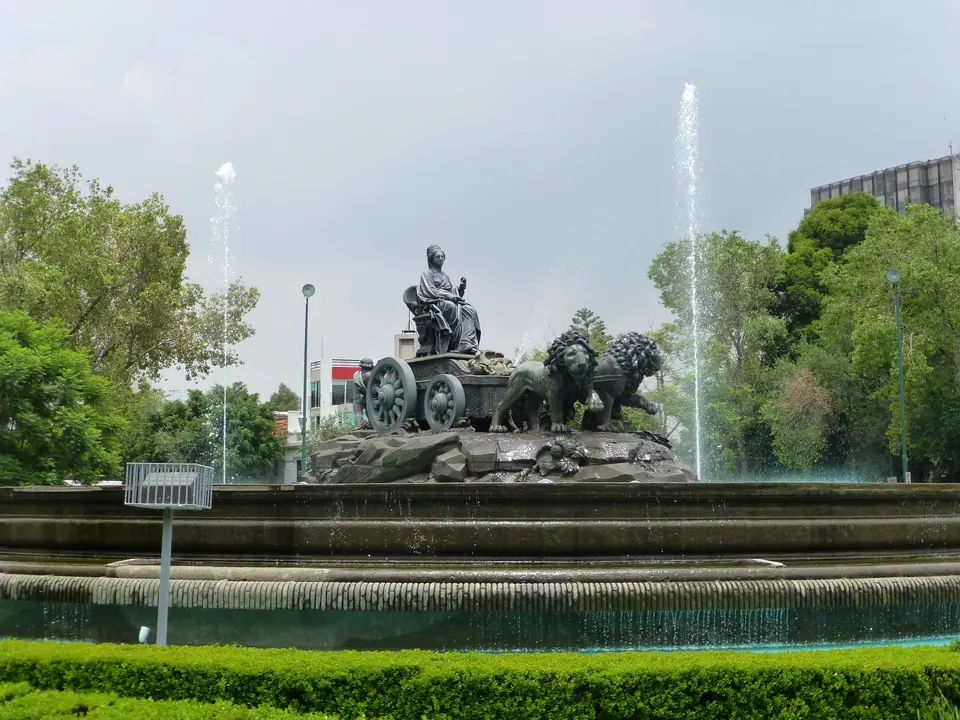
- Calle Colima, Plaza Luis Cabrera and Fuente de Cibeles: Stroll west along Calle Colima past galleries, independent bookshops, and panaderías toward Plaza Villa de Madrid, where a full-scale bronze replica of Madrid's Fuente de Cibeles (donated by the Spanish immigrant community and inaugurated in 1980) sits at the junction of Oaxaca, Durango, Medellín, and El Oro. Further south in Roma Sur, Mercado de Medellín supplies tropical fruit, Oaxacan cheeses, and Yucatecan cochinita pibil discussed in the Mexico City food guide.
Colonia Condesa and Hipódromo: Parque México and Avenida Ámsterdam
Cross Avenida Insurgentes west (at Sonora/Insurgentes or Campeche) and the architectural mood shifts from Belle Époque stone mansions to 1920s and 1930s Art Deco, Streamline Moderne, and California Neo-Colonial apartment blocks. When the Jockey Club of Mexico closed its Hipódromo de la Condesa racecourse in the mid-1920s, architects José Luis Cuevas and Leonardo Noriega preserved the elliptical geometry of the old horse track in the street plan of Colonia Hipódromo:
- Avenida Ámsterdam: This two-kilometre oval street traces the exact loop of the former racetrack. Its raised, tree-tunnelled central pedestrian footpath (camellón) lets you walk a complete circuit around the neighbourhood beneath ash, jacaranda, and ficus trees without leaving the shade, passing circular concrete benches, Art Deco doorways, and outdoor coffee tables at Citlaltépetl, Iztaccíhuatl, and Popocatépetl roundabouts.
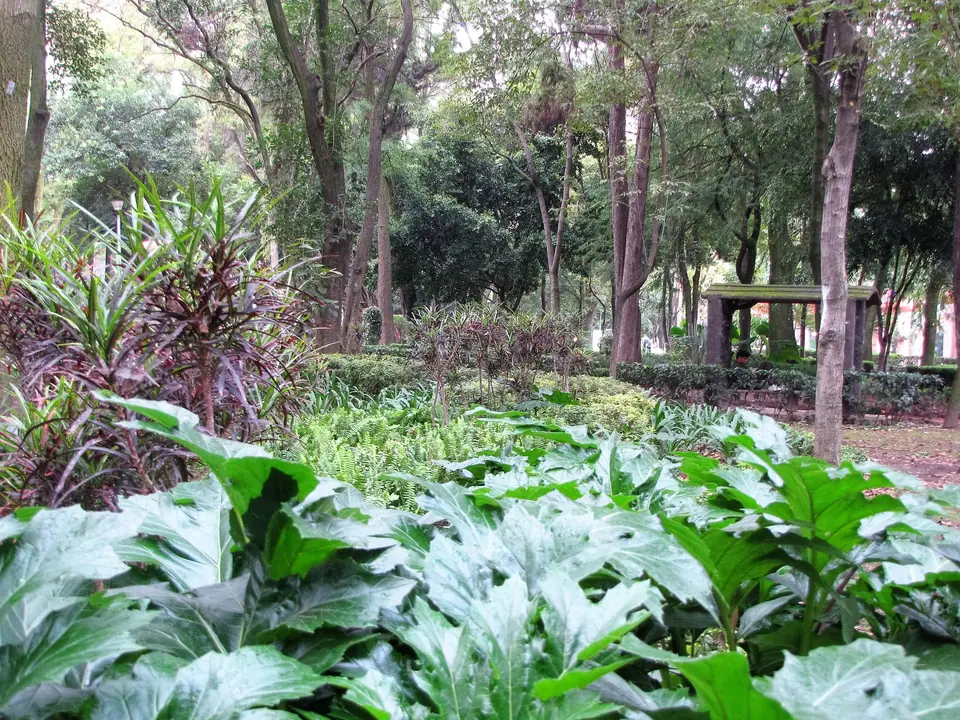
- Parque México (Parque General San Martín): Occupying nine hectares at the centre of the Avenida Ámsterdam oval and inaugurated in 1927, Parque México is the social heart of Condesa, featuring curved Art Deco pergolas, bamboo groves, duck ponds, the 1927 steel clock tower, and the open-air Foro Lindbergh amphitheatre backed by five monumental concrete pillars and murals by Roberto Montenegro.
- Parque España: Just north of Parque México, this smaller triangular park (opened in 1921 to mark the centenary of Mexican independence) leads directly toward the southern gates of Chapultepec Park and the hotel options covered in the where to stay in Mexico City guide.
Traveller tips
Real advice from people who have been to Roma Norte and Condesa Guide: Art Deco Parks, Porfirian Plazas and Café Streets. Every tip is read by our team before it goes live.
No tips yet. Been here? Yours could be the first.
Thank you! Your tip will appear here after a quick review.
More in Mexico City
Continue exploring Mexico City with related neighbourhood, food, and planning guides
How to Get to Mexico City: AICM (MEX), Felipe Ángeles (AIFA) and Bus Terminals
Mexico City, Mexico
Best Time to Visit Mexico City: Subtropical Highland Climate, Jacarandas and Festivals
Mexico City, Mexico
Where to Stay in Mexico City: Comparing Roma Norte, Condesa, Reforma, Polanco and Centro
Mexico City, Mexico
3 Days in Mexico City Itinerary: Centro, Chapultepec, Roma, Coyoacán and Xochimilco
Mexico City, Mexico
