


























Zócalo and Centro Histórico: Tenochtitlan's Templo Mayor, Cathedral and Palaces
Exploring UNESCO-listed Centro Histórico across the Zócalo, Metropolitan Cathedral, Templo Mayor ruins, National Palace murals, Bellas Artes, and Torre Latinoamericana.
Inscribed on the UNESCO World Heritage List in 1987, the Historic Centre of Mexico City (Centro Histórico) spans roughly nine square kilometres and more than 1,500 classified historic buildings erected directly atop the island capital of Mexico-Tenochtitlan. Because the entire district rests on the compressible clay bed of drained Lake Texcoco, centuries of groundwater extraction have caused uneven soil subsidence across the centre, giving sixteenth- and seventeenth-century churches tilted facades and undulating stone floors.
The Zócalo (Plaza de la Constitución) and Metropolitan Cathedral
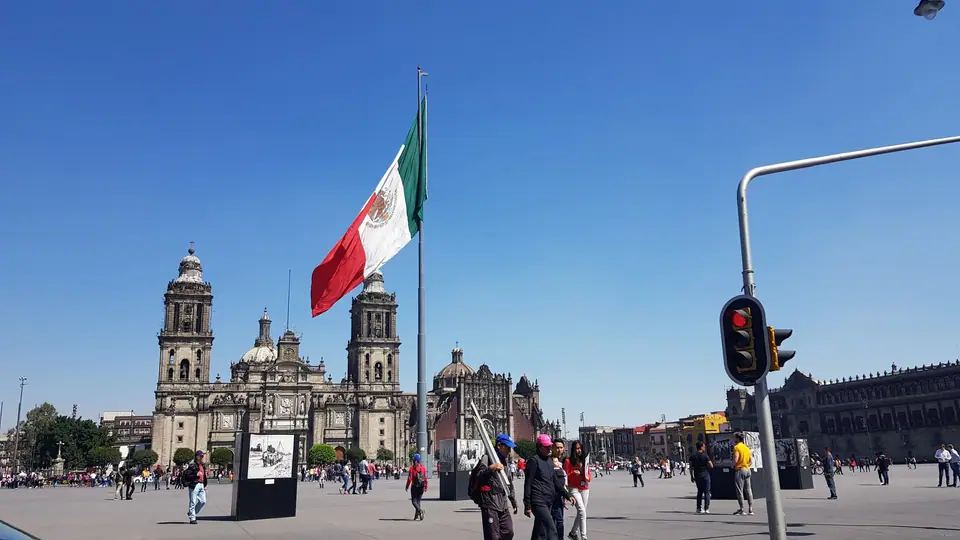
Measuring roughly 240 by 240 metres (57,600 square metres), the Plaza de la Constitución is one of the largest public squares in the world. It earned its universal nickname, el Zócalo (meaning plinth or pedestal), in 1843 when President Antonio López de Santa Anna laid a stone base in the centre of the square for an independence monument that was never erected; today a giant Mexican national flag flies from the central flagpole, raised and lowered daily by military ceremony.
Dominating the northern flank of the Zócalo, the Mexico City Metropolitan Cathedral (Catedral Metropolitana de la Asunción de la Santísima Virgen María a los Cielos) is the largest cathedral in the Americas, measuring 128 metres long by 59 metres wide with twin bell towers rising 67 metres. Construction began in 1573 under architect Claudio de Arciniega adjacent to Cortés's earlier church and concluded in 1813 under Manuel Tolsá, blending Renaissance vaults, Churrigueresque baroque portals, and neoclassical domes. Step inside to see the gilded eighteenth-century Altar de los Reyes (Altar of the Kings) by Jerónimo de Balbás and the adjacent Sagrario Metropolitano, and observe the central plumb line hanging from the nave ceiling that tracks ongoing differential settlement remediation.
Templo Mayor Archaeological Zone and the National Palace
Just outside the cathedral's north-eastern corner lies the Templo Mayor (Huey Teocalli), the sacred ceremonial heart of Tenochtitlan built in seven overlapping stages between 1325 and 1521 and crowned by twin shrines to Huitzilopochtli and Tlaloc. After electrical workers unearthed the monumental relief disc of the dismembered moon goddess Coyolxauhqui on 21 February 1978, archaeologist Eduardo Matos Moctezuma directed the Proyecto Templo Mayor excavations. Elevated boardwalks thread past carved stone serpent heads, the Tzompantli (skull rack) platform, the House of the Eagles, and the eight-level on-site museum housing the Coyolxauhqui and Tlaltecuhtli monoliths (compare these Mexica carvings with the Sun Stone in the National Museum of Anthropology).
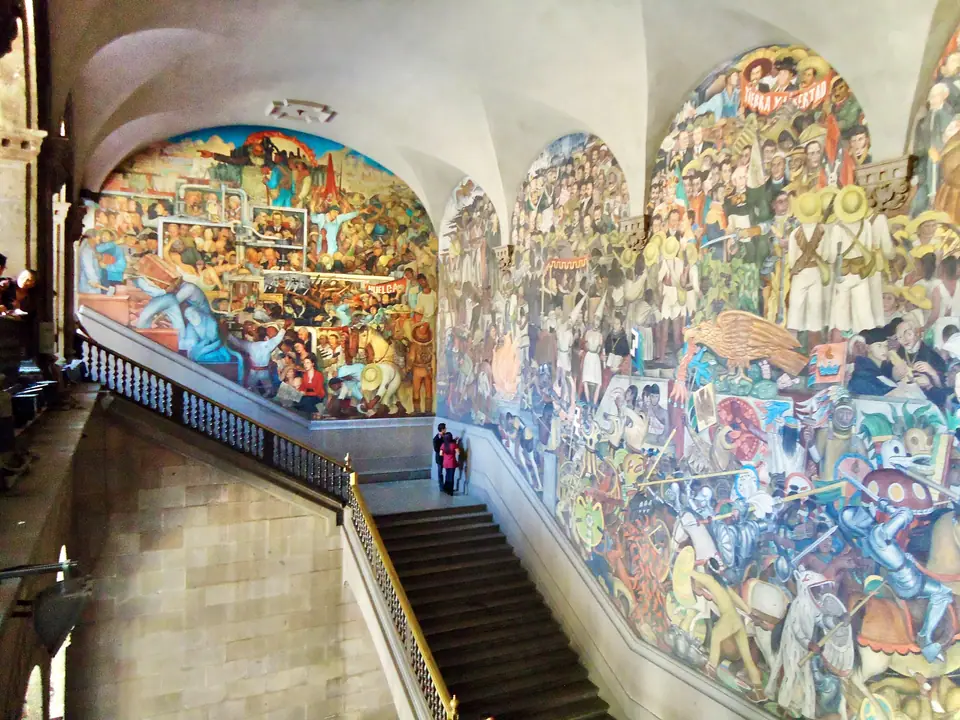
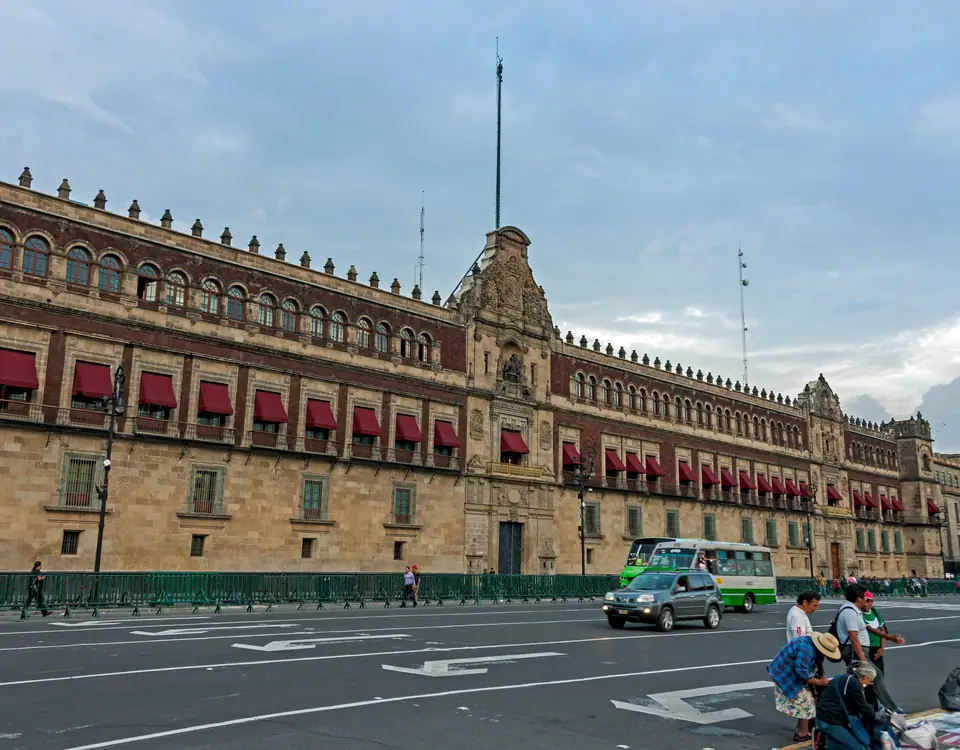
Along the entire 200-metre eastern side of the Zócalo stands the Palacio Nacional (National Palace), clad in blood-red volcanic tezontle stone and quarry limestone on the site of Moctezuma II's New Houses. Serving as the seat of the federal executive, the palace contains the central bell from Dolores rung by Father Miguel Hidalgo in 1810 above its main balcony and Diego Rivera's vast fresco cycle The History of Mexico (painted 1929 to 1935) around the main stairwell, along with second-floor panels depicting pre-Hispanic market life in Tlatelolco. Check the official presidency visitor desk rules and bring a valid government photo ID to join scheduled guided tours.
Calle Madero, Palacio Postal, Bellas Artes and Torre Latinoamericana
From the Zócalo's western edge (reached directly at Zócalo/Tenochtitlan or Allende stations on the Mexico City Metro), pedestrianised Avenida Francisco I. Madero leads six blocks west to Alameda Central through the city's densest concentration of vice-regal and Porfirian landmarks:
- Casa de los Azulejos: The eighteenth-century palace of the Counts of the Valley of Orizaba, faced entirely in blue-and-white Talavera tiles from Puebla and housing a 1925 José Clemente Orozco mural (Omniscience) on its staircase alongside the flagship Sanborns café.
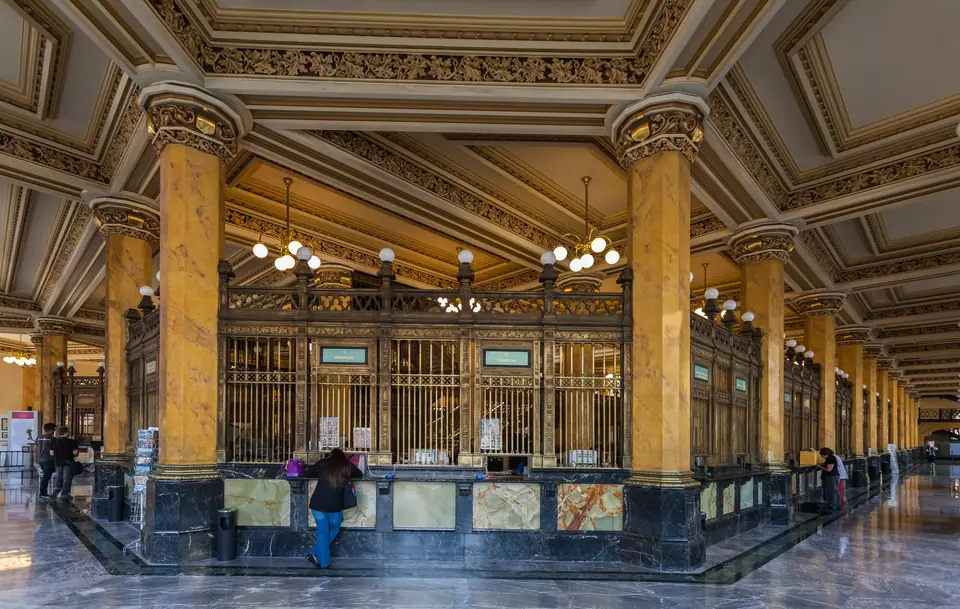
- Palacio Postal (Quinta Casa de Correos): Designed by Italian architect Adamo Boari and military engineer Gonzalo Garita and opened in 1907, featuring Plateresque stonework and a soaring interior hall of gilded bronze and cast iron cast in Florence.
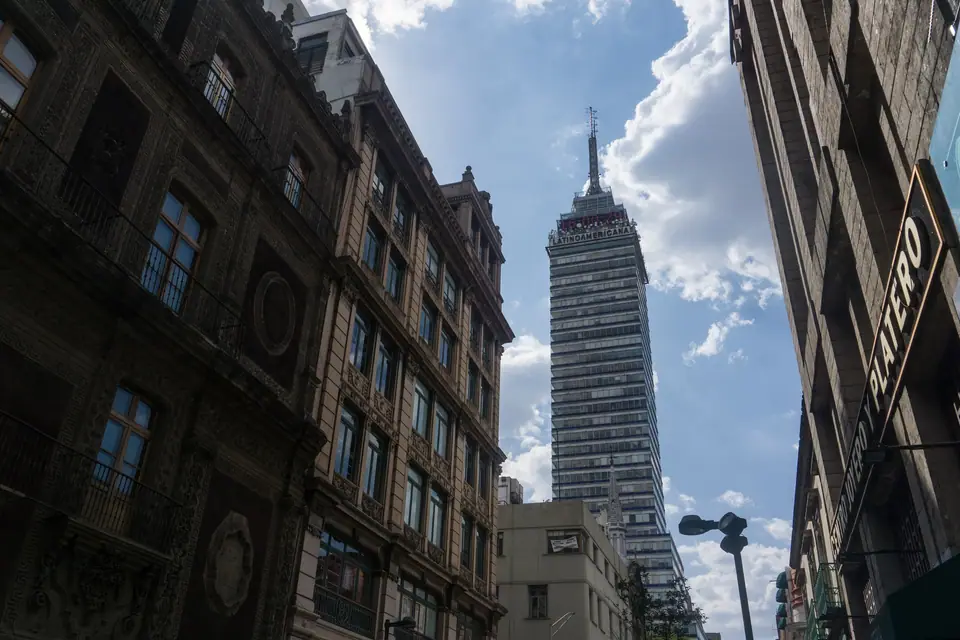
- Torre Latinoamericana: Completed in 1956 at the corner of Madero and Eje Central (182 metres tall to its antenna tip across forty-four storeys), this seismic-engineered skyscraper withstood the 1957, 1985, and 2017 earthquakes; its top-floor Mirador offers unobstructed 360-degree views over Palacio de Bellas Artes, Alameda Central (founded in 1592 as the oldest public park in the Americas), and the routes in the 3-day Mexico City itinerary.
Traveller tips
Real advice from people who have been to Zócalo and Centro Histórico: Tenochtitlan's Templo Mayor, Cathedral and Palaces. Every tip is read by our team before it goes live.
No tips yet. Been here? Yours could be the first.
Thank you! Your tip will appear here after a quick review.
More in Mexico City
Continue exploring Mexico City with related neighbourhood, food, and planning guides
3 Days in Mexico City Itinerary: Centro, Chapultepec, Roma, Coyoacán and Xochimilco
Mexico City, Mexico

What to Eat in Mexico City: Tacos al Pastor, Chilaquiles, Pozole, Tlacoyos and Churros
Mexico City, Mexico
Getting Around Mexico City: Metro, Metrobús, Tarjeta MI, Ecobici and Cablebús
Mexico City, Mexico
Chapultepec Park, Chapultepec Castle and the National Museum of Anthropology
Mexico City, Mexico
