


























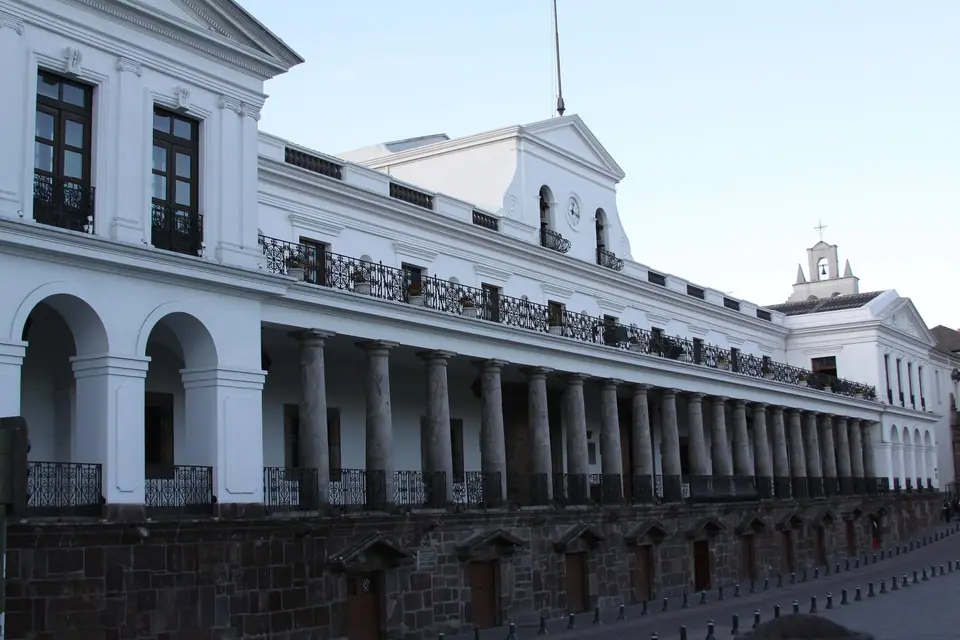
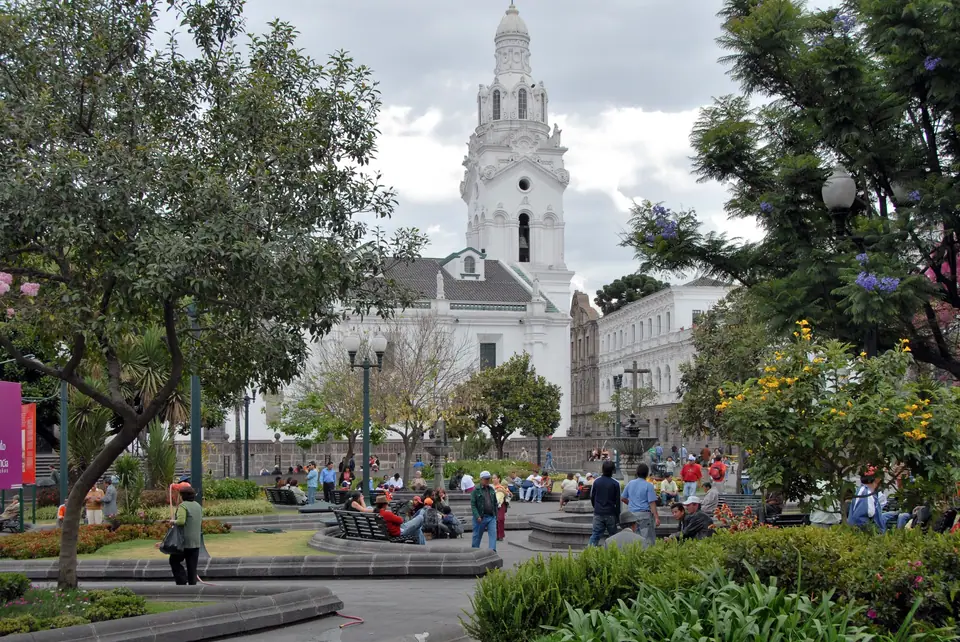
Plaza Grande, Carondelet Palace and the Metropolitan Cathedral of Quito
Walk the civic and ecclesiastical heart of Quito at Plaza de la Independencia, flanked by Palacio de Carondelet, the 1562 Metropolitan Cathedral, and the Archbishop's Palace.
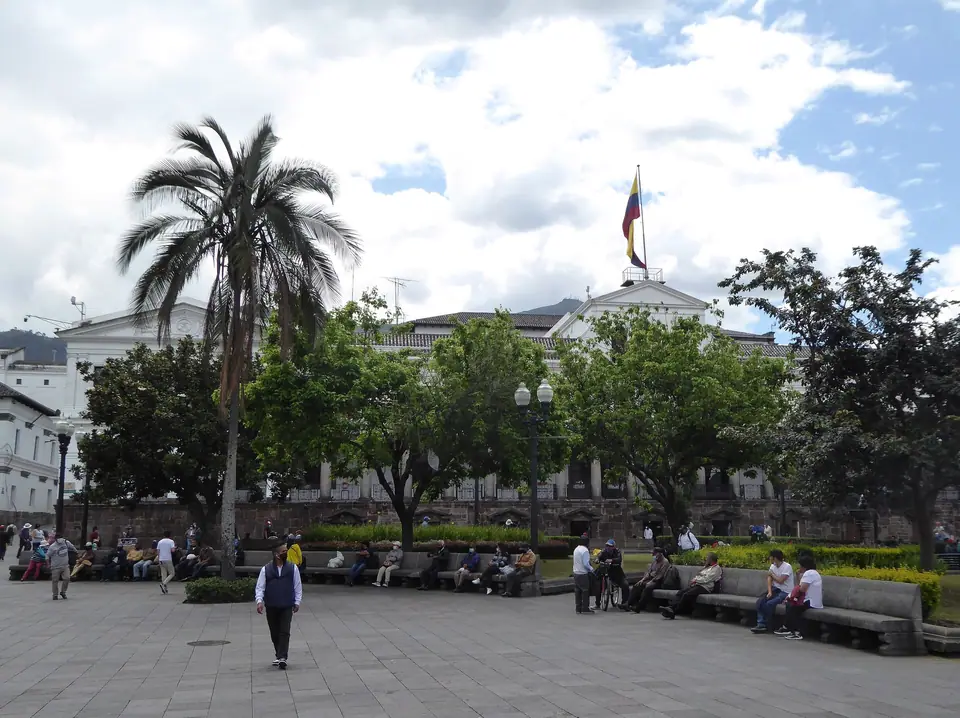
Located at 2,818 metres elevation in the centre of the 1534 colonial grid, Plaza de la Independencia, universally known to locals as Plaza Grande, serves as the civic living room of Ecuador. Four historic institutional buildings frame its palm-shaded gardens: the Presidential Palacio de Carondelet to the west, the whitewashed Catedral Metropolitana to the south, the seventeenth-century Palacio Arzobispal (Archbishop's Palace) to the north, and the modern Palacio Municipal to the east. At the centre of the square rises the 1906 Monumento a la Independencia (called La Libertad by Quitenos), cast in Europe by Italian sculptors Adriatico Froli and Francisco Durini to honour the patriots of the 10 August 1809 Primer Grito de la Independencia, South America's earliest Creole autonomy movement against Spanish rule. Combine your visit here with nearby La Compania de Jesus and Plaza San Francisco.
Palacio de Carondelet and the Archbishop's Palace
Occupying the entire western flank of Plaza Grande, Palacio de Carondelet serves as the official seat of the President of the Republic of Ecuador. Simon Bolivar himself bestowed the name after admiring the graceful neoclassical stone colonnade commissioned between 1799 and 1807 by Baron Francisco Luis Hector de Carondelet, President of the Royal Audience of Quito. Above the grand main staircase inside the palace hangs a monumental three-panel mural painted in 1957 by Oswaldo Guayasamin depicting Francisco de Orellana's 1542 expedition from Quito down the Amazon River. Across the northern side of the square, the two-storey courtyard arcades of the Palacio Arzobispal house traditional sweet stalls (mistelas), bakeries, and artisan shops.
Catedral Metropolitana de Quito and Iglesia de El Sagrario
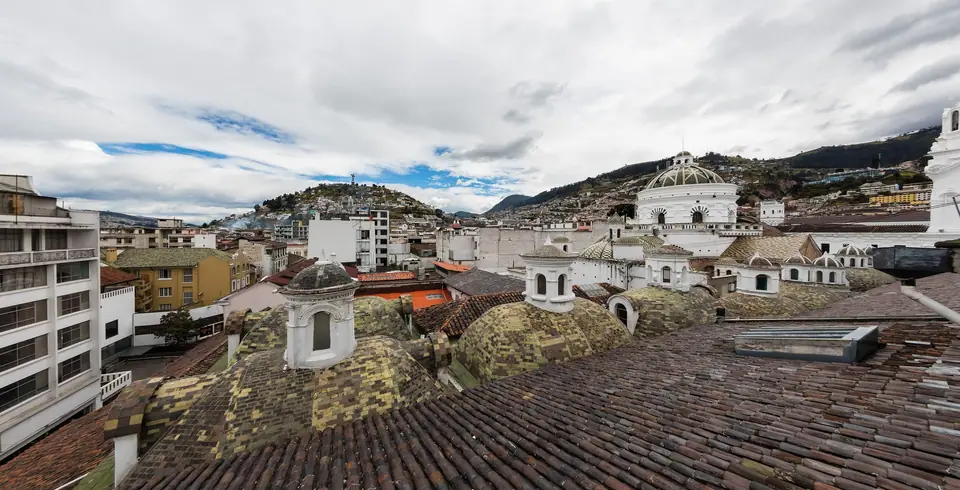
- Catedral Metropolitana (Primada) de Quito: Constructed between 1562 and 1567 under Bishop Pedro de la Pena and repeatedly restored after seventeenth- and nineteenth-century earthquakes, the cathedral turns its long northern flank toward Plaza Grande rather than its main facade, connected to the square by the semicircular stone staircase and triumphal arch of La Circasiana.
- Quito School masterpieces and Sucre's tomb: Beneath the carved cedar Mudéjar ceiling hang paintings by Bernardo Rodriguez and Manuel Samaniego, while the high choir displays The Descent from the Cross (La Sabana Santa) sculpted by Manuel Chili (Caspicara). A dedicated chapel guards the marble sarcophagus of Grand Marshal Antonio Jose de Sucre, whose victory at the Battle of Pichincha on 24 May 1822 on the volcano slopes directly above the square secured Quito's independence.
- Iglesia de El Sagrario: Immediately adjacent on Calle Garcia Moreno stands the Renaissance-Baroque chapel of El Sagrario (built 1699 to 1717 by architect Jose Jaime Ortiz), notable for its gilded central dome and intricately carved wooden interior screen (mampara) crafted by Bernardo de Legarda.
Traveller tips
Real advice from people who have been to Plaza Grande, Carondelet Palace and the Metropolitan Cathedral of Quito. Every tip is read by our team before it goes live.
No tips yet. Been here? Yours could be the first.
Thank you! Your tip will appear here after a quick review.
More in Quito
Continue exploring Quito with related neighbourhood, food, and planning guides
Cotopaxi National Park and Otavalo Market Day Trips from Quito
Quito, Ecuador
Quito: Essential Planning for Ecuador's Andean Capital
Quito, Ecuador
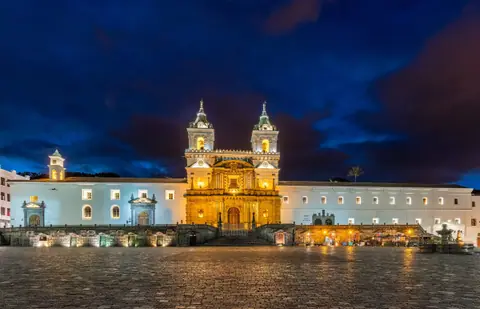
Things to Do in Quito: Baroque Gold Churches, Volcanoes and the Equator
Quito, Ecuador
How to Get to Quito: Mariscal Sucre Airport (UIO), Metro and Bus Terminals
Quito, Ecuador
