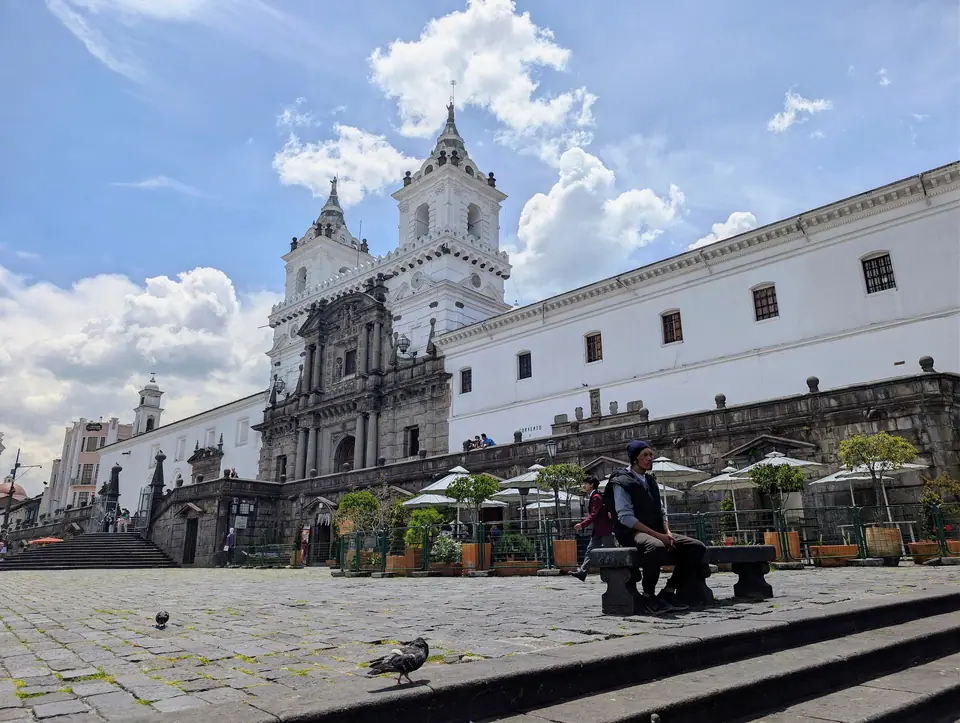
Plaza San Francisco, the 1535 Franciscan Convent and Calle La Ronda
Explore Quito's oldest and largest monastic complex at Iglesia y Convento de San Francisco (begun 1535), then stroll down bohemian Calle La Ronda.
Weeks after Quito's Spanish foundation in December 1534, Flemish Franciscan friars Jodoco Ricke and Pedro Gocial acquired a vast terrace at the foot of Pichincha where Inca generals had maintained storage palaces and military barracks. Beginning in 1535, they raised Iglesia y Convento de San Francisco, the oldest and largest architectural ensemble in historic South America, covering 3.5 hectares (nearly 40,000 square metres of built area) across 13 cloisters and three churches. Today, its sloping volcanic-stone plaza links seamlessly with the San Francisco station of the Quito Metro and lies a short walk from La Compania de Jesus and Plaza Grande.
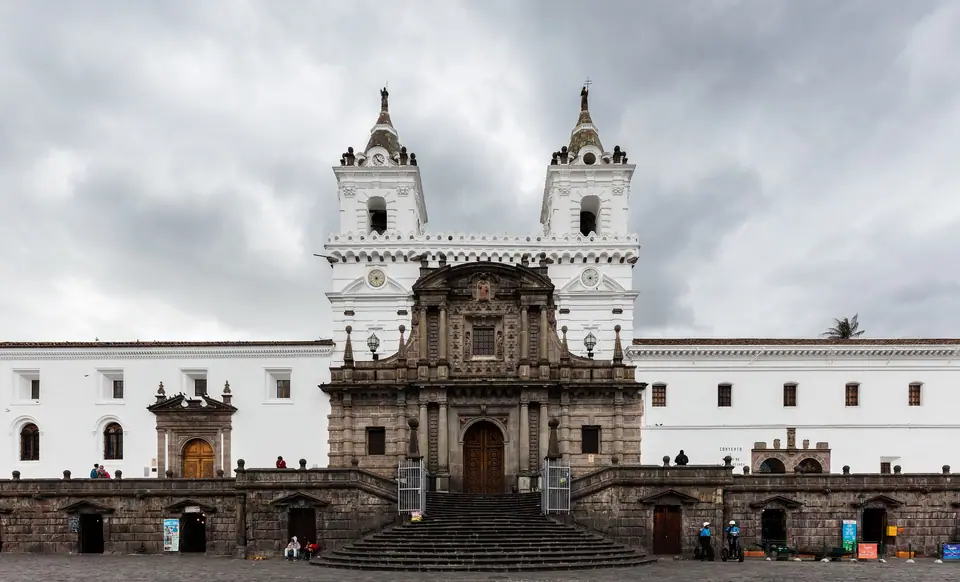
Inside the Main Church and the Legend of Cantuna
Because Plaza San Francisco slopes from west to east, sixteenth-century builders levelled the church terrace with a long Italianate stone atrium and a concave-convex semicircular staircase patterned after an architectural drawing by Sebastiano Serlio. According to Quito legend, indigenous builder Cantuna compacted with the devil to finish the atrium before dawn in exchange for his soul, only to be saved when the workers failed to place one final stone.
Bernardo de Legarda's 1734 Winged Virgin of Quito
Inside the main church, Mudéjar coffered woodwork over the nave and transept frames the main altar, where Bernardo de Legarda's 1734 polychrome sculpture of the Virgen de Quito (the Winged Virgin of the Apocalypse, dancing atop a chained dragon with silver wings) stands as the signature emblem of the Quito School.
Cloisters, Pedro Gocial Museum and the 1566 Franciscan Brewery
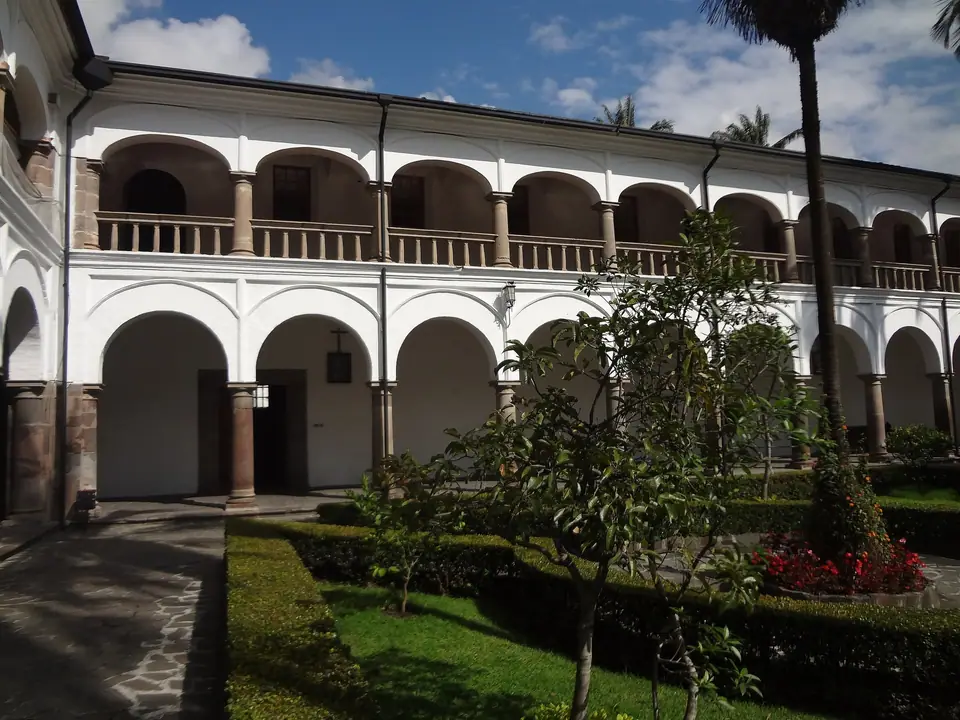
Attached to the main sanctuary, the Museo de Arte Religioso Pedro Gocial leads visitors through the two-tier main cloister (completed 1605 around a central garden with native palms and parakeets), displaying selections from over 3,500 colonial paintings and sculptures alongside the vaulted cellars of the 1566 Franciscan brewery (Cerveceria Franciscana), where Jodoco Ricke introduced wheat and barley brewing to the Andes.
Walking Pedestrianised Calle La Ronda (Calle Juan de Dios Morales)
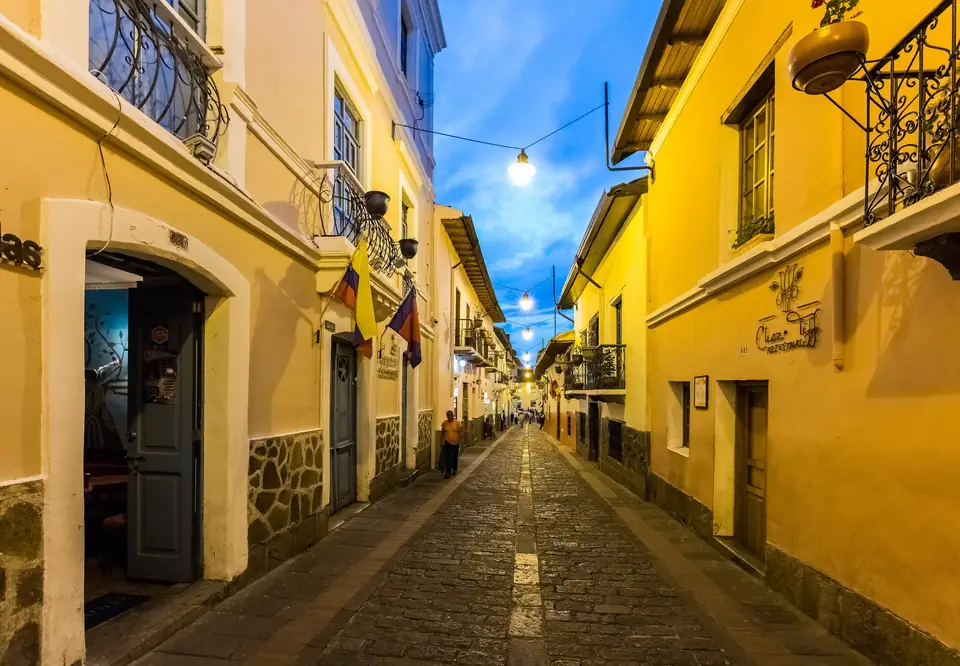
Four blocks south of Plaza San Francisco, narrow Calle Juan de Dios Morales, universally known as Calle La Ronda, follows the winding contour of an ancient pre-Hispanic ravine path that once carried water down from Pichincha. In the early twentieth century, this cobblestone lane became the gathering place for bohemian poets, composers of melancholic Ecuadorian pasillo music, and painters.
Artisan Courtyards Along Calle La Ronda
Restored as a pedestrian zone lined with geranium-draped wrought-iron balconies, narrow doorways open into internal courtyards where master artisans demonstrate hand-spun wooden tops (trompos), tinwork lanterns, handwoven straw hats, bean-to-bar chocolate making, and evening servings of empanadas de viento and hot canelazo.
Traveller tips
Real advice from people who have been to Plaza San Francisco, the 1535 Franciscan Convent and Calle La Ronda. Every tip is read by our team before it goes live.
No tips yet. Been here? Yours could be the first.
Thank you! Your tip will appear here after a quick review.
More in Quito
Continue exploring Quito with related neighbourhood, food, and planning guides