


























Buddha Tooth Relic Temple: Sacred Light Hall and Museum
Learn what to see at the Buddha Tooth Relic Temple, including etiquette and timing for your visit.
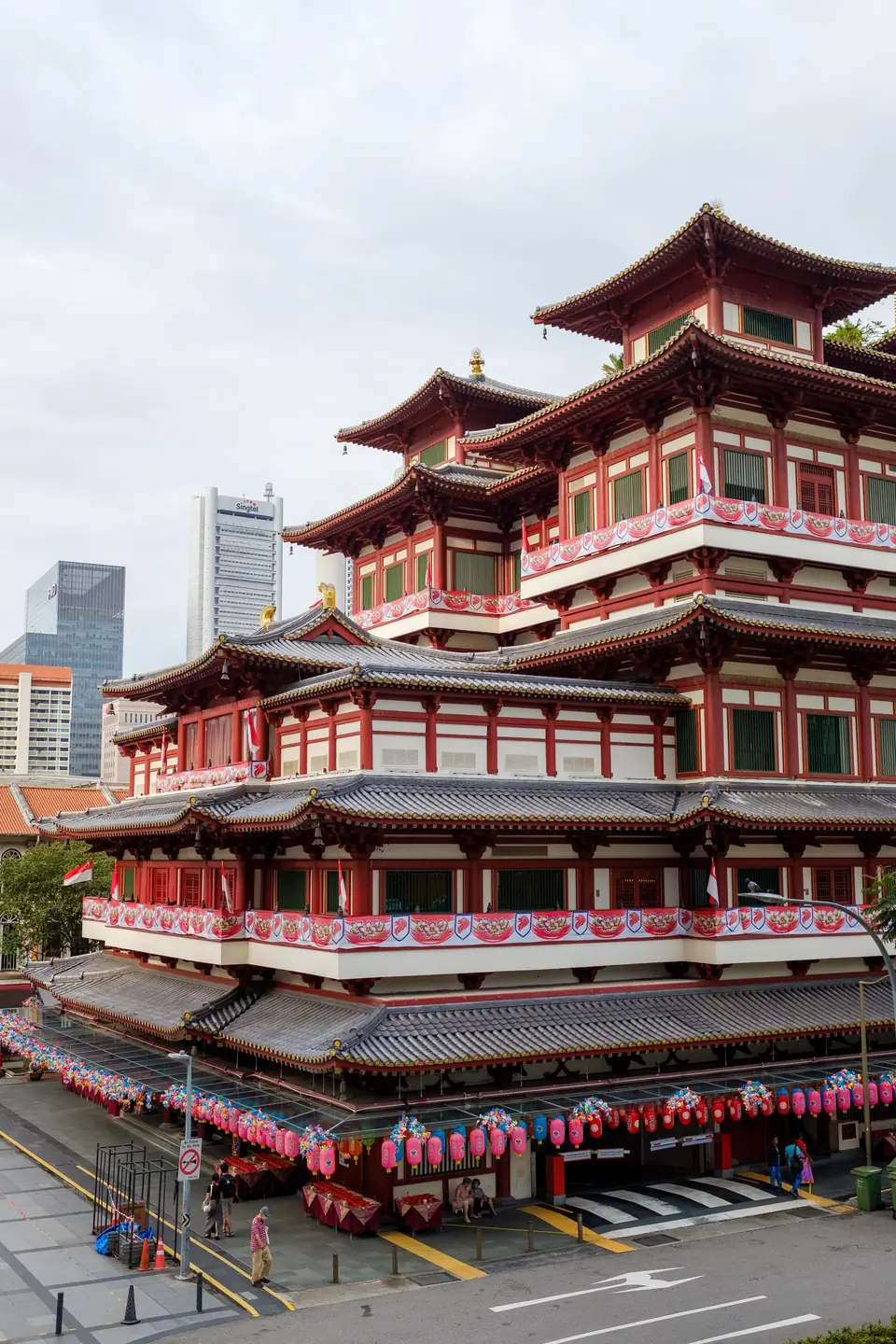
The Buddha Tooth Relic Temple is a large, red and gold temple in Chinatown. It opened in 2007 and was built in the style of the Tang dynasty, with a tiered roof, heavy wooden doors and detailed carving. The temple houses what is believed to be a tooth of the Buddha, and it is both an active place of worship and a museum, so visitors are asked to behave with respect.
Tang dynasty architecture
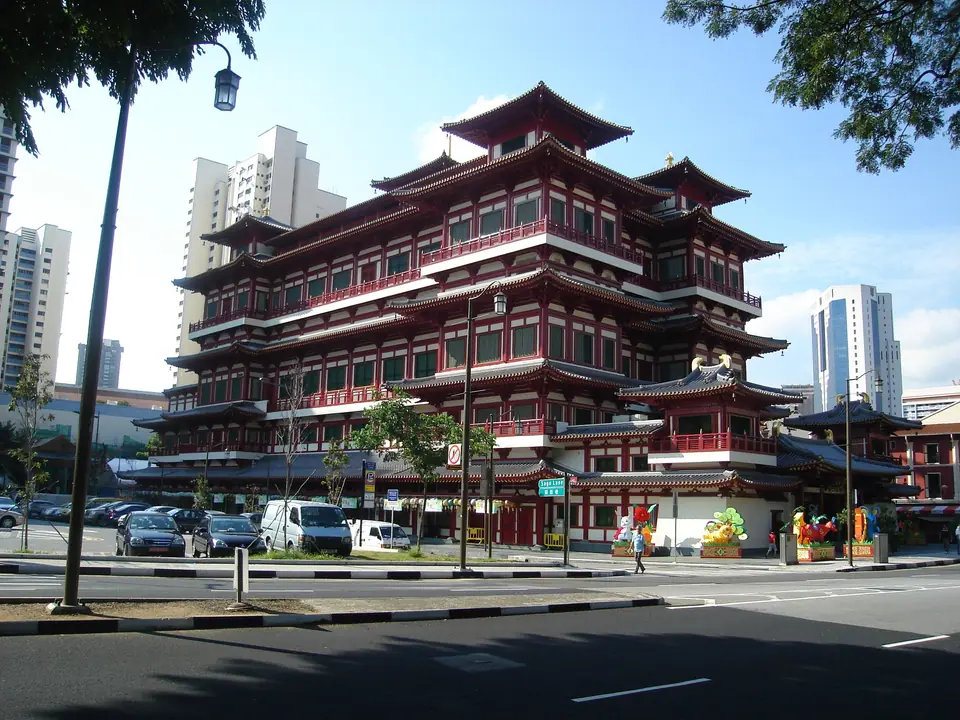
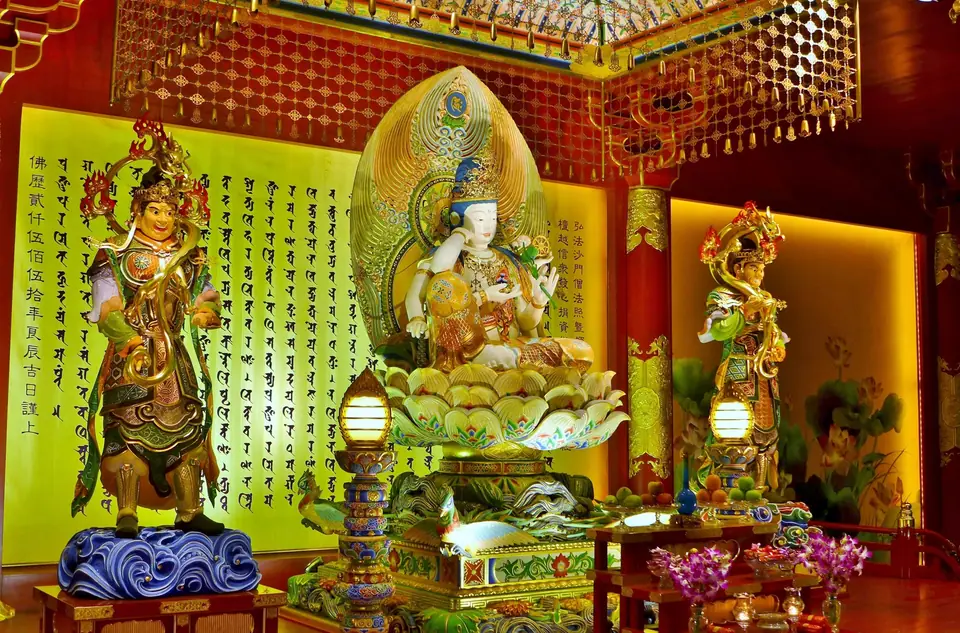
The temple faces a busy street, and its bold colour and large proportions stand out from the older shophouses around it. Four floors rise behind the entrance, and the main hall is decorated with lanterns, gilded statues and carved beams. Inside, the atmosphere changes from the street noise to a quiet, incense scented space, and the large statues of Maitreya, the future Buddha, dominate the entrance hall.
The sacred relic
The tooth is kept in a stupa made of gold on the upper floor, in a special chamber that visitors can approach quietly and look at from a distance. Photography is not allowed in some areas, and signs show which. Many visitors stay for a moment of quiet, and there is often chanting, so approach with care.
Museum and rooftop garden
One floor holds a museum of Buddhist culture, with sculptures, ritual objects and explanation panels about the faith across Asia. It is well laid out and provides context that makes the rest of the visit richer. On the roof, a quiet garden has a large prayer wheel, which visitors can turn, and a small pavilion with thousands of tiny Buddha figures. It is a place to sit away from the street.
Dress and manners
Cover your shoulders and knees, and take your shoes off where requested. Keep your voice low, do not point your feet toward statues and avoid touching offerings. You will see worshippers kneeling, and you should not walk in front of them. If you wear a hat, remove it inside. Staff may lend a shawl or wrap if you arrive in shorts, but it is better to be prepared.
Timing and visitor crowds
Mornings are quiet, and the building gets busier as tour groups arrive. Special ceremonies and festival days bring large crowds, and some areas may close for events, so check the official site for current hours and prices. A visit takes about an hour, or longer if you read the museum panels and sit on the roof.
Combining your visit
The temple sits a few minutes from Maxwell Food Centre, which makes lunch and the temple an easy combination, and the streets of Chinatown run right past its doors. For contrast, walk to the Sri Mariamman Temple, an older Hindu shrine, and see how the two traditions share the same neighbourhood. A walk along Temple Street and Pagoda Street links them.
Reading the visual symbols
Look for the lotus motifs carved into doors and railings, which stand for purity, and for the wheel of the teaching, a symbol of the Buddha's first sermon. The hall of the Maitreya shows him seated with a relaxed pose that differs from the more upright poses in other schools. The small altars along the sides are dedicated to different guardians, and you will often see visitors light incense there. A moment spent at each one gives you a quick tour of the faith's visual language.
Suggestions for your visit
You do not need to buy anything from the stalls at the entrance, and you can skip the museum if you are in a rush, although it adds depth. If you dislike crowds, avoid visiting at midday or on festival days.
Why it belongs on your route
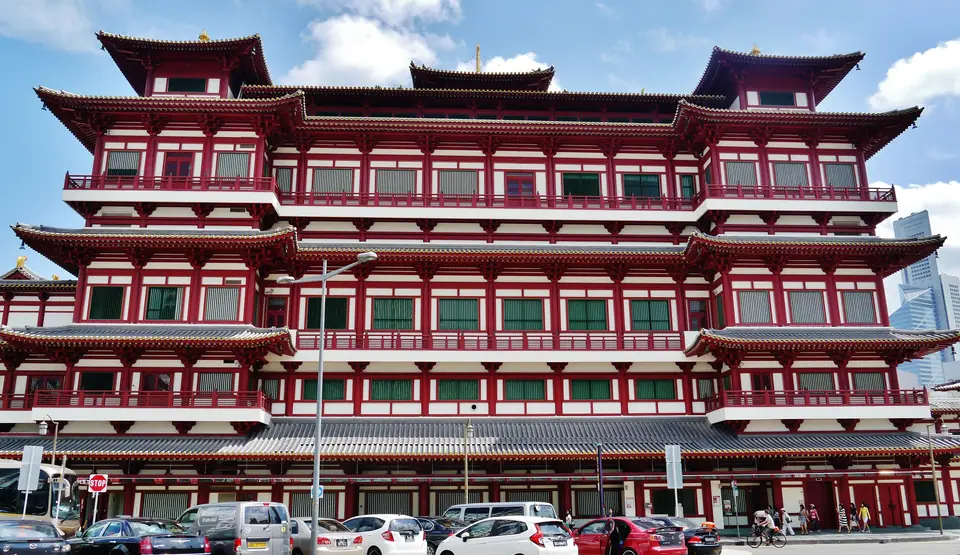
The temple is a relatively modern building, so do not expect the age of other temples in the city. Its value is in its scale, its living worship and its calm inside. It works best as one stop among several in Chinatown, with food nearby and a second temple to compare.
Treat it as a place of faith first and a sight second, and you will have a more rewarding visit.
Traveller tips
Real advice from people who have been to Buddha Tooth Relic Temple: Sacred Light Hall and Museum. Every tip is read by our team before it goes live.
No tips yet. Been here? Yours could be the first.
Thank you! Your tip will appear here after a quick review.
More in Singapore
Continue exploring Singapore with related neighbourhood, food, and planning guides
Haji Lane: Shophouse Street Art, Independent Boutiques and Cafe Lanes
Singapore, Singapore
Little India: Serangoon Road, Tekka Centre Market and Hindu Temples
Singapore, Singapore
Joo Chiat and Katong: Koon Seng Road Shophouses, Nyonya Kueh and Laksa
Singapore, Singapore
Peranakan Shophouse Architecture: Ceramic Tiles, Five-Foot Ways and Best Streets
Singapore, Singapore
