


























Singapore Chinatown: Shophouse Streets, Historic Temples and Hawker Markets
A walking route through Chinatown with temples, food and heritage streets.
Chinatown is a compact district south of the Singapore River where the Chinese settlers of the nineteenth century lived, worked and prayed. It is smaller than many visitors expect and much more mixed. Rows of restored shophouses sit next to a Hindu temple, a mosque, tea shops, herbal medicine stores and some of the best-known hawker food in the country. The streets are close together, so you can cover a lot on foot in half a day.
A walking route
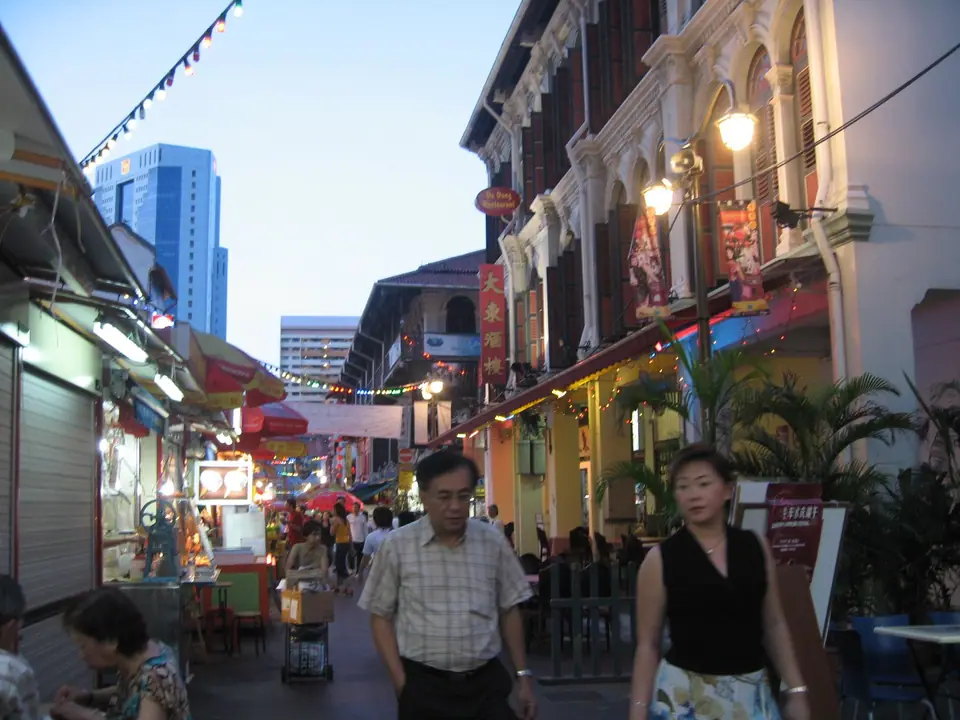
- Chinatown MRT and Pagoda Street. Begin at the station and walk down Pagoda Street, lined with souvenir stalls and restored shopfronts.
- Chinatown Heritage Centre. A museum in a row of shophouses recreates how families lived in cramped rooms in the early twentieth century.
- Sri Mariamman Temple. The oldest Hindu temple in the city sits in the middle of Chinatown. Read the Sri Mariamman Temple guide before entering.
- Temple Street and Trengganu Street. Browse the stalls, then notice how the street names reflect the Malay and Chinese mix of the area.
- Buddha Tooth Relic Temple. A large Tang-style temple with a rooftop garden. See the temple guide.
- Smith Street food area. A pedestrian street of food stalls and restaurants aimed at visitors.
- Chinatown Complex Food Centre. The largest hawker centre in the city by number of stalls, with a busy market on the lower floor.
- Telok Ayer Street. Walk south to find old temples and mosques on the former shoreline, including Thian Hock Keng, a Hokkien temple from the 1840s.
- Maxwell Food Centre. Finish with a plate of chicken rice at Maxwell.
What gives the district its character
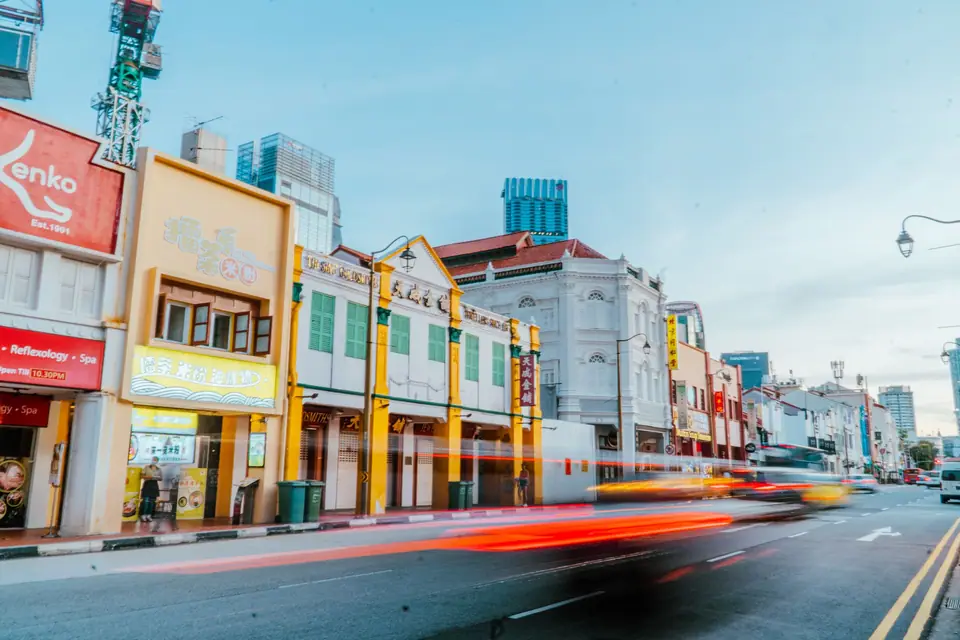
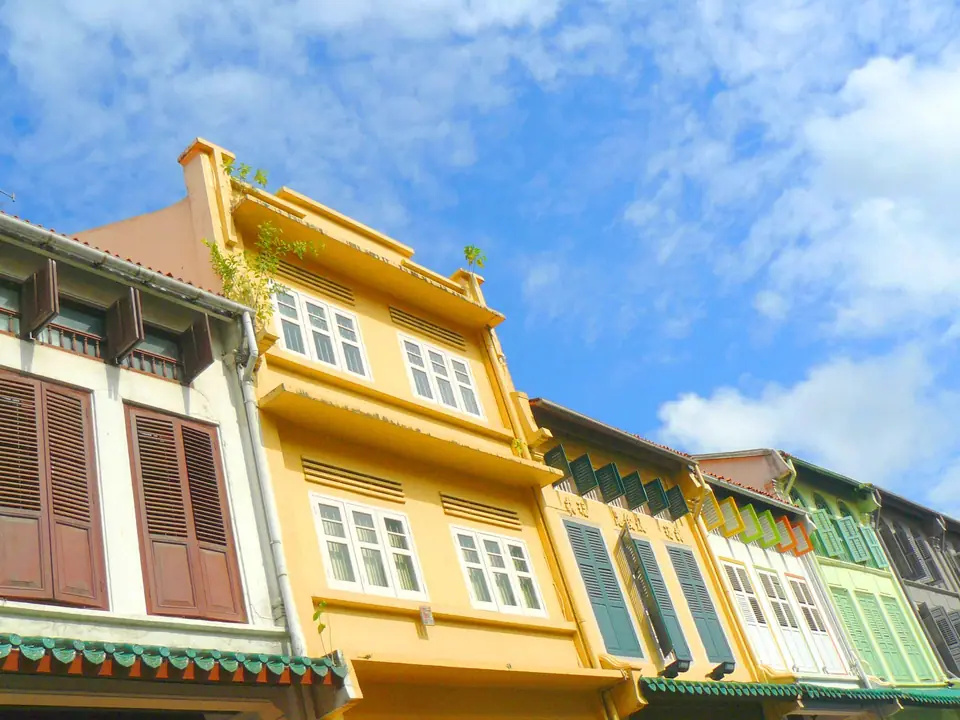
The shophouses are the key. They are narrow buildings, two or three storeys high, with a shop on the ground floor and rooms above, and they were often built in terraces with a covered walkway in front. Many are painted in soft colours, and the details on the shutters and tiles show Chinese, Malay and European influence. The government protected much of the district from demolition in the 1980s, which is why it still looks as it does.
When to go
Morning is the most comfortable time, before the heat and before the tour groups. Evenings are lively, with lanterns lit and the food streets busy. Around Lunar New Year the district is decorated and crowded, which is lovely but slow. Midday heat and humidity are high, so plan to duck into a temple or a shop for shade.
Where to eat
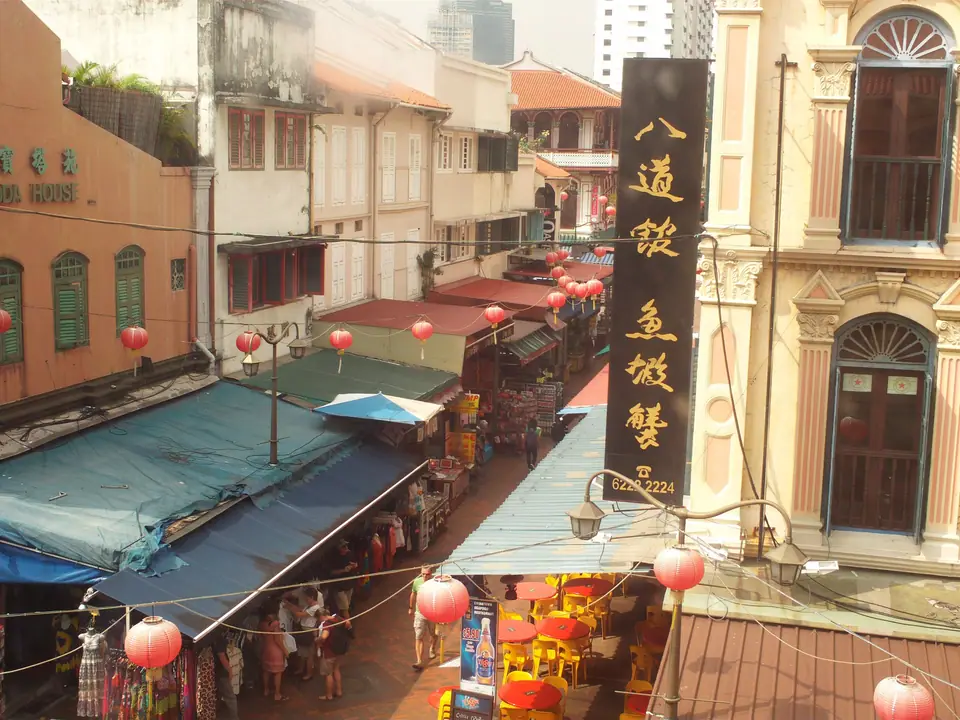
The food streets aimed at visitors have a wide choice but often charge more. For a local meal, go to a hawker centre. The hawker centre guide explains how to order. For tea or sweets, look for traditional shops in the side streets.
Practical notes
Dress modestly for the temples, with shoulders and knees covered. Remove your shoes when asked and keep your voice low inside. The district is safe and walkable, but pavements are narrow, so watch your step. If you are short of time, take a taxi from the river rather than walking, and start at the temple end.
Small things to notice
Look up above the shopfronts for painted plaster, tiled panels and carved wooden lintels. Peek inside the traditional medicine shops, where herbs, dried mushrooms and ginseng are weighed on brass scales, and stop at a tea merchant who will let you smell the leaves. Evening is when the old trades quiet down and the lanterns take over, so a second pass after dinner shows a different street.
What to skip
Skip the souvenir stalls if you want authentic crafts, since many items are the same across the island. Skip the evening crowds on a weekend if you dislike crowds, and choose a weekday instead. Do not try to see everything in one hour. The district is best when you let it unfold over a few hours with a break for food.
From here you can continue to the river, or take the MRT to Little India for a contrast in colour and smell.
Traveller tips
Real advice from people who have been to Singapore Chinatown: Shophouse Streets, Historic Temples and Hawker Markets. Every tip is read by our team before it goes live.
No tips yet. Been here? Yours could be the first.
Thank you! Your tip will appear here after a quick review.
More in Singapore
Continue exploring Singapore with related neighbourhood, food, and planning guides
Cloud Forest: Indoor Waterfall, Aerial Walkways and Highland Plants
Singapore, Singapore
Supertree Grove: OCBC Skyway, Garden Rhapsody Lights and Best Views
Singapore, Singapore
Merlion Park: Waterfront Statue, Skyline Photo Angles and River Walk
Singapore, Singapore
ArtScience Museum: Lotus Architecture, Future World and Ticket Planning
Singapore, Singapore
