


























Geneva Museums: Musée d'Art et d'Histoire, Patek Philippe & Red Cross
Explore Geneva's three essential museums covering fine art and archaeology, five centuries of Swiss watchmaking, and humanitarian history.
Geneva's museum landscape reflects the three pillars of the city's identity: encyclopaedic civic collecting in Les Tranchées, five centuries of watchmaking in Plainpalais, and international humanitarian law opposite the Palais des Nations. All three institutions sit within twenty minutes of one another by TPG tram or bus, making them ideal stops on our 3-day Geneva itinerary.
Because each museum occupies a distinct neighbourhood, with Les Tranchées on the eastern ring of the Old Town, the cultural grid of Plainpalais to the southwest, and the diplomatic hills of Nations on the right bank, spacing them across two or three days lets you pair gallery hours with lakeside walks and courtyard lunches.
Musée d'Art et d'Histoire (MAH): Architecture and Civic Origins
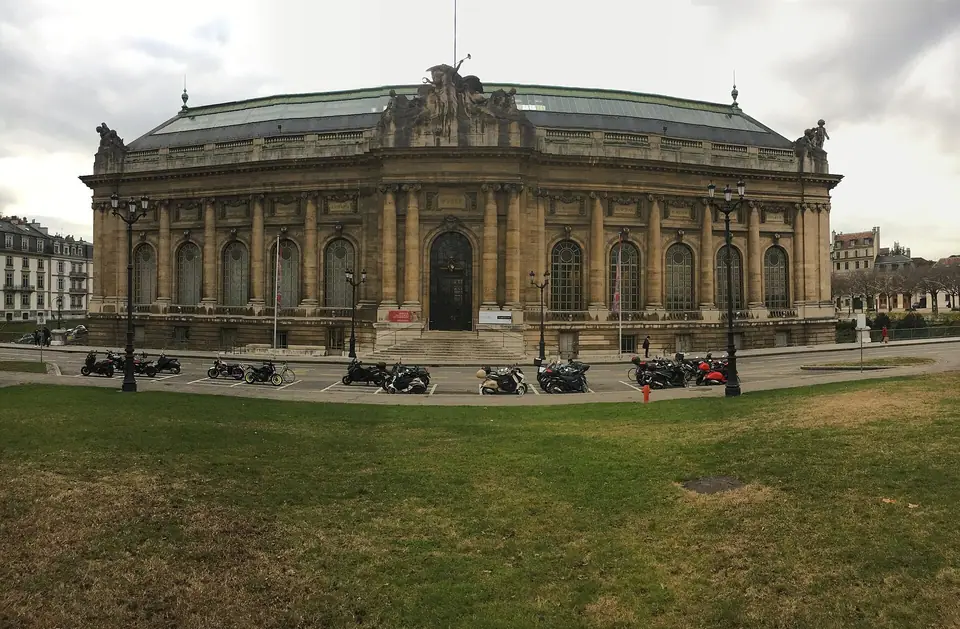
Located in Les Tranchées southeast of the Vieille Ville, the Musée d'Art et d'Histoire (MAH) heads the municipal museum network and preserves more than 650,000 objects alongside a 400,000-volume art and archaeology library and a numismatic cabinet of 100,000 coins and medals initiated in 1535. Designed by architect Marc Camoletti after a 1900 competition and built between 1903 and 1910 using a bequest from banker Charles Galland (1816 to 1901), the four-storey limestone building forms a 60-metre square around an inner courtyard with 7,000 square metres of exhibition space. Above the entrance, sculptures by Paul Amlehn depict allegories of the arts beneath a frieze naming Genevan artists including Liotard, Calame, Töpffer, and Pradier.
Before the palace opened in 1910, Geneva's public collections were scattered across the 1826 Musée Rath on Place de Neuve, the Academic Museum, and the municipal armoury. Camoletti's beaux-arts edifice brought archaeology, applied arts, armour, and fine painting under one roof, bathed in natural daylight from the central courtyard and skylit upper galleries.
Konrad Witz's 1444 Altarpiece, Liotard, Hodler, and the Escalade Armour
The Fine Art galleries trace European painting from the Middle Ages to the 20th century. The centrepiece is Konrad Witz's 1444 Miraculous Draft of Fishes (from the St. Peter Altarpiece painted for St. Pierre Cathedral), recognised as the earliest topographically accurate landscape in Western art because it depicts Christ standing on the real shoreline of Lake Geneva with the limestone ridge of Mont Salève, the Petit Lac, and the snows of Mont Blanc rendered behind the apostles.
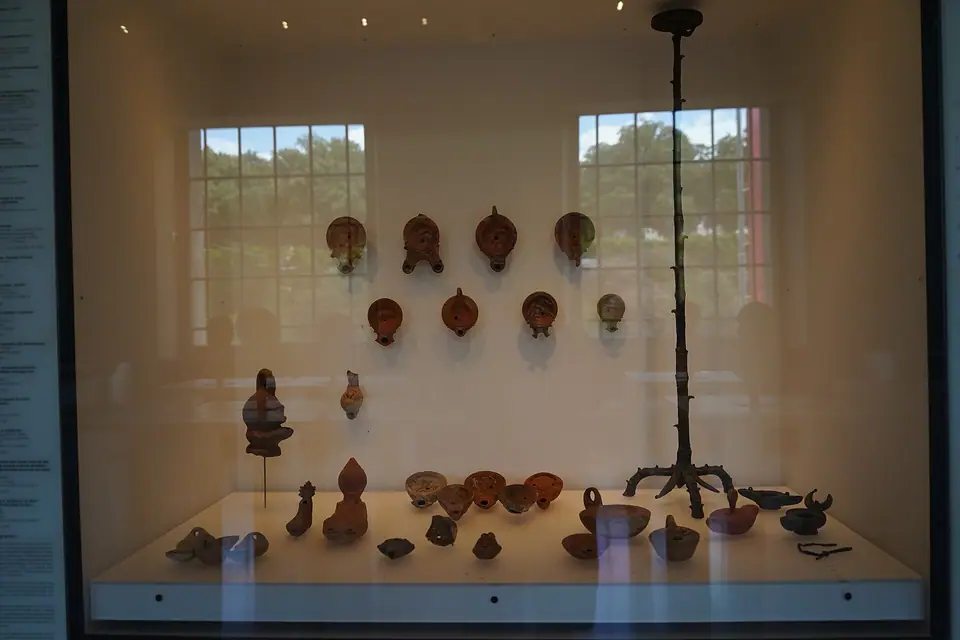
Other highlights include eighteenth-century Enlightenment pastels by Jean-Étienne Liotard, 241 sketchbooks and monumental symbolist landscapes by Swiss master Ferdinand Hodler, a 9th-century BC Egyptian mummy, Greek and Roman bronzes, late 17th-century carved wood-panelled rooms from Lower Castle Zizers, and the ground-floor Salle des Armures displaying the dark steel Savoyard helmets, pikes, and scaling ladders captured during the night battle of L'Escalade in December 1602.
Huguenot Watchmakers and the Patek Philippe Museum in Plainpalais
After French Protestant watchmakers fled the St. Bartholomew's Day massacre of 23 August 1572 to Geneva, where John Calvin's strict ordinances against ornamental jewellery channelled resident goldsmiths and enamellers into functional watchmaking, the city became a premier European centre of horology, enamel miniatures (led by Jean Petitot and Liotard), and 18th-century musical automatons. Over generations, the traditional Genevan fabrique system coordinated independent case makers, dial painters, spring winders, and master watchmakers working in rooftop workshops lit by wide bands of windows across Saint-Gervais and the Old Town.
Four Floors of Horology, Enamels, and Royal Timepieces
Following a landmark 150th-anniversary exhibition of 500 watches in 1989, Patek Philippe president Philippe Stern and his wife Gerdi converted an early twentieth-century industrial building designed by architect William Henssler near Plainpalais into a four-level horological museum. Visitors begin on the ground floor among historic workbenches and hand tools, ascend to level one for Patek Philippe complicated wristwatches and pocket watches made between 1839 and 1989, explore 16th- to 19th-century antique European watches and singing-bird automatons on the second floor, and finish on the third floor amid portrait miniatures and a 4,000-book horological library.
Taken together, these three museums trace how a modest fortified bishopric at the outlet of Lake Geneva grew into a global capital of precision craftsmanship, civic humanism, and international treaty law. At the Musée d'Art et d'Histoire, archaeological finds from the Allobrogian oppidum and Roman forum sit beside late medieval altarpieces and the armour worn on the night of the Escalade, grounding the city's story in its physical landscape between the Jura and the Alps.
Across town in Plainpalais, the Patek Philippe Museum shows how sixteenth-century religious migration and strict sumptuary laws channelled artistic talent into miniature mechanical engineering and painted enamels admired by courts across Europe and Asia. Up on the right bank in the International Quarter, the Red Cross and Red Crescent Museum carries that civic tradition into the modern era, documenting how humanitarian volunteers and legal conventions sought to protect human dignity during armed conflict and natural disasters. Spacing the three visits across separate mornings or afternoons gives you time to absorb each collection without museum fatigue.
International Red Cross and Red Crescent Museum on Avenue de la Paix
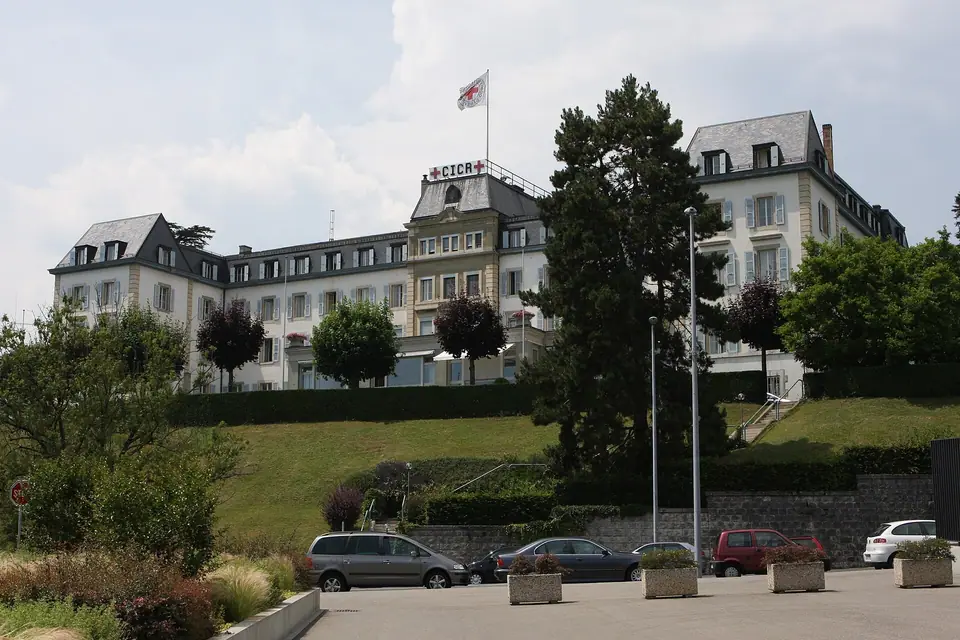
On the right bank opposite the Palais des Nations, the International Red Cross and Red Crescent Museum opened in 1988 adjacent to the headquarters of the International Committee of the Red Cross (ICRC), inspired by Genevan businessman Henry Dunant after he witnessed the aftermath of the Battle of Solferino. The museum preserves 30,000 humanitarian items and welcomes an average of 120,000 visitors annually through its underground exhibition halls.
Nobel Peace Prize Medal, Prisoner Archives, and Visiting Logistics
- 1901 Nobel Peace Prize and Great War files: Key displays include the first Nobel Peace Prize medal awarded in 1901 jointly to Henry Dunant and Frédéric Passy, alongside millions of index cards from the Great War International Prisoners of War Agency archives (inscribed on UNESCO's Memory of the World Register), which tracked captured soldiers and reunited families across borders.
- Branch museums across town: Note that the MAH network also includes the Maison Tavel urban history museum in the Old Town and the Ariana Museum of ceramics and glass near the UN Quarter, while Plainpalais also hosts contemporary art institutions close to the Patek Philippe Museum.
- Planning your museum route: Check our guide to things to do in Geneva and best time to visit Geneva to schedule indoor gallery hours around lake cruises and mountain views.
Traveller tips
Real advice from people who have been to Geneva Museums: Musée d'Art et d'Histoire, Patek Philippe & Red Cross. Every tip is read by our team before it goes live.
No tips yet. Been here? Yours could be the first.
Thank you! Your tip will appear here after a quick review.
More in Geneva
Continue exploring Geneva with related neighbourhood, food, and planning guides
Vieille Ville, St. Pierre Cathedral & Place du Bourg-de-Four
Geneva, Switzerland

Jet d'Eau, Lake Geneva Promenade & Bains des Pâquis
Geneva, Switzerland
Palais des Nations, Broken Chair & Geneva's International Quarter
Geneva, Switzerland
CERN Science Gateway, Globe of Science & the Large Hadron Collider
Geneva, Switzerland
