


























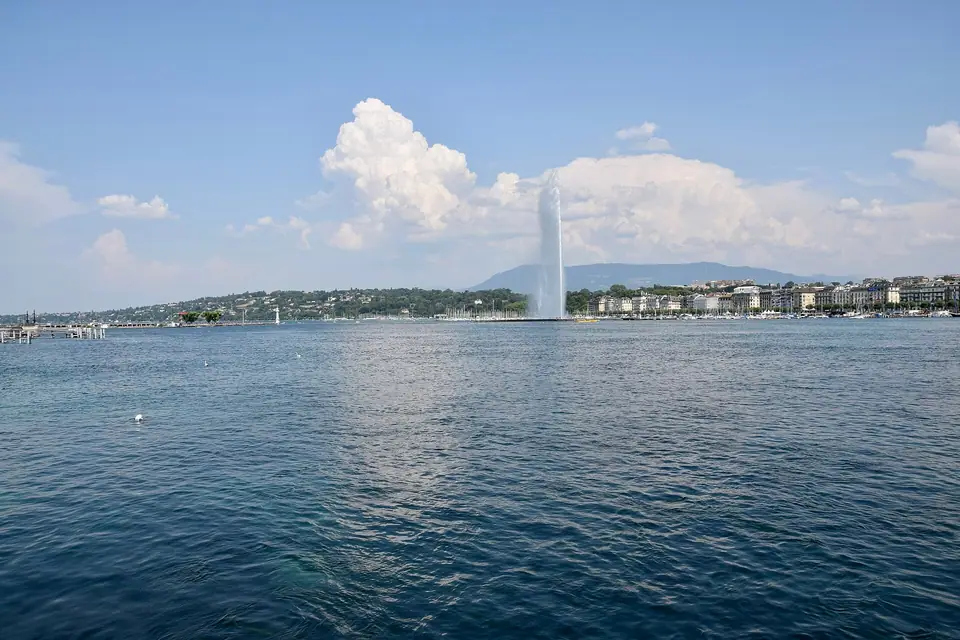
Geneva: Essential Planning for Lake Geneva's Diplomatic Hub
How to navigate Geneva's left-bank Old Town, right-bank International Quarter, harbour ferries, and cross-border rail network.
Positioned at 46°12' North and 6°09' East where the crescent of Lake Geneva narrows into the Petit Lac and empties into the Rhône river, Geneva is Switzerland's second-largest city after Zurich and the capital of the Republic and Canton of Geneva. Although the municipality of Geneva covers only 16 square kilometres with 203,856 inhabitants recorded in January 2021, the surrounding basin functions as a single cross-border metropolis: the Grand Genève transnational grouping spans 1,996 square kilometres with 1,046,168 residents across the Swiss cantons of Geneva and Vaud and the French departments of Ain and Haute-Savoie, with 58.3 percent living in Switzerland and 41.7 percent in France.
For travellers, this compact municipal footprint is a major practical advantage. Nearly every landmark inside the city proper can be reached on foot or by a short tram or harbour ferry ride, yet the urban texture shifts noticeably every few streets as you move from lakeside promenades and luxury watch showrooms to medieval limestone courtyards, university parks, and multilateral headquarters. Pairing this overview with our guide to things to do in Geneva helps you organise each half-day by bank and river corridor.
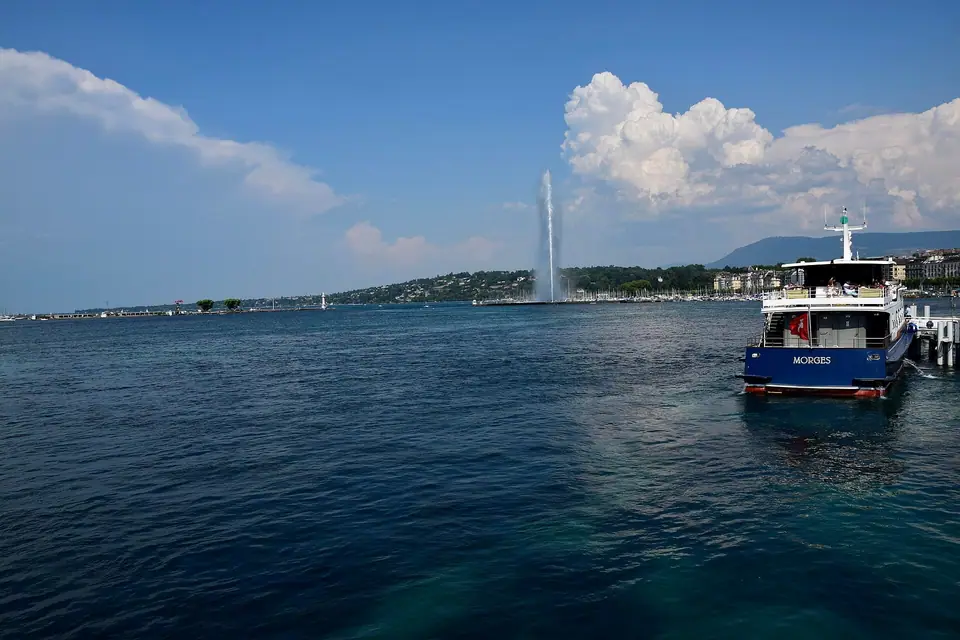
Reading the Basin: Left Bank, Right Bank, and Two Rivers
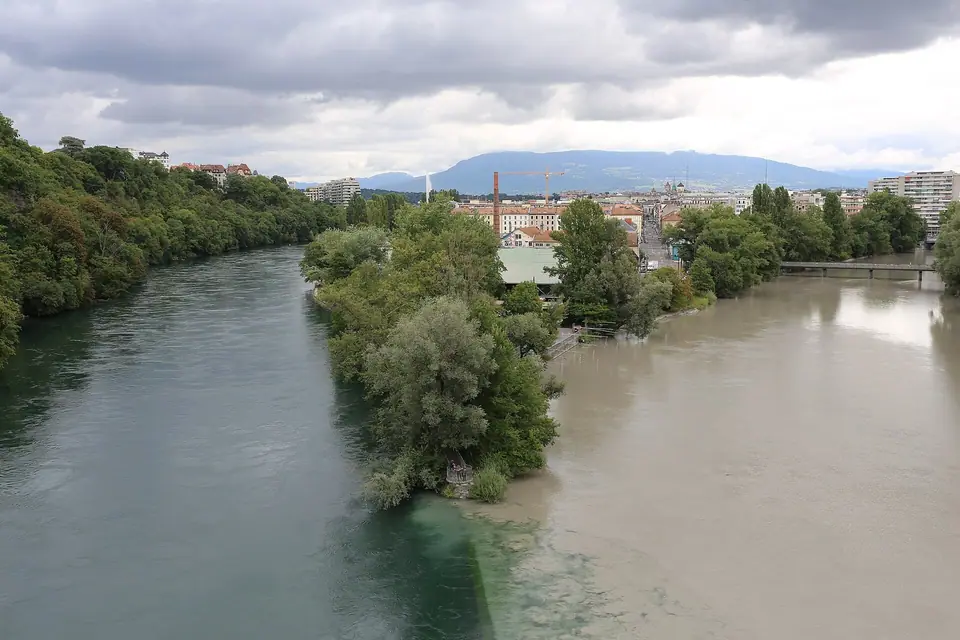
Geneva sits in a natural bowl framed by mountains that stand across the border in France: the limestone cliff of Mont Salève (1,379 metres) to the south, the Voirons and Le Môle to the east, the Vuache to the southwest, and the Jura massif to the northwest. Inside the city, two rivers shape every walk. The clear blue-green Rhône flows out of the harbour (la Rade) beneath Pont du Mont-Blanc and around Île Rousseau, while the glacier-fed, silt-laden Arve descends from the Mont Blanc massif via Carouge before merging with the Rhône at the Pointe de la Jonction on the city's western edge.
Standing on Pont du Mont-Blanc on a clear morning, you can read the entire layout of the basin at a glance. Looking northeast up the Petit Lac, the harbour quays frame the vertical plume of the Jet d'Eau against distant snowfields. Looking downstream to the west, the Rhône splits around Île Rousseau and passes beneath pedestrian footbridges toward the old watchmaking workshops of Saint-Gervais and the industrial sluices that once powered the city's workshops.
Eight Municipal Quartiers Across Two Shores
Municipally, Geneva is divided into eight quartiers split between the two shores. The Rive Gauche (Left Bank) holds the hilltop Vieille Ville around St. Pierre Cathedral and Place du Bourg-de-Four, the shopping streets of the Rues Basses, Parc des Bastions and Plainpalais, lakeside Eaux-Vives, Jonction, and residential Champel. The Rive Droite (Right Bank) contains Gare de Genève-Cornavin, the lakeside promenade and Bains des Pâquis, the historic watchmakers' quarter of Saint-Gervais, and the diplomatic avenues around the Palais des Nations.
Because each quarter retains a distinct architectural character, crossing from one bank to the other feels like stepping between different chapters of European urban history. The Left Bank preserves the tight medieval street plan of the fortified hilltop republic alongside nineteenth-century ring boulevards created when the ramparts came down, whereas the Right Bank opens onto grand hotel embankments, international railway links, and parkland estates donated to the public in the late nineteenth and twentieth centuries.
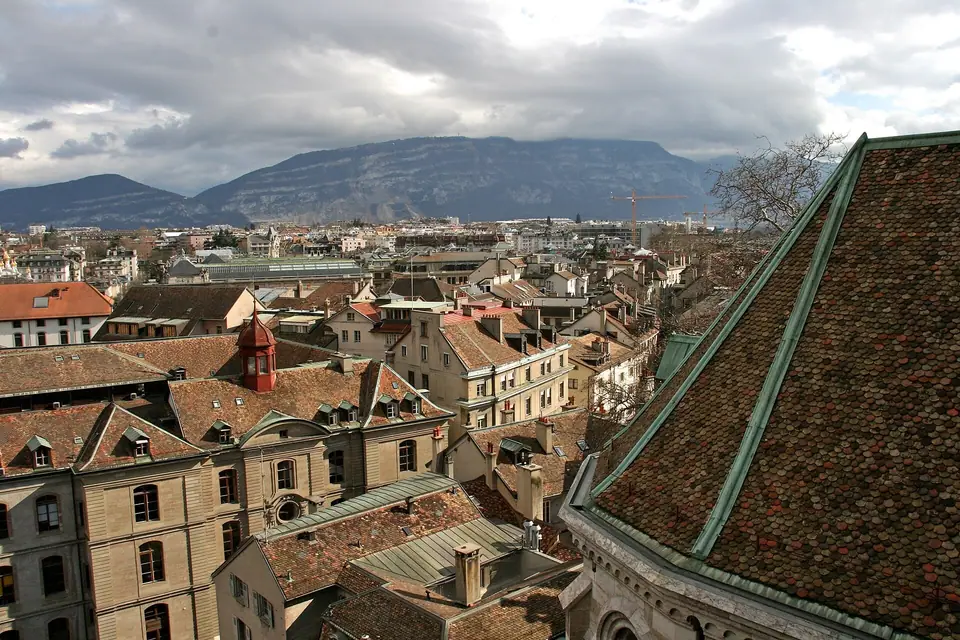
From Allobrogian Oppidum to Protestant Republic
Mentioned by Julius Caesar as Genava, an Allobrogian stronghold taken by Rome in 121 BC, the city became an episcopal see in the 4th century AD and gained self-governing privileges in 1387. After adopting the Protestant Reformation in 1535 to 1536 and welcoming John Calvin in 1541, Geneva attracted French Huguenot refugees whose goldsmiths and watchmakers built its horological craft. Annexed by Revolutionary France in 1798, the republic regained independence after the Napoleonic Wars and joined the Swiss Confederation on 19 May 1815.
Walking through the upper streets around St. Pierre Cathedral and the Hôtel de Ville reveals how deeply those centuries of self-government shaped local civic identity. Limestone mansions built by merchant and scholar families turn quiet facades toward the street while opening onto arcaded inner courtyards and spiral stair towers behind heavy oak doors. Down on the lower edges of the hill, nineteenth-century squares such as Place de Neuve mark the transition from walled citadel to open modern canton.
Multilateral Diplomacy and Scientific Cooperation
Today the canton hosts 39 international organisations and 431 non-governmental organisations, from the United Nations Office at Geneva and the World Health Organization to the International Committee of the Red Cross. That dual heritage of civic independence and international humanitarian work remains visible across the streetscape. In the upper town and university park, inscriptions and statues recall sixteenth-century theologians and the citizen militia that defended the walls against Savoy, while the northern avenues and the suburb of Meyrin showcase twentieth-century treaties, humanitarian archives, and collaborative scientific research at CERN.
Visitors who take time to look beyond the formal diplomatic gates discover a remarkably approachable lakeside city where residents swim off concrete piers at lunchtime, browse outdoor produce and book stalls on Plainpalais, and gather in neighbourhood wine bars across Eaux-Vives and Carouge. Even on days when major international conferences fill the right-bank hotels, the cobbled squares of the upper town and the shaded lawns of Parc La Grange maintain an unhurried local pace.
Essential Logistics: Language, Transit, and Seasonal Rhythm
- Language and daily etiquette: French is the official language of the city and canton, used on all street signs, tram announcements, and restaurant menus, though English is widely spoken across hotels, museums, and diplomatic institutions; greeting shopkeepers with a polite bonjour before asking a question is standard local custom.
- Getting around on a single network: Combine TPG trams, Mouettes Genevoises ferries, and Léman Express trains inside Unireso Zone 10, which links the airport, the main railway station, the harbour piers, and the border suburbs under one unified fare zone.
- Choosing a neighbourhood base: Review our guide to where to stay in Geneva to decide between right-bank convenience near Cornavin and left-bank historic character around the Old Town, Eaux-Vives, and Plainpalais.
- Structuring your days: Follow our 3-day Geneva itinerary and check the best time to visit Geneva to match outdoor lake walks with museum hours, traditional Genevan dining, and seasonal festivals.
Traveller tips
Real advice from people who have been to Geneva: Essential Planning for Lake Geneva's Diplomatic Hub. Every tip is read by our team before it goes live.
No tips yet. Been here? Yours could be the first.
Thank you! Your tip will appear here after a quick review.
More in Geneva
Continue exploring Geneva with related neighbourhood, food, and planning guides
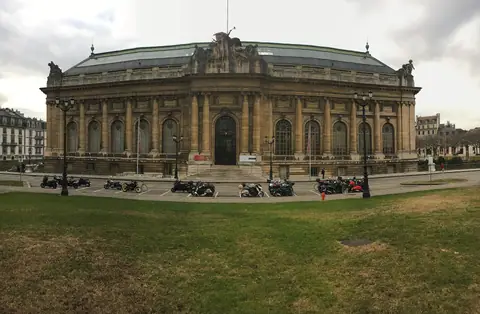
Geneva Museums: Musée d'Art et d'Histoire, Patek Philippe & Red Cross
Geneva, Switzerland
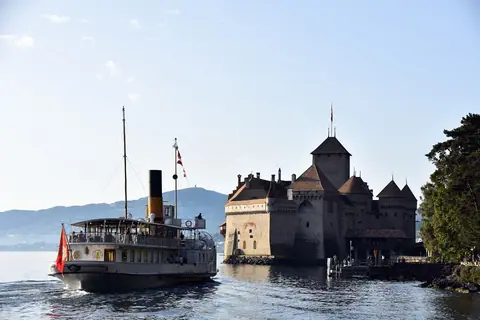
Day Trips from Geneva: Mont Salève, Lausanne & Chillon Castle
Geneva, Switzerland

What to Eat in Geneva: Lake Perch, Cheese Fondue, Longeole & Escalade
Geneva, Switzerland
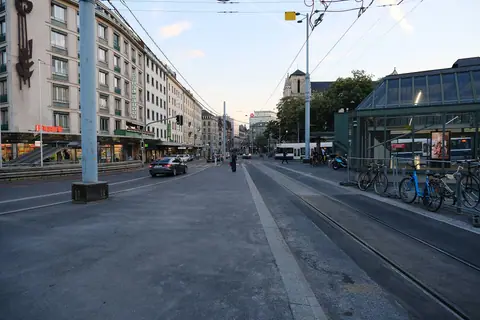
How to Get to Geneva & Get Around: Airport, Cornavin, TPG & Léman Express
Geneva, Switzerland
