


























What to Eat in Geneva: Lake Perch, Cheese Fondue, Longeole & Escalade
A guide to Geneva's signature dishes, from Lake Geneva perch fillets and Bains des Pâquis cheese fondue to Longeole IGP sausage and silver cardoons.
Genevan cuisine sits at the crossroads of French-speaking Romandy, nearby Savoy, and the market gardens of the Rhône and Arve plains. While international dining fills the right-bank hotels, local bistros in the Vieille Ville, Carouge, and the lakeside piers celebrate four regional traditions: freshwater fish from Lake Geneva, melted alpine cheeses, protected fennel-spiced charcuterie, and winter festival dishes tied to the 1602 Escalade.
Centuries of cross-border agricultural exchange gave the canton its distinctive pantry. Under historic treaties with Savoy and France, surrounding farmland supplied fresh dairy, chestnuts, and market vegetables to the fortified city, while Protestant refugees from France and Italy introduced pastry techniques, cardoon cultivation, and spiced sausage recipes that evolved into protected municipal specialities. Pair this culinary guide with our Geneva travel guide to find authentic tables across every quarter.
Filets de Perche du Léman and Cantonal Wines
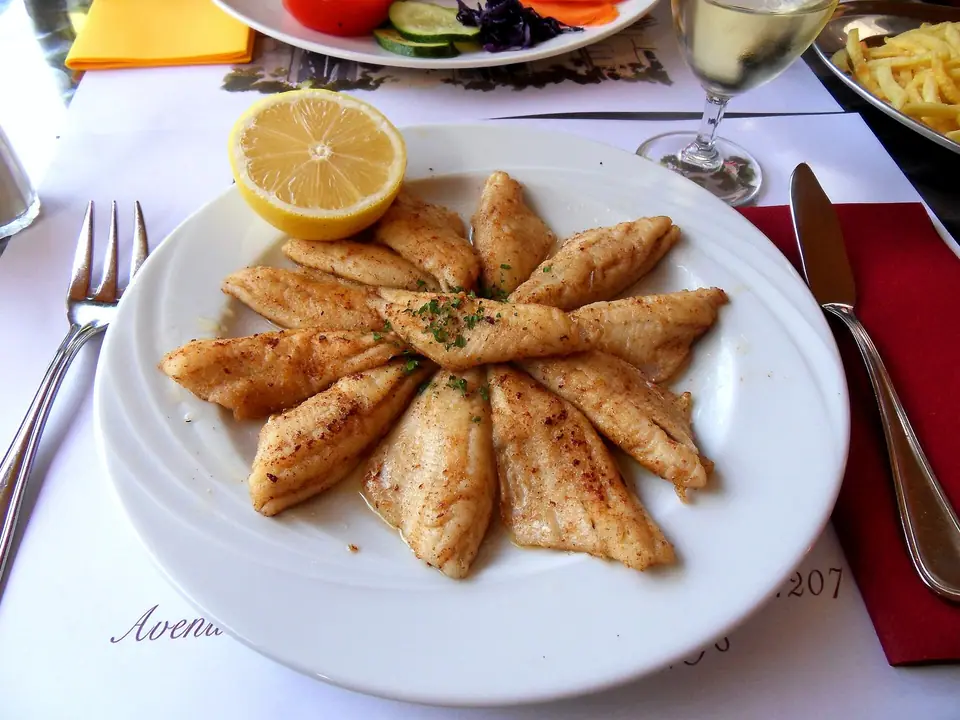
In warmer months, the classic lakeside lunch across the Petit Lac is filets de perche du Léman: delicate fillets of European perch caught in the clear waters of Lake Geneva, lightly dredged in flour, and pan-fried in foaming butter with lemon juice and chopped parsley (meunière). Bistros along the harbour quays, in Eaux-Vives, and in Vieux Carouge serve the fish with thin matchstick fries (pommes allumettes), crisp green salad, and tangy tartar sauce. Alongside perch, traditional lake menus also feature whitefish (féra du Léman) and lake char (omble chevalier) poached or baked with local herbs.
Pair a platter of perch fillets with a chilled glass of Chasselas, the dry, mineral white wine pressed in the cantonal vineyard slopes of Mandement, Satigny, Dardagny, and Lully between the Rhône and the foot of the Jura. Although Genevan wines are rarely exported in volume because local restaurants and households drink most of the harvest within the canton, growers also produce supple Gamay, Pinot Noir, and Gamaret reds served by the decilitre in neighbourhood cafés.
Cheese Fondue at the Buvette des Bains des Pâquis
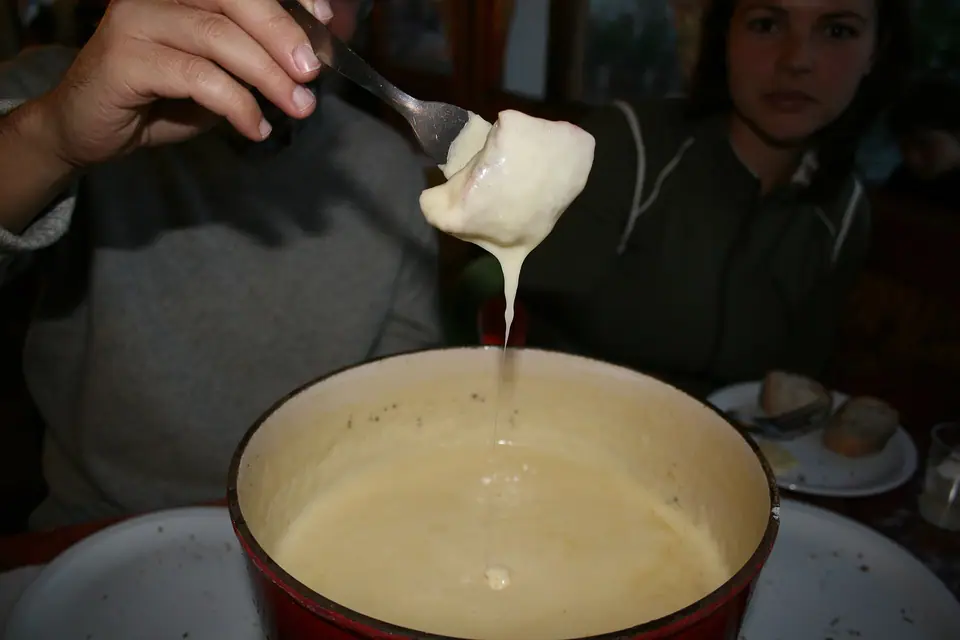
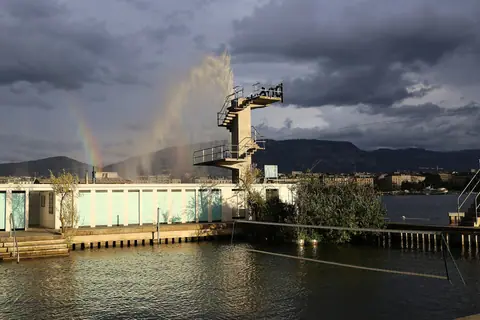
Year-round, the most convivial table in town is the Buvette at the Bains des Pâquis out on the right-bank harbour mole. After citizens saved the 1932 concrete baths in the 25 September 1988 referendum (with 72 percent voting against demolition) and the user association (AUBP) opened the complex twelve months a year, the Buvette established its famous lakeside fondue cabane.
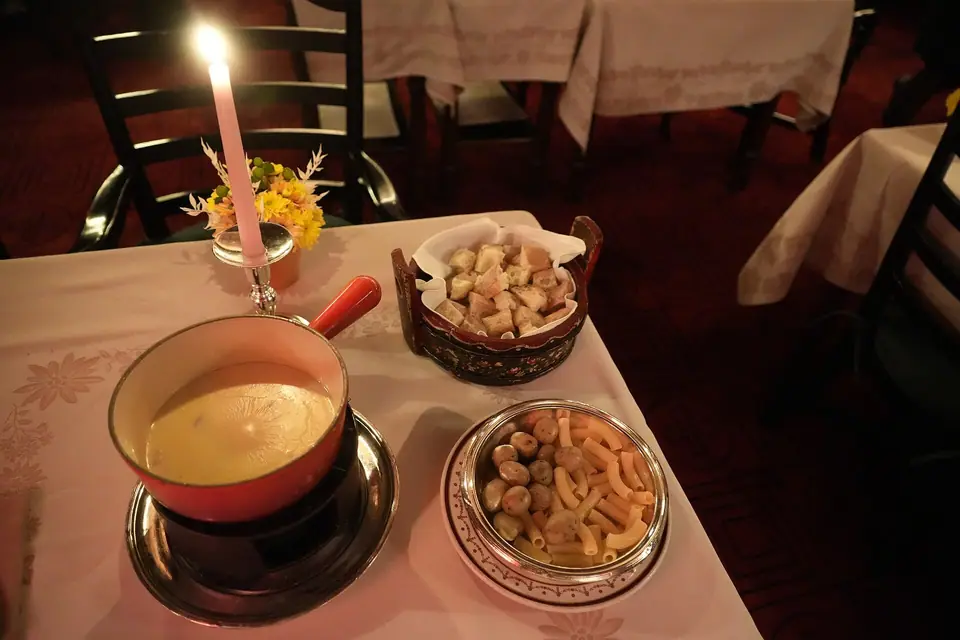
When you visit on a breezy autumn evening or after a winter sauna session, locals and travellers squeeze onto long wooden benches under the lighthouse to dip cubes of crusty bread into bubbling cast-iron caquelons of half-Gruyère, half-Vacherin cheese fondue flavoured with dry white wine, garlic, and a splash of kirsch, looking straight across the dark water toward the illuminated Jet d'Eau and the cathedral spire. In the upper Old Town, traditional timber-panelled restaurants such as Les Armures near St. Pierre Cathedral also serve fondue and raclette throughout the year.
Longeole IGP: Geneva's Fennel-Spiced Pork Sausage
In autumn and winter, traditional Genevan brasseries and country inns (auberges communales) feature the canton's signature charcuterie: the Longeole, a coarse sausage made from pork meat, jowl or neck fat, raw pork rind (couenne), and whole wild fennel seeds, registered as a Swiss Protected Geographical Indication (IGP) since 2009. Attributed by local tradition to Père Longeot, a monk at the nearby Chartreuse de Pomier, its written mention appears in A.-J. Gaudy-Lefort's 1820 Glossaire genevois before entering recipe books in 1885 and Joseph Favre's 1894 culinary dictionary.
By 1932 more than half of Geneva's country inns advertised Longeole during the annual Foire aux Longeoles, which drew thousands of visitors before its 1995 French culinary inventory recognition. Because raw pork rind gives the sausage its rich gelatinous texture, a genuine Longeole is never pricked before cooking and must be simmered gently in water for about three hours without boiling before being sliced thick at the table.
Cardon Argenté de Plainpalais
Simmered Longeole is classically served alongside a bubbling dish of Cardon argenté de Plainpalais, the thorny silver cardoon cultivated in the market gardens of Geneva since Huguenot market gardeners refined the variety in the seventeenth century. Related to the globe artichoke, the tall silver-grey stalks are harvested in late autumn, tied up and blanched in dark cellars for several weeks to soften their natural bitterness, and baked au gratin with marrowbone sauce or cream and Gruyère cheese as the centrepiece of Genevan Christmas dinners.
Planning where and when to eat in Geneva is much easier once you match each dish to its traditional setting and season. Save a sunny midday by the harbour or in Carouge for pan-fried filets de perche du Léman paired with a crisp local Chasselas, and head out onto the right-bank mole of the Bains des Pâquis for a casual evening caquelon of Gruyère and Vacherin fondue right above the water.
If your visit falls between late autumn and early spring, seek out a neighbourhood brasserie or country inn serving slow-simmered Longeole IGP sausage alongside creamy gratin of Cardon argenté de Plainpalais, and step into an Old Town confectioner in December to admire the hand-crafted chocolate marmites prepared for the Fête de l'Escalade.
Soupe de la Mère Royaume and the Chocolate Marmite
- Vegetable soup and the 1602 legend: During the Fête de l'Escalade around 11 to 12 December, families and schools prepare big pots of vegetable soup in memory of Catherine Cheynel (known as Mère Royaume), the Lyon-born wife of mint master Pierre Royaume living above the La Monnaie gate who poured a heavy cast-iron cauldron of boiling vegetable soup onto a Savoyard soldier scaling the city walls on the night of 11 to 12 December 1602.
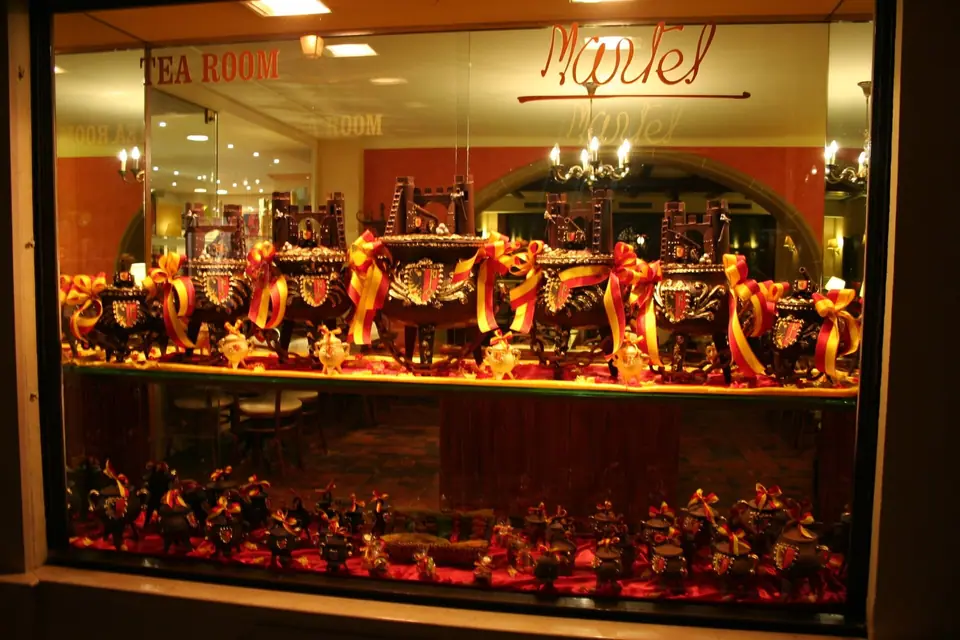
- Smashing the chocolate Marmite: Throughout November and December, confectioners craft dark or milk chocolate cauldrons (marmites de l'Escalade) bearing the Genevan coat of arms and filled with marzipan carrots, turnips, and leeks alongside sweets wrapped in red-and-gold foil; by custom, the eldest and youngest people at the table smash the cauldron together while reciting, "Qu'ainsi périssent les ennemis de la République." ("May the enemies of the Republic thus perish.")
- Where to sample local markets: Browse seasonal cardoons, cheeses, and charcuterie at the open-air markets on Plaine de Plainpalais or Place du Marché in Carouge during our 3-day Geneva itinerary.
Traveller tips
Real advice from people who have been to What to Eat in Geneva: Lake Perch, Cheese Fondue, Longeole & Escalade. Every tip is read by our team before it goes live.
No tips yet. Been here? Yours could be the first.
Thank you! Your tip will appear here after a quick review.
More in Geneva
Continue exploring Geneva with related neighbourhood, food, and planning guides
Jet d'Eau, Lake Geneva Promenade & Bains des Pâquis
Geneva, Switzerland
Palais des Nations, Broken Chair & Geneva's International Quarter
Geneva, Switzerland
CERN Science Gateway, Globe of Science & the Large Hadron Collider
Geneva, Switzerland
Parc des Bastions, Reformation Wall, Place de Neuve & Plainpalais
Geneva, Switzerland
