


























Things to Do in Geneva: Landmarks from the Jet d'Eau to CERN
The essential sights and experiences across Geneva's harbour, hilltop Old Town, diplomatic avenues, and science campuses.
Although Geneva is famous for summit diplomacy and private banking, its core sights sit within a compact lakeside amphitheatre where you can walk from a 12th-century Protestant cathedral to a 1930s Bauhaus bathing pier in twenty minutes. When spending a weekend in the city or combining a visit with our Geneva travel guide, these experiences define the city on both banks of Lake Geneva and the Rhône, connecting medieval stonework, public lakeside culture, high-precision watchmaking, and particle physics.
Because the harbour (la Rade) acts as an open stage at the centre of town, sightseeing here rarely feels confined to indoor galleries. Even a museum-focused morning naturally includes a water taxi crossing, a stroll beneath lakeside plane trees, or a pause on a sunny stone mole watching sailboats tack across the Petit Lac toward the distant snows of Mont Blanc.
Walk the Harbour Quays and the Jet d'Eau
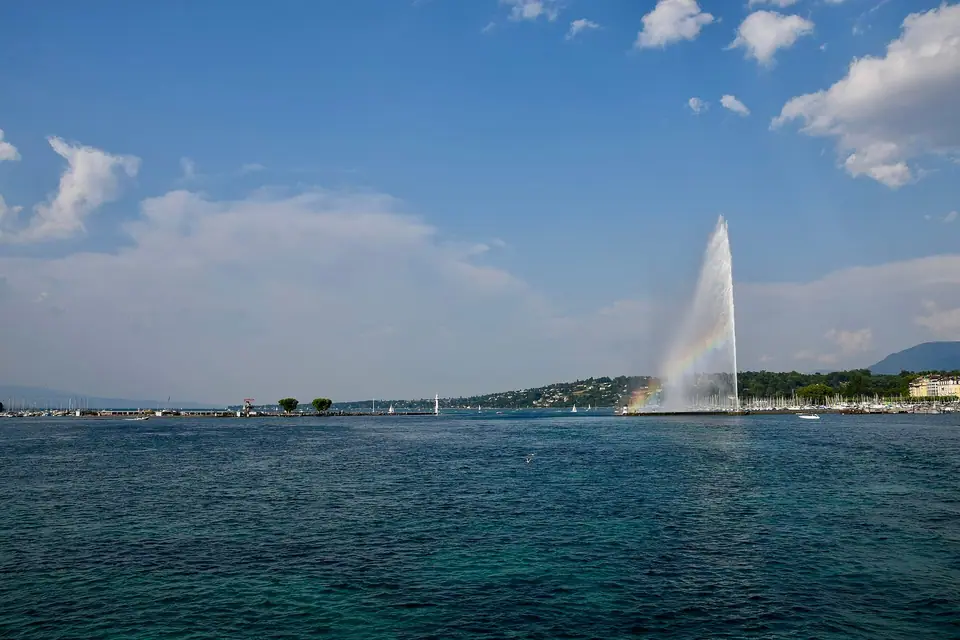
Begin on the Rade, the sheltered harbour at the southwestern tip of Lake Geneva. Out on the Eaux-Vives jetty, the Jet d'Eau propels 500 litres of lake water per second at 200 km/h to an average height of 140 metres (reaching up to 150 metres in calm air). Walking out along the stone breakwater brings you close enough to hear the roar of the twin pumps and feel the cool mist drifting across the water whenever a light breeze ripples the surface.
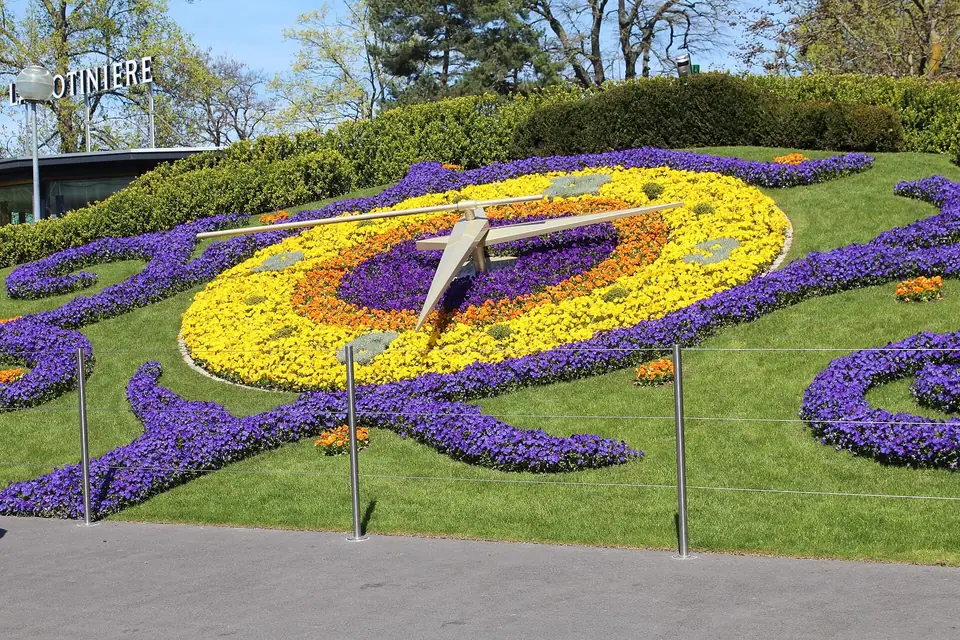
On the left bank just east of Pont du Mont-Blanc, the Jardin Anglais laid out on reclaimed lake land in 1854 frames a monumental 1862 cast-iron fountain from the Val d'Osne foundry, the 1869 Monument National commemorating Geneva's union with Switzerland, and the Horloge fleurie, a 4-metre-diameter flower clock created in 1955 by landscape architect Armand Auberson whose 2.5-metre seconds hand is adjusted by satellite. Further east along the shore, Parc La Grange opens onto rose beds and mature lawns sloping down toward the lake.
Cross by Mouettes Ferry to Bains des Pâquis
Cross the harbour aboard a yellow-and-red Mouettes Genevoises water taxi to the right bank. Here the Bains des Pâquis jetty, opened in wood in 1872 and reconstructed in reinforced concrete in 1932 by engineer Louis Arnichard and architect Henry Roche, extends toward an 1894 lighthouse. Locals treat the pier as a year-round civic living room, swimming in the clear lake water in summer, relaxing in the lakeside sauna and hammam during winter, and sharing pots of melted cheese fondue at the casual outdoor buvette.
Watching the yellow boats shuttle back and forth between the Molard, Pâquis, and Eaux-Vives landings reveals how closely everyday life in Geneva revolves around the water. Early risers gather on the concrete decks with coffee, swimmers climb the metal ladders straight into the deep harbour channel, and evening strollers linger along the breakwater as the lights of both quays reflect across the surface.
See the 1879 Monument Brunswick and Île Rousseau
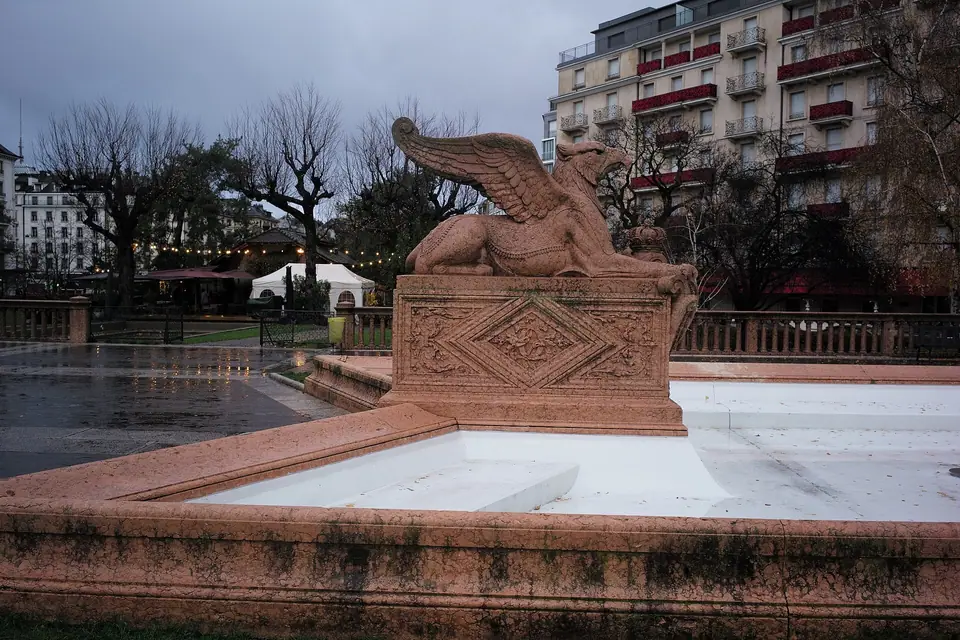
A short walk inland on the Jardin des Alpes stands the 1879 Monument Brunswick, a neo-Gothic mausoleum built by architect Jean Franel as a replica of the Scaliger tombs in Verona after exiled Duke Charles II of Brunswick bequeathed 24 million gold francs to the city in 1873. Marble sarcophagi, red Verona stone columns, and carved heraldic lions give the monument an unmistakable Italianate silhouette against the manicured lakeside flowerbeds and hotel facades of the right bank.
Continuing west along Quai du Mont-Blanc and Quai des Bergues leads to the pedestrian bridge onto Île Rousseau, a wooded island mid-stream in the Rhône where a statue of philosopher Jean-Jacques Rousseau watches the river current accelerate out of the lake toward the historic watchmakers' workshops of Saint-Gervais. Downstream on the western edge of the city, another rewarding river walk leads out to the Pointe de la Jonction, where the clear blue-green water of the Rhône and the pale, silt-laden current of the glacier-fed Arve flow side by side before blending into a single channel.
Climb the Hilltop Vieille Ville and Reformation Wall
Climb from the Rues Basses into the Vieille Ville, where St. Pierre Cathedral crowns the hill above fourth-century Christian basilica ruins and a 1st-century BC Allobrogian chieftain's tomb. Climb the cathedral towers for a panorama from the Jura to Mont Blanc, step inside the medieval Maison Tavel to study the detailed Relief Magnin scale model of fortified Geneva, and pause over coffee on hourglass-shaped Place du Bourg-de-Four.
From the upper town, descend past the ramped 16th-century Hôtel de Ville to Parc des Bastions, where the monumental Reformation Wall displays 5-metre stone statues of William Farel, John Calvin, Theodore Beza, and John Knox backed against the old ramparts opposite the University of Geneva and giant outdoor chessboards.
When organising your days around the harbour and the surrounding hills, allow time for unhurried transitions between major monuments. Stepping off a tram at Place de Neuve to watch a lunchtime chess match in Parc des Bastions, browsing second-hand book stalls along the Plainpalais gravel alleys, or lingering on Pont des Bergues as the evening light catches the copper spires of the upper town gives your visit a sense of rhythm that balances structured museum tours with everyday Genevan life.
Tour the International Quarter and CERN
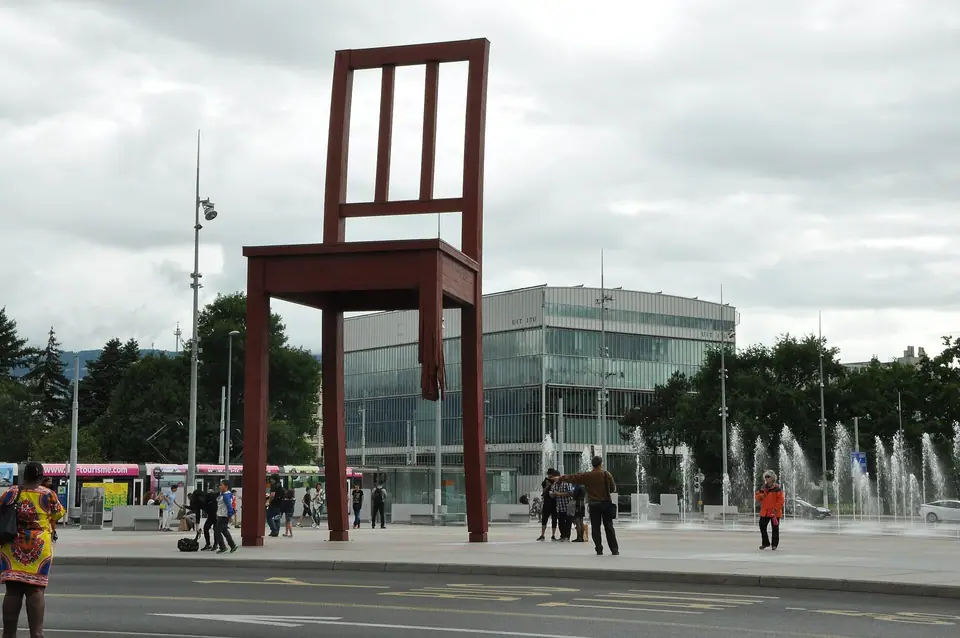
On the northern hills of the right bank, ride tram 15 to Place des Nations to see Daniel Berset's 12-metre, 5.5-ton wooden Broken Chair (installed on 18 August 1997) facing the 600-metre-long Palais des Nations in Ariana Park and the International Red Cross and Red Crescent Museum. Guided walks inside the United Nations complex bring you into vast multilateral assembly halls while peacocks wander across the surrounding lawns. From Gare de Genève-Cornavin, tram 18 runs west to Meyrin for the CERN Science Gateway and the timber Globe of Science and Innovation above the Large Hadron Collider, where interactive exhibits unpack particle physics at no charge.
Stroll Sardinian Carouge and the Museum Quarter
- Carouge across the Arve: Ride tram 12 or 18 south into Carouge, planned for King Victor Amadeus III of Sardinia in the 1770s with low shuttered houses, hidden garden courtyards, artisan studios, and lively market squares.
- Horology and fine art: Pair Plainpalais and Les Tranchées to visit the Patek Philippe Museum and the Musée d'Art et d'Histoire, where European paintings, enamel miniatures, and historical armour trace centuries of craftsmanship.
- Regional excursions and dining: Round out your stay with traditional Genevan dishes and day trips to Mont Salève, Lausanne, and Chillon Castle, or follow our 3-day Geneva itinerary.
Traveller tips
Real advice from people who have been to Things to Do in Geneva: Landmarks from the Jet d'Eau to CERN. Every tip is read by our team before it goes live.
No tips yet. Been here? Yours could be the first.
Thank you! Your tip will appear here after a quick review.
More in Geneva
Continue exploring Geneva with related neighbourhood, food, and planning guides
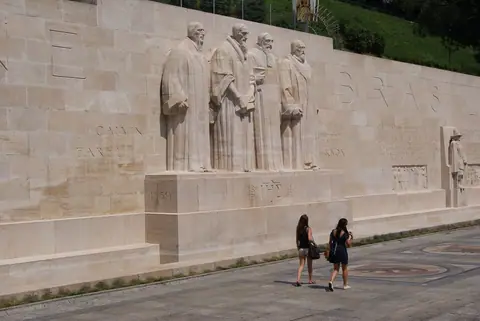
Parc des Bastions, Reformation Wall, Place de Neuve & Plainpalais
Geneva, Switzerland
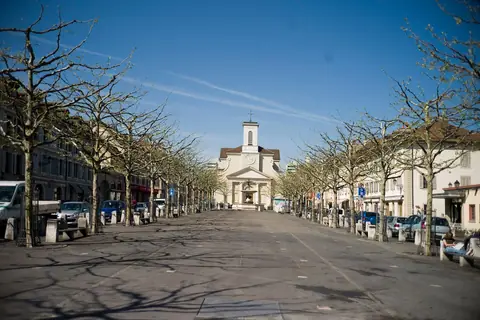
Carouge: Geneva's Sardinian Quarter, Courtyards & Artisan Workshops
Geneva, Switzerland
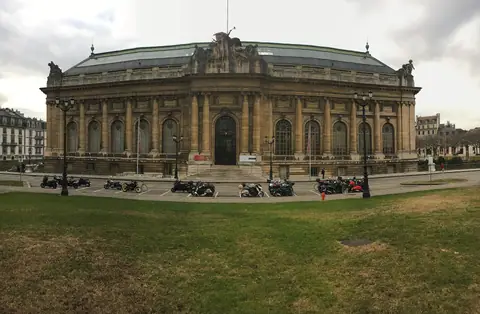
Geneva Museums: Musée d'Art et d'Histoire, Patek Philippe & Red Cross
Geneva, Switzerland
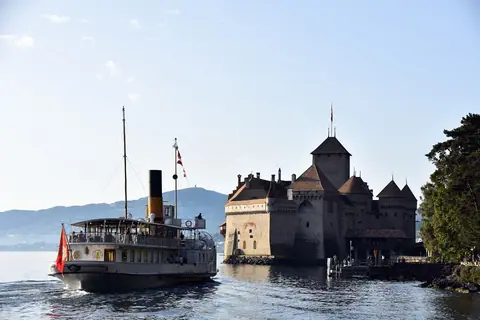
Day Trips from Geneva: Mont Salève, Lausanne & Chillon Castle
Geneva, Switzerland
