


























Gothenburg Opera, Maritiman Ships, Eriksberg and Älvsborg Bridge
Tracing Gothenburg's maritime heritage along the Göta älv riverfront, from the 1994 Opera House, Barken Viking, and Maritiman's naval vessels to Lindholmen, Eriksberg, and New Älvsborg.
For three centuries, shipyards and ocean liners lined both banks of the Göta älv river through central Gothenburg. Following the 1970s shipbuilding crisis that closed the giant Götaverken, Lindholmen, and Eriksberg yards, the city transformed its south and north riverbanks into a public promenade linked by Västtrafik's Älvsnabben and free cross-river Älvsnabbare ferries from Stenpiren and Lilla Bommen.
Walking west along the southern river quay from Gothenburg Central Station toward Stenpiren and Packhuskajen traces the maritime lifeline that made Gothenburg Sweden's gateway to the Atlantic. Where wooden East Indiamen of the eighteenth century and transatlantic emigrant steamers of the nineteenth century once departed, glass cultural venues, floating museum ships, and cross-river electric ferries now animate the harbour basin just steps from Gustaf Adolfs torg and the Museum of Gothenburg.
Lilla Bommen, Barken Viking, and the 1994 Gothenburg Opera
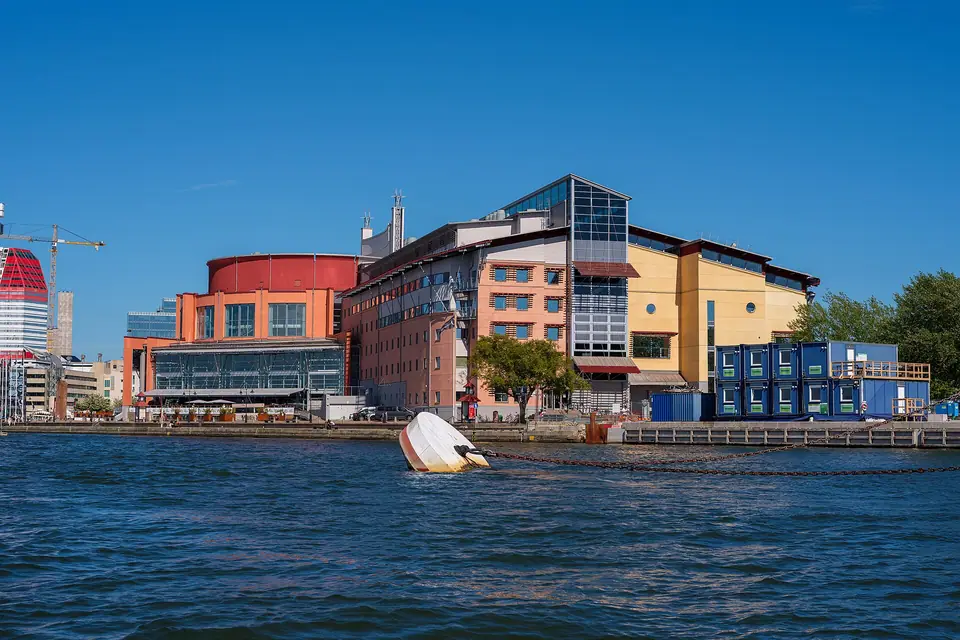
At the Lilla Bommen marina stands the 86-metre red-and-white high-rise of Skanskaskrapan (nicknamed Läppstiftet, the Lipstick, designed by Ralph Erskine and completed in 1989) alongside the four-masted steel barque Viking, launched in Copenhagen in 1906 as the largest sailing ship ever built in the Nordic countries and permanently moored in Gothenburg since 1951 as a hotel, restaurant, and maritime school ship. Immediately west along Packhuskajen rises the Gothenburg Opera (Göteborgsoperan), designed by architect Jan Izikowitz of Lund & Valentin with nautical silhouettes inspired by ship hulls, spinnaker sails, and harbour cranes. Built between June 1991 and October 1994 at a cost of 558 million SEK, the building measures 160 metres long, 85 metres wide, and 32 metres high across 28,700 square metres, with a 1,276-seat Main Stage that opened with Karl-Birger Blomdahl's space opera Aniara.
Even if you are not attending an evening performance of opera, ballet, or musical theatre, the glass-fronted foyers and harbourside boardwalk of the Gothenburg Opera welcome daytime visitors for waterfront lunches and coffee overlooking the moored tall ship and cross-river ferry piers. The angled glass facade is engineered to catch the low northern sun reflecting off the Göta älv channel.
Climbing Aboard Maritiman's Ten Floating Vessels
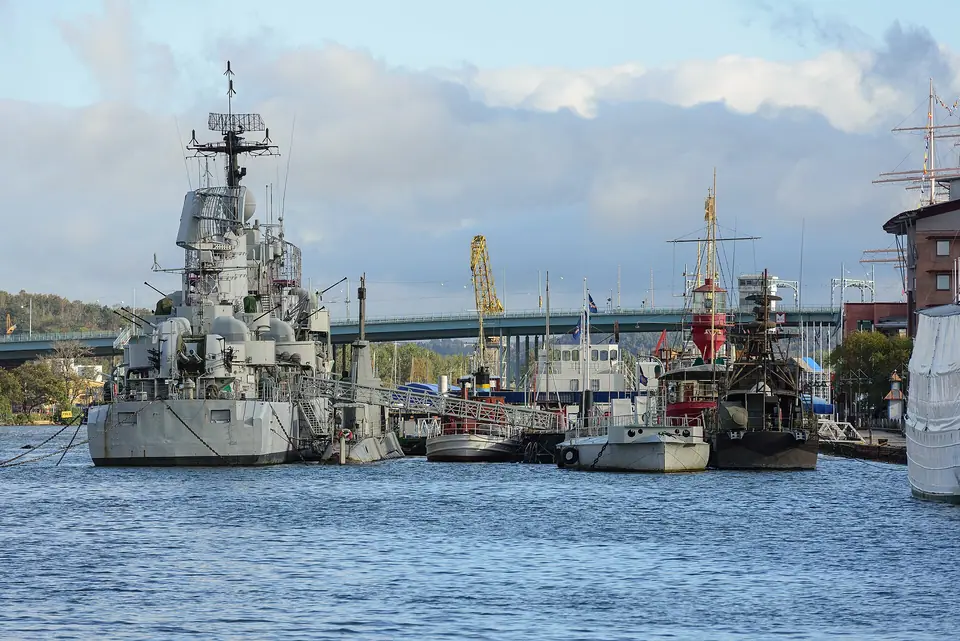
Next door along Packhuskajen, Maritiman (founded in 1985 and opened in 1987) is the world's largest floating ship museum. Visitors climb gangways and ladders across a fleet of ten historic civilian and naval vessels, headlined by the 1952 Halland-class destroyer HMS Småland (J19), the 1962 Draken-class submarine HMS Nordkaparen, the 1875 coastal monitor HMS Sölve, the 1915 lightship Fladen, and the 1946 cargo vessel Fryken; check the official site for April to October boarding dates.
Stepping through the watertight bulkheads of HMS Småland and descending into the torpedo rooms, galley, and periscope station of HMS Nordkaparen offers a close-up look at Cold War naval engineering in the Baltic and Kattegat. Even when the ship interiors close for winter maintenance, the quayside walkway along Packhuskajen remains open for viewing the moored hulls, fireboats, and the neoclassical 1866 Tullpackhuset customs warehouse.
Lindholmen, Eriksberg Crane, and Hisingen's Shipyard Conversion
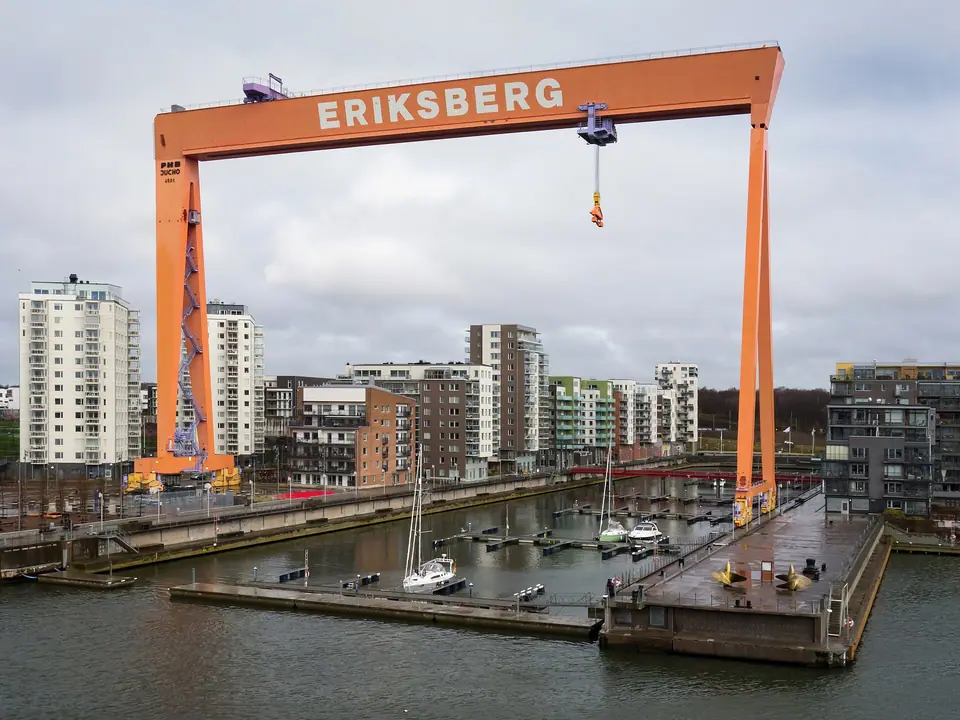
Take the cross-river ferry from Stenpiren across the Göta älv to Hisingen, Sweden's fifth-largest island by area and second-most populous. On the former shipyard peninsula of Lindholmen, Chalmers University of Technology, tech companies, and the 246-metre Karlatornet skyscraper (Scandinavia's tallest building) stand beside boardwalk cafés. Follow the wooden dockside promenade west to Eriksberg, where the bright orange Eriksberg Gantry Crane (Eriksbergskranen), built in Cologne in 1969, rising 84 metres high with a 109-metre beam and listed as a historic monument in 2012, straddles the old dry dock.
Along the northern waterfront between Lindholmspiren, Slottsberget (a preserved cluster of nineteenth-century wooden shipyard workers' cottages perched on a rocky outcrop), and Eriksberg, timber boardwalks and converted machine halls overlook the shipping channel. Climbing the short footpath up Slottsberget reveals small painted wooden cottages with garden fences and laundry lines that survived right beside the mammoth slipways of the twentieth-century tanker yards. Travellers comparing quiet waterfront hotel districts often choose Eriksberg or Lindholmen for their south-facing views back toward the city spires and easy ferry access to central seafood halls.
On the opposite southern bank near the foot of the suspension bridge lies Klippan, the historic outer harbour anchorage where East India merchantmen and transatlantic steamers transferred cargo onto shallow-draught canal barges before entering the inner city.
Riding the river ferries back and forth between Stenpiren, Lilla Bommen, Lindholmspiren, and Eriksberg is one of the most enjoyable ways to take in Gothenburg's harbour architecture from the water. From the open rear deck of the boat, you watch the copper-and-glass prows of the Gothenburg Opera recede behind the white masts of Barken Viking, pass alongside the grey naval hulls of Maritiman, and glide beneath the high green suspension cables of Älvsborgsbron while gulls follow the wake across the estuary.
Älvsborg Bridge and New Älvsborg Sea Fortress
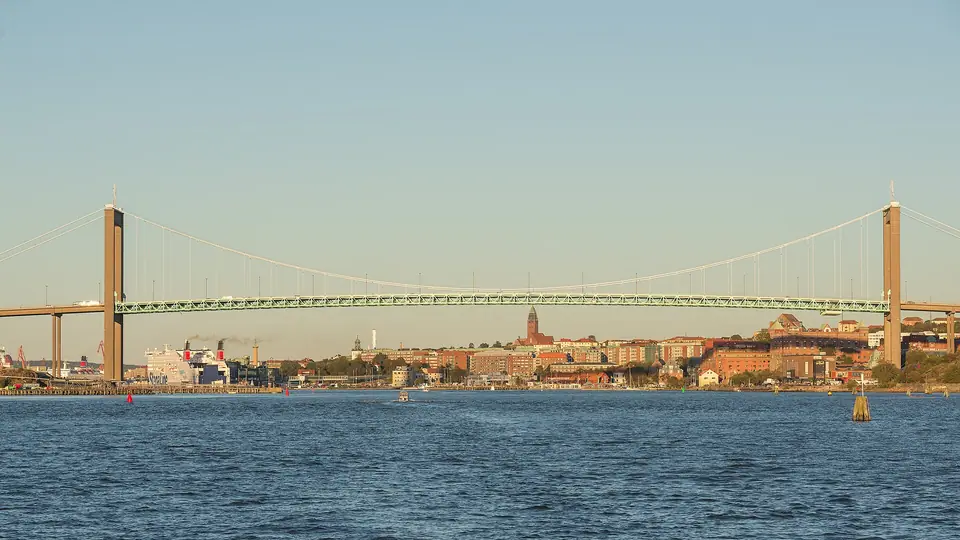
- Älvsborg Bridge (Älvsborgsbron): Spanning the harbour mouth west of Eriksberg, the 933-metre green suspension bridge designed by Sven Olof Asplund opened in 1966 with a 417.6-metre main span, 107-metre pylons, and 45 metres of shipping clearance.
- New Älvsborg Fortress (Nya Älvsborg): On the small island of Kyrkogårdsholmen at the river mouth stands the 1653 sea fortress defended by Admiral Per Lilliehorn and Commander Johan Abraham Lillie against Danish Admiral Tordenskjold's four-day siege in July 1719, reachable by summer tour boats from Lilla Bommen or paired with a day in our three-day Gothenburg itinerary.
- Ferry route planning: Ride the free Älvsnabbare shuttle between Stenpiren and Lindholmspiren on weekdays, or use a standard Västtrafik Zone A ticket on the full Älvsnabben line between Lilla Bommen, Stenpiren, Lindholmen, Slottsberget, Eriksberg, and Klippan on the southern bank.
Taken together, the two banks of the Göta älv tell the complete story of how Gothenburg reinvented its industrial port. Where steam cranes and dry docks once launched ocean tankers, wooden quayside promenades, floating museum ships, university campuses, and opera stages now invite walkers and ferry passengers to enjoy the riverfront from morning until dusk. Sunset views from the Eriksberg pier looking east toward the harbour cranes and city spires are especially memorable on clear evenings, when commuter boats leave silver wakes across the calm estuary water and waterfront terraces fill with diners along the northern docks.
Traveller tips
Real advice from people who have been to Gothenburg Opera, Maritiman Ships, Eriksberg and Älvsborg Bridge. Every tip is read by our team before it goes live.
No tips yet. Been here? Yours could be the first.
Thank you! Your tip will appear here after a quick review.
More in Gothenburg
Continue exploring Gothenburg with related neighbourhood, food, and planning guides
Southern Gothenburg Archipelago: Car-Free Styrsö, Vrångö and Brännö
Gothenburg, Sweden
Northern Archipelago: Hönö Klåva, Öckerö and Marstrand's Carlsten Fortress
Gothenburg, Sweden
Slottsskogen, Gothenburg Botanical Garden and Trädgårdsföreningen
Gothenburg, Sweden
Kronhuset, Gustaf Adolfs Torg and the Museum of Gothenburg
Gothenburg, Sweden
