


























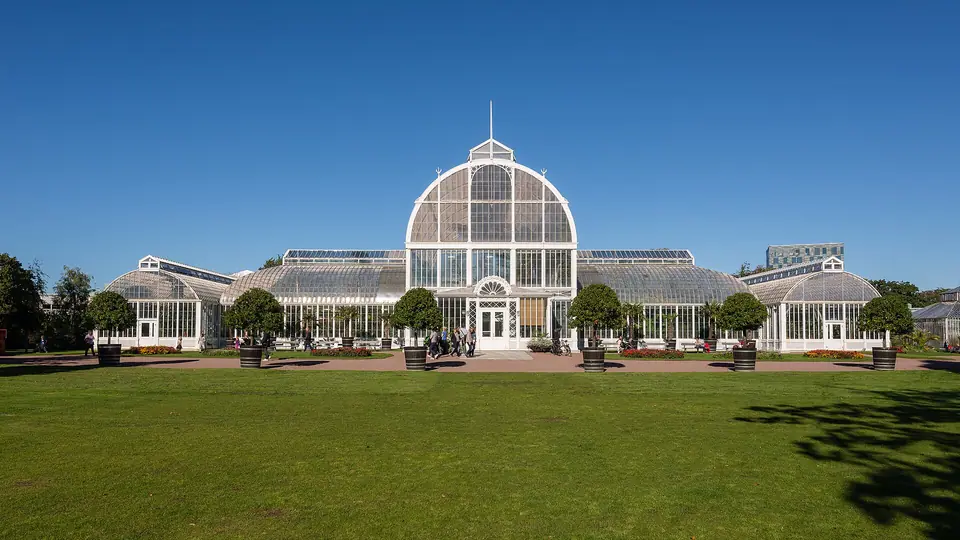
Slottsskogen, Gothenburg Botanical Garden and Trädgårdsföreningen
Gothenburg's three historic parks: the 1842 canal-side Rose Garden and 1878 Palm House of Trädgårdsföreningen, 1876 Slottsskogen, and the 175-hectare Botanical Garden.
Few European port cities devote as much central territory to public parks and botanical collections as Gothenburg. Three major green spaces form a garden corridor from the inner moat southwest to the wooded ridges of Änggårdsbergen: Trädgårdsföreningen beside Central Station, Slottsskogen south of Linnéplatsen, and the Gothenburg Botanical Garden directly across Dag Hammarskjöldsleden.
Created across decades of civic landscaping between the 1840s and the 1923 Tercentennial Jubilee, the three parks serve distinct roles in daily urban life. Trädgårdsföreningen preserves the formal Victorian horticulture of nineteenth-century glasshouses and rose beds along the canal, Slottsskogen provides an open woodland common and Nordic animal park for families and festivalgoers, and the Gothenburg Botanical Garden operates as a leading scientific alpine, woodland, and greenhouse collection in Northern Europe.
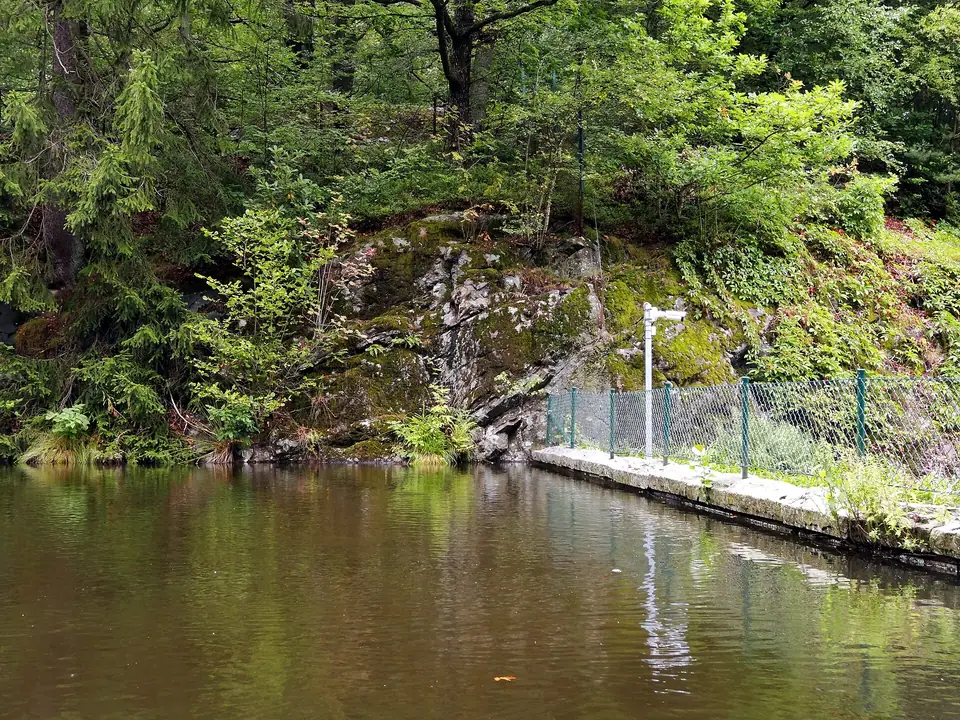
Slottsskogen: 137 Hectares of Woodland and Nordic Wildlife
Taking its name ("Castle Forest") from the former royal deer park associated with Old Älvsborg Castle, Slottsskogen was opened as a free municipal park in 1876 on the initiative of merchant August Kobb and landscaped in English romantic style by gardener C. P. Lange. Covering 137 hectares of native oak, beech, and linden woodland interspersed with wide lawns and ponds, the park climbs to three hill viewpoints topped by the 80-metre observation tower at Stora Utsikten. At its northeastern corner above Linnéplatsen stands the red-brick Gothenburg Natural History Museum (inaugurated in 1923, famous for displaying the world's only mounted blue whale, stranded at Askim in 1865).
Unlike fenced aristocratic estates, Slottsskogen was designed from its inception as an open social park where factory workers, families, and students could picnic on the grass, listen to bandstand music, and walk beneath native deciduous canopies. Winding carriage drives and shaded footpaths climb gently from the duck ponds on the valley floor up to the rocky ridge crest, where timber observation pavilions look out across the western harbour and residential rooftops.
Free Nordic Zoo, Azalea Valley, and Park Traditions
- Free Nordic Zoo and Seals: Slottsskogen houses one of Sweden's oldest public zoos, freely accessible year-round and dedicated to Nordic species and heritage breeds including elk (moose), Gotland ponies, Gute sheep, fallow deer, harbour seals in Säldammen, and Humboldt penguins.
- Azalea Valley and Festivals: In late May and June, hundreds of rhododendrons and azaleas bloom in Azaleadalen, while every August the park hosts the three-day Way Out West music festival. Regional wooden cottages scattered across the hills recall early twentieth-century open-air folklore displays, and the large playground of Plikta sits near the northern entrance below Haga and Linnégatan.
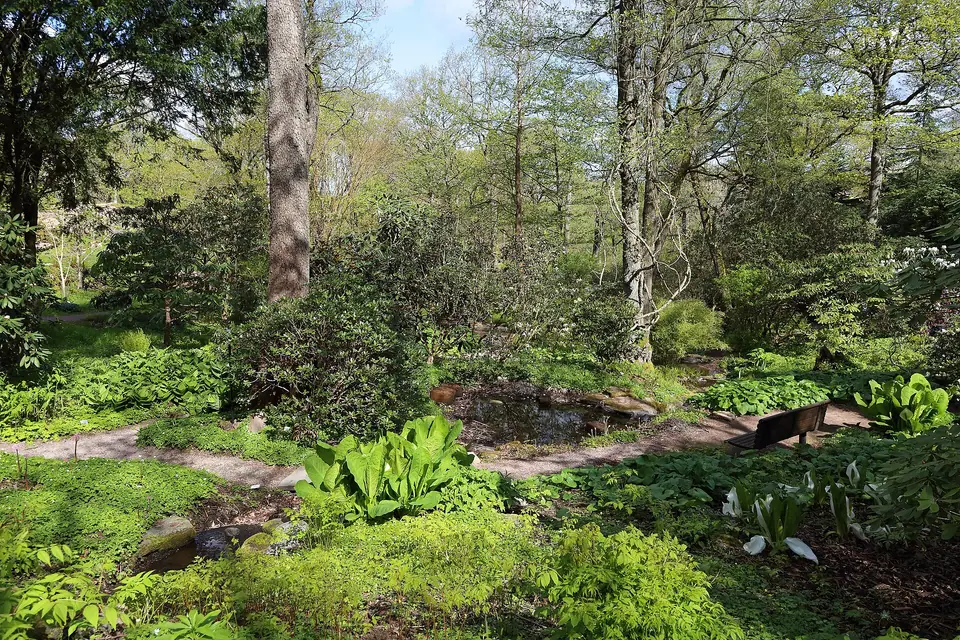
Gothenburg Botanical Garden (175 Hectares)
Directly across from Slottsskogen at Carl Skottsbergs gata 22A, the Gothenburg Botanical Garden (Göteborgs botaniska trädgård) was inaugurated on 8 July 1923 for the Tercentennial Jubilee under its first director, polar explorer and botanist Carl Skottsberg (who led the garden from 1919 to 1948). Spanning 175 hectares, including the wild arboretum and nature reserve of Änggårdsbergen and 40 hectares of cultivated gardens, it cultivates roughly 16,000 plant species.
The Rock Garden, Japanese Glade, and Greenhouses
Highlights inside the cultivated valley include the stepped Rock Garden (Klippträdgården) with over 5,000 alpine species and a cascade waterfall, the tranquil Japanese Glade (Japanska dalen) shaded by East Asian maples and magnolias, the Rhododendron Valley, the Herb Garden, and the display greenhouses holding 4,000 species, including 1,500 orchids and the rare Easter Island tree Sophora toromiro. Well-marked woodland paths continue uphill from the cultivated beds into the heath and pine ridges of Änggårdsbergen for views toward the coast.
Because the garden occupies a sheltered valley carved into coastal gneiss bedrock, microclimates vary from damp mossy ravines and shaded fern gullies to sun-warmed south-facing rock ledges. This topographical variety allows botanists to grow tender Himalayan perennials, South American high-altitude plants, and North American woodland flora side by side outdoors, while gravel benches beside the bulb meadows and bamboo groves invite unhurried afternoon walks.
Trädgårdsföreningen and the 1878 Palm House
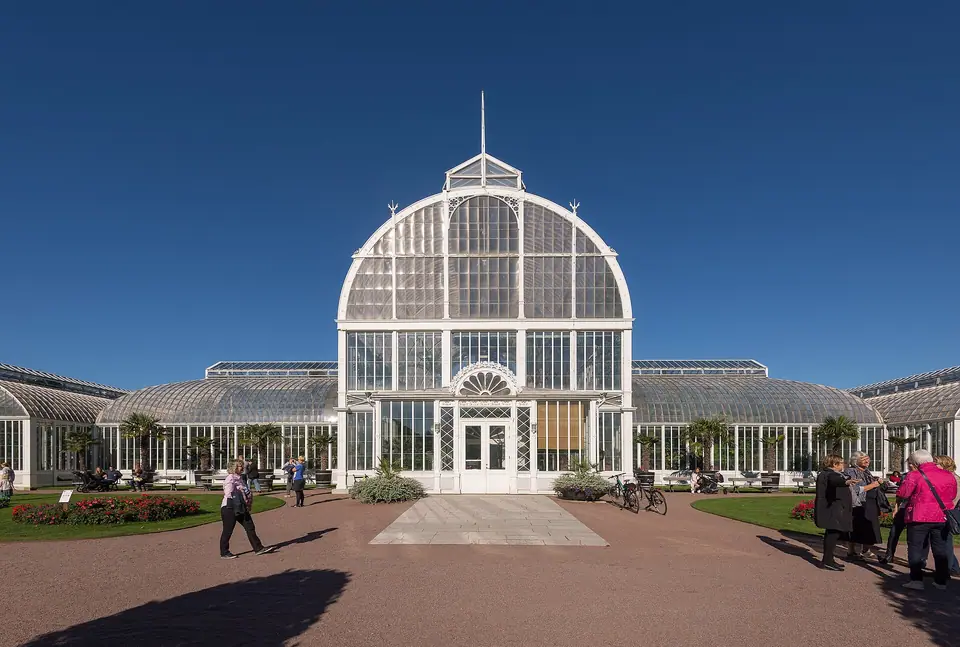
Back in the city centre along the Vallgraven moat between Drottningtorget and Kungsportsplatsen, Trädgårdsföreningen (The Garden Society of Gothenburg) was founded on 28 September 1842 by King Carl XIV Johan on the initiative of amateur botanist Henric Elof von Normann and protected as a listed monument in 1992. Its centrepiece is the 1878 Palm House (Palmhuset), a nearly 1,000-square-metre white cast-iron and glass conservatory modeled on London's Crystal Palace and fabricated in Edinburgh, flanked by the Rosariet rose garden containing roughly 4,000 roses across 1,200 to 1,900 varieties.
Walking through Trädgårdsföreningen along the Vallgraven canal reveals how nineteenth-century horticultural societies blended scientific plant collecting with civic leisure. Cast-iron arches inside Palmhuset shelter tall palms, Mediterranean citrus trees, and camellia beds from coastal frosts, while the surrounding lawns host summer rose exhibitions, outdoor concerts, and quiet canal-side benches. Together with the open oak woodlands of Slottsskogen and the alpine valleys of the Botanical Garden, these three green spaces give travellers a continuous botanical route from the railway station to the western nature reserves.
Linking All Three Gardens by Tram and Foot
Inside Palmhuset, five climate compartments shelter Mediterranean camellias, tropical palms, and water lilies even in the middle of winter, while the nineteenth-century wooden seed shop (Fröhandeln) and canal-side café paths provide an immediate green retreat outside Gothenburg Central Station. Trams 1, 2, and 6 connect Drottningtorget and Brunnsparken directly to Linnéplatsen and Botaniska Trädgården, making it easy to walk from Trädgårdsföreningen through Haga to Slottsskogen and the Botanical Garden as part of our three-day Gothenburg itinerary. Whether you visit in late spring for the azalea and rhododendron blooms, midsummer for the heirloom rose beds, or autumn for the maple foliage in the Japanese Glade, all three parks welcome visitors without an entry fee for their outdoor grounds; check the official sites for greenhouse renovation updates and seasonal rose-pruning talks.
For a relaxed half-day route, start with morning coffee beside the rose beds and cast-iron conservatory of Trädgårdsföreningen, ride the tram southwest to Linnéplatsen for a woodland walk past the seal pond and elk enclosures of Slottsskogen, and spend the afternoon climbing from the Rock Garden and Japanese Glade of the Botanical Garden into the quiet heather ridges of Änggårdsbergen. Few urban walks in Scandinavia offer such a rich variety of native woodland, historic glasshouse architecture, and global alpine plant collections within minutes of the city centre.
Traveller tips
Real advice from people who have been to Slottsskogen, Gothenburg Botanical Garden and Trädgårdsföreningen. Every tip is read by our team before it goes live.
No tips yet. Been here? Yours could be the first.
Thank you! Your tip will appear here after a quick review.
More in Gothenburg
Continue exploring Gothenburg with related neighbourhood, food, and planning guides
Gothenburg: Dutch Canals, Haga and West Coast Islands
Gothenburg, Sweden

Things to Do in Gothenburg: Museums, Canals, Liseberg and Islands
Gothenburg, Sweden
Haga Wooden Quarter and Skansen Kronan Redoubt in Gothenburg
Gothenburg, Sweden
Liseberg Amusement Park, Universeum and World of Volvo in Gothenburg
Gothenburg, Sweden
