


























Kronhuset, Gustaf Adolfs Torg and the Museum of Gothenburg
Exploring Gothenburg's 17th- and 18th-century heart inside Inom Vallgraven: the 1643 to 1654 Kronhuset, Gustaf Adolfs torg, and the Museum of Gothenburg in the 1762 East India Company House.
In the northwestern corner of Inom Vallgraven, a compact triangle of cobbled streets between Stora Hamnkanalen and Postgatan preserves Gothenburg's earliest surviving architecture from the 17th-century Swedish Empire and the 18th-century Chinese porcelain trade.
When Dutch engineers laid out Gothenburg's inner canal grid after the royal charter of 1621, the blocks surrounding Stora Hamnkanalen and Norra Hamngatan formed the political, military, and mercantile command centre of the fortified port. Although repeated eighteenth- and early nineteenth-century fires destroyed the early timber burgher houses, the crown's brick artillery storehouse, the governor's residence, the courthouse, and the stone headquarters of the Swedish East India Company survived intact within a short walk of Stenpiren and the Göta älv riverfront.
Kronhuset (1643 to 1654) and Kronhusbodarna
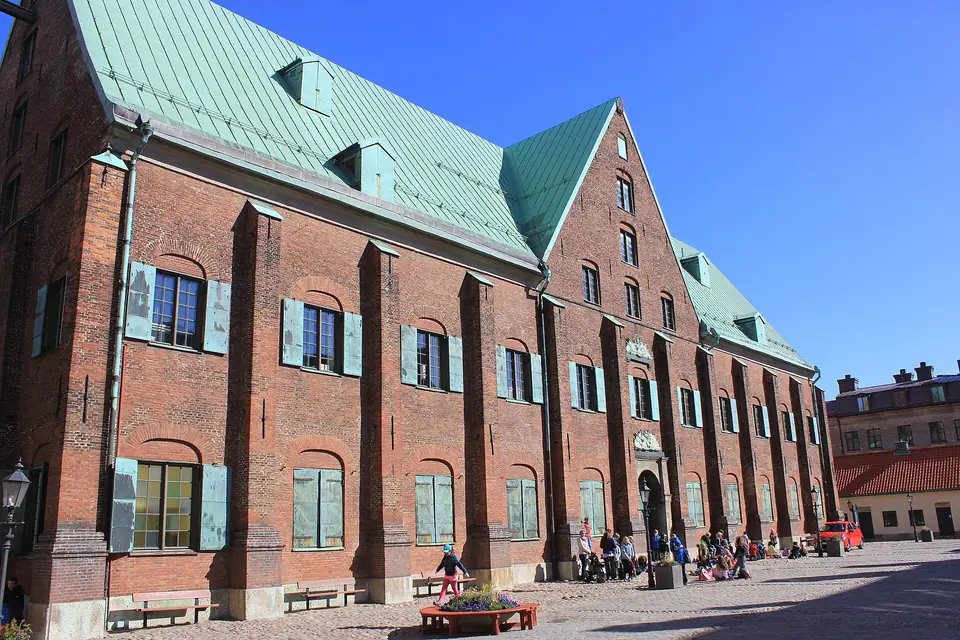
Tucked behind Gustaf Adolfs torg at Kronhusgatan 1D stands Kronhuset, Gothenburg's oldest non-residential building and, alongside the 1648 to 1650 Residenset, one of only two surviving 17th-century buildings in the city core. Built between 1643 and 1654 in imported Dutch red brick with a steep green copper roof to designs attributed to royal quartermasters Olof Hansson Örnehufvud and Johan Wärnschiöldh (and master builder Simon de la Vallée), it served as the garrison artillery storehouse for grain, uniforms, and weapons. Because its ground-floor hall was framed without interior columns, King Charles X Gustav convened the Estates of the Realm (Riksdag) here in January 1660; when the king fell ill and died in the nearby Residenset on 13 February 1660, his four-year-old son was proclaimed King Charles XI inside Kronhuset on 1 March 1660.
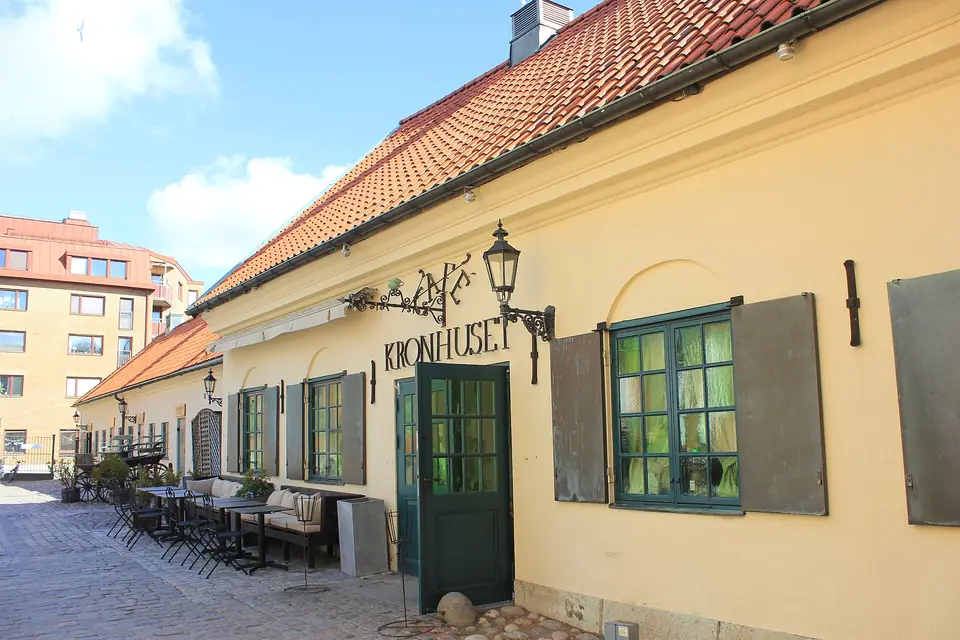
Bought by the City of Gothenburg in 1929 and listed as a national monument on 24 October 1968, Kronhuset now serves as a concert venue alongside the cobbled courtyard of Kronhusbodarna, mid-18th-century yellow timber workshops housing glassblowers, chocolatiers, watchmakers, and Café Kronhuset.
Stepping Into Kronhusbodarna's Craft Courtyard
Entering the quiet quadrangle of Kronhusbodarna from Postgatan or Kronhusgatan feels worlds removed from the busy shopping streets of Nordstan just one block east. The yellow-painted eighteenth-century outbuildings originally housed military wheelwrights, smithies, and harness rooms servicing the royal garrison. Today, open workshop doors allow visitors to watch artisans hand-dipping pralines, repairing mechanical timepieces, and shaping blown glassware before pausing for traditional Swedish fika beneath the steep brick gables and multi-level attic dormers of Kronhuset.
Gustaf Adolfs Torg, Börsen, and Asplund's Courthouse Annex
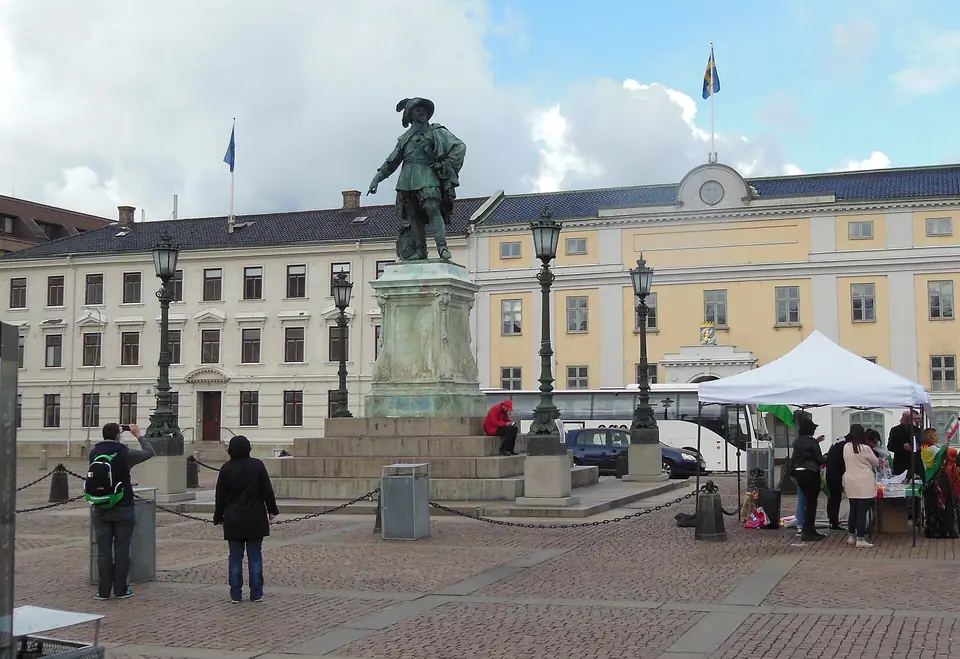
Two blocks south on the northern bank of Stora Hamnkanalen opens Gustaf Adolfs torg, the city's historic main square (called Stortorget until 1854, when Bengt Erland Fogelberg's bronze statue of founder King Gustavus Adolphus pointing to the ground with the words "Here the city shall stand" was erected). On the north side stands Börsen, the 1849 former mercantile exchange designed by P. J. Ekman that now hosts City Council meetings. On the west side stands the Gothenburg Courthouse (Rådhuset), originally designed by Nicodemus Tessin the Elder in 1672 and famous among architectural historians for its 1936 functionalist courtyard annex designed by Erik Gunnar Asplund. Just west along Södra Hamngatan 1 sits Residenset (Torstensonska palatset), built in 1648 to 1650 for Field Marshal Lennart Torstenson and still the official residence of the Governor of Västra Götaland County.
Architectural visitors should take time to look closely at the western side of Gustaf Adolfs torg, where Asplund's 1936 Courthouse extension joins Tessin's seventeenth-century facade. Rather than mimicking historical ornament or clashing violently with the older building, Asplund proportioned the pale rendered bay windows and ash-wood interior atrium to echo the classical rhythm of the square, creating one of Nordic modernism's most studied civic interiors. Directly opposite across the canal rises the spire of Christinae Church (commonly called the German Church, Tyska kyrkan), named after Queen Kristina and serving the city's historic German-speaking congregation.
Ostindiska Huset and the Museum of Gothenburg
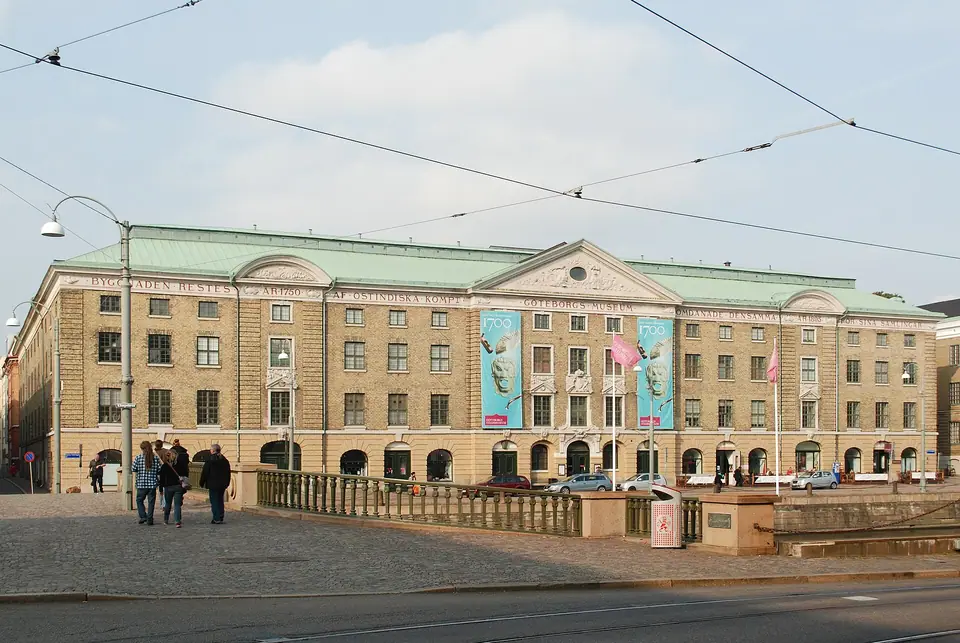
- Museum of Gothenburg (Stadsmuseum): Across Stora Hamnkanalen at Norra Hamngatan 12 stands Ostindiska huset, built between 1747 and 1762 to designs by Bengt Wilhelm Carlberg and Carl Hårleman as the headquarters and auction warehouse of the Swedish East India Company (founded in 1731).
- Inside the museum: Founded in 1861, the museum traces 12,000 years of West Swedish history, displaying Sweden's only preserved Viking ship, the 9th-century oak Äskekärr ship excavated on the Göta älv bank in 1933, alongside 18th-century Canton trade porcelain, prehistoric rock-carving casts, and the original 1621 urban growth models.
Inside the Museum of Gothenburg at Ostindiska huset, the transition from seventeenth-century Dutch military engineering to eighteenth-century global maritime trade comes alive through original artefacts recovered from the Göta älv and East India voyages. Model tables trace how the bastions and canals of Inom Vallgraven were staked out across marshy river meadows, while upstairs galleries display silk textiles, tea chests, and blue-and-white Chinese porcelain auctioned inside this very building to merchants from across Europe. In the vaulted ground-floor hall, the clinker-built oak planks of the Äskekärr Viking ship show the shipbuilding traditions that preceded Gothenburg's royal charter by centuries.
Walking Route Through the 17th-Century Core
A rewarding morning walk starts at Drottningtorget or Brunnsparken, follows the northern stone quay of Stora Hamnkanalen into Gustaf Adolfs torg, loops north through the cobbled courtyard of Kronhuset, and finishes inside the three-wing courtyard of Ostindiska huset. Because the museum's exhibitions span three full floors of the former East India warehouse, covering Stone Age coastal hunters, medieval fortress life, seventeenth-century Dutch town planning, and industrial-era working quarters, allow at least two hours inside before crossing the canal bridges toward Kungstorget or Haga and Skansen Kronan on Day 1 of our three-day itinerary; check the official site for museum opening hours.
Spending a morning around Kronhuset, Gustaf Adolfs torg, and Ostindiska huset gives every visitor a clear sense of how Gothenburg rose from a seventeenth-century Dutch-engineered garrison town into Sweden's window on the world. Between the red-brick artillery walls of Kronhuset, the functionalist timber and stone details of Gunnar Asplund's courthouse annex, and the porcelain and Viking ship galleries of the Museum of Gothenburg, the entire architectural evolution of the inner city unfolds within a few cobbled blocks, making this corner of Inom Vallgraven an essential starting point for any historical walk along the canals and harbour quays.
Traveller tips
Real advice from people who have been to Kronhuset, Gustaf Adolfs Torg and the Museum of Gothenburg. Every tip is read by our team before it goes live.
No tips yet. Been here? Yours could be the first.
Thank you! Your tip will appear here after a quick review.
More in Gothenburg
Continue exploring Gothenburg with related neighbourhood, food, and planning guides

Best Time to Visit Gothenburg: SMHI Climate, Daylight and Festivals
Gothenburg, Sweden
3 Days in Gothenburg Itinerary: Canals, Haga, Museums and Islands
Gothenburg, Sweden
Gothenburg: Dutch Canals, Haga and West Coast Islands
Gothenburg, Sweden
Things to Do in Gothenburg: Museums, Canals, Liseberg and Islands
Gothenburg, Sweden
