


























How to Get to Gothenburg: Landvetter Airport, Central Station and Trams
Practical arrival and local transit guide covering Göteborg Landvetter Airport (GOT), Sweden's oldest active main rail station from 1858, Stena Line ferries, and the 12-line tram network.
Situated midway between the capitals of Stockholm, Oslo, and Copenhagen, Gothenburg is western Sweden's primary air, rail, motorway, and ferry hub. Once you arrive, the entire urban area and southern island chain run on the integrated Västtrafik public transport system.
Because the railway station, long-distance coach terminal, and central tram interchange sit side by side at Drottningtorget and Brunnsparken on the edge of Inom Vallgraven, arriving travellers can step off a train or airport coach and reach central hotels within minutes. Even visitors heading straight to exhibitions or family attractions on the eastern side of the city centre can alight from airport coaches directly at Korsvägen without passing through the main rail station.
Flying into Göteborg Landvetter Airport (GOT)
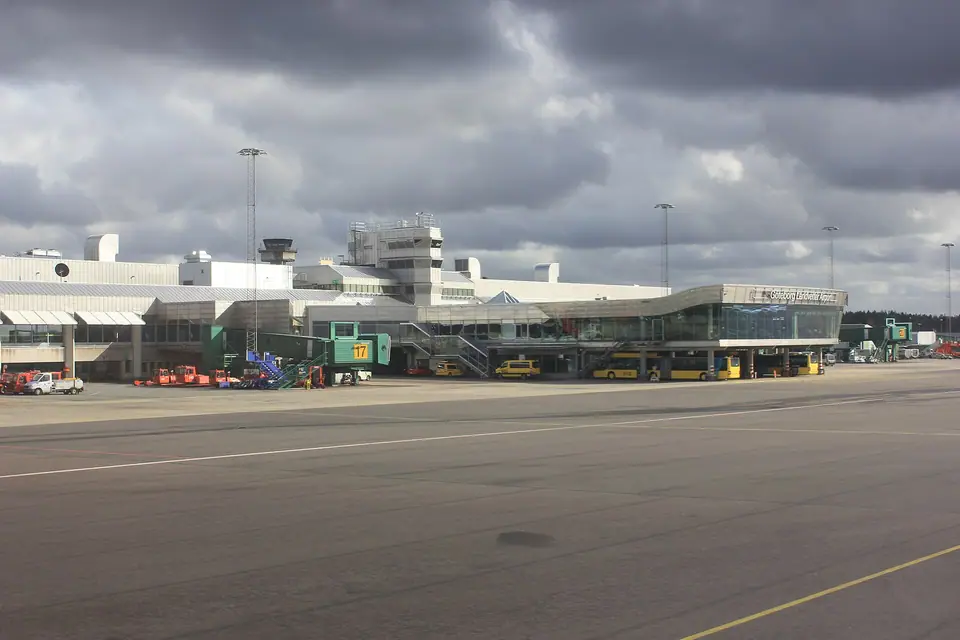
Göteborg Landvetter Airport (IATA: GOT) lies in Härryda Municipality, 20 to 25 kilometres east-southeast of central Gothenburg along motorway Riksväg 40. Opened by King Carl XVI Gustaf on 3 October 1977 to replace the older Torslanda Airport, Landvetter is Sweden's second-largest airport, handling more than 5.3 million passengers in 2024 across a single integrated passenger terminal and a 3,299-metre runway.
Because all international and domestic gates share a single terminal building at Landvetter, walking from baggage reclaim to the ground-transport forecourt takes only a few minutes under cover. Return coaches back to the airport depart from the same city-centre stops at Nils Ericson Terminal, Kungsportsplatsen, and Korsvägen throughout the day.
Airport Coaches and Transfers into the City
- Airport coaches (20 to 30 minutes): Vy Flygbussarna and FlixBus run frequent coaches from outside the arrivals hall directly to Korsvägen (for Liseberg and Gothia Towers), Kungsportsplatsen, and Nils Ericson Terminal beside Gothenburg Central Station; check the official site for departures tied to late-night flights.
- Contactless ticketing and taxis: Coach tickets can be purchased via mobile apps or contactless payment cards before boarding, and authorised taxi ranks outside the terminal display fixed-zone fare stickers on the rear window for journeys into central Gothenburg.
Trains to Gothenburg Central Station
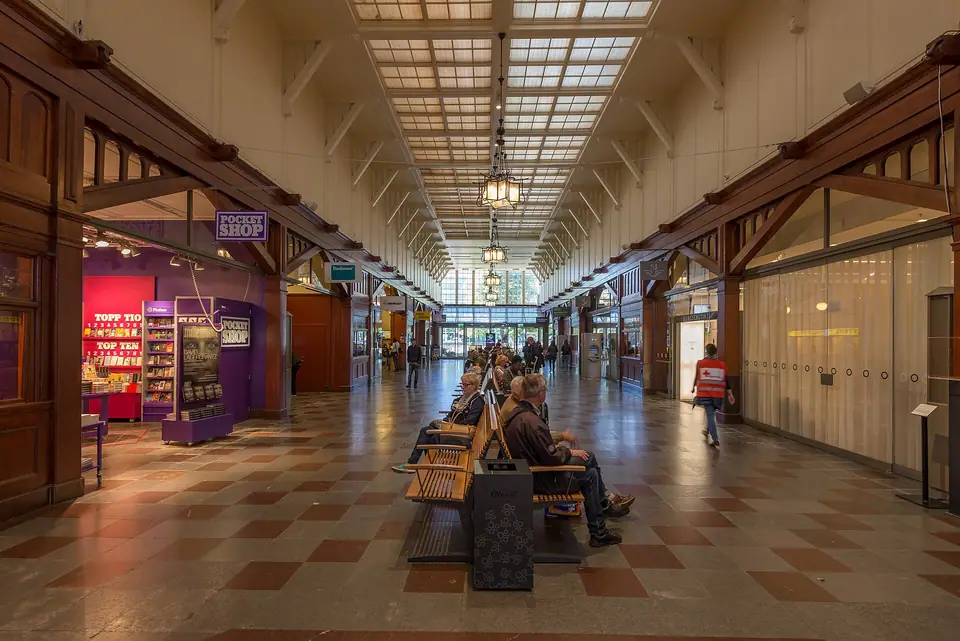
Opened on 4 October 1858 to designs by chief railway architect Adolf Wilhelm Edelsvärd for the Western Main Line (Västra stambanan), Gothenburg Central Station (Göteborgs centralstation) at Drottningtorget is Sweden's oldest active main railway station, serving 27 to 32.8 million passengers a year across 16 terminal tracks. Directly connected to its northern hall is the 1996 Nils Ericson Terminal (designed by Niels Torp) for regional and long-distance coaches.
Inside the limestone-and-brick station complex, luggage lockers, ticket machines, coffee bars, and direct indoor passages lead out to Drottningtorget's tram platforms to the south and the glazed coach gates of Nils Ericson Terminal to the north, sheltering arriving rail passengers from coastal rain and wind. Just across the square begins the canal-side garden park of Trädgårdsföreningen.
Direct Rail Routes and Stena Line Ferries
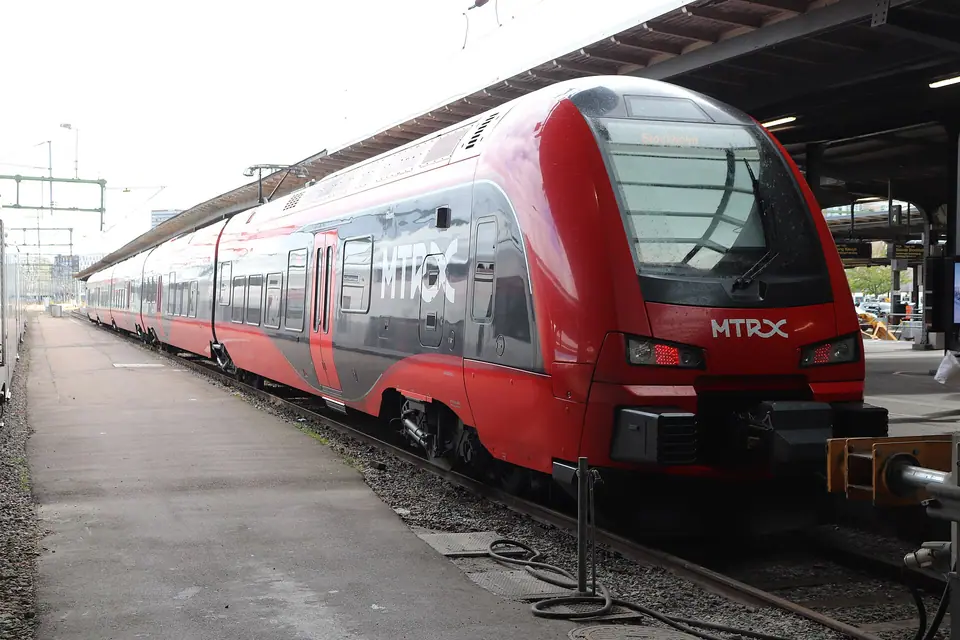
- From Stockholm (approx. 3 hours): High-speed SJ X2000 and VR Snabbtåg (formerly MTRX) electric trains run hourly along the Western Main Line via Skövde.
- From Malmö and Copenhagen (approx. 2.5 to 3.5 hours): Frequent Öresundståg and SJ trains run south along the West Coast Line via Halmstad, Helsingborg, Lund, and Malmö across the Øresund Bridge to Copenhagen Airport and København H.
- From Oslo (approx. 3.5 hours): Vy regional trains link Oslo Central Station with Gothenburg via Halden and Trollhättan.
- Stena Line Ferries: Stena Line operates daily car and foot-passenger ferries from the Denmark Terminal at Masthuggskajen to Frederikshavn in northern Jutland (around 3 hours 30 minutes) and overnight ferries from its Germany Terminal (Tysklandsterminalen) to Kiel in Germany.
Riding Gothenburg's 12 Tram Lines and River Ferries
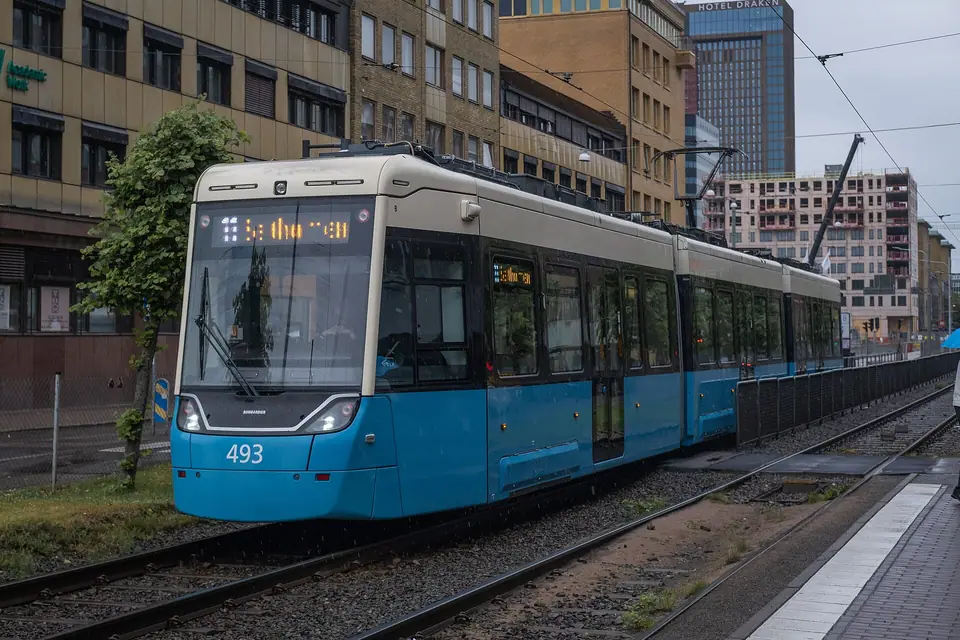
Opened as a horse tramway on 24 September 1879 and electrified in 1902, the Gothenburg tram network (Göteborgs spårväg) is the largest light-rail system in the Nordic countries, covering 12 numbered lines, 132 stops, and roughly 173 kilometres of track with over 125 million annual passenger journeys. Almost all lines pass through Brunnsparken or Centralstationen.
Navigating the tram network is intuitive even for visitors arriving in Gothenburg for the initial time. Electronic display boards at every platform show the line number, destination, and minutes until departure, while colour-coded route maps inside the carriages trace how lines fan out from Brunnsparken and Drottningtorget toward Haga, Linnéplatsen, Korsvägen, and the western ferry terminal at Saltholmen. Because tickets are validated digitally in the Västtrafik To Go app or by tapping a contactless payment card on the onboard reader, boarding through the wide low-floor doors is quick and cashless across all lines.
If you are arriving by car along the European route corridors from Oslo, Stockholm, or Helsingborg and Malmö, note that central Gothenburg operates an automatic weekday congestion tax system (trängselskatt) and that street parking inside the moat and around Haga and Lorensberg is limited. Leaving your vehicle at a peripheral park-and-ride facility or hotel garage and relying on Västtrafik trams and ferries is far simpler for sightseeing across the historic core.
Foot passengers arriving on Stena Line ferries from Frederikshavn at Masthuggskajen or from Kiel at Majnabbe can board surface trams just outside the ferry terminals to reach Brunnsparken and Centralstationen in minutes. Similarly, long-distance bus travellers stepping off at Nils Ericson Terminal walk directly under cover into the main railway hall and Drottningtorget tram plaza without crossing busy roadways, making onward connections across western Sweden and the coastal islands straightforward throughout the day.
Västtrafik To Go App, Zone A Passes, and Archipelago Boats
Download the Västtrafik To Go app to buy 90-minute single Zone A tickets or 24-hour and 72-hour passes, which also cover the Älvsnabben (Line 285) river ferry and Styrsöbolaget ferries from Saltholmen to the southern archipelago, while the short cross-river shuttle Älvsnabbare (Line 286) runs between Stenpiren and Lindholmspiren on the Hisingen waterfront. Travellers heading north to Hönö, Öckerö, or Marstrand can also purchase single or multi-zone tickets in the same app. During summer, volunteer conductors from the Ringlinien Tramway Society operate historic wooden vintage trams on the heritage Liseberg Line between Centralstationen and Sankt Sigfrids Plan; check Västtrafik for current fares and pair a multi-day pass with our three-day Gothenburg itinerary. For cyclists and walkers, the municipal Styr & Ställ bike-sharing system also maintains docking stations outside major tram stops, parks, and river quays.
Traveller tips
Real advice from people who have been to How to Get to Gothenburg: Landvetter Airport, Central Station and Trams. Every tip is read by our team before it goes live.
No tips yet. Been here? Yours could be the first.
Thank you! Your tip will appear here after a quick review.
More in Gothenburg
Continue exploring Gothenburg with related neighbourhood, food, and planning guides

Best Time to Visit Gothenburg: SMHI Climate, Daylight and Festivals
Gothenburg, Sweden
3 Days in Gothenburg Itinerary: Canals, Haga, Museums and Islands
Gothenburg, Sweden
Gothenburg: Dutch Canals, Haga and West Coast Islands
Gothenburg, Sweden
Things to Do in Gothenburg: Museums, Canals, Liseberg and Islands
Gothenburg, Sweden
