


























Things to Do in Gothenburg: Museums, Canals, Liseberg and Islands
A curated guide to Gothenburg's essential landmarks, from 17th-century hilltop fortresses and Nordic art galleries to timber roller coasters and car-free islands.
Gothenburg balances its 17th-century Dutch fortification history and maritime shipyards with major cultural institutions built for the 1923 Gothenburg Tercentennial Jubilee Exposition. Because the city's main districts are linked by 12 tram lines and river ferries, you can move easily from morning coffee in a 19th-century wooden quarter to an afternoon art museum or island ferry across the Kattegat.
Rather than clustering all monuments around a single ceremonial plaza, the city spreads its sights across distinct waterfronts, hillside redoubts, and leafy museum boulevards. Visitors who pair the inner canal ring of Inom Vallgraven with the southern parks and outer skerries gain a complete picture of how royal military engineers, East India merchants, nineteenth-century timber builders, and modern industrial designers shaped western Sweden's principal port.
Historic Quarters, Fortresses, and Canals
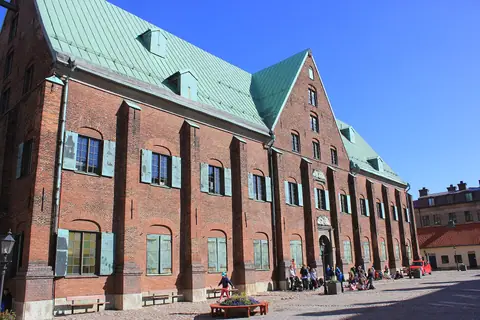
Begin in Haga, established by royal decree of Queen Kristina on 25 October 1647. Along pedestrian Haga Nygata, preserved three-storey landshövdingehus (one brick ground floor topped by two wooden storeys) house independent shops and bakeries serving oversized cinnamon buns. From Haga, climb Risåsberget to Skansen Kronan, the octagonal granite redoubt designed by Erik Dahlbergh and built between 1687 and 1689 with walls 4 to 7 metres thick beneath a gilded crown. Back inside the moat, visit Kronhuset (built 1643 to 1654, Gothenburg's oldest secular building) and the Museum of Gothenburg inside the 1762 Swedish East India Company House on Norra Hamngatan, where Sweden's only preserved Viking ship, the Äskekärr ship, is displayed alongside 18th-century Canton trade porcelain.
Strolling along Stora Hamnkanalen between Gustaf Adolfs torg and Kungsportsplatsen also reveals the classical stone facades erected after eighteenth- and nineteenth-century town fires replaced early timber dwellings inside the moat. In the artisanal courtyard of Kronhusbodarna beside Kronhuset, craftspeople still work in yellow eighteenth-century storehouses, offering a quiet contrast to the busy tram interchanges at nearby Brunnsparken. Open-top sightseeing barges also depart from Kungsportsplatsen during warmer months, slipping beneath low stone bridges along the Vallgraven moat and out into the main harbour basin.
1923 Jubilee Institutions, Science, and Design
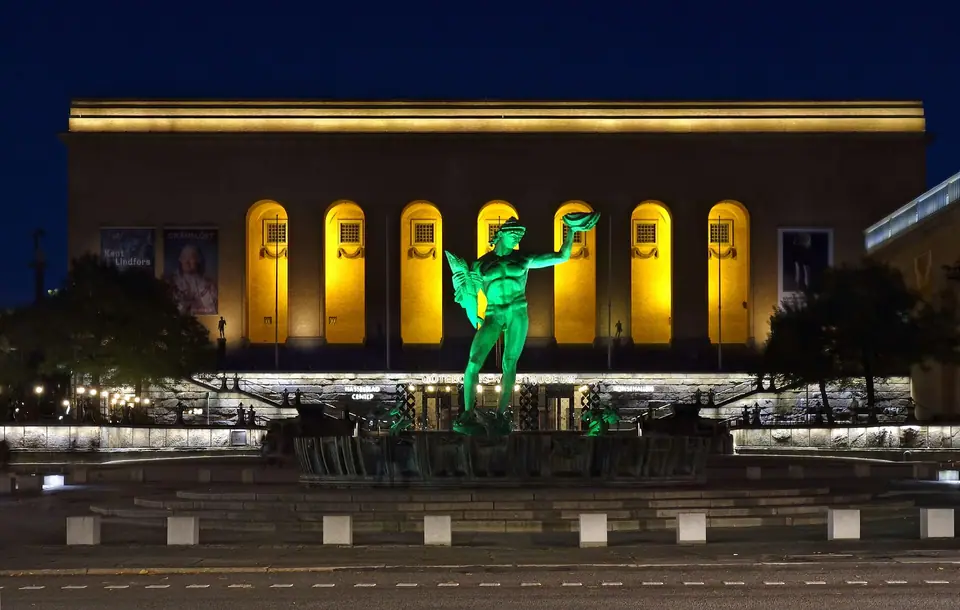
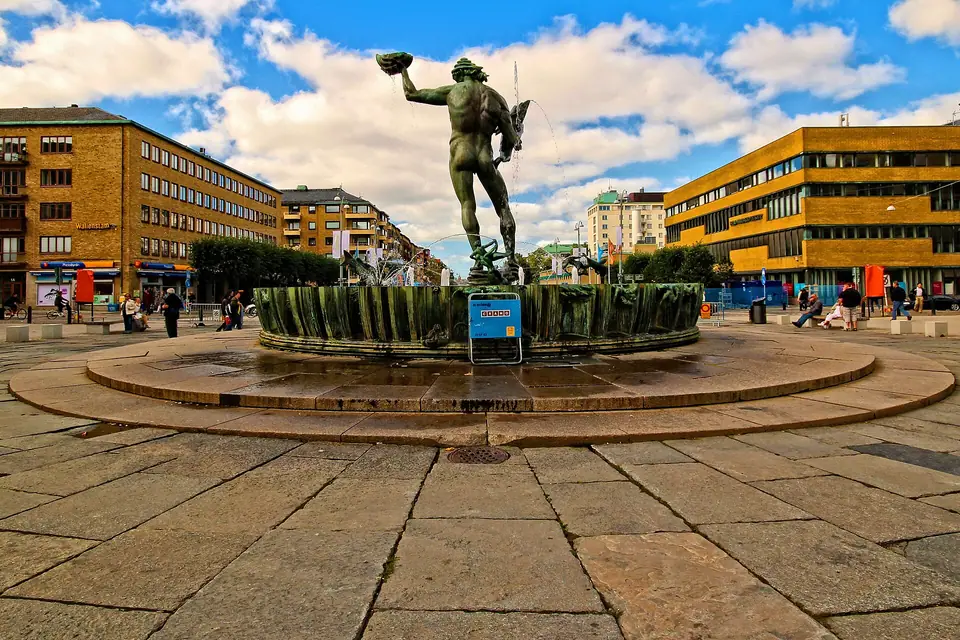
At the top of Kungsportsavenyn, Götaplatsen is framed by Carl Milles' bronze Poseidon fountain and the monumental yellow-brick Gothenburg Museum of Art, which holds more than 70,000 works and the celebrated Nordic fin-de-siècle Fürstenberg Gallery. Two blocks north on Vasagatan, the 1916 red-brick Röhsska Museum showcases over 50,000 design, fashion, and applied arts pieces. East of Götaplatsen at Korsvägen, Liseberg Amusement Park (opened 8 May 1923) pairs the Balder wooden coaster and Helix steel launch coaster with Universeum (opened 8 June 2001) and the circular glulam-and-CLT timber building of World of Volvo (opened 14 April 2024).
This cultural axis between Götaplatsen and Korsvägen allows travellers with differing interests to split up or move between art, natural science, and industrial design within a single afternoon. While art lovers study late-nineteenth-century plein-air canvases by Nordic painters under the vaulted skylights of the art museum, families and architecture enthusiasts can explore Universeum's suspended rainforest walkways, timber gridshell dome, and Volvo's historic passenger vehicles just down the slope.
Waterfront Quays, Floating Ships, and Market Halls
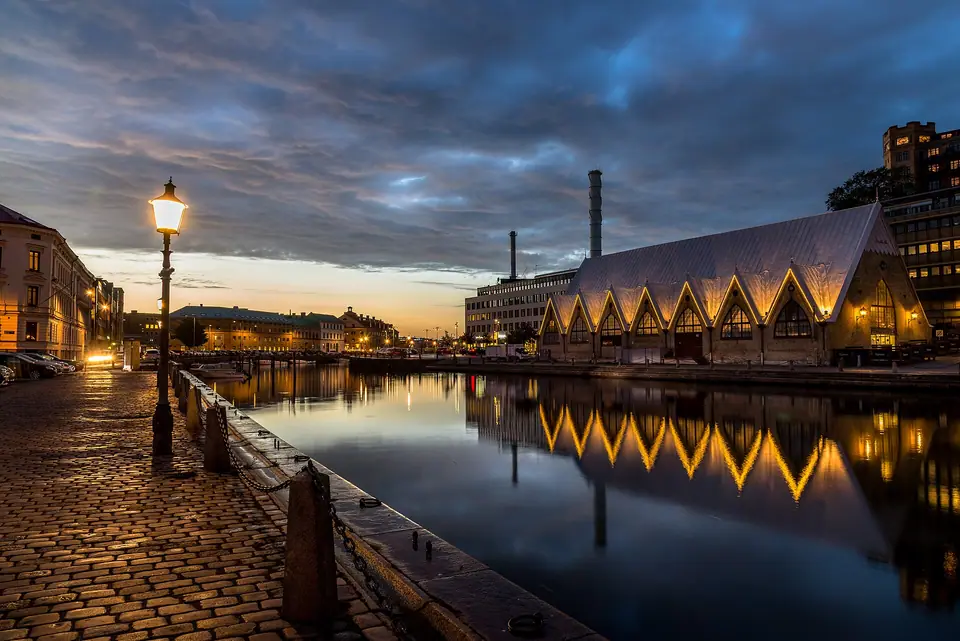
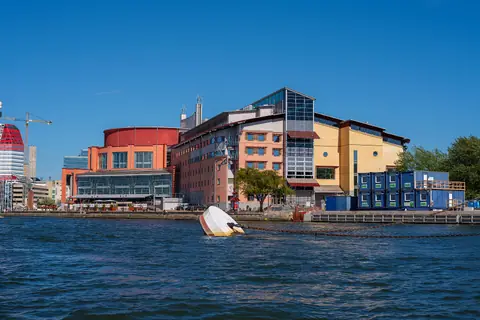
Where the inner canals meet the main channel of the Göta älv at Packhuskajen and Lilla Bommen, Gothenburg's seafaring past takes centre stage. Moored beside the angled glass foyers of the 1994 Gothenburg Opera, the floating ship collection of Maritiman lets visitors step aboard Cold War naval vessels, lightships, and steam tugs, while the four-masted barque Viking rises beside the harbourfront promenade. For lunch, walk south along Rosenlundskanalen to the restored 1874 Feskekôrka fish hall or cross Kungstorget into the 1889 barrel-vaulted market hall of Stora Saluhallen for West Coast shellfish and hand-peeled shrimp sandwiches.
From the Stenpiren travel hub just west of Gustaf Adolfs torg, cross-river commuter ferries carry foot passengers across the shipping lane to Hisingen in minutes. Strolling the northern timber boardwalks from Lindholmen to the preserved orange gantry crane at Eriksberg provides wide-angle views back toward the southern skyline and hill fortresses.
Botanical Conservatories and the Kattegat Islands
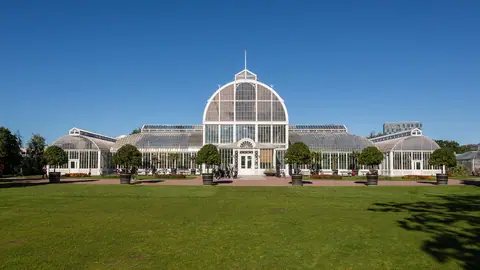
Green space is woven directly into the city's tram network. Just steps from Central Station, the historic garden park of Trädgårdsföreningen shelters thousands of roses and an 1878 cast-iron glasshouse, while southwest of Haga lie the wooded hills of 1876 Slottsskogen and the rock gardens of the 1923 Gothenburg Botanical Garden. When the weather is clear, extend your sightseeing onto the water by boarding a tram to Saltholmen for car-free island trails or riding north into Bohuslän.
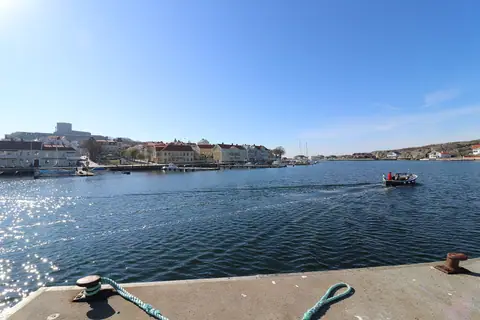
Even a half-day excursion to the islands changes the perspective of a city break: on Styrsö, Brännö, and Vrångö, footpaths wind between painted wooden cottages, Bronze Age hilltop cairns, and sheltered swimming coves without a single car in sight, while north of the river mouth, fishing trawlers line the quays of Hönö Klåva below the granite ramparts of Marstrand. Because both city trams and southern archipelago ferries share the same Västtrafik ticket system, switching between urban galleries and coastal hiking paths requires no advance boat reservation or separate transit pass. Travellers visiting during spring, summer, or autumn can easily balance indoor museum mornings with afternoon harbour walks.
For visitors interested in architecture and urban regeneration, walking from the 17th-century brick ramparts of Kronhuset to the functionalist courthouse courtyard by Erik Gunnar Asplund and the contemporary laminated-timber rings of World of Volvo illustrates four centuries of Nordic building design. Public benches along Stora Hamnkanalen, grassy bastions atop Skansen Kronan, and wooden ferry decks on the Göta älv make sightseeing restful between museum stops, with coffee roasters and bakery counters never more than a short walk away.
Essential Experiences Across the City
- Feskekôrka and Stora Saluhallen: Taste West Coast shrimp sandwiches and smoked fish at Victor von Gegerfelt's 1874 Gothic-inspired Fish Church or the 1889 market hall on Kungstorget.
- Botanical Garden, Slottsskogen, and Palmhuset: Walk through the 16,000 plant species of the 1923 Gothenburg Botanical Garden, see Nordic elk and Humboldt penguins in 1876 Slottsskogen, and step inside the 1878 cast-iron Palm House at Trädgårdsföreningen.
- Maritiman and Gothenburg Opera: Board the 1952 Cold War destroyer HMS Småland and submarine HMS Nordkaparen at Packhuskajen near the 1994 Gothenburg Opera and Barken Viking.
- Southern and Northern Archipelagos: Sail from Saltholmen to car-free Styrsö, Brännö, and Vrångö, or head north to Hönö Klåva and Carlsten Fortress on Marstrand; check the official site for ferry schedules and review our three-day itinerary to organise your days.

Traveller tips
Real advice from people who have been to Things to Do in Gothenburg: Museums, Canals, Liseberg and Islands. Every tip is read by our team before it goes live.
No tips yet. Been here? Yours could be the first.
Thank you! Your tip will appear here after a quick review.
More in Gothenburg
Continue exploring Gothenburg with related neighbourhood, food, and planning guides
Northern Archipelago: Hönö Klåva, Öckerö and Marstrand's Carlsten Fortress
Gothenburg, Sweden
Slottsskogen, Gothenburg Botanical Garden and Trädgårdsföreningen
Gothenburg, Sweden
Gothenburg Opera, Maritiman Ships, Eriksberg and Älvsborg Bridge
Gothenburg, Sweden
Kronhuset, Gustaf Adolfs Torg and the Museum of Gothenburg
Gothenburg, Sweden
