




















Best Time to Visit Gyeongju: Cherry Blossoms, Pink Muhly & Seasons
Month-by-month weather and seasonal guide to Gyeongju: early April cherry blossoms around Bomun Lake, October pink muhly grass and autumn ginkgoes, and winter quiet.
Gyeongju sits inside a sheltered inland river basin surrounded by Mount Toham (745 m). To the east and Mount Danseok (827 m) to the west, Gyeongju experiences four sharply contrasting seasons that completely change the colour palette of its royal burial mounds and temple courtyards. Gyeongju is famous across South Korea for both its April cherry blossom tunnels and its October autumn foliage and pink muhly fields. Choosing your travel month determines both the photography conditions and how early you should book a hanok guesthouse. Pair this seasonal breakdown with our Gyeongju packing and dress guide and our Gyeongju travel guide.
| Season (Months) | Avg High / Low (°C) | Floral & Cultural Highlights | Crowd & Price Level |
|---|---|---|---|
| Spring (Late Mar to May).. | 16°C to 26°C / 4°C to 13°C. | Cherry blossoms (late Mar to Apr 10), yellow rapeseed fields, double-petal gyeopbeotkkot at Bulguksa (mid-to-late Apr). | Peak during cherry blossom week; ideal in May. |
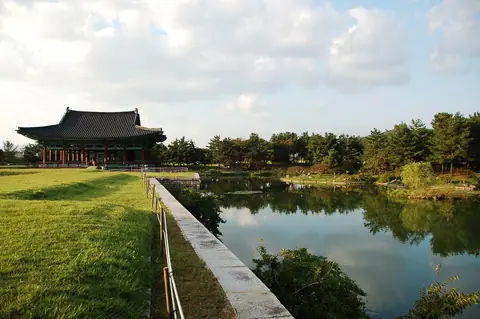
| Summer (Jun to Aug).. | 28°C to 31°C / 18°C to 22°C. | Emerald green royal tumuli, blooming lotus ponds around Donggung & Wolji (July to Aug), warm night walks. | Moderate; humid with July monsoon showers. |
| Autumn (Sep to Nov).. | 15°C to 26°C / 3°C to 17°C. | Pink muhly grass at Cheomseongdae (Sep to Oct), Silla Cultural Festival (Oct), crimson maples & golden ginkgoes (late Oct to mid Nov). | High on October weekends; crisp, dry skies. |
| Winter (Dec to Feb).. | 6°C to 9°C / -4°C to -2°C. | Golden dried grass on the royal tombs, empty temple courtyards, New Year sunrise at Munmu's Underwater Tomb. | Low; best hotel rates and zero queues. |
Spring (Late March to May): Two Waves of Cherry Blossoms
April and May are widely cherished as the most picturesque months to visit Gyeongju, and the city offers a rare botanical advantage. If you miss the first wave of cherry blossoms, a second wave blooms two weeks later:
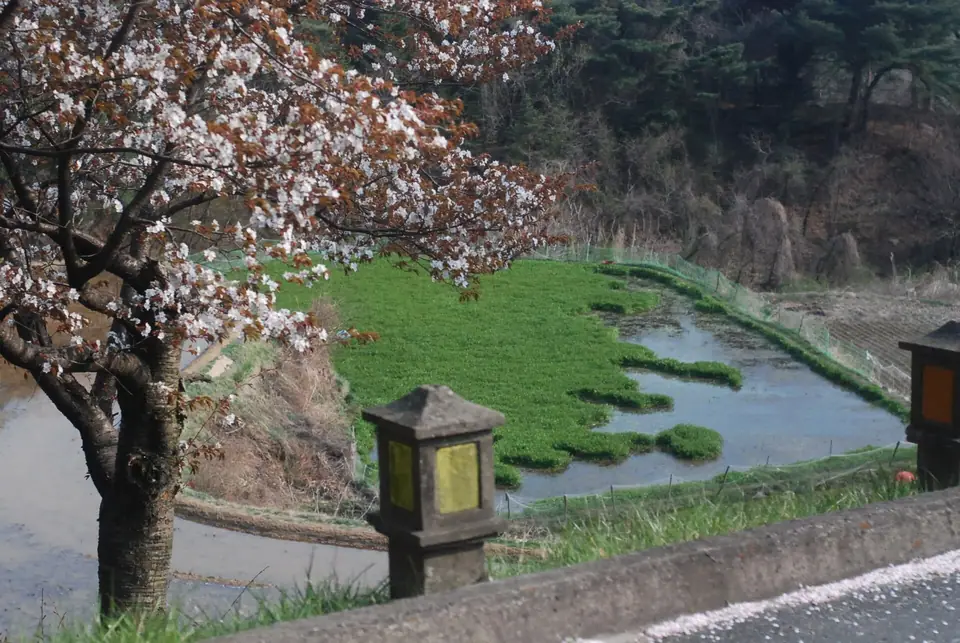
- Standard Cherry Blossoms (Beotkkot, March 28 to April 8). Tens of thousands of pale pink Yoshino cherry trees burst into bloom simultaneously around the 8-kilometre perimeter of Bomun Lake. Along the stone walls of Daereungwon, beside the Heungmuro riverside road, and around Woljeonggyo Bridge. Note that the first Saturday of April typically hosts the Gyeongju Cherry Blossom Marathon around Bomun Lake, when morning buses are diverted until 13:00.
- Double-Petal King Cherry Blossoms (Gyeopbeotkkot, April 14 to April 25). Even after the regular cherry petals have fallen, the sloped park directly below the main entrance gate of Bulguksa Temple comes alive with hundreds of fluffy. Deep rose-pink double cherry blossom trees that look like pom-poms hanging low over the grass.
- Yellow Canola & May Greenery. Throughout April, fields of bright yellow rapeseed (yuchae) carpet the meadows around Cheomseongdae and Banwolseong, while May brings dry, sunny 24°C afternoons and Buddha's Birthday lantern celebrations at Bulguksa.
Autumn (Late September to Mid-November): Pink Muhly and Golden Ginkgoes
If you prefer crisp blue skies, low humidity, and comfortable hiking weather on Mount Namsan, October and the first two weeks of November are unmatched in Gyeongju:
- Pink Muhly Grass & Autumn Wildflowers (Mid-September to Late October). Just north of Cheomseongdae Observatory, municipal botanists cultivate a vast meadow of pink muhly grass (Muhlenbergia capillaris) together with cosmos. Zinnias, and silver grass that turns into a glowing rose-pink cloud at late afternoon sunset.
- The Silla Cultural Festival (Early to Mid-October). Celebrated annually since 1962, this flagship three-day festival stages royal Silla street parades, traditional mask dances, outdoor media-art projections across Daereungwon's burial mounds, and silk lantern displays along Woljeonggyo Bridge.
- Peak Maple and Ginkgo Foliage (October 25 to November 15). Because Gyeongju sits in the southern half of the peninsula, autumn foliage peaks about two weeks later than at Mount Seoraksan. By the first week of November, the stone bridges of Bulguksa Temple are framed by fiery red Korean maples. Meanwhile, the centuries-old ginkgo avenues at Tongiljeon Hall (on the eastern foot of Mount Namsan) and Dorimsa Forest in Seomyeon turn into a solid carpet of bright yellow gold.
Summer (June to August): Emerald Mounds and Lotus Blossoms
Because Gyeongju lies in an inland basin, mid-summer afternoons in July and August are hot (30°C to 34°C) and humid, with the East Asian summer monsoon (jangma) bringing periodic heavy downpours between late June and mid-July. However, summer rewards visitors with two striking sights. The earthen mounds of Daereungwon reach their most vivid, velvety emerald green of the year. The vast marsh gardens of Yeonkkot Danji (Lotus Complex) directly between Cheomseongdae and Donggung Palace bloom with tens of thousands of fragrant pink and white lotus flowers in July and August (best photographed between 07:00 and 09:30 when the petals open). In summer, spend midday inside the air-conditioned Gyeongju National Museum and explore the outdoor parks after 17:30.
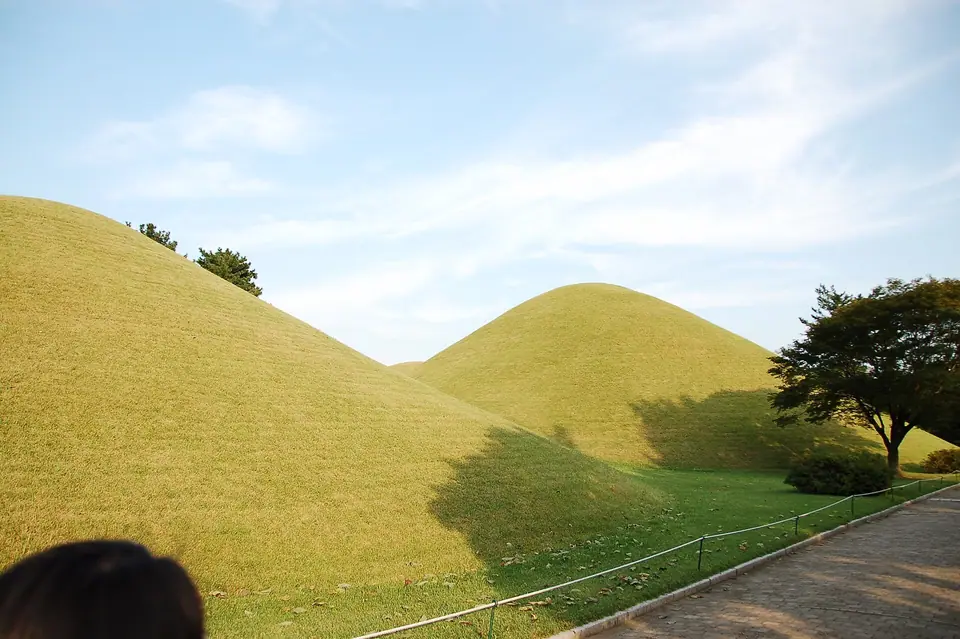
Winter (December to February): Golden Grass and Crisp Solitude
During winter, the grass covering Gyeongju's royal tumuli turns a warm wheat-gold color (until late February, when park groundskeepers briefly trim and maintain the turf for spring growth). Gyeongju receives relatively little snow compared to Gangwon Province, averaging only 4 to 5 precipitation days per month in winter. Skies are predominantly crystal-clear and sunny, with daytime highs of 6°C to 9°C and frosty mornings around -3°C. Winter is the best season if you want to photograph the famous magnolia tree between the two mounds of Daereungwon or the bridges of Bulguksa without another tourist in the frame.
Where it is
- 1Gyeongju
- Daegu International Airport (TAE) · about 50 km from Gyeongju in a straight line
- Directions in Google Maps
Traveller tips
Real advice from people who have been to Gyeongju. Every tip is read by our team before it goes live.
No tips yet. Been here? Yours could be the first.
Thank you! Your tip will appear here after a quick review.
More in Gyeongju
Continue exploring Gyeongju with related neighbourhood, food, and planning guides
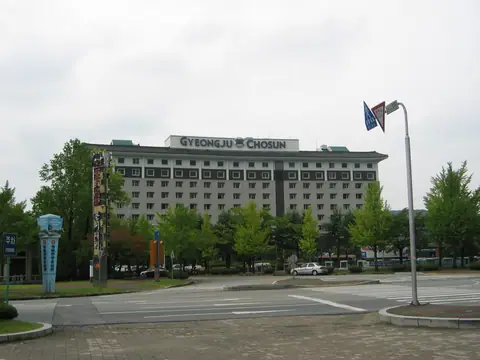
Where to Stay in Gyeongju: Hwangnidan-gil Hanoks vs Bomun Lake Resorts
Gyeongju, South Korea
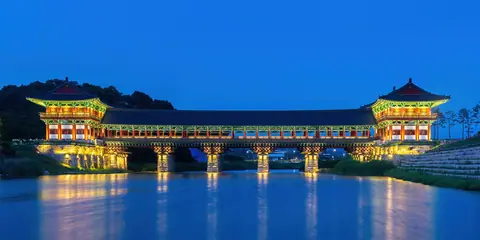
Gyeongju 3-Day Itinerary: Silla Royal Tombs, Bulguksa & Namsan (2026)
Gyeongju, South Korea
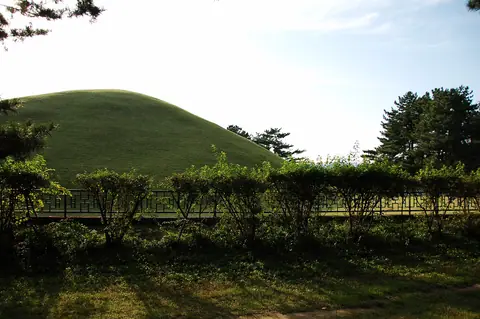
Daereungwon Royal Tombs, Cheomseongdae & Hwangnidan-gil Walking Guide
Gyeongju, South Korea
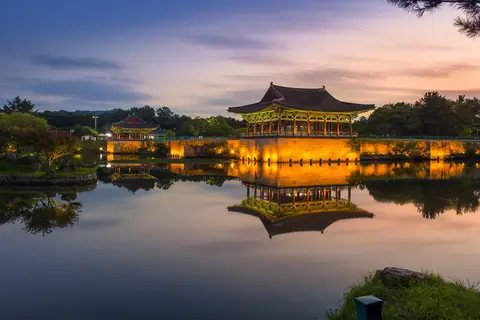
Donggung Palace, Wolji Pond & Woljeonggyo Bridge Night Walking Guide
Gyeongju, South Korea
