




















Yangdong UNESCO Folk Village & Gyochon Traditional Village Guide
Complete 2026 guide to Gyeongju's two living traditional villages: UNESCO-listed Yangdong Folk Village (500-year Joseon clan mansions) and central Gyochon Village (House of the Choi Clan).
Beyond its Silla tombs and Buddhist temples, Gyeongju preserves two living windows into the Confucian aristocracy (yangban) of the Joseon Dynasty (1392 to 1910). The hillside clan community of Yangdong Folk Village (양동마을) was inscribed by UNESCO in 2010 (Reference 1324), while Gyochon Traditional Village (교촌마을) sits next to Woljeonggyo Bridge in central Gyeongju. Visiting one or both shows you how Korean noble families organised architecture, ancestor worship, and social responsibility across five hundred years. Pair this village guide with our Gyeongju transport guide and Woljeonggyo Bridge walk.
| Feature | Yangdong Folk Village (UNESCO Ref, 1324) | Gyochon Traditional Village |
|---|---|---|
| Location.. | 20 km north of Gyeongju in Gangdong-myeon. | Central Gyeongju, immediately north of Woljeonggyo Bridge. |
| 2026 Entry Fee & Hours.. | 4,000 KRW (09:00 to 18:00; 17:00 in winter). | Free 24 hours (Choi Clan House open 09:00 to 17:30). |
| Historic Clan & Era.. | Wolseong Son Clan & Yeogang Yi Clan (founded 15th century). | Gyeongju Choi Clan (12 generations of ethical rich scholars). |
| Time Needed & Transit.. | 2 to 2.5 hours (+ 45 min each way on Bus 203). | 45 to 60 minutes (flat 10-min walk from Cheomseongdae). |
Yangdong Folk Village: A 500-Year Joseon Aristocratic Landscape
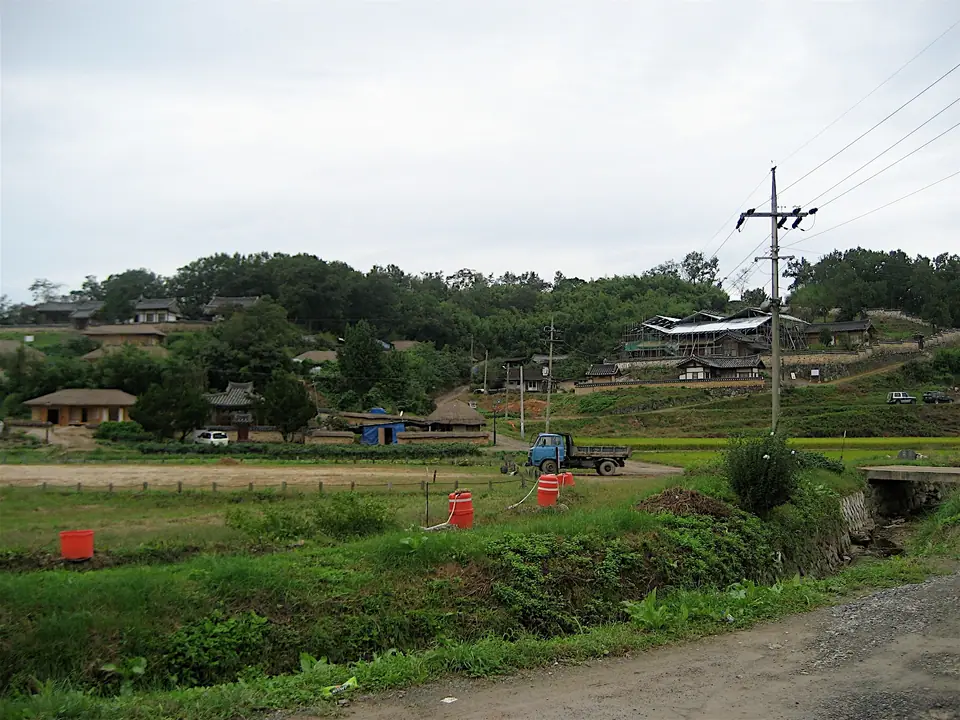
Tucked into the valleys of Mount Seolchang 20 kilometres north of Gyeongju, Yangdong Village was founded in the mid-15th century by Son So (1433 to 1484). A generation later, his daughter gave birth in the village's Seobaekdang mansion to Yi Eon-jeok (1491 to 1553), a revered Joseon Neo-Confucian philosopher. For over five centuries, the intermarried Wolseong Son and Yeogang Yi clans lived side by side in this secluded valley, producing dozens of high state examination (gwageo) officials.
What makes Yangdong unique in Korea is that its strict Confucian social hierarchy is physically mapped onto the mountain topography. The grand multi-courtyard slate-and-tile roofed mansions (giwajip) of the ruling yangban aristocracy sit high on the sunny upper ridges overlooking the valleys. In contrast, more than 100 golden rice-straw thatched cottages (chogajip) built for tenant farmers and retainers cluster along the lower valley floors below. Unlike folk museum parks where houses were moved from elsewhere, Yangdong is a living residential village. Here direct descendants of the Son and Yi clans still inhabit the homes (always stay on public paths and respect "Private Residence" signs on closed gates).
Four National Treasures & Masterpiece Mansions Inside Yangdong
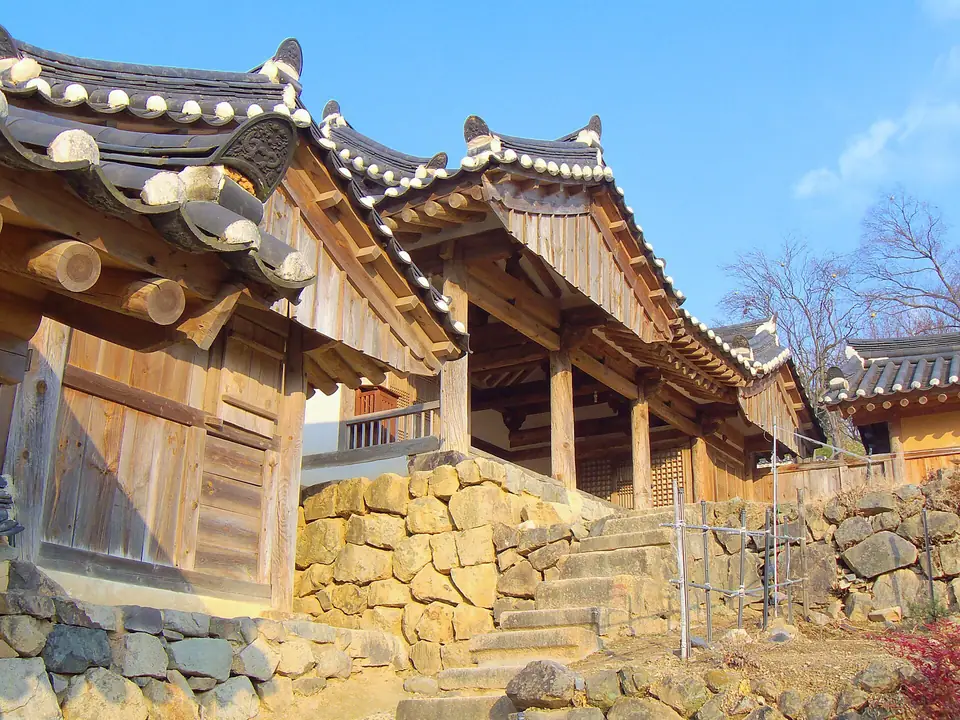
Allow two full hours to walk the Hagu, 물봉 (Mulbong), and Naegok valley trails inside Yangdong, focusing on these four landmark compounds:
- Gwajang (관가정, Treasure No, 442). Perched on the first hilltop as you enter from the ticket plaza, this late-15th-century residence of Prime Minister Son Jung-don features an elevated wooden veranda (nu-maru) that commands a sweeping panorama over the entire An-gye plain and the Hyeongsan River.
- Hyangdan (향단, Treasure No, 412). This mansion was built in 1543 by King Jungjong for philosopher Yi Eon-jeok so he could care for his elderly mother while serving as Governor of Gyeongsang Province. Its interlocking roof ridges create one of the most complex and refined timber profiles in Korean architecture.
- Mucheomdang (무첨당, Treasure No, 411). The ceremonial head house (jongga) of the Yeogang Yi clan, featuring an L-shaped detached scholar's pavilion where guests were received and books were stored.
- Seobaekdang (서백당, Important Folklore Material No, 23). This head house was built in 1454 at the highest geomantic spot (myeongdang) deep in the back valley. This is the primary head house of the Wolseong Son clan, where a 500-year-old Chinese juniper tree twists across the courtyard.
How to Get to Yangdong Village by Bus 203 (2026 Schedule Tip)
From downtown Gyeongju, City Bus 203 departs from the bus stop outside the Gyeongju Intercity Bus Terminal (and stops opposite the old Gyeongju Station / Seongdong Market). It also runs directly inside the Yangdong Village parking plaza in 45 to 50 minutes (1,450 KRW on T-money as of November 2026). Bus 203 runs only nine times daily (roughly every 60 to 90 minutes, with morning departures around 07:35, 08:50, 10:00, and 11:20). Photograph the return timetable at the Yangdong bus shelter the moment you step off. Alternatively, a metered taxi from downtown Gyeongju to Yangdong takes 25 minutes and costs roughly 25,000 to 28,000 KRW.
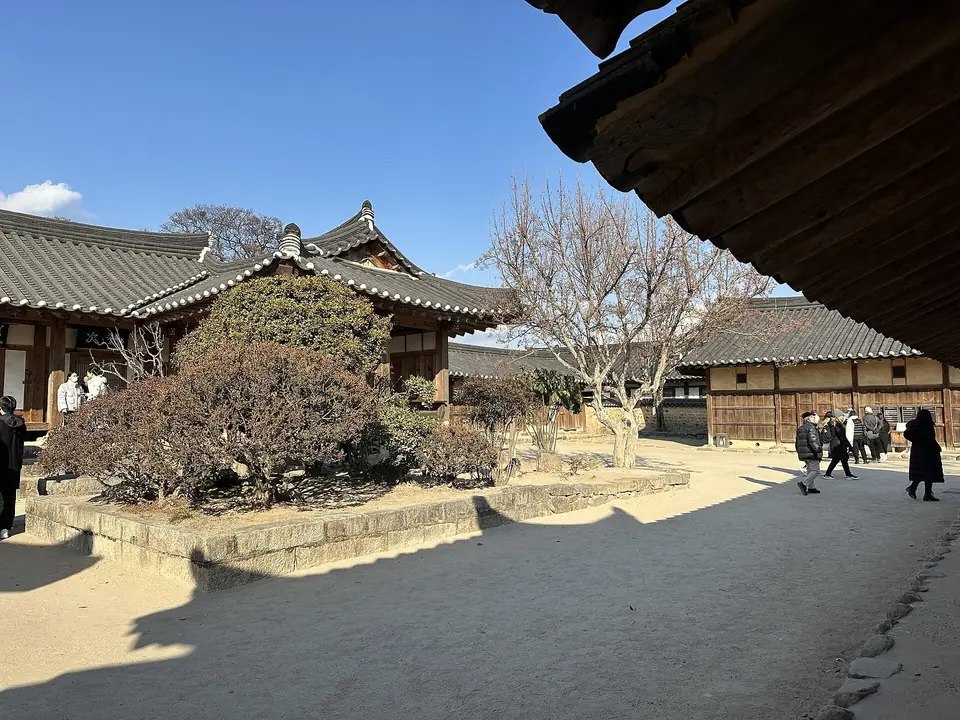
Gyochon Traditional Village & the Twelve Generations of the Rich Choi Clan
If you prefer not to travel 20 kilometres north to Yangdong, you can experience Joseon noble culture right in central Gyeongju at Gyochon Traditional Village, set between Banwolseong and Woljeonggyo Bridge. In 682 CE, Unified Silla established Korea's first national Confucian academy (Gukhak) on this exact spot. During the Joseon Dynasty, Gyochon was home to the Gyeongju Choi Clan (경주 최부잣집). The family maintained nine generations of Jinsa scholars and twelve generations of wealth before donating their fortune in 1947 to found Daegu University.
While a Korean proverb warns that "wealth never lasts three generations", the Choi Clan endured because every head of the household swore to obey the Six Ethical Precepts (육훈, Yuk-hun) displayed inside the compound:
- Pass the civil service exam, but never seek an office higher than a Jinsa (so the family avoids political purges).
- Never accumulate wealth exceeding 10,000 sacks (seok) of rice per year; return any surplus to society.
- Treat every passing traveller generously inside the guest quarters (sarangchae).
- Never buy land from distressed neighbours during a drought or famine year.
- Daughters-in-law must wear plain cotton clothes for the first three years after marriage.
- Ensure that no one living within 100 ri (40 kilometres) of the house ever starves to death.
After touring the Choi Clan compound and its massive wooden rice granary (free entry, open 09:00 to 17:30), stop next door at the ancestral brewery of Gyeongju Gyodong Beopju (National Intangible Cultural Heritage). To see where sticky-rice medicinal liquor has been fermented in earthenware jars for nine generations, and try a fresh skewer of sweet fried rice cake (Gyochon Garak-tteok) along the lane.
Where it is
- 1Yangdong UNESCO Folk Village & Gyochon Traditional Village
- Pohang Airport (G-815/K-3) (KPO) · about 15 km from here in a straight line
- Directions in Google Maps
Traveller tips
Real advice from people who have been to Gyeongju. Every tip is read by our team before it goes live.
No tips yet. Been here? Yours could be the first.
Thank you! Your tip will appear here after a quick review.
More in Gyeongju
Continue exploring Gyeongju with related neighbourhood, food, and planning guides
Mount Namsan Hiking Guide: Samneung Trail, Rock Buddhas & Silla Pagodas
Gyeongju, South Korea
Gyeongju East Sea Coast Day Trip: King Munmu's Underwater Tomb & Gameunsa
Gyeongju, South Korea
What to Eat in Gyeongju: Royal Ssambap, Hwangnam Bread & Hanwoo BBQ
Gyeongju, South Korea
Gyeongju: 5 UNESCO Belts, Free Temple Rules & Navigation
Gyeongju, South Korea
