





















Donggung Palace, Wolji Pond & Woljeonggyo Bridge Night Walking Guide
How to plan the ultimate evening walk in Gyeongju for 2026: sunset at Cheomseongdae, crossing illuminated Woljeonggyo Bridge, and photographing Donggung Palace and Wolji Pond after dark.
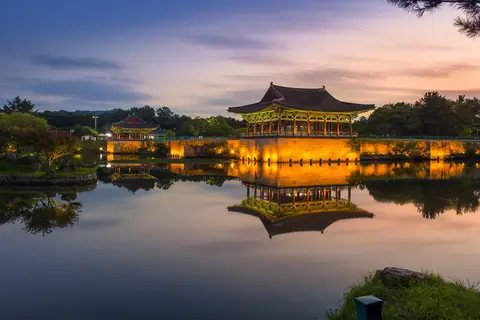
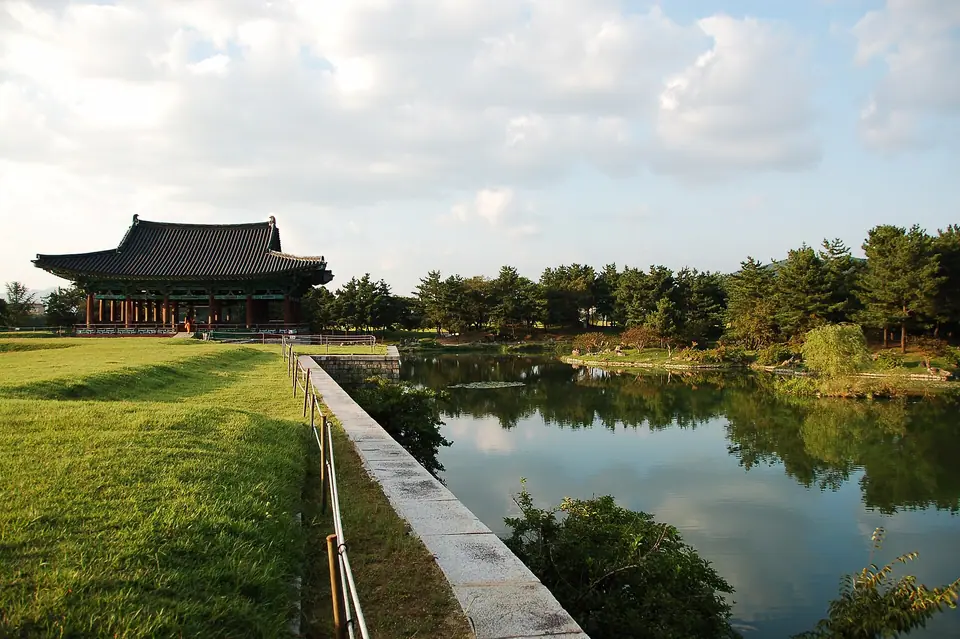
While many historic cities shut their monument gates at 17:00, Gyeongju comes alive after sunset with one of the finest architectural night walks in Asia. Across the grassy plain of the Wolseong Belt, municipal lighting engineers illuminate the 7th-century observatory of Cheomseongdae. The 66-metre covered wooden colonnade of Woljeonggyo Bridge, and the lakeside banquet pavilions of Donggung Palace and Wolji Pond (동궁과 월지) until 22:00 every night of the year. Walking this flat 2.8-kilometre evening route takes you through the exact royal pleasure grounds where Unified Silla kings hosted foreign ambassadors beneath the moon. Pair this night guide with our Daereungwon and Cheomseongdae walk and our Gyeongju National Museum guide.
| Night Walk Stop | Illumination Hours | 2026 Admission Fee | Best Photography Angle |
|---|---|---|---|
| 1. Woljeonggyo Bridge (월정교).. | Sunset to 22:00 daily. | Free (0 KRW). | From the stone stepping-stones across the Namcheon Stream looking upstream. |
| 2. Banwolseong & Seokbinggo.. | Sunset to 22:00 daily. | Free (0 KRW). | Lit earthen fortress ramparts and lotus gardens leading northeast. |
| 3. Donggung Palace & Wolji Pond.. | 09:00 to 22:00 (last ticket 21:30; lights on at dusk). | 3,000 KRW (Adults). | Eastern and northern curved shoreline looking back toward Pavilion No. 1 & 2. |
The History of Donggung Palace and Wolji Pond (Formerly Anapji)
According to the Samguk Sagi (History of the Three Kingdoms), in 674 CE, just six years after unifying the Korean Peninsula, King Munmu ordered a grand artificial pond dug inside the Crown Prince's Eastern Palace (Donggung). Workers sculpted three islands and twelve miniature peaks around the water, stocked the garden with rare birds and flowering trees, and built lavish waterside banquet halls where the court hosted state feasts. After Silla fell in 935 CE, the wooden halls burned down. Later Goryeo and Joseon poets, seeing only wild geese and ducks among the reeds, called the ruin Anapji ("Pond of Geese and Ducks"). That name stuck until 1975, when archaeologists dredging the pond discovered a ceramic shard inscribed with the characters Wolji ("Pond that Reflects the Moon"), restoring its true Silla royal name.
Why You Can Never See the Whole Pond at Once: Silla Landscape Genius
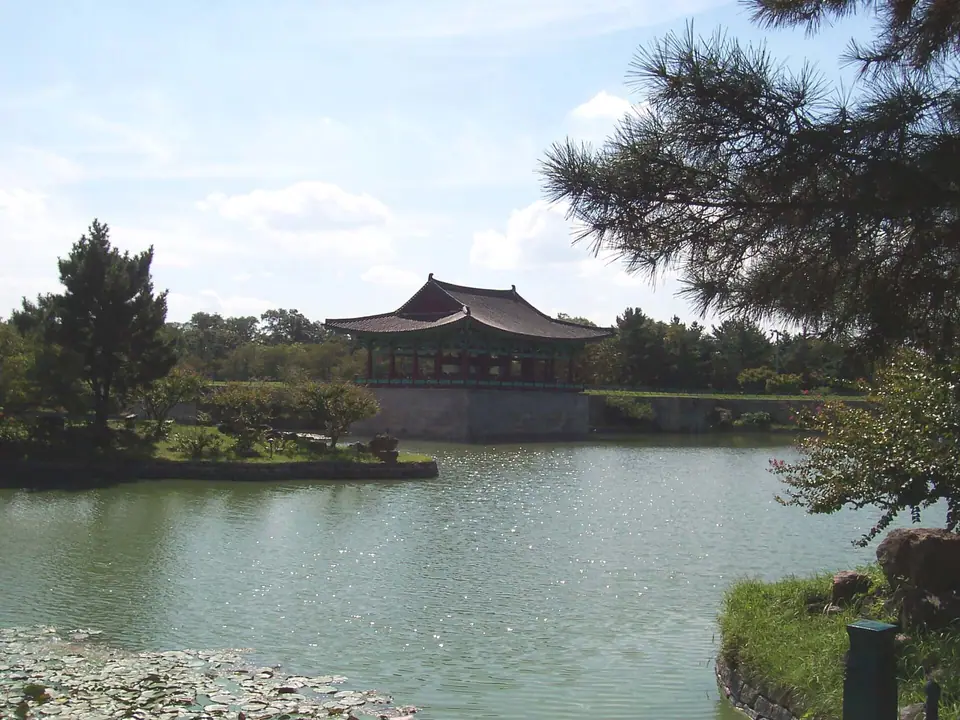
The artificial pond measures 200 metres from east to west and 180 metres from north to south. Wolji Pond looks comparatively modest on a map, yet Silla landscape architects used a brilliant visual trick borrowed from Taoist and Buddhist cosmology. Meanwhile, the western and southern edges where the three royal pavilions stand are built with straight granite retaining walls. The eastern and northern shorelines twist in complex peninsulas, coves, and three asymmetric islands. As a result, no matter where you stand along the perimeter path, the entire expanse of water can never be seen from a single vantage point. Creating the illusion for banquet guests sipping wine inside the pavilions that they were gazing out across a boundless ocean.
The 1975 Dredging Miracle: 33,000 Royal Artifacts in the Mud
When archaeologists drained the silt at the bottom of Wolji Pond in 1975 and 1976, they uncovered a rich time capsule of royal court life. More than 33,000 Silla artifacts had fallen into the water over two centuries. Among the mud lay a complete wooden royal pleasure boat, gilt-bronze Buddhist triad plaques. Intricate gold scissors used to trim candlewicks, glazed roof tiles (sumaksae) stamped with lotus flowers and mythical faces. The famous 14-sided oak drinking game die (Juryeonggu) inscribed with playful banquet penalties such as "Sing a song by yourself". "Drink three cups of wine at once", and "Dance without making a sound". After visiting the pond at night, you can view these exact excavated treasures inside the dedicated Wolji Hall at the Gyeongju National Museum ten minutes south.
Woljeonggyo Bridge: The Crimson Corridor Over the Namcheon Stream
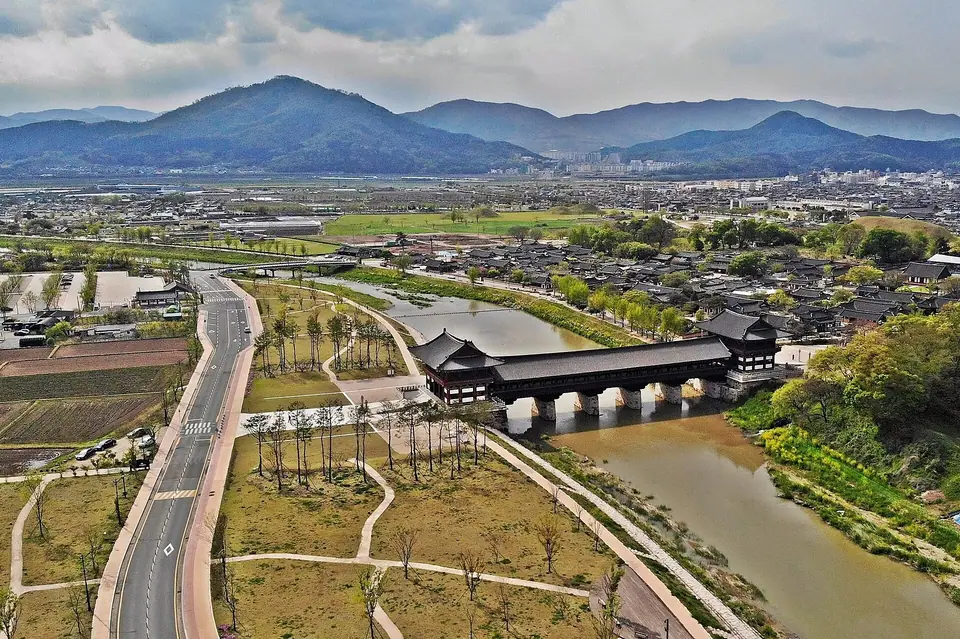
Begin your evening walk about 30 minutes before sunset at Woljeonggyo Bridge (월정교), located at the southern edge of Gyochon Traditional Village across the Namcheon Stream. Recorded in the Samguk Sagi as having been built in the 19th year of King Gyeongdeok (760 CE) together with its sister bridge Chunyanggyo. Woljeonggyo served as the ceremonial royal bridge linking the main palace inside Banwolseong Fortress with the sacred valleys of Mount Namsan. After meticulously excavating the original 8th-century boat-shaped granite bridge piers and charred timber beams from the riverbed, heritage carpenters completed a full reconstruction in April 2018. Spanning 66.15 metres in length and topped by two soaring two-storey gatehouses (munru), the bridge is completely free to walk across until 22:00. Climb the wooden stairs inside the gate towers to see the digital exhibition displaying original iron nails and roof tiles recovered from the river. Then step down to the river's stone stepping-stones (jinggeumdari) downstream to frame the classic mirror-reflection shot of the crimson pillars on the water.
Practical Night Timing Tips and Ticket Queue Strategy
Because tour groups from Busan and school trips converge on the main entrance of Donggung Palace and Wolji Pond right at dusk (19:00 to 20:00), two simple timing adjustments will make your visit far smoother:
- Use the Automated Card Kiosks. Instead of standing in the long cash ticket line to the left of the main gate, walk straight up to the automated touchscreen ticket kiosks on the right, which print your 3,000 KRW ticket in ten seconds when you insert a credit card.
- Visit Between 20:15 and 21:30. Tour buses depart by 20:15. Entering the pond after 20:15 gives you calm, uncrowded wooden viewing decks along the eastern shore where you can photograph Pavilions 1, 2, and 3 reflected in the water without crowds pushing against the railing.
- Walk via Banwolseong and Seokbinggo. When walking the 1.4 kilometres from Woljeonggyo Bridge to Wolji Pond, follow the illuminated footpath over the crescent-shaped earthen walls of Banwolseong (Half-Moon Fortress)., the primary royal palace complex of Silla from 101 CE to 935 CE. There you can still see the subterranean stone arch vaults of Seokbinggo, an 18th-century Joseon royal ice storage house built over Silla foundations.
Where it is
- 1Donggung Palace, Wolji Pond & Woljeonggyo Bridge Night Walking
- Daegu International Airport (TAE) · about 52 km from here in a straight line
- Directions in Google Maps
Traveller tips
Real advice from people who have been to Gyeongju. Every tip is read by our team before it goes live.
No tips yet. Been here? Yours could be the first.
Thank you! Your tip will appear here after a quick review.
More in Gyeongju
Continue exploring Gyeongju with related neighbourhood, food, and planning guides
Best Time to Visit Gyeongju: Cherry Blossoms, Pink Muhly & Seasons
Gyeongju, South Korea
What to Wear in Gyeongju: Temple Etiquette, Hanbok Rental & Hiking Gear
Gyeongju, South Korea
Where to Stay in Gyeongju: Hwangnidan-gil Hanoks vs Bomun Lake Resorts
Gyeongju, South Korea
Gyeongju 3-Day Itinerary: Silla Royal Tombs, Bulguksa & Namsan (2026)
Gyeongju, South Korea
