


















Bulguksa Temple & Seokguram Grotto Guide: Buses, Pagodas & Free Entry
Complete 2026 visitor guide to UNESCO-listed Bulguksa Temple and Seokguram Grotto in Gyeongju: free admission rules, Bus 10/11 and Bus 12 shuttle timetables, and architecture.
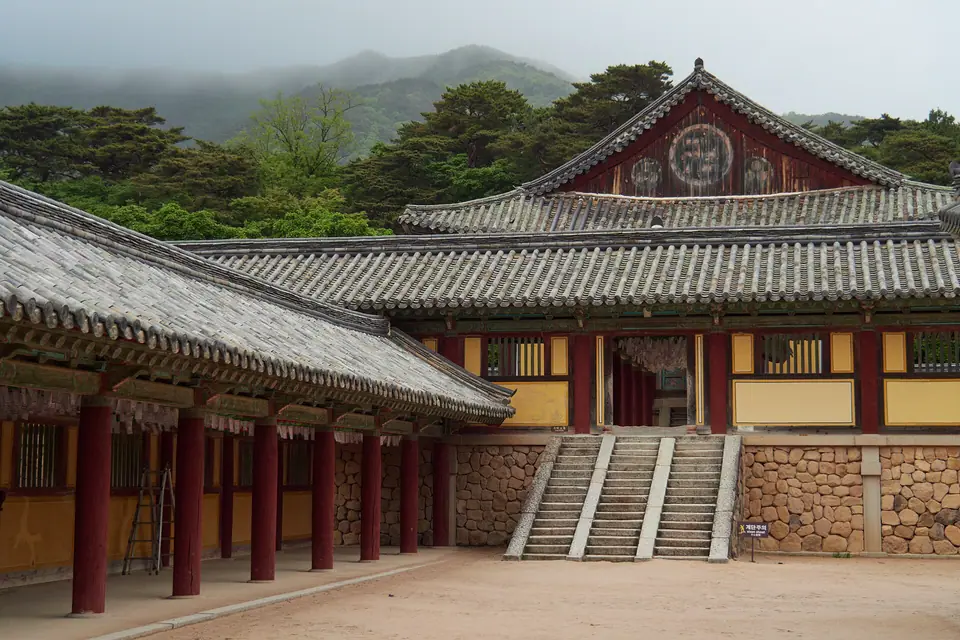
Inscribed together in 1995 among South Korea's first UNESCO World Heritage sites (Reference 736), Bulguksa Temple (불국사) and Seokguram Grotto (석굴암) represent the pinnacle of 8th-century Unified Silla Buddhist architecture, mathematics, and granite sculpture. Perched on Mount Toham (745 m) 16 kilometres southeast of Gyeongju, both sanctuaries were begun in 751 CE by Chief Minister Kim Daeseong and completed in 774 CE. According to the Samguk Yusa, he built Bulguksa for his present parents and sculpted Seokguram Grotto for his parents from a past life. Combine this monument guide with our Gyeongju transport guide and 3-day itinerary.
| Monument | 2026 Admission Fee | Opening Hours | How to Reach It |
|---|---|---|---|
| Bulguksa Temple (Lower Slope, 250 m).. | Free (0 KRW as of Nov 2026).. | 09:00 to 18:00 daily (last entry 17:00; 09:00 to 17:30 in winter). | City Bus 10, 11, or 700 from downtown Gyeongju / KTX Station (40 min, 1,450 KRW). |
| Seokguram Grotto (Upper Ridge, 565 m).. | Free (0 KRW as of Nov 2026).. | 09:00 to 18:00 (last entry 17:00; closes 17:00 in winter). | Bus 12 shuttle from Bulguksa parking lot (20 min each way, 1,450 KRW) or 3.2 km forest hike. |
How to Coordinate Bus 10/11 and the Hourly Bus 12 Shuttle
Bulguksa Temple sits at the base of Mount Toham, while Seokguram Grotto sits 9 kilometres further up the mountain road. Timing the local bus connections is the key to a smooth morning:
- Step 1 (Downtown to Bulguksa). Board City Bus 10 or Bus 11 from opposite the Gyeongju Intercity Bus Terminal. Daereungwon, or Donggung & Wolji (every 18 to 20 minutes, 40 minutes travel time, 1,450 KRW on T-money as of November 2026).
- Step 2 (Check the Bus 12 Board Immediately). Bus 10/11 drops you at the Bulguksa parking lot. Before walking up into the temple, glance at the Bus 12 departure timetable posted at the bus shelter and tourist information booth. Bus 12 climbs from Bulguksa up to the Seokguram parking plaza in 20 minutes. It departs roughly once an hour (typically `:40` past the hour going up and `:00` coming down).
- Step 3 (The Hiking Alternative). If you enjoy forest trekking and have sturdy trail shoes, a well-maintained 3.2-kilometre stone-and-earth mountain trail climbs directly. From behind the main gates of Bulguksa Temple up to the Seokguram Grotto ticket plaza (55 to 70 minutes uphill through fragrant oaks and pines, or 40 minutes downhill). Many fit travellers ride Bus 12 UP to Seokguram first and then walk the scenic forest trail DOWN to Bulguksa.
Architectural Highlights of Bulguksa Temple (Seven National Treasures)
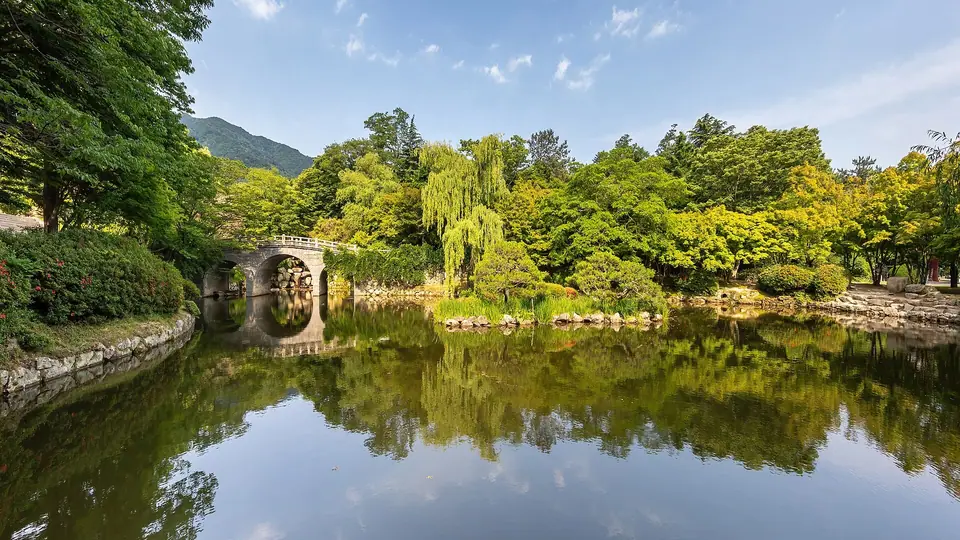
Bulguksa's wooden worship halls were burned during the 1592 Imjin War and reconstructed during the Joseon era and a 1969 to 1973 restoration. The entire 8th-century Silla granite terrace, bridges, and stone pagodas survived completely original. Inside the temple grounds stand no fewer than seven South Korean National Treasures:
- Cheongungyo (Blue Cloud Bridge) & Baegungyo (White Cloud Bridge, National Treasure No, 23). Rising at a 45-degree incline across the main terrace, this staircase of 33 granite steps symbolises the 33 heavens of Buddhism. It bridges the secular world below (Saha) with the enlightened realm above. Look closely at the dry-stone retaining wall (Gaguk-seok): Silla masons carved rough natural boulders and smooth dressed granite pillars so they interlock like wood joinery without mortar, absorbing earthquake shocks for 1,250 years.
- Yeonhwagyo (Lotus Flower Bridge) & Chilbogyo (Seven Treasures Bridge, National Treasure No, 22). To the left, a smaller, more delicate twin staircase leads to the Hall of Paradise (Geungnakjeon), with subtle lotus petals carved onto each stone step.
- Dabotap (Pagoda of Many Treasures, National Treasure No, 20) & Seokgatap (Sakyamuni Pagoda, National Treasure No. 21). Standing in front of the main hall (Daeungjeon), these two 10.4-metre pagodas illustrate the Lotus Sutra, pairing Prabhutaratna (Dabo) with Sakyamuni (Seokga). Three-tiered Seokgatap embodies unadorned geometric harmony. In contrast, Dabotap is carved like woodwork in granite, with bamboo-shaped pillars and a stone lion featured on the 10-won coin. During a 1966 restoration of Seokgatap, conservators opened its second-storey relic chamber and discovered the Mugujeonggwang Daedaranigyeong (Pure Light Dharani Sutra), printed prior to 751 CE, the oldest surviving woodblock print in the world.
- The Two Gilt-Bronze Seated Buddhas (National Treasures No, 26 & No, 27). Step inside Birojeon (Hall of Vairocana) to see the 8th-century gilt-bronze Vairocana Buddha with his hands clasped in the mudra of cosmic wisdom. Next, visit Geungnakjeon to see the gilt-bronze Amitabha Buddha, and look for the small carved wooden golden pig hidden behind its exterior signboard.
Seokguram Grotto: The Mathematical Masterpiece of Silla Sculpture
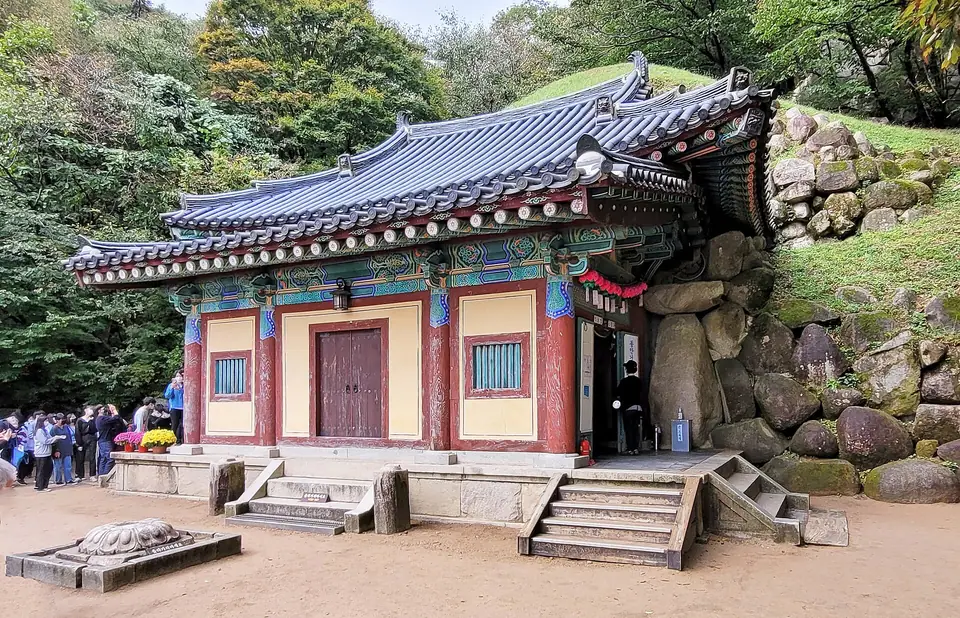
Whereas Chinese and Indian Buddhist cave temples were hollowed out of soft sandstone or limestone cliffs, Mount Toham is made of hard crystalline granite. Instead of carving into a cliff, Kim Daeseong's engineers built an artificial stone dome out of more than 360 interlocking blocks of white granite. They locked the domed ceiling in place with heavy stone counterweights (gamgiseok), covered the structure in an earthen mound, and routed a cold mountain spring directly beneath the floor slabs. Moisture in the warm air would condense downward into the sub-floor rather than forming water droplets on the sacred sculptures.
Walking through the rectangular antechamber (guarded by the Eight Guardian Deities and two muscular Vajrapani / Geumgangyeoksa warriors) and the narrow corridor (guarded by the Four Heavenly Kings) brings you before the circular main rotunda. At its centre sits the 3.45-metre white granite Sakyamuni Buddha on an octagonal lotus pedestal, his right hand touching the earth in the Bhumisparsa mudra. Along the curved rotunda wall behind the Buddha stand 15 carved granite panels depicting the Ten Disciples, the Vedic gods Brahma and Indra, and the Eleven-Faced Avalokitesvara Bodhisattva (Sibimyeon Gwaneum Bosal) directly behind the Buddha's halo. Because human breath humidity damages the granite, visitors view the chamber through a protective glass partition in the wooden vestibule, and photography inside the grotto is strictly forbidden.
Where it is
- 1Bulguksa Temple & Seokguram Grotto
- Ulsan Airport (USN) · about 22 km from here in a straight line
- Directions in Google Maps
Traveller tips
Real advice from people who have been to Gyeongju. Every tip is read by our team before it goes live.
No tips yet. Been here? Yours could be the first.
Thank you! Your tip will appear here after a quick review.
More in Gyeongju
Continue exploring Gyeongju with related neighbourhood, food, and planning guides
Gyeongju East Sea Coast Day Trip: King Munmu's Underwater Tomb & Gameunsa
Gyeongju, South Korea
What to Eat in Gyeongju: Royal Ssambap, Hwangnam Bread & Hanwoo BBQ
Gyeongju, South Korea
Gyeongju: 5 UNESCO Belts, Free Temple Rules & Navigation
Gyeongju, South Korea
15 Best Things to Do in Gyeongju: Royal Tombs, Temples & Night Ponds
Gyeongju, South Korea
