





















Gyeongju East Sea Coast Day Trip: King Munmu's Underwater Tomb & Gameunsa
How to plan a half-day trip from Gyeongju to the East Sea coast in 2026: King Munmu's Underwater Tomb (Daewangam), the giant twin pagodas of Gameunsa, and Yangnam basalt columns.
Thirty kilometres east of central Gyeongju's grassy burial mounds, the mountains of Mount Toham plunge down to the crashing waves of the East Sea (Sea of Japan). Here along the dramatic coastline between Gampo and Yangnam lies one of the most poetic and architecturally unique royal burial sites in world history. Daewangam (대왕암), the Underwater Tomb of Great King Munmu, paired two kilometres inland with the monumental 682 CE twin stone pagodas of Gameunsa Temple Site (감은사지). The fan-shaped volcanic basalt columns of Yangnam Jusangjeolli. Combining these three coastal sites creates a memorable four-hour afternoon excursion away from the city crowds. Pair this coastal guide with our Gyeongju 3-day itinerary and transport guide.
| Coastal Stop | Distance from Gyeongju | 2026 Entry Fee | Why It Is Famous |
|---|---|---|---|
| 1. Gameunsa Temple Site (감은사지).. | 30 km east (along the Daejongcheon River). | Free 24 hours. | Twin 13.4-metre stone pagodas (NT No, 112, 682 CE) & sub-floor dragon channel. |
| 2. King Munmu's Underwater Tomb (문무대왕릉).. | 32 km east (at Bonggil Daewangam Beach). | Free 24 hours. | World's only underwater royal tomb; cremated ashes of Silla's unifier buried 200 m offshore. |
| 3. Yangnam Jusangjeolli & Wave Sound Path.. | 37 km southeast (at Eupcheon Port). | Free 24 hours (Observatory free). | Rare horizontal and fan-shaped volcanic basalt columns (Natural Monument No, 536). |
How to Reach the East Sea Coast by Bus 150 or Private Taxi
All three sites sit along a single 8-kilometre stretch of coastal Highway 31, connected to downtown Gyeongju by a direct city bus route:
- By City Bus 150 or 150-1. This bus departs from opposite the Gyeongju Intercity Bus Terminal (and stops at Donggung & Wolji) roughly every 35 to 45 minutes. The scenic ride over the Mount Toham pass takes 55 to 60 minutes (1,450 KRW when tapping a T-money card as of November 2026). Get off first at Gameunsaji (감은사지), then walk 1.6 kilometres down the river (or hop back on Bus 150 for 2 stops). To Munmu Daewang-neung / Bonggil Beach, and ride Bus 150 another 10 minutes south to Eupcheon-ri (Yangnam Jusangjeolli).
- By 4-Hour Taxi Charter or Rental Car. If you are travelling as a couple or small group, hiring an official Gyeongju taxi for a 3.5-to-4-hour coastal loop (including Bulguksa or the coast). Hiring a taxi costs roughly 80,000 to 100,000 KRW as of November 2026 and eliminates waiting between buses.
Gameunsa Temple Site: The Dragon's Subterranean Waterway
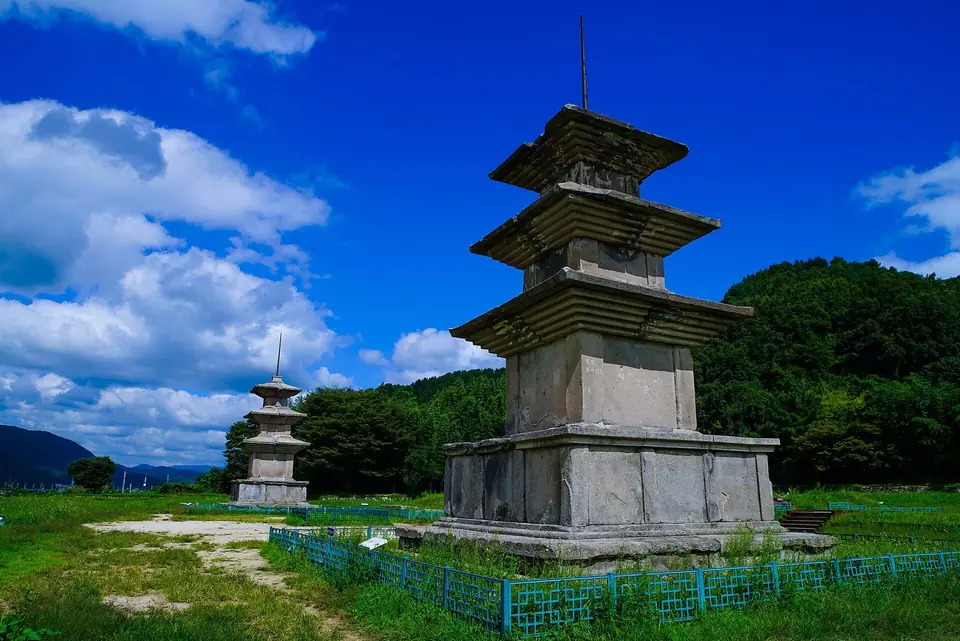
Begin your coastal route 1.5 kilometres inland from the beach at the Gameunsa Temple Site (Historic Site No, 31). King Munmu began building this monastery (originally called Jinguksa, "Temple for Pacifying the Nation") to invoke the Buddha's protection against eastern naval raids, but he died in 681 CE before its completion. His son and successor, King Sinmun, completed the temple in 682 CE and renamed it Gameunsa ("Temple of Gratitude") in memory of his father.
Rising across the green valley are the East and West Three-Storey Stone Pagodas of Gameunsa (National Treasure No, 112). Standing 13.4 metres tall, they are the largest three-storey stone pagodas of Unified Silla and the earliest example of Silla's twin-pagoda temple layout. Even more extraordinary is the stone foundation of the vanished Main Golden Hall (Geumdang) between the two pagodas. When archaeologists excavated beneath the stone floor slabs in 1959, they discovered a raised stone subterranean chamber connected to the nearby Daejongcheon River and the East Sea. As recorded in the 13th-century Samguk Yusa, King Sinmun engineered this hollow stone space beneath the Buddha altar so that his father's spirit. Transformed into a great East Sea dragon, could swim up the river at high tide and rest directly beneath the temple floor.
Daewangam: The Underwater Tomb of Great King Munmu
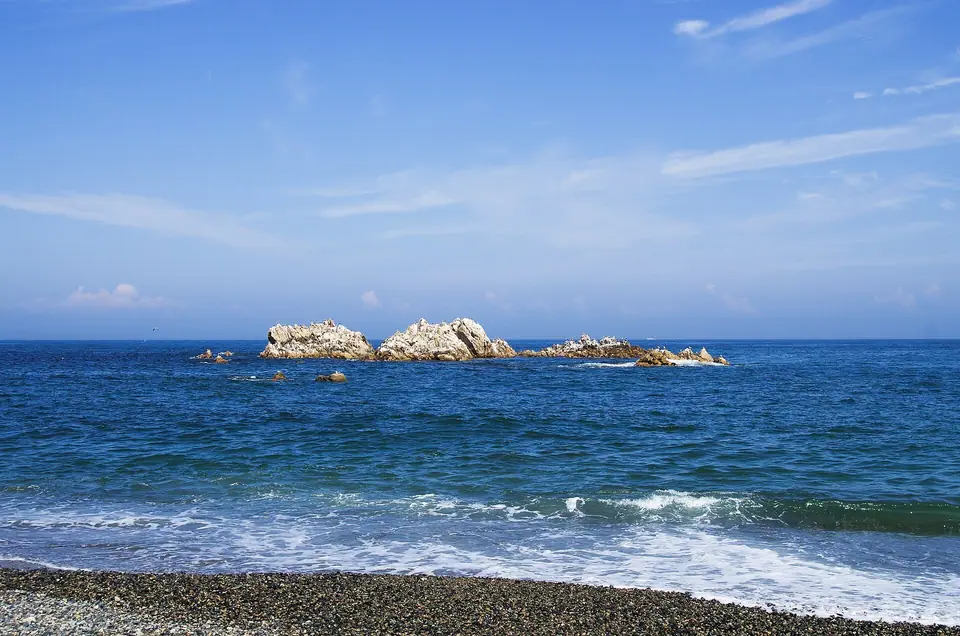
Continue down the mouth of the Daejongcheon River to the wide pebble shoreline of Bonggil Daewangam Beach. Two hundred metres out in the turquoise surf sits a ring of jagged natural granite rocks known as Daewangam (Historic Site No, 158). On his deathbed in July 681 CE, after twenty years of war that unified Goguryeo, Baekje, and Silla into a single nation, King Munmu (r, 661 to 681 CE) left a revolutionary royal testament recorded in the Samguk Sagi. Rather than wasting the labour of his people building another colossal earthen burial mound in Gyeongju, he ordered his body cremated according to Buddhist rites and his ashes placed in the rocks of the East Sea, declaring, "I shall become a great dragon of the East Sea to defend our Buddhist law and protect our nation."
When a marine survey team inspected the reef in 1967, they discovered that Daewangam is not just a random rock outcrop. Silla engineers carved four intersecting underwater water channels straight through the natural granite ring (oriented to the four cardinal directions). Incoming waves from the east flow gently into a calm central pool and drain out to the west, keeping the water inside crystal clear even during rough seas. At the centre of the pool rests a submerged dressed granite boulder measuring 3.6 metres long, 2.85 metres wide, and 0.9 metres thick, beneath which the king's funerary urn was sealed. Along the pine-shaded beach facing the reef, Buddhist shamans and pilgrims still bow toward the waves. On January 1st thousands gather on the pebbles to watch the first New Year sunrise break directly over the Dragon King's rock.
Yangnam Jusangjeolli: The Fan-Shaped Volcanic Columns
Seven kilometres south along the coast at Eupcheon Port begins the Haeparang-gil Wave Sound Path (파도소리길)., a flat, family-friendly 1.7-kilometre wooden coastal boardwalk linking Eupcheon Port with Haseo Port through the Yangnam Jusangjeolli (양남 주상절리군, Natural Monument No, 536). Unlike most volcanic basalt columns that stand vertically, 20-million-year-old lava flows here cooled into rare horizontal and tilted columns. The highlight is the Fan-Shaped Jusangjeolli (부채꼴 주상절리), which radiates across the wave-cut platform like a stone chrysanthemum. Climb to the top of the free Jusangjeolli Wave Sound Observatory at the midpoint of the trail for an elevated bird's-eye view straight down onto the fan formation before catching Bus 150 back to Gyeongju.
Where it is
- 1Gyeongju
- Ulsan Airport (USN) · about 20 km from Gyeongju in a straight line
- Directions in Google Maps
Traveller tips
Real advice from people who have been to Gyeongju. Every tip is read by our team before it goes live.
No tips yet. Been here? Yours could be the first.
Thank you! Your tip will appear here after a quick review.
More in Gyeongju
Continue exploring Gyeongju with related neighbourhood, food, and planning guides
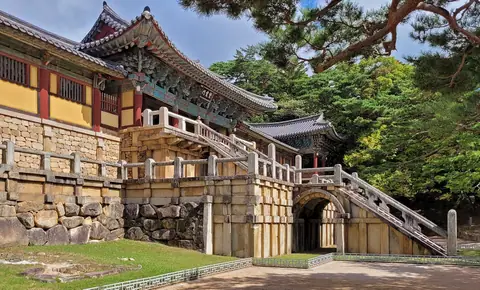
What to Wear in Gyeongju: Temple Etiquette, Hanbok Rental & Hiking Gear
Gyeongju, South Korea
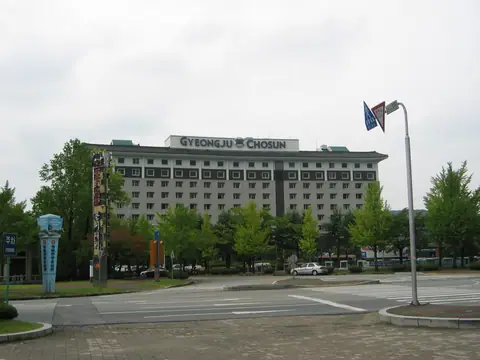
Where to Stay in Gyeongju: Hwangnidan-gil Hanoks vs Bomun Lake Resorts
Gyeongju, South Korea
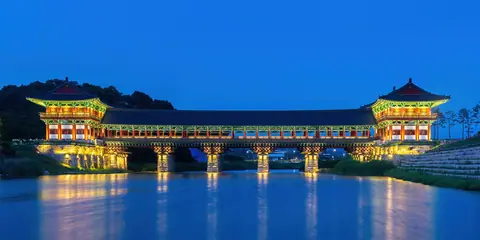
Gyeongju 3-Day Itinerary: Silla Royal Tombs, Bulguksa & Namsan (2026)
Gyeongju, South Korea
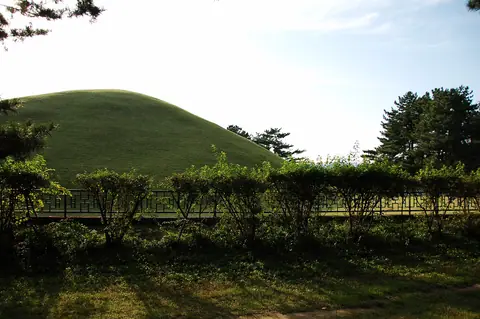
Daereungwon Royal Tombs, Cheomseongdae & Hwangnidan-gil Walking Guide
Gyeongju, South Korea
