





















Gyeongju National Museum Guide: Silla Gold Crowns, Emille Bell & Wolji Hall
Complete 2026 visitor guide to the Gyeongju National Museum: how to book free entry, where to find the 5th-century Silla Gold Crowns, the 18.9-tonne Emille Bell, and Wolji Hall.
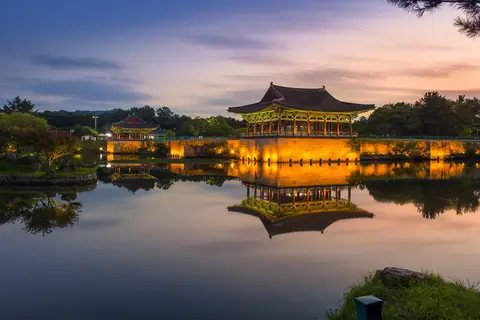
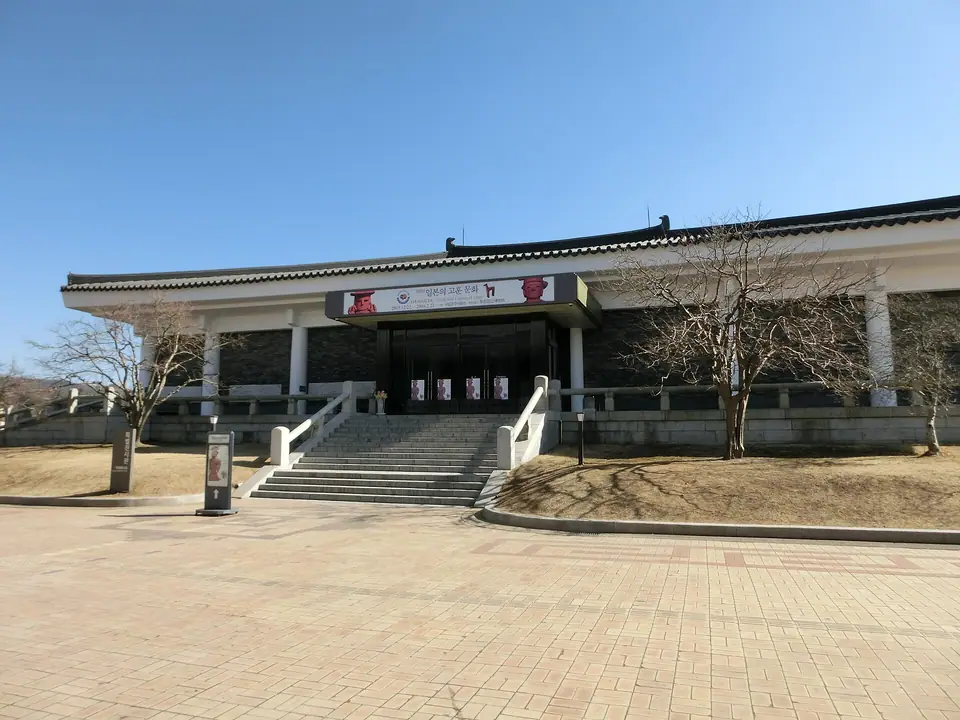
Walking among the grass-covered mounds of Daereungwon or the nighttime waters of Wolji Pond shows you the exterior shell of the Silla Kingdom. Stepping inside the Gyeongju National Museum (국립경주박물관) reveals the dazzling gold, jade, bronze, and Roman glass that lay inside them. Ranked second only to the National Museum of Korea in Seoul, this sprawling four-building campus immediately southeast of Banwolseong Fortress houses more than 100,000 excavated Silla relics. Highlights include 16 South Korean National Treasures. Best of all, general admission to all permanent galleries is completely free (0 KRW as of November 2026). Pair this museum guide with our Daereungwon Royal Tombs guide and our Donggung Palace and Wolji Pond night guide.
| Museum Building / Zone | Key Masterpieces Inside | Recommended Time | Don't-Miss Detail |
|---|---|---|---|
| 1. Silla History Gallery (신라역사관).. | Cheonmachong Gold Crown (NT No, 188), Gold Belt, Roman Glass, Queen Seondeok's era relics. | 45 minutes. | Room 2 ("Golden Kingdom"): 880g solid gold crown with 58 jade gogok commas. |
| 2. Silla Art Gallery (신라미술관).. | Baeknyulsa Gilt-Bronze Standing Bhaisajyaguru Buddha (NT No, 28), Seokguram scale model. | 35 minutes. | 7th-century "Face-Patterned Roof Tile" (Sumaksae), the "Smile of Silla". |
| 3. Wolji Hall (월지관).. | 33,000 royal palace artifacts dredged from Anapji / Wolji Pond in 1975. | 30 minutes. | 14-sided oak drinking game die (Juryeonggu) and royal wooden boat. |
| 4. Outdoor Courtyard Pavilion.. | Sacred Bell of Great King Seongdeok (Emille Bell, NT No, 29) & Goseonsa 3-Storey Pagoda. | 20 minutes. | Flying celestial apsara relief and acoustic sound pipe at the crown of the bell. |
Hours, Free Entry Barcode, and Closed Mondays
As of November 2026, the Gyeongju National Museum is open Tuesday to Sunday from 10:00 to 18:00 (last entry at 17:30), with extended Saturday evening hours until 21:00 from March through December. The museum is closed every Monday (unless Monday is a public holiday, in which case it closes the following Tuesday), as well as January 1, Lunar New Year's Day, and Chuseok Day. Even though permanent admission is 0 KRW, walk up to the ticket kiosk or scan the QR placard at the front gate to obtain a free admission barcode ticket before passing through the security turnstiles. Free English audio guides and a smartphone docent app can be rented or downloaded at the lobby desk inside the Silla History Gallery.
Silla History Gallery: The Golden Crowns and Silk Road Glass
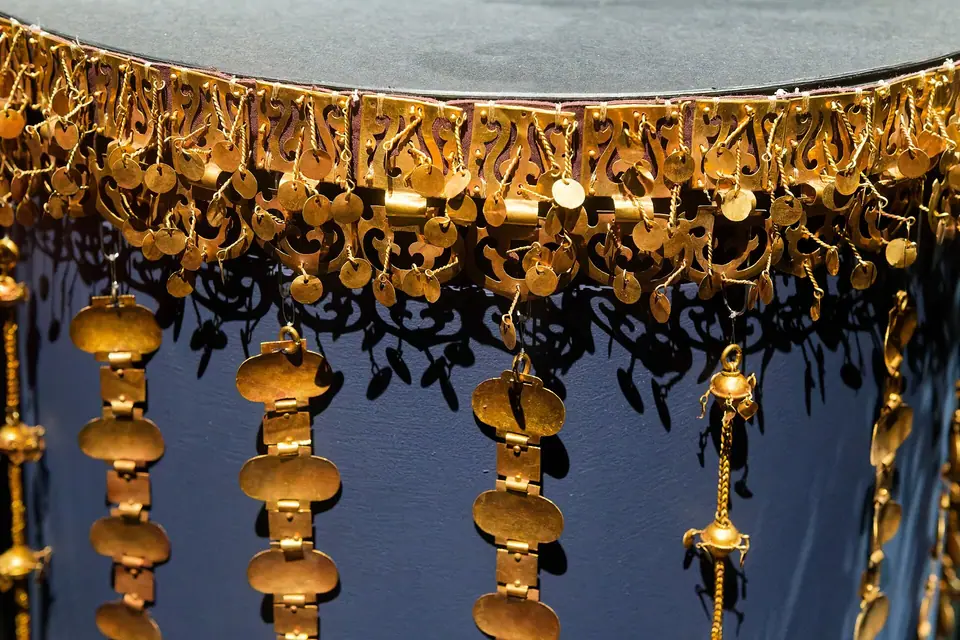
Start your visit in the main building on the right, the Silla History Gallery, which traces Silla's rise from the six Saro-guk villages of 57 BCE to a unified peninsular kingdom. In Room 2 (The Rise of the Golden Kingdom), darkened display cases showcase the world-famous 5th- and 6th-century Silla Gold Crowns. Only six complete solid gold crowns from the Three Kingdoms period have ever been discovered in Korea, and five of them come from the royal tombs of Gyeongju. Examine the Cheonmachong Gold Crown (National Treasure No, 188), hammered from pure sheet gold with three central uprights shaped like the Chinese character chul (出, Representing the sacred Cosmic World Tree linking earth and heaven) flanked by two outer uprights shaped like reindeer antlers, proof of early Silla kings' role as Eurasian shaman-priests. Dangling from gold wires across the headband are 58 emerald-green comma-shaped nephrite jade pendants (gogok) and hundreds of circular gold spangles (yeongnak) that shimmer with the slightest movement.
Right beside the crown, inspect the 109-centimetre Cheonmachong Gold Belt (National Treasure No, 190), from which hang thirteen symbolic gold pendants (representing whetstones, tweezers, fish, Ritual knives carried by northern Eurasian nomads), and the delicate cobalt-blue and blown Roman glass vessels imported thousands of kilometres along the Oasis and Steppe Silk Roads from the eastern Mediterranean in the 4th and 5th centuries.
Silla Art Gallery: The "Smile of Silla" and Giant Bronze Buddhas
Crossing the courtyard to the Silla Art Gallery shifts the story from early shamanistic gold to the Buddhist golden age (6th to 9th centuries). Three masterpieces here demand close attention:
- The Face-Patterned Roof Tile (얼굴무늬 수막새, Treasure No, 2010). Discovered in 1934 at the site of Yeongmyosa Temple with its right cheek slightly chipped. This 7th-century circular terracotta eave-end tile is known across Korea as the "Smile of Silla" for the warm, gentle, asymmetric smile moulded by hand into the clay.
- Gilt-Bronze Standing Bhaisajyaguru Buddha from Baeknyulsa (National Treasure No, 28). Standing 1.77 metres tall, this late-8th-century Medicine Buddha is one of the Three Great Gilt-Bronze Statues of Unified Silla, celebrated for the fluid concentric folds of its robes and remnants of green and red pigment.
- The Four-Sided Stone Buddhist Niche from Gulbulsa (굴불사지 석조사면불). Before entering the building, notice the replica and contextual display explaining how Silla sculptors transformed raw granite boulders into multi-directional cosmic mandalas.
The Sacred Bell of Great King Seongdeok (The Emille Bell)
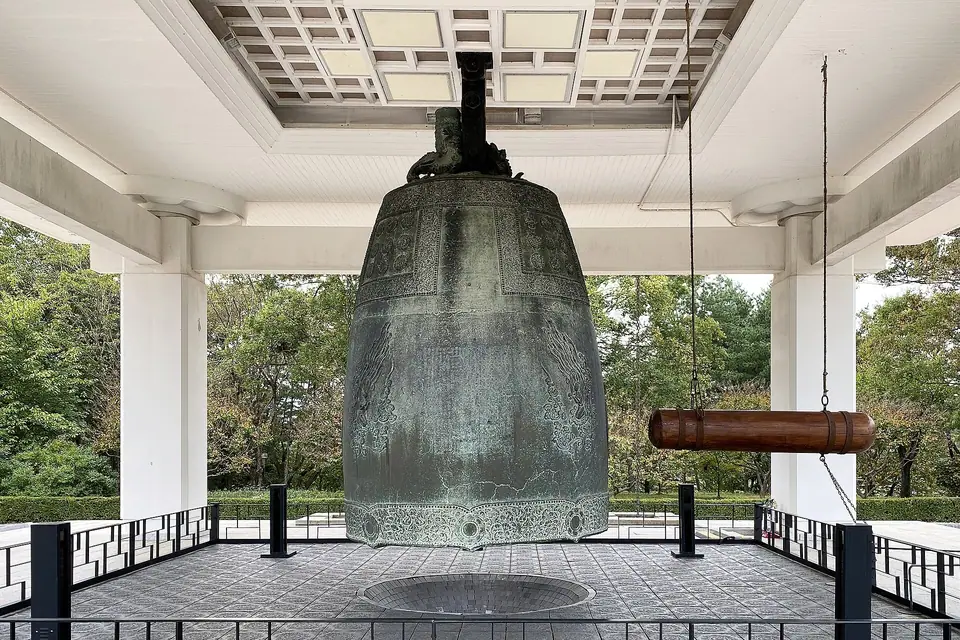
In the open-air pavilion near the entrance hangs National Treasure No. 29. The Sacred Bell of Great King Seongdeok (성덕대왕신종), universally known as the Emille Bell. Begun by King Gyeongdeok to honour his father King Seongdeok and finally cast in 771 CE under King Hyegong after decades of failed attempts. This monumental bronze bell stands 3.75 metres high, 2.27 metres in diameter at the lip, and weighs 18.9 tonnes. Folk legend claims that the master bell-founder could only make the bronze alloy fuse after a child was offered. That when struck, the bell's long, mournful resonance cried out "E-mil-le" (ancient Silla dialect for "Mother"). Modern metallurgical and acoustic testing revealed the real scientific genius of Silla bronze casters. The hollow cylindrical sound pipe (eumtong) on top filters out high-frequency dissonance. Meanwhile, a shallow resonance pit dug into the stone floor directly beneath the bell's scalloped lotus lip creates a deep acoustic beat frequency that carries for over 40 kilometres on a clear night. Look closely at the bell's surface to admire the 1,000-character Sanskrit-and-Hanja dedicatory inscription and the two relief carvings of kneeling celestial maidens (Bicheonsang) floating on lotus clouds while burning incense.
Wolji Hall and the Silla Millennium Library (Silla Cheonnyeon Seogo)
Finish your visit inside Wolji Hall, dedicated exclusively to the artifacts excavated in 1975 from nearby Wolji Pond. Highlights include architectural roof rafters, dragon-head bronze door rings, and gold-inlaid lacquerware. Before leaving the grounds, step into the newly opened Silla Millennium Library (신라천년서고). The Yeongnam Region Cultural Heritage Center at the rear of the campus, where floor-to-ceiling glass walls allow visitors to look directly into the museum's visible conservation storage vaults.
Where it is
- 1Gyeongju National Museum
- Daegu International Airport (TAE) · about 52 km from here in a straight line
- Directions in Google Maps
Traveller tips
Real advice from people who have been to Gyeongju. Every tip is read by our team before it goes live.
No tips yet. Been here? Yours could be the first.
Thank you! Your tip will appear here after a quick review.
More in Gyeongju
Continue exploring Gyeongju with related neighbourhood, food, and planning guides
Where to Stay in Gyeongju: Hwangnidan-gil Hanoks vs Bomun Lake Resorts
Gyeongju, South Korea
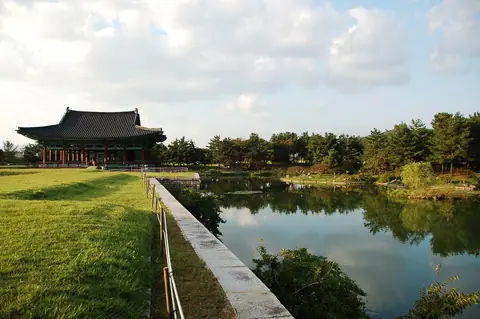
Gyeongju 3-Day Itinerary: Silla Royal Tombs, Bulguksa & Namsan (2026)
Gyeongju, South Korea
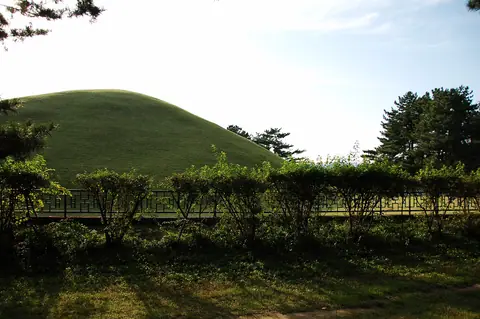
Daereungwon Royal Tombs, Cheomseongdae & Hwangnidan-gil Walking Guide
Gyeongju, South Korea
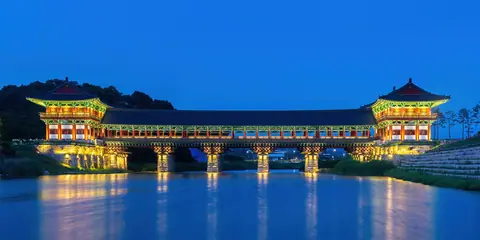
Donggung Palace, Wolji Pond & Woljeonggyo Bridge Night Walking Guide
Gyeongju, South Korea
