


























Jungfraujoch (3,454 m) and the Jungfrau Railway Guide from Interlaken
How to travel from Interlaken Ost to Europe's highest railway station at 3,454 metres, covering the 1912 rock tunnel, Sphinx Observatory, and Aletsch Glacier.
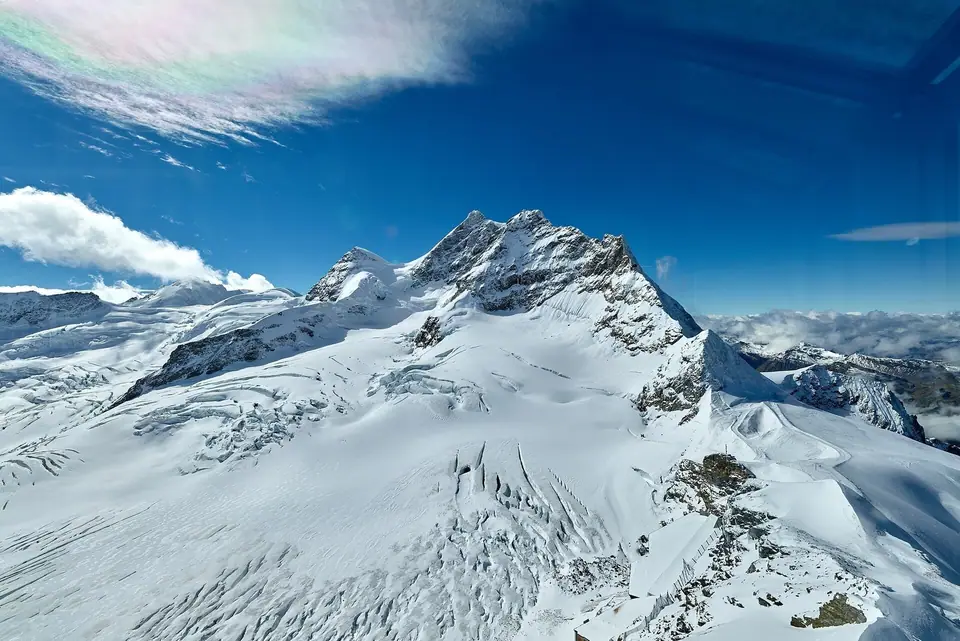
Visible on clear days from the Höhematte lawn in the middle of Interlaken, the snow saddle of the Jungfraujoch connects the Mönch (4,110 metres) and the Jungfrau (4,158 metres) on the border between the cantons of Bern and Valais. Carved inside the rock ridge just below the pass at 3,454 metres above sea level sits the terminus of the Jungfrau Railway (Jungfraubahn, JB), since its inauguration on 1 August 1912, the highest railway station in Europe.
Rising nearly three vertical kilometres above the Bödeli floodplain, this perennial world of rock, firn snow, and glacier ice can be reached in a single morning by electric cogwheel train and aerial cableway without mountaineering equipment. Stepping out onto the viewing terraces places visitors directly on the main alpine divide overlooking the vast ice fields of the Bernese Alps.
Adolf Guyer-Zeller and the 9.34-Kilometre Tunnel Through the Eiger
After early pneumatic and funicular proposals in the 1870s and 1880s stalled, Zürich textile industrialist and railway financier Adolf Guyer-Zeller sketched his vision in August 1893 for an electric rack railway starting at Kleine Scheidegg (2,061 metres) rather than the valley floor. Granted a federal concession on 21 December 1894, construction began on 27 July 1896 on a 1,000-millimetre-gauge Strub rack line electrified with three-phase alternating current at 1,125 volts and 50 hertz. After a 2-kilometre open-air climb to Eigergletscher station (2,320 metres), workers blasted a 7.12-kilometre tunnel inside the limestone and gneiss of the Eiger and Mönch. Although Guyer-Zeller died of pneumonia in April 1899, his sons continued the bore past the rock-window stations of Eigerwand (opened 1903, 2,864 metres) and Eismeer (opened 1905, 3,158 metres), where trains still pause for five minutes behind panoramic glass above the glacier, before reaching the 3,454-metre Jungfraujoch cavern on 21 February 1912 and opening to passengers on Swiss National Day, 1 August 1912.
Blasting the rock bore at high altitude required years of arduous work by Italian and Swiss tunnellers who wintered in timber barracks at Eigergletscher and inside rock chambers carved into the Eiger wall. Financing the project depended on ticket revenues collected from passengers riding to each newly completed intermediate station inside the mountain before the final ascent to the pass was finished.
Two Routes from Interlaken Ost: Classic Wengernalp vs Eiger Express
Every journey starts at Interlaken Ost (567 metres) aboard the Bernese Oberland Railway, which splits at Zweilütschinen for Lauterbrunnen and Grindelwald. You can ride a round-trip circuit using two different approaches to Eigergletscher:
- Via Lauterbrunnen and Wengen: Transfer at Lauterbrunnen (797 metres) to the 800-millimetre-gauge Wengernalp Railway (opened 1893) past car-free Wengen to Kleine Scheidegg (2,061 metres), where you board the Jungfrau Railway.
- Via Grindelwald Terminal and Eiger Express: Ride the BOB train to Grindelwald Terminal (943 metres, opened December 2020) and board the 6.5-kilometre Eiger Express 3S tricable gondola directly to Eigergletscher (2,320 metres) in fifteen minutes, cutting roughly 47 minutes off the total ascent from Interlaken Ost.
Combining both corridors into a continuous loop gives you the full spectrum of alpine scenery in one day: ride the fast tricable gondola up past the sheer limestone precipice of the Eiger North Face in the morning, and descend slowly in the afternoon on the cogwheel railway over Kleine Scheidegg and down into the waterfall cliffs of the Lauterbrunnen trough.
Sphinx Observatory (3,571 m), Ice Palace and Aletsch Glacier
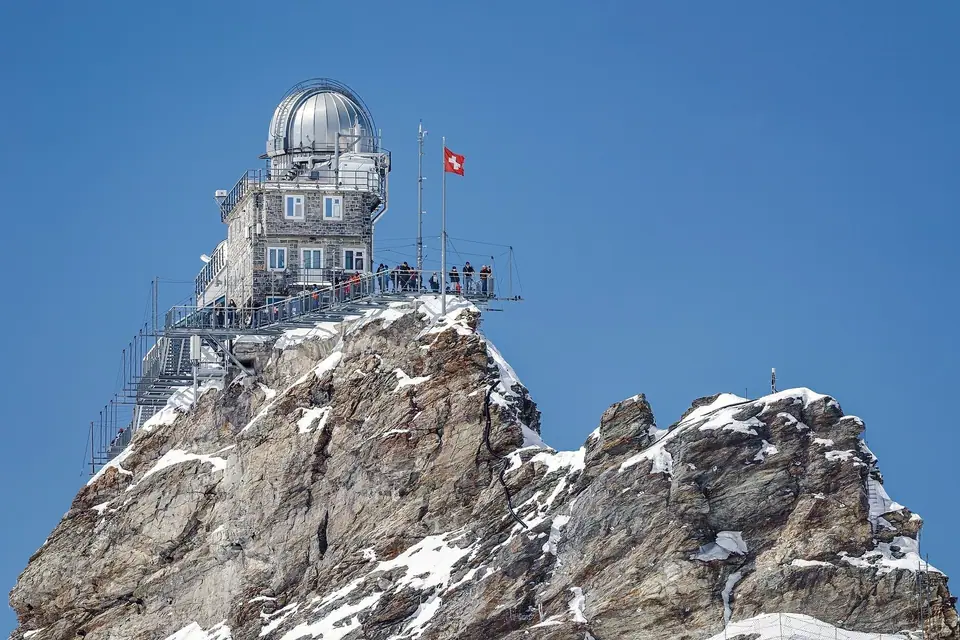
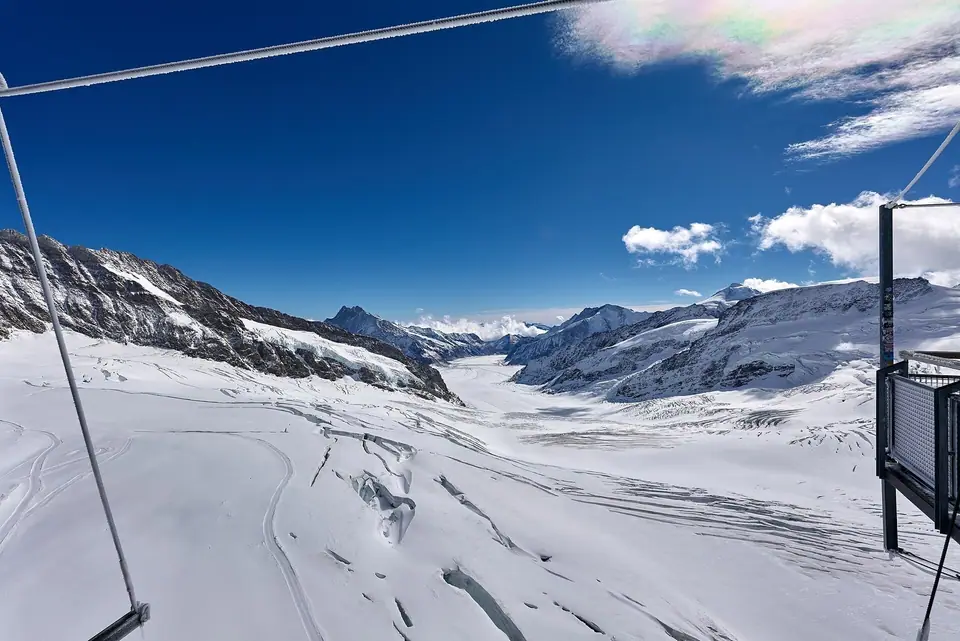
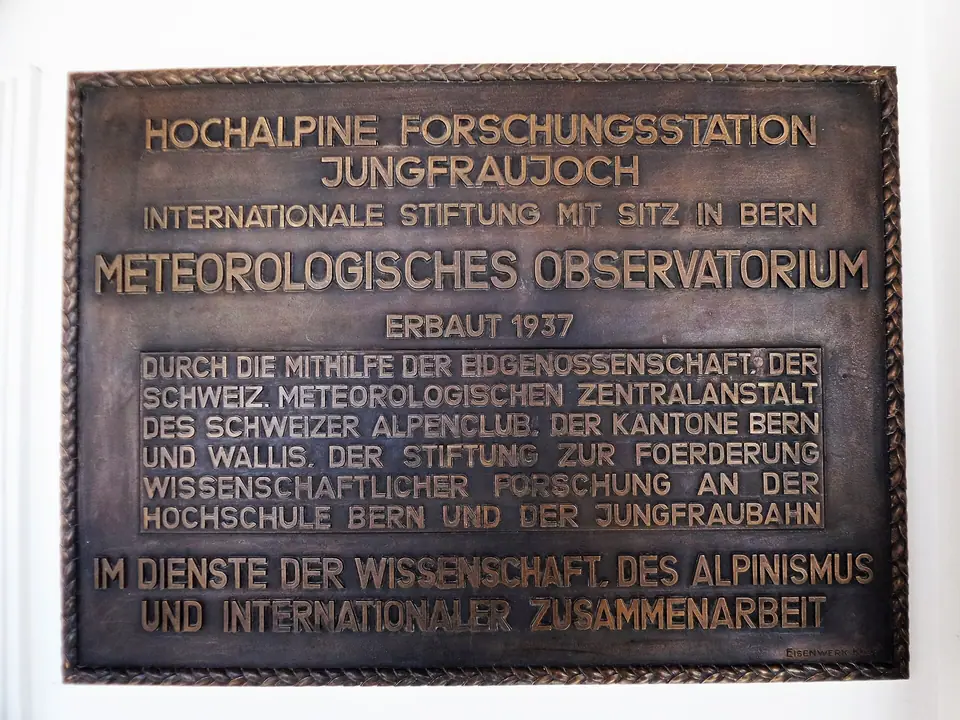
From the underground station halls at Jungfraujoch, a swift 108-metre lift ascends inside the rock pinnacle to the Sphinx Observatory at 3,571 metres. Inaugurated in October 1937 for meteorology, glaciology, and astronomy, its open-air metal grille terrace overlooks the Jungfraufirn, the upper snow basin feeding the 20-kilometre Great Aletsch Glacier, the longest glacier in the Alps and the core of the Swiss Alps Jungfrau-Aletsch UNESCO World Heritage site inscribed in 2001. Back inside the ridge, tunnels lead through the Alpine Sensation exhibition (opened in 2012 for the railway's centenary), the sub-glacial chambers of the Ice Palace (Eispalast, first carved by mountain guides in the 1930s), and out onto the snow plateau.
Walking through the vaulted corridors of the Ice Palace takes you directly inside moving glacier ice several metres below the surface, where sculptors maintain smooth tunnels and carved alcoves kept below freezing year-round. Outside on the snow plateau, marked ropes enclose a safe walking area where visitors can crunch across high-alpine firn snow with the rocky pyramid of the Jungfrau rising immediately overhead.
High-Altitude Preparation and Visibility Checks
Because air pressure and temperatures at the summit station sit far below valley levels, walk at an unhurried pace along the subterranean corridors and stairs to let your body adjust to the thin mountain air. Always pack UV-blocking sunglasses, sunscreen, a warm windproof jacket, and closed shoes with sturdy soles for walking on the outdoor snow plateau and the cold ice floors of the sub-glacial palace. Check high-altitude webcams and official fares before departure, and consult our seasonal weather guide to pick the clearest morning of your stay.
What elevates this excursion beyond a simple viewpoint ride is the sheer contrast between the green valley pastures of the Bernese Oberland and the high polar environment of the Jungfraufirn and Great Aletsch Glacier. Within ninety minutes of leaving the walnut trees of Interlaken Ost, you pass from lakeside meadows and wooden chalet villages into a vertical world of limestone precipices, rock-bored railway galleries, and permanent ice. Standing on the outdoor grille of the Sphinx Observatory lets you look south down the sweeping curve of the Aletsch ice stream toward the Valais Alps while looking north across the green hills of the Swiss Mittelland toward the Jura mountains. By taking the Eiger Express gondola in one direction and the classic Wengernalp cogwheel line through Kleine Scheidegg and Lauterbrunnen in the other, you experience more than a century of Swiss mountain railway engineering alongside the grandest glacial panorama in the region. Allowing unhurried time at both the indoor viewing windows of Eismeer and the outdoor snow plateau at the summit ensures you appreciate the scale of Adolf Guyer-Zeller's alpine railway vision, before descending to the green pastures of the valley floor for a relaxed evening.
Traveller tips
Real advice from people who have been to Jungfraujoch (3,454 m) and the Jungfrau Railway Guide from Interlaken. Every tip is read by our team before it goes live.
No tips yet. Been here? Yours could be the first.
Thank you! Your tip will appear here after a quick review.
More in Interlaken
Continue exploring Interlaken with related neighbourhood, food, and planning guides
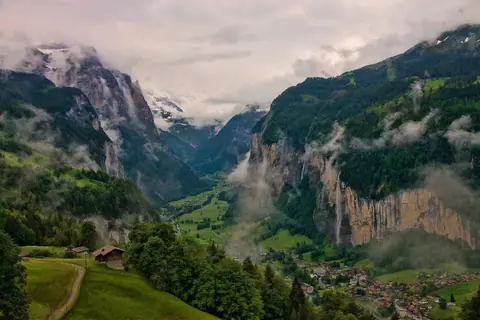
Lauterbrunnen Valley, Grindelwald and Eiger Day Trips from Interlaken
Interlaken, Switzerland

What to Eat in Interlaken: Fondue, Raclette, Rösti and Alpkäse
Interlaken, Switzerland
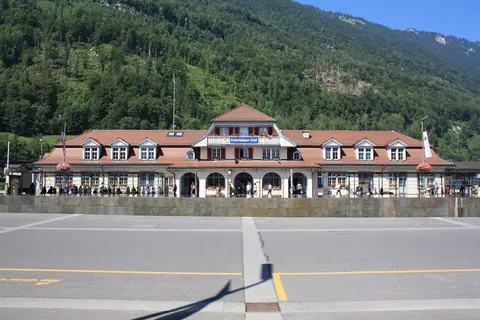
How to Get to Interlaken: Ost vs West Stations, Trains and Boats
Interlaken, Switzerland
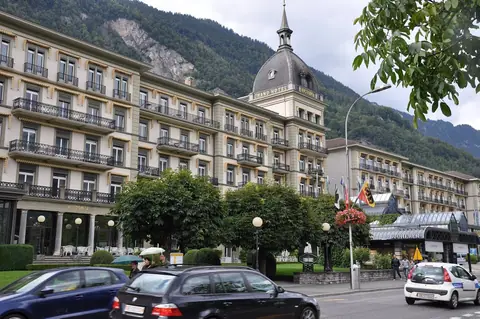
Where to Stay in Interlaken: Höheweg, Unterseen and Ost Compared
Interlaken, Switzerland
