


























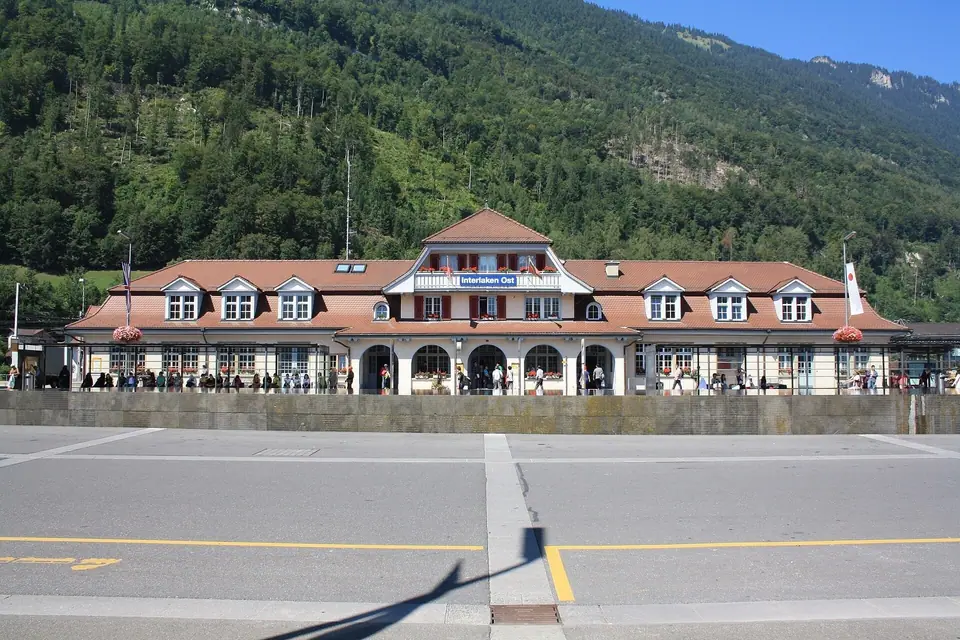
How to Get to Interlaken: Ost vs West Stations, Trains and Boats
Understand the crucial difference between Interlaken West and Interlaken Ost stations, mainline SBB connections, and mountain railway transfers.
Unlike dead-end mountain villages, Interlaken sits on a flat valley floor at 568 metres with two full-service mainline railway stations located 2 kilometres apart by track: Interlaken West (566 metres) and Interlaken Ost (567 metres). Knowing which station handles which train or boat line saves unnecessary backtracking across town.
Because standard-gauge national express trains terminate on the same platforms where narrow-gauge mountain railways and lake steamers begin, the municipality acts as an integrated transport machine. Passengers arriving from major Swiss cities or international airports can step across a level platform and continue straight into the high Alps or out onto the water with coordinated Swiss timetable precision.
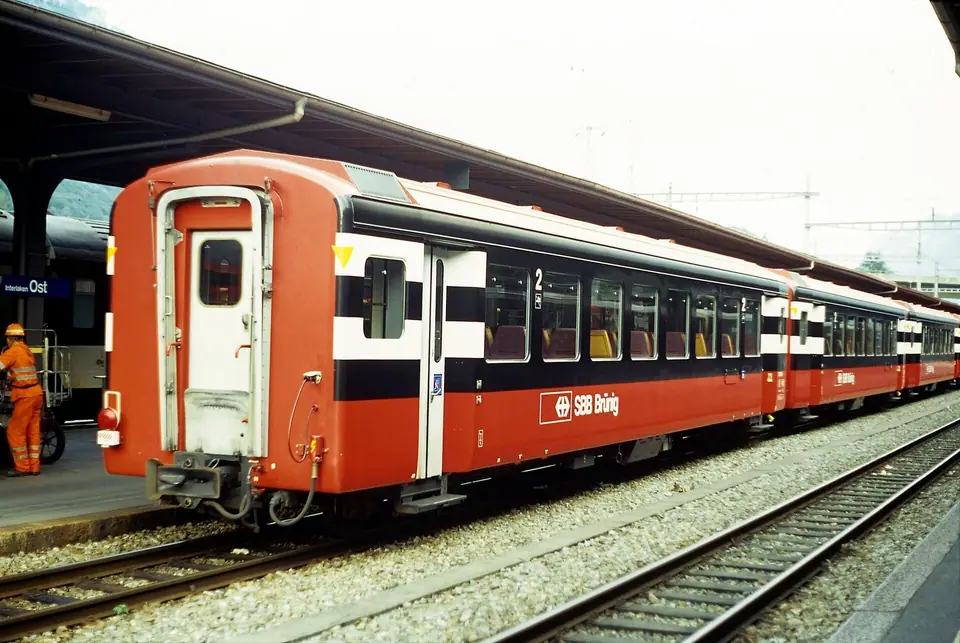
How the Bödelibahn Linked the Two Lakes (1872 to 1874)
Before continuous railways reached the Bernese Oberland from Bern or over the Brünig Pass, passengers travelled by paddle steamer across Lake Thun to Därligen and transferred onto the standard-gauge Bödelibahn. Opened on 12 August 1872 between Därligen and Interlaken station (now Interlaken West), the line was extended across the Aare bridges to Bönigen on Lake Brienz on 1 July 1874, opening the intermediary station of Interlaken Zollhaus. When the Bernese Oberland Railway (1890) and the continuous lakeside line from Thun via Spiez (1893) made Zollhaus the primary mountain transfer junction, the station was renamed Interlaken Ost, while the original 1872 town station took the name Interlaken West.
During its early decades, the Bödelibahn functioned as an isolated island railway linking the two lake steamer networks across the alluvial plain, even carrying freight wagons over a two-storey iron bridge across the Aare. Today, the historic iron bridges across the river remain a vital corridor connecting both stations for every mainline train entering the valley.
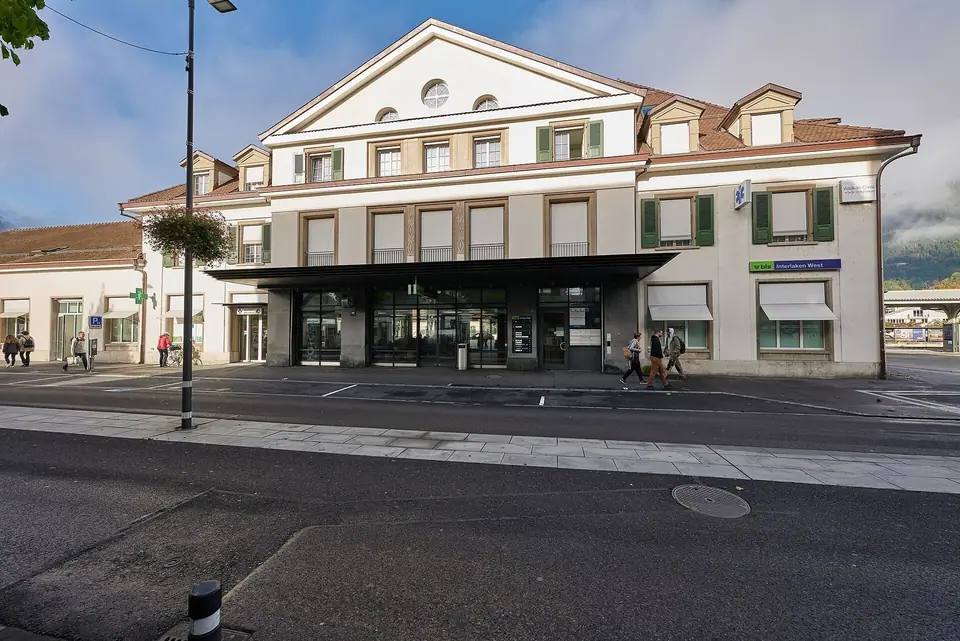
Interlaken West vs Interlaken Ost: Which Station Do You Need?
- Interlaken West: Positioned at the western end of the Höheweg, immediately south of Unterseen Old Town. Directly behind Platform 1 lies the 1892 shipping canal pier for BLS boats on Lake Thun, while the station forecourt serves PostBus line 101 to Beatenberg and STI bus line 21 along the northern shore of Lake Thun to the St. Beatus Caves.
- Interlaken Ost: The eastern terminus of all standard-gauge mainline trains (1,435 mm) and the gateway to the high Alps. Here you transfer across the platforms to the metre-gauge (1,000 mm) Bernese Oberland Railway (BOB) for Wilderswil (Schynige Platte), Lauterbrunnen, and Grindelwald (Jungfraujoch), as well as the metre-gauge Zentralbahn Brünig line (opened 1888) over the 1,008-metre Brünig Pass to Meiringen and Lucerne. Directly behind the station sits the Lake Brienz boat pier, and a five-minute walk across the Aare reaches the Harderbahn funicular.
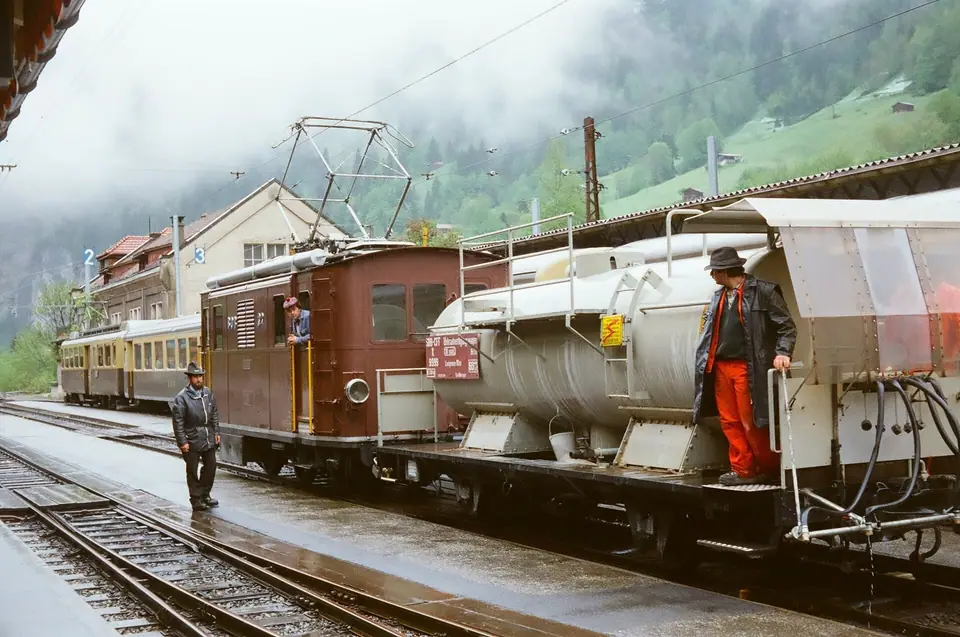
Direct Mainline Trains from Bern, Zurich, Basel and Geneva
Swiss Federal Railways (SBB) and BLS operate half-hourly standard-gauge InterCity (IC 61) and ICE services from Basel SBB and Bern via Thun and Spiez to both Interlaken West and Interlaken Ost, taking roughly 50 to 55 minutes from Bern and around two hours from Zurich Airport or Basel. From Geneva (changing in Montreux), the GoldenPass Express from Montreux runs via Zweisimmen directly into Interlaken Ost using gauge-changing bogies, while the Lucerne to Interlaken Express covers the scenic Brünig route in roughly one hour and fifty minutes.
Travellers riding the standard-gauge line between Spiez and Interlaken West should sit on the northern side of the carriage for uninterrupted views across the blue waters of Lake Thun toward the castle-topped promontories and the limestone cliffs of the Niederhorn. On the metre-gauge Zentralbahn from Lucerne, sitting on the southern side along Lake Brienz places you directly above the turquoise shoreline.
Walking and Local Buses Between the Two Stations
Every mainline train between Interlaken West and Interlaken Ost takes three to five minutes, local buses 102 and 103 run along the Höheweg, and walking the flat 1.6-kilometre boulevard past the Höhematte takes twenty minutes. Overnight guests registered at local accommodation receive the Interlaken Visitor's Card covering local bus and train zones within the valley.
Luggage Lockers, Station Facilities and Rail Passes
Both Interlaken West and Interlaken Ost feature staffed ticket counters, currency exchange desks, baggage lockers for large suitcases, and bike rental depots, making it easy to store bags if you want to ride up to Harder Kulm or cruise Lake Brienz between hotel check-out and your onward train. Regional passes such as the Swiss Travel Pass, Swiss Half Fare Card, and Berner Oberland Pass cover or discount the standard-gauge, metre-gauge, and lake steamer networks across the region.
For international and domestic visitors alike, the clarity of this rail and water layout eliminates the stress usually associated with mountain travel. You do not need to rent a car, navigate narrow alpine switchbacks, or hunt for valley parking spaces to reach any sight in the Bernese Oberland. Standard-gauge express trains bring you smoothly along the lakeshore to the valley floor, where level station platforms, coordinated narrow-gauge cogwheel departures, and adjacent steamer piers sit within a few steps of each other. Even the short two-kilometre link between Interlaken West and Interlaken Ost is served by trains, municipal buses, and a flat tree-lined pedestrian avenue, ensuring that any hotel neighbourhood you choose keeps every mountain railway, cableway, and paddle steamer effortlessly accessible throughout your stay. Checking the electronic departure boards at either station gives you instant, reliable connections across the entire regional network in every season of the year. If your itinerary continues onward to Lucerne, Montreux, Bern, or Zurich after your stay on the Bödeli, luggage lockers and step-free platform ramps at both stations make your departure day just as smooth as your arrival. Knowing in advance whether your hotel, boat pier, or mountain train sits closer to West or Ost lets you step off the carriage at the right platform from day one and start exploring the lakes and ridges immediately without any wasted transit time across the municipality. Because Swiss rail and steamer timetables are synchronised to the minute across both stations, even brief transfer windows allow unhurried walks from standard-gauge coaches to narrow-gauge mountain trains or waiting ship decks throughout the day in every season of your journey across the Swiss Alps.
Traveller tips
Real advice from people who have been to How to Get to Interlaken: Ost vs West Stations, Trains and Boats. Every tip is read by our team before it goes live.
No tips yet. Been here? Yours could be the first.
Thank you! Your tip will appear here after a quick review.
More in Interlaken
Continue exploring Interlaken with related neighbourhood, food, and planning guides
Best Time to Visit Interlaken: Climate Normals and Seasonal Guide
Interlaken, Switzerland
3-Day Interlaken Itinerary: Valley, Lakes, Ridges and Jungfraujoch
Interlaken, Switzerland
Interlaken: Valley Layout, Lakes and Mountain Rail
Interlaken, Switzerland
Things to Do in Interlaken: Viewpoints, Lake Steamers and Rail
Interlaken, Switzerland
