


























What to Wear in Luxor: Subterranean Tomb Heat, Sun Protection, Footwear & Upper Egypt Modest Dress
Pack smart for Luxor: breathable linen layers for 30-35°C subterranean royal tombs, grippy closed shoes for wooden tomb ramps, UPF sun gear, and modest Sa'idi dress etiquette.
Packing for Luxor requires preparing for three contrasting microclimates on the very same day. You will start in a chilly 8°C to 12°C river breeze when crossing the Nile by open boat at 05:30 dawn. By 10:30, you move into blinding white-limestone solar reflection across the shadeless desert plazas of Deir el-Bahari and Karnak. Moments later, you descend into still, humid 30°C to 34°C subterranean air inside the deep shafts of the Valley of the Kings. At the same time, Luxor is the heart of traditional Upper Egypt (Al-Sa'id), where rural social norms are noticeably more conservative than in coastal Red Sea resorts or central Cairo. Below is a practical field guide to footwear, breathable fabrics, sun gear, and dress etiquette.
| Environment | Ground & Air Conditions | Recommended Footwear & Clothing | What to Avoid |
|---|---|---|---|
| 1. Valley of the Kings & Tombs | Steep wooden ramps, still 30°C+ underground air, and zero breeze | Lightweight linen or cotton trousers, short-sleeved shirt, and closed rubber-soled walking shoes | Heavy synthetic fabrics, slick leather soles, or loose flip-flops on steep ramps |
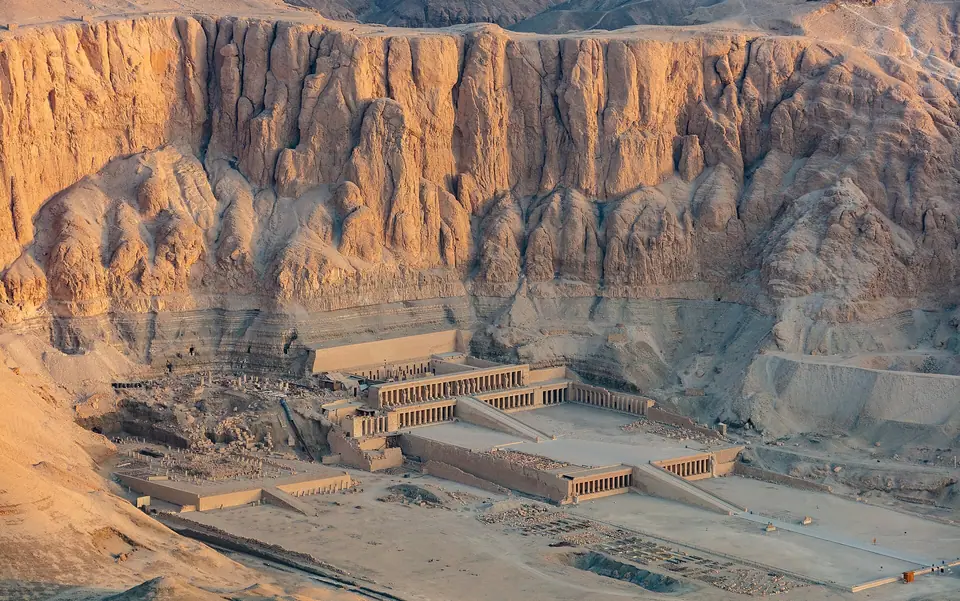
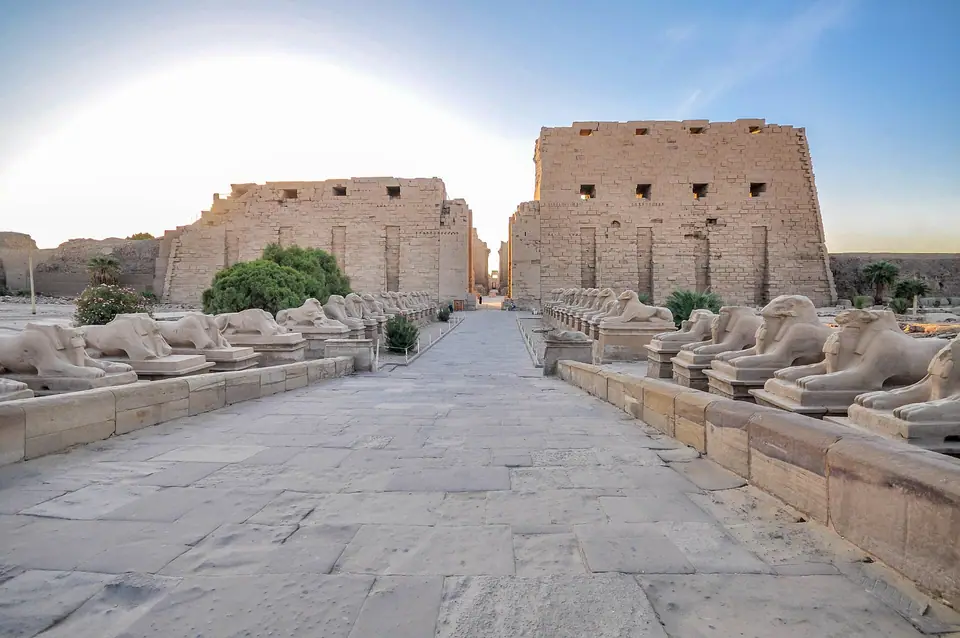
| 2. Open Desert Temples (Karnak & Hatshepsut) | Uneven sandstone flagstones, loose gravel, and intense upward UV glare | Cushioned trail sneakers, wide-brimmed hat with chin cord, UV400 sunglasses, and UPF overshirt | Bare shoulders, sleeveless tank tops, or thin-soled fashion sandals |
| 3. Dawn Nile Ferry & Balloon Flights (Nov to Mar) | 6°C to 12°C river wind chill before sunrise, followed by rapid warming by 09:30 | Peelable three-layer system: breathable base tee, light fleece or windbreaker, and cotton scarf | Dressing only for midday heat and shivering during the 05:30 boat crossing |
Footwear for temple flagstones, gravel avenues, and steep wooden tomb ramps
Over three days following our Luxor itinerary, you will walk 10 to 15 kilometres per day across ancient uneven sandstone blocks at Karnak and compacted desert gravel in the Valley of the Kings. You will also climb and descend long inclined wooden walkways fitted with cross-slats leading 50 to 100 metres down into subterranean burial chambers:
- Why Closed-Toe Cushioned Walking Shoes Win. Pack broken-in, breathable mesh running shoes, lightweight trail sneakers, or supportive closed-toe walking shoes with grippy rubber outsoles. Fine desert dust coats the wooden ramps inside tombs like KV11 (Ramesses III) and KV17 (Seti I), making smooth leather soles or loose slide sandals slippery on the 20-degree descent.
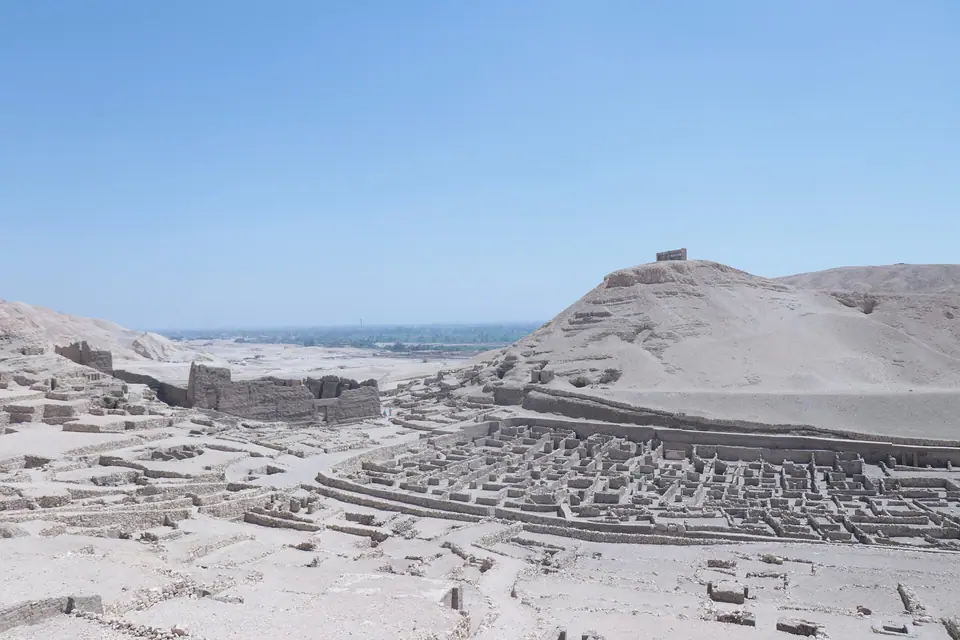
- Keep Ankles and Toes Protected from Sand and Stone. Inside the artisan village of Deir el-Medina and the Tombs of the Nobles, narrow iron ladders, rock-cut stairs, and rough stone thresholds punish open flip-flops. Pair your sneakers with moisture-wicking cotton or merino ankle socks so hot sand does not rub blisters between your toes.
Beating subterranean tomb heat and desert limestone glare
Even in January when the outdoor temperature in the Valley of the Kings is a comfortable 23°C, stepping fifty metres underground into a sealed rock-cut corridor feels like walking into a warm oven. Hundreds of visitors exhaling inside narrow shafts with no cross-ventilation push underground temperatures above 30°C to 34°C year-round:
- Choose Loose Natural Fibres (Linen and Lightweight Cotton). Leave clingy polyester dresses and heavy denim jeans at home. Loose-fitting 100% linen or lightweight woven cotton trousers, maxi skirts, culottes, and button-down shirts allow air to circulate across your skin while shielding your arms and legs from direct UV radiation. Pale colours (white, sand, khaki, and light blue) reflect solar heat across the open courts of Deir el-Bahari.
- Pack a Handheld Folding Fan and Microfibre Cooling Cloth. Electric fans are prohibited inside fragile painted burial chambers to prevent dust circulation. Carrying a simple folding hand fan (or rechargeable neck fan) and a damp handkerchief makes a huge difference inside KV9 and KV11.
- Essential Sun Protection for the Limestone Amphitheatres. The pale limestone cliffs of the West Bank reflect sunlight from below as well as above. Wear polarized UV400 sunglasses, a crushable wide-brimmed sun hat, and broad-spectrum SPF 50+ sunscreen, and carry a large lightweight cotton scarf (shawl) to drape over the back of your neck.
Modest dress etiquette in Upper Egypt (Al-Sa'id) and active mosques
While foreign visitors are welcome in summer holiday attire inside enclosed hotel pool gardens along the East Bank, walking through Luxor's town streets, markets, and West Bank farming villages calls for respectful local awareness:
- Shoulders and Knees Covered for Both Men and Women. In Upper Egyptian culture, short shorts, crop tops, and spaghetti-strap vests attract unwanted stares and street hassle in the bazaar and on the public Nile ferry. Cover your body from shoulders to below the knees with linen trousers, a midi skirt, and a short-sleeved linen shirt. This modest profile keeps you cooler in the desert sun and earns immediate warmth from local families.
- Entering the Living Mosque of Abu el-Haggag at Luxor Temple. If you step inside the thirteenth-century Mosque of Sheikh Yusuf Abu el-Haggag at Luxor Temple, remove your shoes at the threshold. Carry a pair of thin socks in your daypack so you do not walk barefoot on hot stone. Both men and women should cover their legs, and women should drape a cotton scarf loosely over their hair.
- What to Wear for a Sunrise Hot-Air Balloon Flight. Balloon baskets launch just before sunrise when West Bank field temperatures sit between 6°C and 12°C from November to March, though the propane overhead burners radiate gentle warmth on your head during the flight. Wear closed-toe flat sneakers, which are mandatory for climbing in and out of the wicker basket. Pair long trousers and a breathable t-shirt with a zip-up fleece that you can stow in your daypack at 07:30.
Daypack checklist for a full West Bank loop
Before boarding the morning ferry across the Nile, check that your daypack holds your physical Visa and Mastercard bank cards. Pack 300 to 500 EGP in small cash notes and 1.5 to 2 litres of sealed water per person. Add electrolyte rehydration sachets, tissues, hand sanitiser for desert restrooms, lip balm, and a smartphone power bank. Pair this checklist with our Luxor weather guide and orientation guide.
Seasonal packing adjustments: Winter nights vs summer desert heat
Your packing list shifts noticeably between the cool winter peak and the hot shoulder or summer months in Upper Egypt. If travelling in December, January, or February, pack a warm mid-layer fleece, a windproof jacket, and a knit beanie for 05:00 hot-air balloon pickups. Evening felucca rides over the water dip to 6°C to 8°C once the sun drops behind the cliffs. Many mud-brick guesthouses on the West Bank have high vaulted ceilings and stone tile floors, so bring warm indoor socks or travel slippers for chilly mornings.
If visiting between April and October, leave heavy jackets behind and pack two lightweight long-sleeved UPF 50+ sun shirts. You can rotate and rinse one shirt each afternoon at your hotel so it dries in an hour on the balcony. Fast-drying linen trousers and breathable merino-blend socks prevent chafing during humid subterranean tomb visits. Carry a compact travel umbrella or sun parasol if you are sensitive to direct solar glare while walking the shadeless 2.7-kilometre Avenue of Sphinxes. A small microfibre towel soaked in cold water around your neck keeps core body temperatures comfortable while climbing the ramps at Deir el-Bahari. Store your camera batteries and sunscreen in an insulated pouch inside your daypack so direct desert heat does not degrade them. Packing a small tube of fragrance-free moisturiser and saline nasal spray helps counter the ultra-low 20 percent relative humidity of the Upper Egyptian desert.
Traveller tips
If you arrive in Luxor without a breathable linen shirt or wide cotton scarf, skip the souvenir stalls outside Karnak. Walk instead into the tailors and fabric shops along Cleopatra Street or Television Street on the East Bank. There you can buy a lightweight 100% Egyptian cotton galabeya tunic or soft woven cotton scarf for 150 to 300 EGP (as of November 2026). Local tailors can custom-stitch a loose cotton shirt in twenty-four hours for a fraction of European prices. Always wash new dark-dyed scarves once in cold water before wearing them over a white shirt in the desert heat.
Where it is
- 1Luxor
- Luxor International Airport (LXR) · about 12 km from Luxor in a straight line
- Directions in Google Maps
Traveller tips
Real advice from people who have been to Luxor. Every tip is read by our team before it goes live.
No tips yet. Been here? Yours could be the first.
Thank you! Your tip will appear here after a quick review.
More in Luxor
Continue exploring Luxor with related neighbourhood, food, and planning guides
Valley of the Kings Guide: Best 3 Base-Ticket Tombs, KV62 Tutankhamun, KV9 Ramesses V/VI & KV17 Seti I
Luxor, Egypt
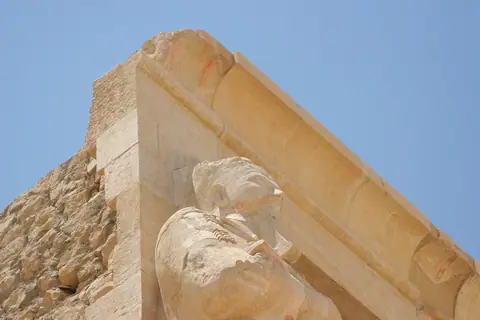
Hatshepsut Temple (Deir el-Bahari) & Valley of the Queens Guide: Punt Reliefs, Tombs of the Nobles & QV66
Luxor, Egypt
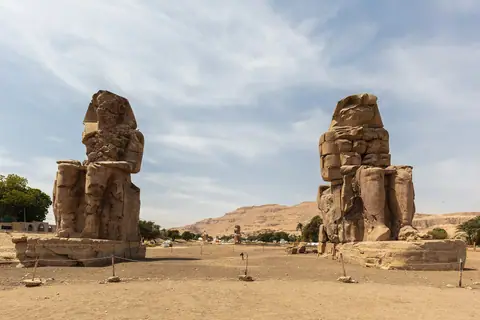
Southern West Bank Guide: Medinet Habu, Deir el-Medina Artisans' Village, Ramesseum & Colossi of Memnon
Luxor, Egypt

Luxor Museum, Mummification Museum & Nile Felucca Guide: 1989 Statue Cachette, Royal Mummies & Banana Island
Luxor, Egypt
