


























Valley of the Kings Guide: Best 3 Base-Ticket Tombs, KV62 Tutankhamun, KV9 Ramesses V/VI & KV17 Seti I
Master the Valley of the Kings ticket system in Luxor: pick the best 3 tombs on your base ticket, compare extra tickets for KV62 Tutankhamun, KV9, and KV17 Seti I, and beat the heat.
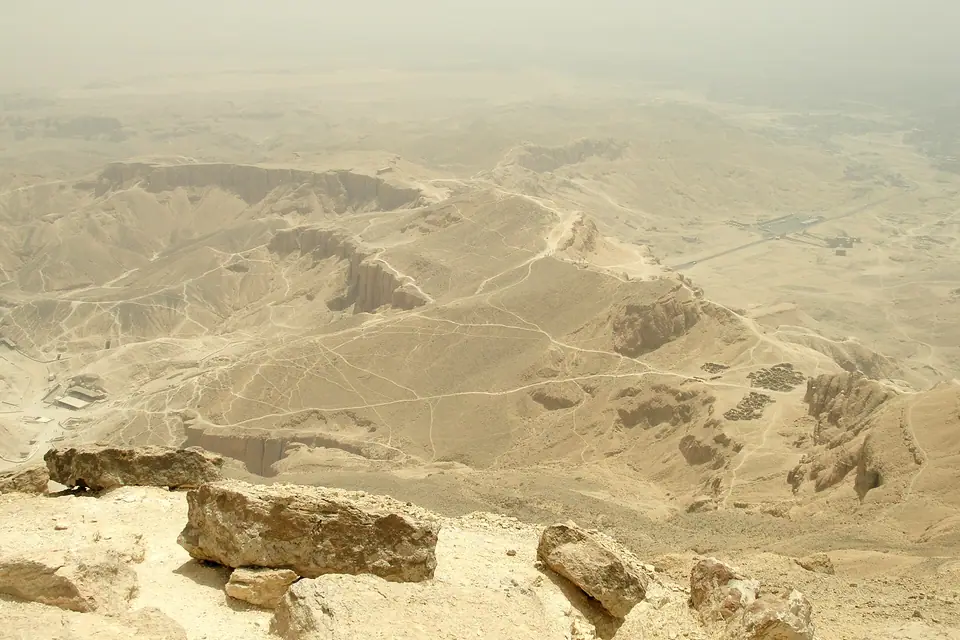
The Valley of the Kings (Arabic: Wadi Biban el-Muluk) sits carved into a bone-dry limestone wadi beneath the pyramid peak of al-Qurn (420 metres elevation) on the West Bank of Luxor. For nearly five hundred years (1539 to 1075 BCE), this secluded canyon served as the royal necropolis of Egypt's New Kingdom pharaohs. Abandoning the conspicuous pyramids of the Old and Middle Kingdoms to deter tomb robbers, Pharaoh Thutmose I and his architect Ineni excavated the first subterranean corridor tomb here at the start of the Eighteenth Dynasty. To date, archaeologists have catalogued 65 numbered rock-cut tombs and shafts (designated KV1 through KV65) inside the East and West Valleys. Because conservation rules rotate open tombs and limit your standard ticket to exactly three tombs, picking the right combination before you pass the turnstile is essential. Below is our complete 2026 field guide to the tickets, the best three base tombs, and the three extra-ticket masterpieces.
| Ticket Category | Tombs Included | Approx. Nov 2026 Card Fee | Field Verdict & Highlight |
|---|---|---|---|
| 1. Base Entry Ticket (3 Tombs) | Any 3 of the ~8 to 10 open standard tombs (KV11, KV2, KV6, KV8, KV1, KV14, KV16, KV47) | ~750 EGP + 20 EGP cash tram | Best 3 combo: KV11 (Ramesses III) + KV2 (Ramesses IV) + KV6 (Ramesses IX) or KV14 (Tausert) |
| 2. Extra: KV9 (Ramesses V & VI) | Single entry to KV9 (right opposite the rest area) | ~220 EGP extra (included in Standard Luxor Pass) | Highest value add-on. dazzling gold-and-blue double astronomical ceiling of Nut |
| 3. Extra: KV62 (Tutankhamun) | Single entry to KV62 (discovered 4 Nov 1922) | ~700 EGP extra (included in Standard Luxor Pass) | Compact four-chamber tomb. Houses Tutankhamun's real linen-wrapped mummy & Twelve Baboons wall |
| 4. Extra: KV17 (Seti I) | Single entry to KV17 (longest & Deepest tomb: 137 m) | ~2,000 EGP extra (included ONLY in Premium Luxor Pass) | Finest art in Egypt. raised-relief painted walls & Vaulted indigo astronomical burial hall |
| 5. Extra: KV23 (Ay, West Valley) | Single entry to KV23 in the separate Western Valley (2.5 km drive) | ~200 EGP extra | Quiet desert wadi. Features the only hunting-in-the-marshes scene in a royal tomb |
How the Valley of the Kings ticket and punch-card system works in 2026
Every decision in the Valley of the Kings must be made at the Visitor Centre ticket window before you board the electric tram, there are no ticket sales inside the tomb canyon itself:
- Buy All Extra Tomb Tickets at the Main Visitor Centre Window (Card Only). At the entrance plaza, inspect the glass display board listing which 8 to 10 standard tombs are open that day (tombs rotate periodically for humidity control and conservation). Pay by Visa or Mastercard for your Standard Valley Entry Ticket (around 750 EGP for foreign adults as of November 2026), which entitles you to visit any 3 open standard tombs. At the exact same window, purchase any extra tickets you want for KV9 (Ramesses V & VI, ~220 EGP), KV62 (Tutankhamun, ~700 EGP), or KV17 (Seti I, ~2,000 EGP). At the entrance to each standard tomb, the guardian punches or scans one of your three slots.
- The Electric Taf-Taf Tram (20 EGP Cash). Walk through the 3D topographical model of the valley inside the air-conditioned Visitor Centre. Outside, board the open-sided electric tram (taf-taf) for the 600-metre uphill ride to the canyon gate (20 EGP round-trip in cash, Carry small EGP notes from our orientation guide).
- Photography Rules Inside the Tombs. As of 2026, non-flash smartphone photography is free of charge inside the standard tombs and KV9, though flash is strictly forbidden as it degrades ancient mineral pigments. In KV62 (Tutankhamun) and KV17 (Seti I), guardians strictly enforce no-photography rules or require specific commercial tripod permits, always check the sign at the tomb door and never use a flash.
The best 3 tombs to pick on your standard base ticket
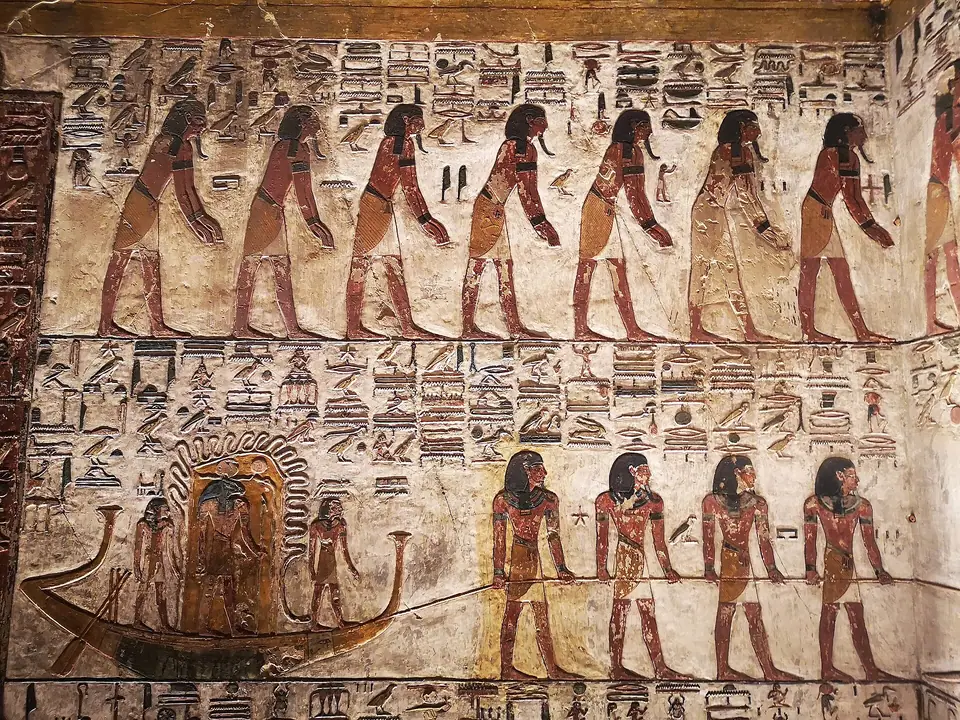
Eighteenth Dynasty tombs (such as Thutmose III or Amenhotep II) were cut high in the cliffs with right-angle bends and steep stairs. By contrast, Nineteenth and Twentieth Dynasty Ramesside tombs were engineered as wide, straight, gently sloping corridors. Their walls glow floor-to-ceiling with painted reliefs from the Book of Gates, Amduat, Litany of Ra, and Book of Caverns. Prioritize three from this top five list (depending on which are open on your morning):
- 1. KV11 (Ramesses III, The "Bruce's Tomb / Harper's Tomb"). Stretching 188 metres into the rock, KV11 is the richest tomb on the standard ticket. Because its workmen accidentally broke into the adjacent tomb of Amenmesse (KV10), the corridor jogs sideways before continuing. Look inside the ten small side chambers just beyond the entrance for unique secular scenes of royal bakeries, armoury weapons, boats, and the famous two blind harpists playing before the gods.
- 2. KV2 (Ramesses IV). Located just inside the valley entrance with a wide, gently sloped corridor, KV2 is ideal if you want to avoid steep stairs. Its burial hall holds a colossal 3.5-metre-high red granite sarcophagus beneath a vaulted yellow-and-blue ceiling of the sky goddess Nut. Look along the upper walls for ancient Greek, Coptic, and Latin graffiti left by Greco-Roman travellers 2,000 years ago.
- 3. KV6 (Ramesses IX) or KV14 (Queen Tausert & Setnakhte). Right across from KV62, KV6 features magnificent yellow-and-black reliefs of the resurrected giant figure of Osiris-Ramesses and a stunning astrological ceiling in the burial hall. Alternatively, check whether KV14 (built for Queen Tausert and enlarged by King Setnakhte) is open. Walk its 112-metre corridor to see two successive vaulted burial halls where Setnakhte plastered over Tausert's female cartouches.
- 4. KV8 (Merenptah) or KV16 (Ramesses I). If you enjoy deep physical descents, KV8 (Merenptah, son of Ramesses II) plunges 160 metres down steep wooden ramps. In the burial hall rests a massive pink granite sarcophagus lid carved with the recumbent king. By contrast, compact KV16 (Ramesses I) requires descending a short staircase into a single burial chamber painted on pristine blue-grey background plaster that looks as fresh as the day it was sealed in 1290 BCE.
Comparing the 3 extra-ticket tombs: KV9, KV62 (Tutankhamun), and KV17 (Seti I)
How should you allocate your budget among the three extra-ticket tombs?
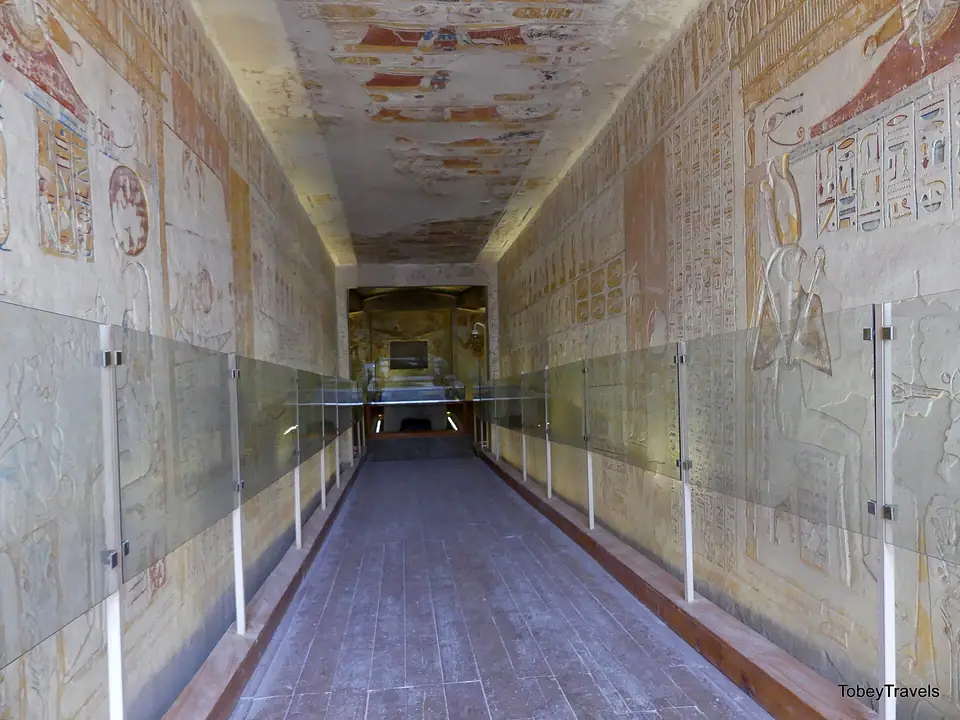
- KV9 (Ramesses V & Ramesses VI, ~220 EGP Extra, Essential for Every Visitor). Do not skip KV9. For roughly 4.50 USD extra, you walk down a wide, straight hall covered in complete texts of the Book of Gates and Book of Caverns. The corridor culminates in a vaulted burial chamber where the twin bodies of the sky goddess Nut swallow the evening sun disc across a lapis-blue ceiling.
- KV62 (Tutankhamun, ~700 EGP Extra, Historical Icon & Real Royal Mummy). British archaeologist Howard Carter and financier Lord Carnarvon discovered KV62 on 4 November 1922 beneath the ancient workmen's huts of KV9. The tomb is compact because the boy king died unexpectedly at age 19 around 1323 BCE. Only the compact burial chamber is painted, featuring the Twelve Baboons of the First Hour of the Amduat and the Opening of the Mouth ceremony performed by Ay. Characteristic brown microbial spots on the walls prove the chamber was sealed before the wet paint dried. While the 5,398 gold artefacts now reside in Cairo's Grand Egyptian Museum (GEM), KV62 still holds the outer gilded wooden coffin inside its red quartzite sarcophagus. Inside a climate-controlled glass case in the antechamber rests the actual linen-wrapped mummy of Pharaoh Tutankhamun.
- KV17 (Seti I, ~2,000 EGP Extra, The Supreme Artistic Masterpiece). Discovered by Giovanni Battista Belzoni on 16 October 1817, the 137-metre-long tomb of Seti I is the longest, deepest, and most artistically accomplished tomb in the entire Theban Necropolis. Every wall of its eleven chambers and pillared halls is carved in painted raised relief, including an unfinished room drawn in red and black scribe ink outlines. At the bottom arches a vaulted dark-blue astronomical burial hall (Seti I's alabaster sarcophagus now rests in Sir John Soane's Museum in London).
Traveller tips
Arrive at the Valley of the Kings Visitor Centre at 06:00 sharp when the gates open, before the sun climbs over the eastern rim of the canyon. Visit KV62 (Tutankhamun) and KV9 first at 06:15 when you will stand inside Tutankhamun's small burial chamber completely alone. By 09:00, a 30-minute queue forms on the narrow stairs of KV62. After finishing your tombs around 09:00, walk or drive 10 minutes across the ridge to Hatshepsut's Temple at Deir el-Bahari as outlined in our 3-day Luxor itinerary.
Where it is
- 1Valley of the Kings
- Luxor International Airport (LXR) · about 13 km from here in a straight line
- Directions in Google Maps
Traveller tips
Real advice from people who have been to Luxor. Every tip is read by our team before it goes live.
No tips yet. Been here? Yours could be the first.
Thank you! Your tip will appear here after a quick review.
More in Luxor
Continue exploring Luxor with related neighbourhood, food, and planning guides
Where to Stay in Luxor: East Bank Corniche Resorts vs West Bank Al-Gezira Garden Guesthouses
Luxor, Egypt
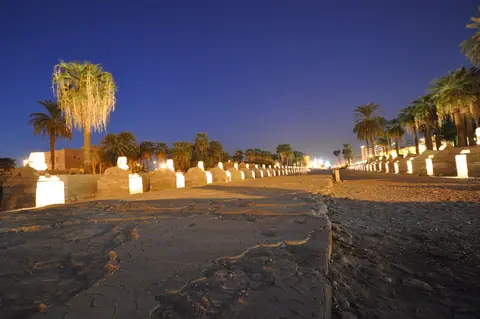
Luxor 3-Day Itinerary: East Bank Temples, Northern Royal Wadis & Southern Mortuary Loop
Luxor, Egypt
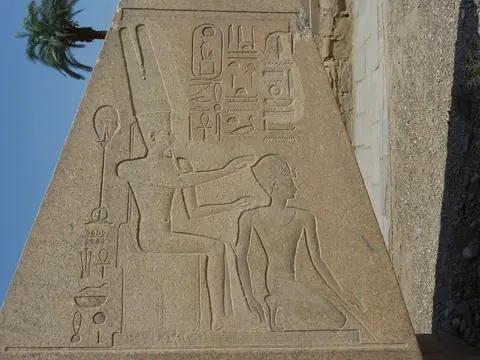
Karnak Temple Guide: Great Hypostyle Hall, Sacred Lake, Obelisks, Open-Air Museum & Precinct of Amun-Ra
Luxor, Egypt
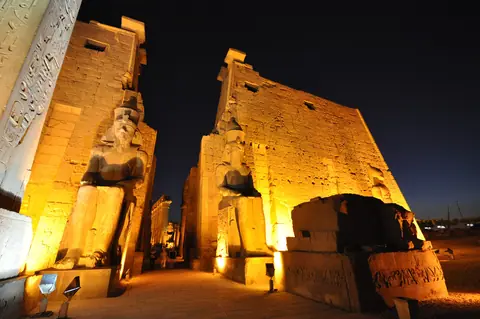
Luxor Temple & Avenue of Sphinxes Guide: First Pylon, Abu el-Haggag Mosque, Amenhotep III & Night Walk
Luxor, Egypt
