


























Luxor Orientation: East Bank vs West Bank Geography, Cashless Ticket Rules, Luxor Pass & Avoiding Scams
Master Luxor's East Bank and West Bank layout, 100% cashless antiquities ticketing, Luxor Pass vs individual site fees, Nile crossings, and how to avoid carriage and alabaster traps.
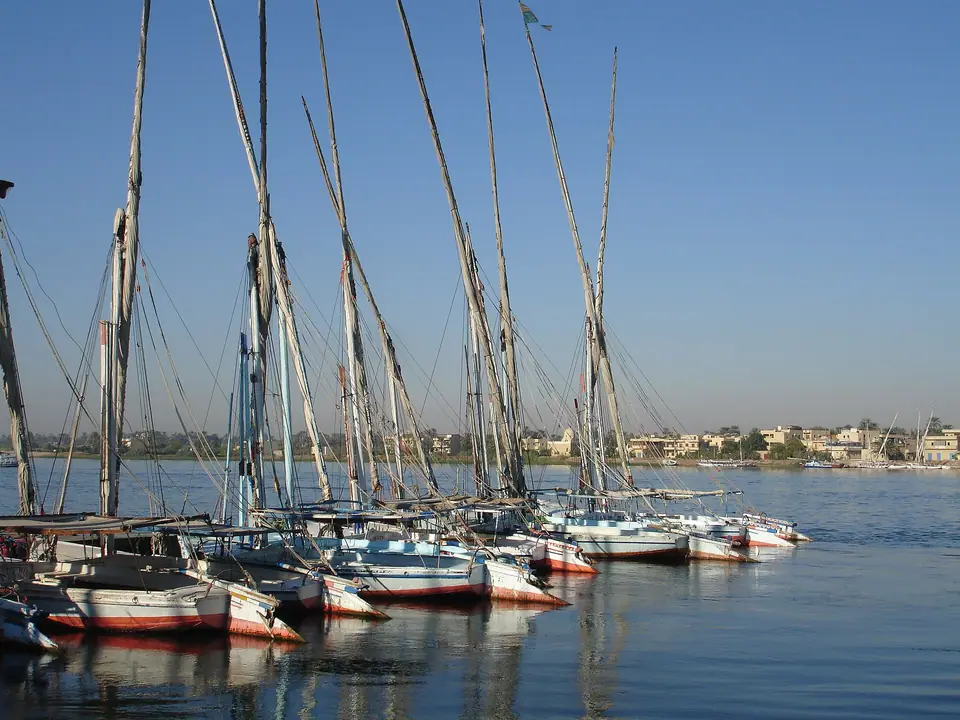
Standing on the banks of the Nile 670 kilometres south of Cairo, Luxor (ancient Thebes, or Waset) is the world's greatest open-air museum. UNESCO inscribed the ancient capital and its necropolis in 1979 under Reference 87 across 7,390 hectares. Yet first-time visitors who arrive without a clear operational plan often lose valuable hours to simple logistical mistakes. Bank-card payment rules at remote desert ticket booths, aggressive horse-carriage (calèche) price bait-and-switches, and midday canyon heat can quickly derail a schedule. Below, we break down how the city is divided across the Nile and how cashless ticketing works as of November 2026.
| Zone | Core Monuments | Nile Crossing & Transit | Best Time of Day |
|---|---|---|---|
| 1. East Bank (City of the Living) | Karnak Temple, Luxor Temple, Avenue of Sphinxes, Luxor & Mummification Museums | Walkable Corniche. A 10 min taxi to Karnak costs around 100 to 150 EGP as of Nov 2026 | 06:00 dawn at Karnak. After 17:00 for illuminated walks at Luxor Temple |
| 2. Northern West Bank (Royal Wadis) | Valley of the Kings (KV), Hatshepsut Temple (Deir el-Bahari), Tombs of the Nobles | 5 min public ferry (15 EGP) plus 20 min West Bank taxi, or 35 min drive via Al-Baghdadi Bridge | 06:00 to 10:30 before desert rock heat builds inside the limestone canyon |
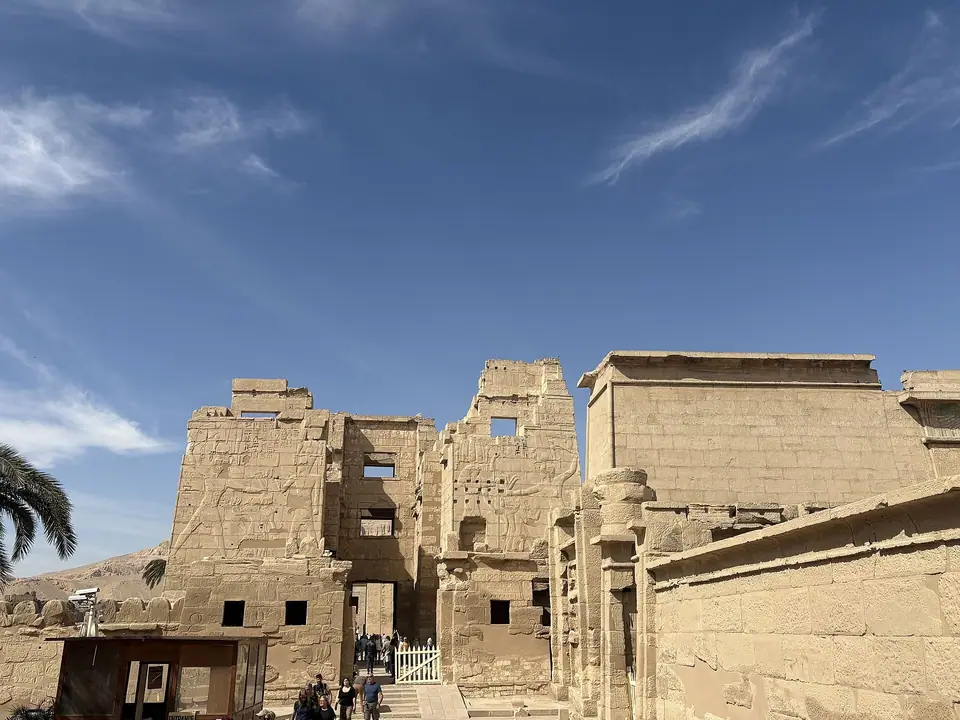
| 3. Southern West Bank (Mortuary Belt) | Medinet Habu, Ramesseum, Colossi of Memnon, Deir el-Medina, Valley of the Queens | 5 min public ferry plus a 10 to 15 min West Bank taxi loop along the canal road | 08:00 to 12:00 or 14:30 to 17:00 for warm afternoon relief lighting |
Solar geography: Why the Nile splits Luxor into the East Bank and West Bank
Ancient Egyptian cosmology mapped the daily cycle of the sun god Ra directly onto the landscape of the Nile Valley at Thebes. Understanding that east-west axis is the foundation of planning your 3-day Luxor itinerary:
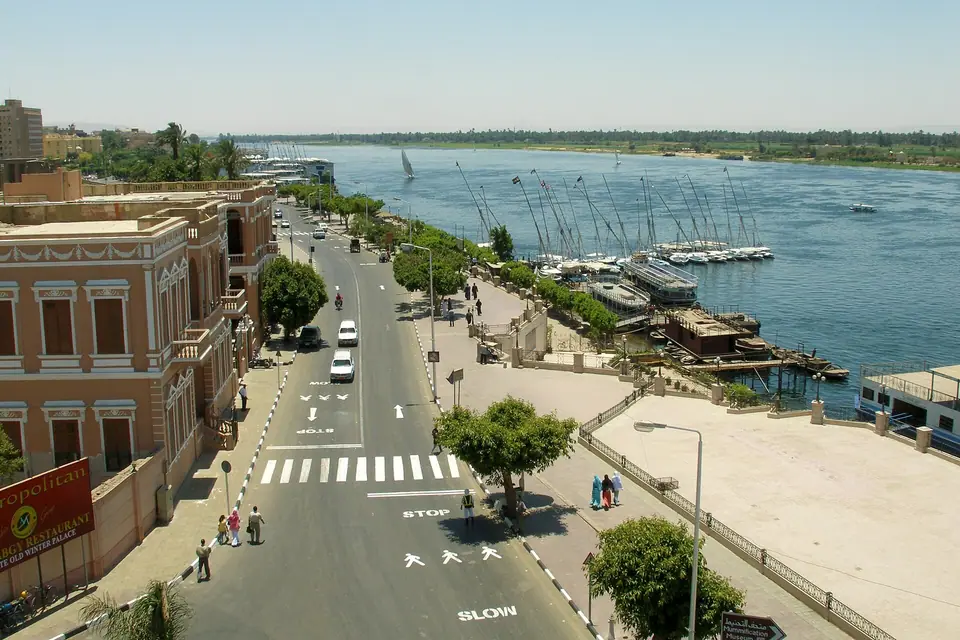
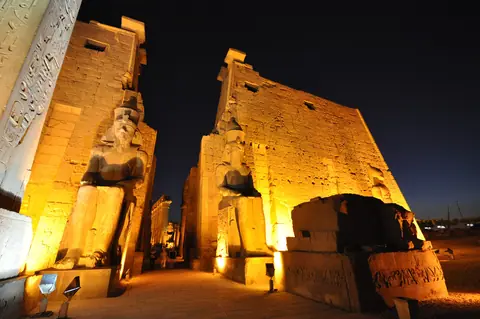
- The East Bank (Al-Barr ash-Sharqi): Temples of the Living, Hotels, and Rail Hub. Because the sun rises in the east, the pharaohs built their state cult temples on the eastern floodplain next to the modern town. Here stand Luxor Temple right on the central Corniche and the colossal Karnak Temple Complex 3 kilometres north. The excavated 2.7-kilometre Avenue of Sphinxes links the two sanctuaries directly through the town centre. The East Bank also houses Luxor Railway Station, the main banking and bazaar streets around Television Street and Cleopatra Street, the Luxor Museum, and the large riverfront resort hotels.
- The West Bank (Al-Barr al-Gharbi): The Theban Necropolis and Mortuary Temples. Across the 500-metre-wide Nile channel, green fields of sugarcane, alfalfa, and banana palms stretch for 3 kilometres to the foot of the bone-dry Theban Hills. The natural pyramid peak of al-Qurn (420 metres elevation) crowns the desert ridge above the valley. Along the edge of the irrigated cultivation stand the royal mortuary temples ("Mansions of Millions of Years"), including the Colossi of Memnon, Ramesseum, and Medinet Habu. Deeper inside the limestone cliffs lie the hidden rock-cut tombs of the Valley of the Kings, Deir el-Bahari, the Valley of the Queens, and the workmen's village of Deir el-Medina.
Cashless ticket windows, 2026 entry fees, and the Luxor Pass breakdown
Every archaeological site and museum in Luxor is administered by Egypt's Ministry of Tourism and Antiquities (MOTA). Before setting out on your first morning, master three strict ticketing rules that apply across Upper Egypt:
- 100% Cashless Card-Only Ticket Windows. You cannot pay with Egyptian Pounds (EGP), US Dollars, or Euros in cash at any official temple or tomb ticket booth in Luxor. All ticket windows accept only physical Visa or Mastercard debit and credit cards (contactless or chip-and-PIN). Carry two cards from different banks in case a desert terminal has a connection glitch. Alternatively, you can pre-purchase official QR-code e-tickets on the Ministry portal (egymonuments.com) the night before.
- Centralised West Bank Ticket Inspectorates. Major sites like the Valley of the Kings, Hatshepsut Temple, and Medinet Habu have their own on-site card terminals. However, smaller West Bank sites (such as the Tombs of the Nobles at Sheikh Abd el-Qurna, the Ramesseum, and the Asasif tombs) do not sell tickets at their gates. Tell your driver to stop first at the West Bank Antiquities Ticket Office right opposite the Colossi of Memnon on the main road. You can buy all your minor-site tickets there in one quick stop.
- Individual Tickets vs the 5-Day Luxor Pass (As of November 2026, Subject to Change). As of late 2026, standard foreign adult entry fees sit around 600 EGP for Karnak Temple, 500 EGP for Luxor Temple, and 750 EGP for the Valley of the Kings (3 tombs). Entry costs around 440 EGP for Hatshepsut Temple, and 220 to 400 EGP for Medinet Habu, Ramesseum, Deir el-Medina, and the Luxor Museum. If you plan to visit most monuments over three to five days, compare the two tiers of the official 5-Day Luxor Pass. The pass is sold at the Karnak or Valley of the Kings visitor centres. Bring your original passport and a photocopy.
- Standard Luxor Pass (around 130 USD / 120 EUR for adults, 70 USD / 60 EUR for students with valid ISIC card as of November 2026). This pass covers unlimited entry for 5 consecutive days to all open archaeological sites and museums on both the East and West Banks, except Seti I (KV17) and Nefertari (QV66). Note that the Standard Pass does cover KV62 (Tutankhamun) and KV9 (Ramesses V & VI).
- Premium Luxor Pass (around 250 USD / 230 EUR for adults, 130 USD / 120 EUR for students as of November 2026). This tier includes everything in the Standard Pass plus one entry to the magnificent Tomb of Seti I (KV17, which alone costs 2,000 EGP on a separate ticket). It also covers the Tomb of Nefertari (QV66) whenever it is open to visitors, so check its restoration status with MOTA before buying the Premium tier.
Field defense: How to avoid Luxor's four classic tourist traps
Luxor is safe to walk day and night, with dedicated Tourism and Antiquities Police checkpoints along the Corniche and West Bank roads. However, persistent street touts target unprepared visitors with four predictable gambits:
- The "10-Pound" Horse Carriage (Calèche) Bait-and-Switch. Drivers along the East Bank Corniche routinely call out, "Horse carriage, 10 Egyptian Pounds for one hour!" Once the ride ends down a backstreet, the driver claims he meant 10 British Pounds per person. Many also demand an exorbitant feed tip for the horse. Skip hailing street carriages altogether. Walk the flat Corniche or use agreed-fare taxis covered in our Luxor transport guide.
- The "Ferry Is Closed Today" Boat Tout Lie. As you walk down the stairs to the public Nile ferry dock opposite Luxor Temple, private motorboat touts wait at the top of the ramp. They frequently claim that "the public ferry is broken or closed to foreigners today". Ignore the claim and walk straight down to the municipal turnstile. The public ferry crosses every 10 to 15 minutes around the clock for 15 EGP per person (as of November 2026).
- The Mandatory West Bank "Alabaster Factory" Detour. Low-priced West Bank group tours and bargain taxi drivers often cut short your time at Medinet Habu or Deir el-Medina to park outside a roadside stone workshop in Qurna. There, actors stage a brief carving demonstration before steering you into a high-pressure showroom selling machine-made calcite bowls. When hiring a private driver, state clearly before departure: "No alabaster shops, no papyrus shops, no perfume stops."
- Tomb Guardian "No-Ticket / Rope-Drop" Baksheesh Traps. Inside temples and tombs, attendants wearing galabeyas may wave you behind a rope barrier, point out a common relief, or offer to take your photo with your phone. Immediately afterwards, they demand a 100-to-200 EGP tip. Keep your hands in your pockets, decline unsolicited guiding with a polite "La, shukran" ("No, thank you"), and never hand your phone to an attendant inside a tomb.
Traveller tips
Although ticket booths are cashless, carry 300 to 500 EGP in small 10, 20, and 50 EGP banknotes each day in a separate front pocket. You will need cash for the public Nile ferry (15 EGP), the Valley of the Kings electric taf-taf train (20 EGP), bottled water, and small restroom tips (5 to 10 EGP). Withdraw Egyptian Pounds from official bank ATMs (National Bank of Egypt, Banque Misr, or CIB) along the East Bank Corniche. Do this before crossing to the West Bank, where working ATMs are scarce. Pair this orientation with our guides to Luxor's desert climate, temple dress etiquette, and where to stay on the East and West Banks.
Where it is
- 1Luxor
- Luxor International Airport (LXR) · about 7 km from Luxor in a straight line
- Directions in Google Maps
Traveller tips
Real advice from people who have been to Luxor. Every tip is read by our team before it goes live.
No tips yet. Been here? Yours could be the first.
Thank you! Your tip will appear here after a quick review.
More in Luxor
Continue exploring Luxor with related neighbourhood, food, and planning guides
Luxor Temple & Avenue of Sphinxes Guide: First Pylon, Abu el-Haggag Mosque, Amenhotep III & Night Walk
Luxor, Egypt
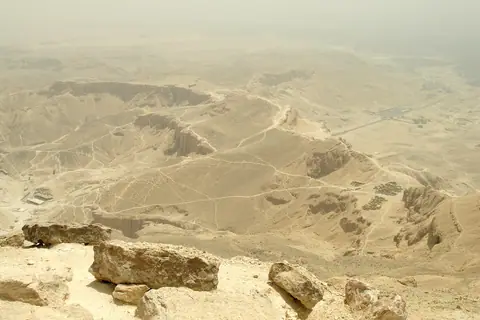
Valley of the Kings Guide: Best 3 Base-Ticket Tombs, KV62 Tutankhamun, KV9 Ramesses V/VI & KV17 Seti I
Luxor, Egypt
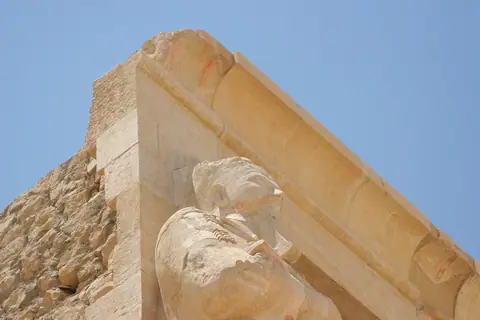
Hatshepsut Temple (Deir el-Bahari) & Valley of the Queens Guide: Punt Reliefs, Tombs of the Nobles & QV66
Luxor, Egypt
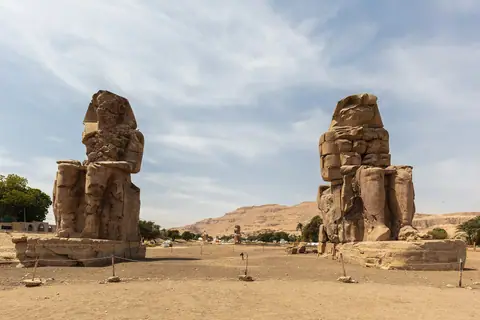
Southern West Bank Guide: Medinet Habu, Deir el-Medina Artisans' Village, Ramesseum & Colossi of Memnon
Luxor, Egypt
