


























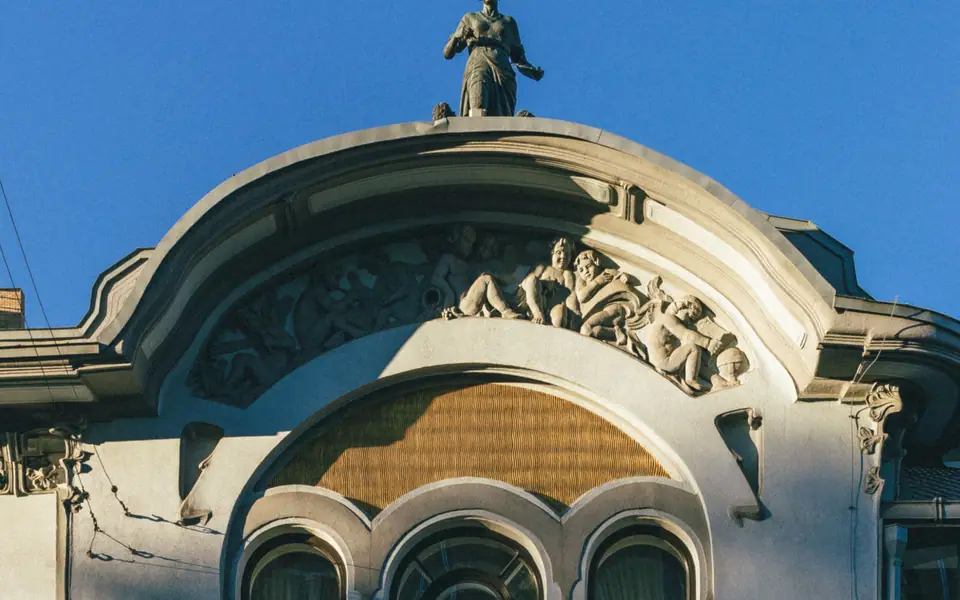
Alberta Street, Riga: Art Nouveau Facades and the Pēkšēns Museum
Read Alberta Street's sculpted facades from the pavement, then decide whether the Art Nouveau Centre's apartment museum adds useful context.
Alberta Street is a place to slow your pace and look up. Riga's Art Nouveau district developed as the city expanded beyond its medieval centre. UNESCO connects that growth with the nineteenth-century suburbs, where wooden neoclassical buildings were followed by stone Art Nouveau architecture. The street makes that transition visible through sculpted facades, projecting forms and carefully composed rooflines.
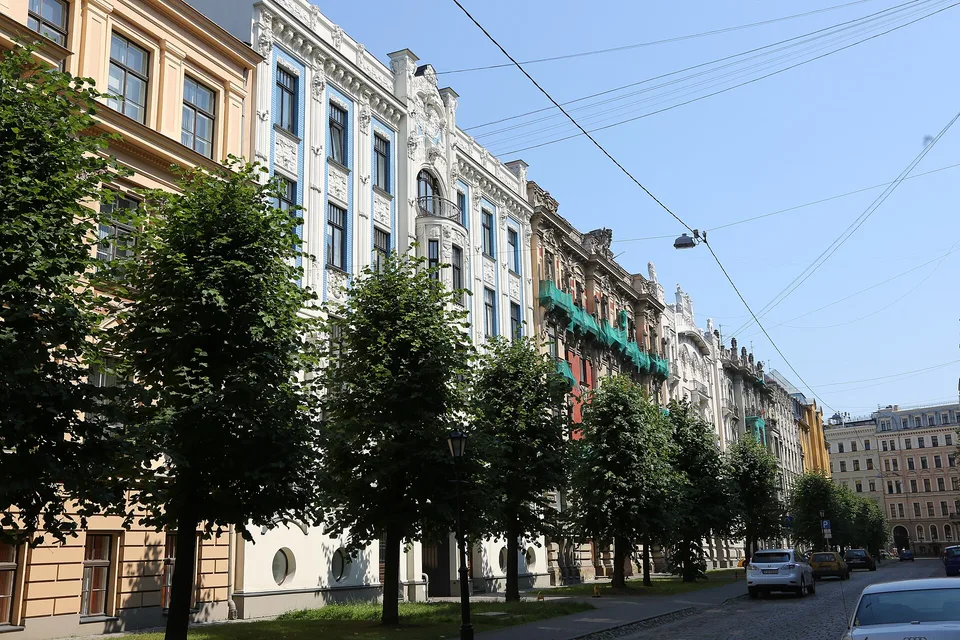
Read the street from pavement level
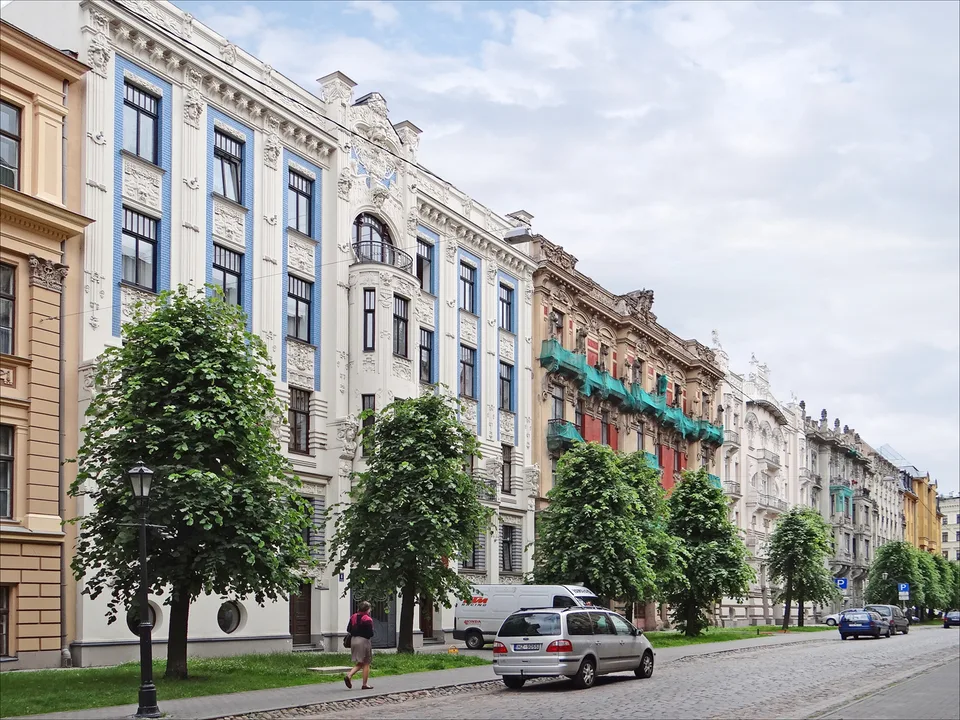
LiveRiga dates the buildings on Alberta Street to 1901 to 1908 and identifies several as national architectural monuments. Walk on both sides if the pavement allows, because details change between entrances, balconies and upper floors. Look for patterns and silhouettes rather than trying to label every building by style from memory.
Some facades combine figures, plant forms and geometric ornament. Others rely more on massing, windows or roof shapes. Use this as an observation guide, not a claim that every visible motif has one fixed meaning. If a building has a public plaque, read it on site; otherwise, leave attribution to the official architecture sources.
Alberta Street is a public street, but the buildings are not all museums. Respect residents and avoid entering private courtyards unless access is clearly permitted. The street walk works independently from any indoor visit.
Decide whether to enter the Art Nouveau Centre
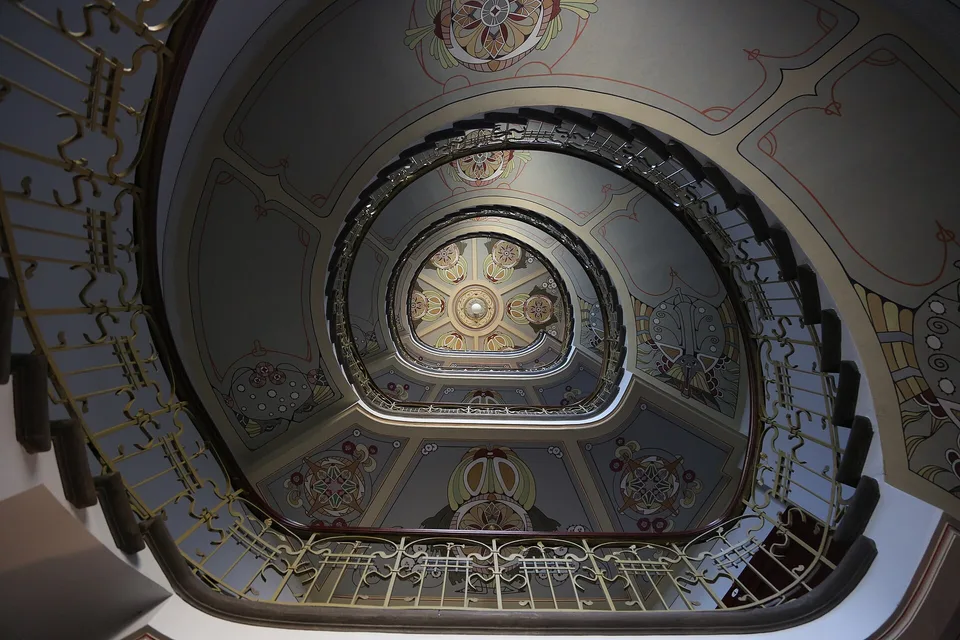
The Riga Art Nouveau Centre is at Alberta iela (AL-ber-tah YEH-lah) 12, in a residence built in 1903 for architect Konstantīns Pēkšēns and designed with Eižens Laube. The museum presents an authentic apartment interior and a digital exhibition. Its value is different from the pavement walk: outside, you see the street's shared architectural language; inside, you encounter a specific domestic setting and interpretation.
Check the museum's official page for current access, exhibitions and visitor arrangements before making it a fixed part of the day. We do not list opening hours or admission charges. If you prefer outdoor architecture, use the time for more streets in the Quiet Centre rather than forcing an indoor stop.
Connect the district to Riga's larger history
The old town and Alberta Street should not be treated as separate styles with no relationship. Riga's port and trade history helped establish its medieval core, while industrial growth in the nineteenth century enlarged the city beyond that older pattern. The boulevard semicircle, canal green belt and surrounding suburbs record that expansion. Alberta Street is one concentrated example within this wider landscape.
To understand the shift, begin at the Old Town and walk towards the canal parks, then continue into the Art Nouveau streets. The route shows how the scale and facade treatment change as the city expands. Our Old Town guide and canal walk give each side of that transition more attention.
What to notice on a short walk
- Building silhouettes: compare projecting bays, balconies and rooflines instead of focusing on ground-floor ornament alone.
- Facade details: look for sculpted decoration and recurring natural forms, then compare how neighbouring buildings use them differently.
- Street context: notice the building line, pavement and scale as a group; the architecture is part of a planned urban district.
- Museum context: visit Alberta iela 12 if an interior interpretation would help, and verify the museum's current information before arriving.
There is no need to rush from one named facade to the next. A measured walk leaves room to compare buildings and notice changes across the street. It also avoids the mistake of treating the district as a checklist of photo stops.
How much of the Art Nouveau district is enough?
For a short Riga stay, combine Alberta Street with the central boulevard parks and one indoor choice. Travellers with a strong interest in architecture can extend the route to nearby streets after checking an official architecture map. The city tourism and museum pages offer a starting point; avoid inventing a self-guided route from unverified building numbers.
If you have already spent a full day in the Old Town, Alberta Street makes a useful contrast rather than a repetition. If you have limited walking time, prioritise the facades and choose the museum when its interior or digital material suits your interests.
- Alberta iela / Elizabetes iela: Compare facade details across streets rather than treating one building as the whole district.
- Street walk / Art Nouveau Centre: A street walk shows exterior design; the museum provides an interpreted interior visit.
Alberta Street is most rewarding when seen as part of Riga's expansion. The sculpted details attract attention, but the larger story sits in the city's movement from medieval centre to boulevard suburbs. Pair the street with the canal and Old Town, then keep the rest of the day open for the architecture that interests you most.
Use the museum to compare exterior and interior
Alberta iela 12 gives the Art Nouveau walk an indoor counterpart. The museum's apartment interior lets visitors see how design carries through rooms, decoration and furnishings, while its digital exhibition places the wider architectural movement in context. That combination is more useful than viewing the facade as an isolated sculpture.
The official museum page identifies Pēkšēns and Laube with the 1903 building and describes its decorative plant and animal forms. It also presents an authentic apartment interior. Use those details to guide what you observe, but do not assign a meaning to every motif without a source. Architecture can be appreciated without turning each ornament into a symbolic claim.
Allow time for the street itself before and after an indoor visit. The museum is one address in a district of buildings, and the neighbouring facades show how designers worked within a shared period while producing different compositions. Check current entry arrangements with the museum rather than relying on a previous visitor's account.
For more central context, connect Alberta Street to the canal and Old Town in the three-day route. For travellers with limited time, focus on the street and choose the museum according to your interest in interiors and interpretation.
When time is limited, the outdoor walk gives a strong overview of the district's facade language. Choose the museum if you want to see how those ideas appear inside a residence and in its interpretation. The two visits complement one another but do not need to be treated as a package. Check the museum's own information and decide based on your interest.
Where it is
- 1Alberta Street, Riga
- Riga International Airport (RIX) · about 9 km from here in a straight line
- Directions in Google Maps
Stations and taxi ranks: OpenStreetMap. Airports: OurAirports. Distances are in a straight line.
Traveller tips
Real advice from people who have been to Riga. Every tip is read by our team before it goes live.
No tips yet. Been here? Yours could be the first.
Thank you! Your tip will appear here after a quick review.
More in Riga
Continue exploring Riga with related neighbourhood, food, and planning guides
Best Time to Visit Riga: Match Outdoor Walks to Latvia's Climate
Riga, Latvia
Where to Stay in Riga: Old Town, Centrs and Pārdaugava Compared
Riga, Latvia
Three Days in Riga: Old Town, Art Nouveau and the Daugava's Left Bank
Riga, Latvia

What to Eat in Riga: Rye Bread, Grey Peas, Smoked Fish and Market Produce
Riga, Latvia
