High Park Guide
Toronto's biggest city park, with a pond, oak woods and spring cherry blossoms.
High Park covers about 160 hectares in the west of Toronto, and it is the city's best answer to the question of where to go when the concrete gets too much. John George Howard, an architect and surveyor, gave much of the land to the city in the 1870s, and his house, Colborne Lodge, still stands near the south entrance as a small museum, giving a glimpse of life in early Toronto. It is a long, hilly park with real woodland, not a manicured square, and locals use it for everything from Sunday picnics to evening runs and winter sledging. Bring a map or a phone, since the many forks in the path make it easy to lose your sense of direction.
Exploring the Park Features
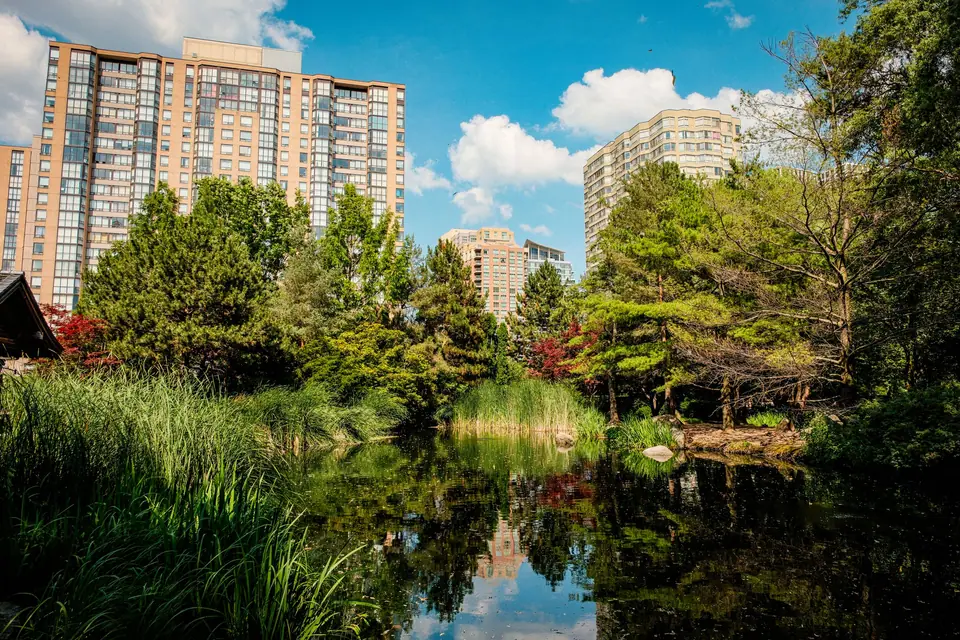
The park is built around Grenadier Pond, a long body of water on the west side, with paths along its edge and views over the water. Much of the land carries rare black oak savannah, a type of open woodland that has almost vanished in Ontario, and the city manages it with care. You will also find playgrounds, a small zoo with animals such as bison and llamas, gardens near the entrance, and a hillside from which the lake appears through the trees.
In spring, the cherry trees near the pond draw large crowds, a legacy of a gift from Japan in the twentieth century. The blossom lasts only briefly and depends on the weather, so follow the city's bloom updates rather than booking around a fixed date. Come on a weekday morning when possible, as weekends can be crowded enough to spoil the point.
Planning Your Time and Visit
Allow a half-day, with the shorter end in winter. Do not try to cover every path. A better plan is to enter at the High Park station, walk to the pond, loop back by the hillside and the lodge, and then leave. In autumn the colour is excellent and the crowds thinner, summer suits picnics and shade, and winter gives you empty trails and the odd skater or sledger. Pack water and sun protection in July, and boots in January, because the park offers little shelter once you are away from the entrance. The hills are gentler than they look, but a full loop is a real walk, so wear shoes made for it.
Combining with Nearby Areas
The natural partner is Roncesvalles Village, a stretch of bakeries, Polish delis and cafés on the east side of the park. Walk out through the Parkside Drive end and the avenue is within reach. If you would rather finish at the water, the south end of the park leads down to the lake, where our Toronto Islands guide describes another route to open space.
The Annex and the Evergreen Brick Works are the other green-minded stops, though they sit on opposite sides of the city. Our getting around guide will help you judge the distances.
Visitor Suitability and Seasonal Advice
High Park suits families, runners, couples and anyone craving open ground after several days of museums. It is a weaker choice if you only have a short first visit and want to see the famous landmarks, since it sits well away from the downtown core. We would skip it in a heavy rain, because the paths turn muddy and the views disappear. In deep winter it is a pleasure only if you dress for it.
If the blossom is the reason you came, accept that the timing is out of your hands. Even in a quiet week, the park repays the trip, providing a changing patchwork of pond, woodland and slope, with dog walkers, cyclists and joggers sharing the paths in every season that reminds you Toronto is built around a ravine system as much as a grid.
Traveller tips
Real advice from people who have been to High Park. Every tip is read by our team before it goes live.
No tips yet. Been here? Yours could be the first.
Thank you! Your tip will appear here after a quick review.
More in Toronto
Continue exploring Toronto with related neighbourhood, food, and planning guides