Royal Ontario Museum (ROM) Guide
Toronto's big all-rounder museum, on Bloor Street between Yorkville and the Annex.
The Royal Ontario Museum sits at the corner of Bloor Street West and Avenue Road, and it is the one Toronto museum that tries to cover everything, with dinosaurs and minerals on one side, and ancient Egypt, East Asia and Canadian history on the other. Locals simply say the ROM. It is a large, slightly sprawling building, and the visit goes better when you pick a few galleries rather than walk every floor.
Exploring the ROM Collections and Architecture
The old Edwardian wing is stone and heavy, with the natural history rooms at its core. The Crystal, a cluster of interlocking glass and aluminium prisms designed by Daniel Libeskind, leans out over the pavement and holds special exhibitions and some permanent galleries. Love it or hate it, it is why the building photographs so well from across the street.
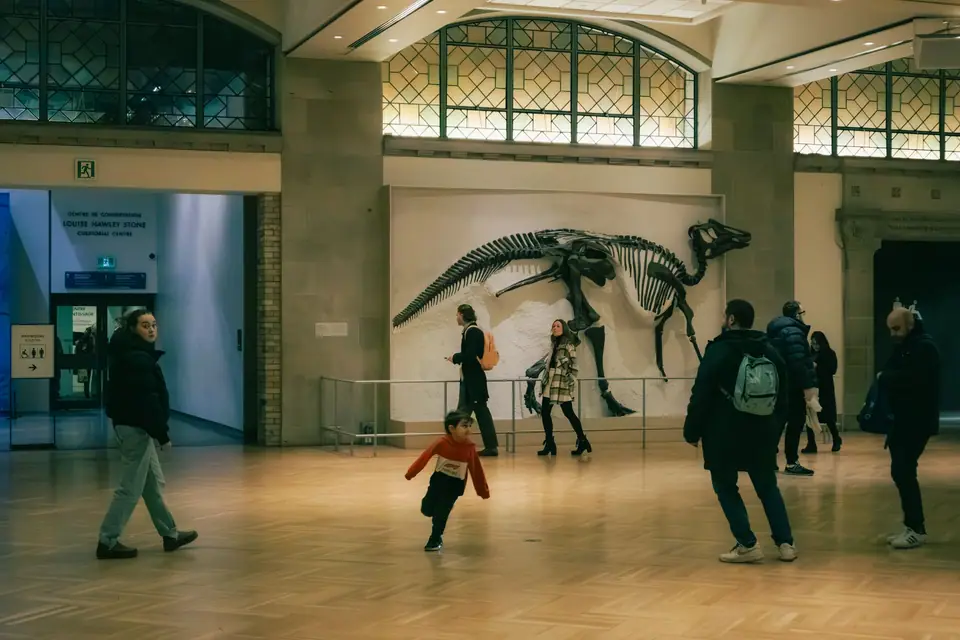
The dinosaur galleries are the crowd favourite and the obvious pick with children, featuring big skeletons, dim lighting and plenty of noise. The Egyptian collection, with mummies and coffins, runs a close second. For something quieter, head for the Chinese temple art, where large wall paintings and sculpture fill a tall room with a calm few other galleries match. The First Peoples and Canada galleries are the place to ask what Toronto and Ontario were before the city existed.
Pacing Your Museum Visit
A first visit fits into roughly a half day, and we would be strict about it. Museum fatigue is real, and the second half of a long visit tends to become a blur of labels. Choose two or three themes, see them properly, and leave the rest for another trip. Special exhibitions are ticketed and change often, so check the official site before you travel and decide whether the headline show or the permanent halls is your reason to come. Families with young children should aim for the dinosaurs first, while energy is high, and keep a gentler gallery in reserve for the end. Adults who come for a headline exhibition often do best to see it early and then drift through one permanent hall they had not planned on.
Neighbourhood Pairings on Bloor Street
The location is half the argument for coming. Yorkville is a short walk east, and our Yorkville guide covers its polished streets and cafés. Going the other way, the Annex offers bookshops, student restaurants and large Victorian houses around the University of Toronto. Across the road, the Gardiner Museum of ceramics is small enough to see in under an hour if you want a second museum without the scale.
Museum station on the Line 1 subway is close, so the visit needs no transfers from most hotels. For route planning, see our getting around guide. Casa Loma is a short ride north and makes a natural afternoon, as we explain in the Casa Loma guide.
Suitability and Practical Tips
The ROM suits families, rainy day planners and anyone who likes a collection with range. It is less ideal if your main interest is painting, since the Art Gallery of Ontario is the better art museum and sits on the other side of the university district. Trying to see both properly in one day usually leaves you tired and slightly disappointed with each. We would choose one museum per day and let the neighbourhood do the rest.
Skip the gift shop dash at the end unless you have time to spare, and skip the gallery you only half care about. A short walk through Queen's Park, a coffee on Cumberland Street or a slow browse in a Bloor Street bookshop gives a better ending than a final room of display cases. If a summer storm or a winter cold snap rearranges your plans, this is one of the easiest places in the city to swap in, which is also why we place it in our 3-day itinerary as the flexible anchor of the middle day.
Traveller tips
Real advice from people who have been to Royal Ontario Museum (ROM). Every tip is read by our team before it goes live.
No tips yet. Been here? Yours could be the first.
Thank you! Your tip will appear here after a quick review.
More in Toronto
Continue exploring Toronto with related neighbourhood, food, and planning guides