Toronto: What to Know Before You Go
How Toronto is laid out, how long to stay and what to sort out before you arrive.
Toronto does not have an old square that everyone gathers around. It is a big lakeside city made of districts that grew up one after another, and the trick to enjoying it is to treat each district as its own small destination. Plan around three or four of them, not around a checklist of attractions.
How the city is laid out
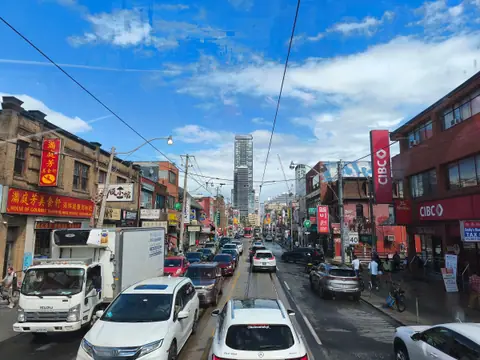
Think of a grid that tilts toward Lake Ontario. Yonge Street is the north-south spine, Bloor Street the main east-west line across the northern edge of downtown, and the lake the southern boundary. The downtown core around Union Station holds the towers, the CN Tower and the stadium. The Old Town sits just east of it, the west side has Chinatown and Kensington Market, and the museum belt of Yorkville and the Annex lies north. The east end and the lakeshore beaches come last.
How many days
Three days is the sensible minimum for a first visit, and our 3-day itinerary shows how to split them by district. Two days works if you accept one skyline block and one neighbourhood block. Five days lets you add the Toronto Islands, a ravine walk and a slow east-end afternoon without hurrying.
Getting around in brief
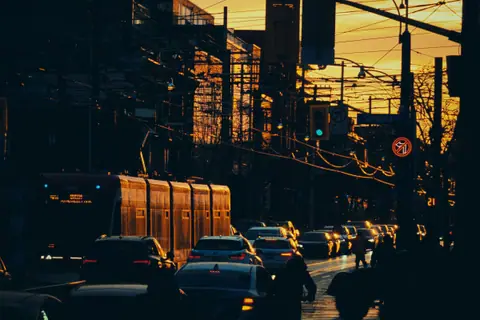
Ride the subway across big distances, hop on a streetcar along the main avenues and walk everything inside a district. Tap a contactless bank card or a PRESTO card at the gate and you are in the system. Taxis and ride apps fill the gaps late at night. Do not hire a car for the city itself. Our getting around guide goes into the details, and how to get there covers the airports.
Booking and timing
Book only the stops that run on fixed slots, such as the CN Tower at a clear-weather time or a major exhibition at the Royal Ontario Museum. Leave markets, parks and neighbourhood walks unbooked so you can swap days when the forecast changes. Ferries to the islands can be cancelled in rough weather, so keep that day flexible. Check official sites for current opening arrangements, ticket systems and any closures, because they shift from season to season.
Money and small practical things
Toronto uses the Canadian dollar and almost everywhere accepts cards and phone payments. Menu and shelf prices usually exclude sales tax, which is added at the till, and restaurant tipping follows the North American habit of roughly fifteen to twenty percent. Plugs are the North American flat-pin type. Tap water is safe to drink. Most visitors who are not Canadian or American need a passport and, depending on nationality, an electronic travel authorisation or visa, so check the Government of Canada site well before you fly.
English dominates daily life, though you will hear dozens of languages on the subway. The city is generally safe for visitors, with the usual care in crowded stations and late at night.
What makes Toronto different from a European city break
There is no medieval core to wander and tick off. The city's best moments come from contrast: a glass tower beside a Victorian brick lane, a Portuguese bakery two streets from a Chinese herbal shop, a ferry that puts you on a car-free beach in a quarter of an hour. Distances are also bigger than they look on the map, so a day that jumps across the city twice will feel long.
The food is the clearest example. Toronto is among the most multicultural cities on earth, and the classic experience is eating by district: markets near St. Lawrence Market, Greek on the Danforth, Italian on College Street. Winters are a real season as well, with snow, early dusk and an underground walkway system that lets you cross parts of downtown without a coat. If you want a European feel, you will not find it. If you want a city that keeps surprising you one street at a time, you will.
Traveller tips
Real advice from people who have been to Toronto: What to Know Before You Go. Every tip is read by our team before it goes live.
No tips yet. Been here? Yours could be the first.
Thank you! Your tip will appear here after a quick review.
More in Toronto
Continue exploring Toronto with related neighbourhood, food, and planning guides