Old Town Toronto Guide
A walk through the original Town of York, from cathedral to market.
Toronto began here. The Town of York was laid out in 1793 by the colony's first lieutenant governor, John Graves Simcoe, on a strip of land beside the harbour, and the area between Yonge, Parliament, the lake and Queen Street still carries the street grid, church spires and brick commercial blocks of the nineteenth century. It is a small, walkable district, and it is the quickest antidote to the idea that Toronto is all glass towers. The walk below takes about half a day with a meal at the market and links up with the Distillery Historic District.
- St. James Cathedral. Begin at King and Church streets. The Anglican cathedral's tall spire dominates the old skyline, and the garden behind it is a shaded rest stop.
- St. Lawrence Hall. A short walk east on King. This stone civic hall of 1850 hosted concerts and political rallies, and its Italianate front gives a sense of how confident the young city felt.
- Church Street south. Walk down towards the lake past warehouses and cafés. The narrow blocks and older shopfronts show how the old town was built for walkers and carts.
- Flatiron Building. Built in the 1890s as the head office of Gooderham and Worts, the distillery family, at the wedge where Front, Wellington and Church streets meet. Go round the back to see a painted mural on the rear wall that tricks the eye into seeing carved windows.
- Berczy Park. A small triangular park with a fountain topped by cast dogs and a bone. It is photographed often, so expect visitors.
- St. Lawrence Market. Cross to the market, which has served the city since the early years of the town. Eat here, and see our market guide for what to order.
- The streets east of the market. Follow Front Street and the cross streets towards Parliament, where warehouses and former factories remain, a useful place to see the city's industrial past. The Town of York Historic Site, where the first parliament buildings stood, is marked by interpretive panels and a small garden.
- Corktown and the Distillery. Continue about twenty minutes east and south through Corktown, the area first settled by Irish immigrants, and finish among the brick lanes of the Distillery.
Timing your Old Town visit
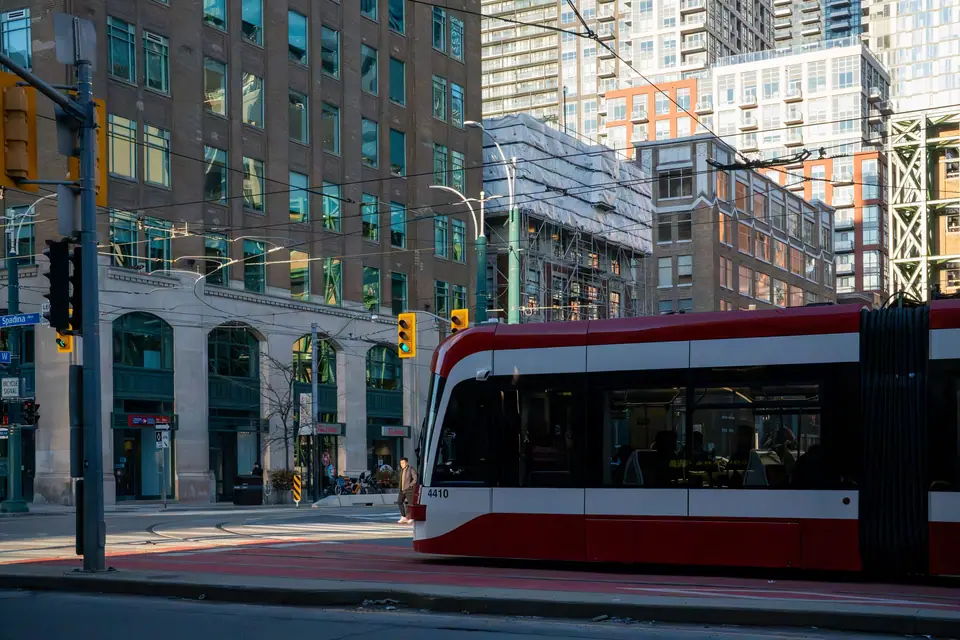
The market sets the rhythm, so plan to start the walk before lunch and eat at the halfway point. Weekends are lively around the market and park, while weekdays give calmer streets and a clearer look at the buildings. The district is pleasant in all seasons, and in winter the market offers a warm indoor break before the colder stretch east. Light is best in the late morning and again in late afternoon, when the brick glows. Our best time to visit guide helps with the season. If you only have an afternoon, go by streetcar along King Street to save energy and walk the final stretch.
Who enjoys this district
This area suits people who like architecture, food and history, and visitors who prefer streets to ticketed sights. It is less interesting for those who expect a medieval old town. Almost none of Toronto's early buildings survive, as fires and redevelopment saw to that, so you are seeing a Victorian city, not an eighteenth-century one. American troops burned the original parliament buildings of Upper Canada in 1813, which gives the walk a layer of story beyond the brick. If you want grander museums, skip ahead to the Royal Ontario Museum. The district sits close to Union Station and the downtown core, so it combines easily with the Hockey Hall of Fame on the same morning.
Traveller tips
Real advice from people who have been to Old Town Toronto. Every tip is read by our team before it goes live.
No tips yet. Been here? Yours could be the first.
Thank you! Your tip will appear here after a quick review.
More in Toronto
Continue exploring Toronto with related neighbourhood, food, and planning guides