Barcelona Gothic Quarter and El Born Guide: Cathedral, Lanes and Tapas
How to explore Barcelona's old town in the right order: the cathedral, Roman streets, medieval squares, El Born, museums, tapas bars and the best lanes.
Barcelona is known for Gaudí's fantasy buildings and its long beaches, but the city began as something much older. Two thousand years ago the Romans founded a small walled town called Barcino on a low hill a short way from the sea. Its streets, its squares and even a few of its columns are still there, buried inside the Gothic Quarter, the Barri Gòtic, which is the core of the old town. A medieval city grew over the Roman one, and then a prosperous merchant district called El Born spread along the harbour side of it.
Together they make the most atmospheric part of Barcelona to walk: dark lanes that open onto bright squares, church bells, small workshops, craft shops, bars with tables in the street and, tucked behind the cathedral, little gardens that feel a world away from the crowds. This guide explains how the two districts fit together, the sights that deserve a stop, a route that links them, and the practical details that make a visit run smoothly.
The old heart of Barcelona at a glance
- How long? A morning covers the Gothic Quarter highlights. A full day takes in El Born, a museum and a long lunch. Two days let you slow down.
- Where to start? At the cathedral, early, before the lanes fill with tour groups.
- The signature sight: the cathedral and its cloister, with the white geese in the garden.
- The best free sights: the lanes, the squares, the church of Santa Maria del Mar and the Ciutadella park cost nothing to enter.
- The classic evening: tapas and vermouth in El Born, followed by a late dinner.
- The biggest mistake: eating on La Rambla or in the squares nearest the big sights, where food is expensive and often mediocre.
- When to go: spring and autumn, covered in our best time to visit Barcelona guide.
- Where to sleep: the old town for atmosphere, or the Eixample for a calmer, more modern base. More in our Barcelona where to stay guide.
The route that works: begin at the cathedral, drift through the quiet squares behind it, cross Via Laietana into El Born, visit Santa Maria del Mar, and end in the Ciutadella park. Our Barcelona 3-day itinerary shows how it fits among the larger sights, and the Gothic Quarter guide gives a shorter summary.
Where the Roman walls met the medieval harbour
The Gothic Quarter occupies the hill where Barcino stood, with the cathedral near its top. Its borders are easy to remember: La Rambla on the west side, Via Laietana, a wide nineteenth-century avenue, on the east, the sea end of the Rambla to the south and the Plaça de Catalunya to the north. Cross Via Laietana and you enter La Ribera, the district better known by the name of its most fashionable corner, El Born. The two areas look different. The Gothic Quarter has tall, dark, closely packed buildings, while El Born has broader lanes, grander palaces and many small shops.
The simplest way to explore is to walk without a plan, since every lane leads somewhere interesting. A few landmarks help you orient yourself: the cathedral towers, the church of Santa Maria del Mar and the avenue of Via Laietana. If you find yourself on a wide street full of traffic, you have reached the edge of the old town and can turn back.
La Seu, the cathedral and its geese
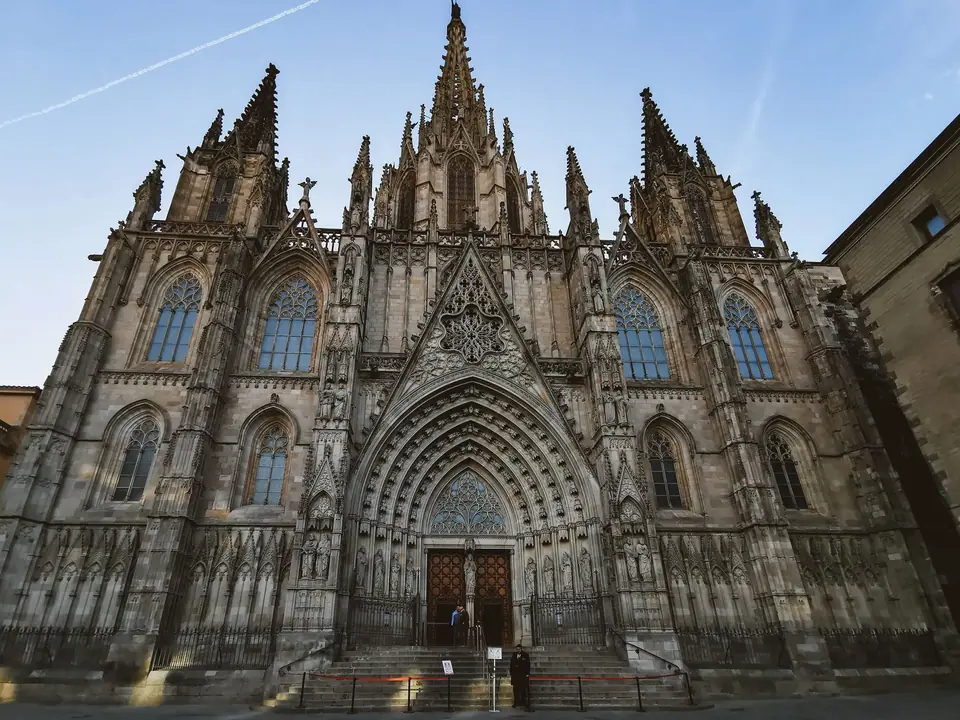
The cathedral, known locally as La Seu, is the heart of the Gothic Quarter. Construction began in the late thirteenth century and went on for generations, and the main facade with its tall spires was only finished in the nineteenth century, from medieval plans. Inside, the nave is dim and soaring, with a carved wooden choir and chapels that open off the side aisles. A lift or staircase leads up to the roof terrace, from which you can look out over the lanes and the sea.
The cloister is the part most visitors remember. It is a quiet garden of palms, magnolias and a fountain, surrounded by an arcade of pointed arches, and it has been home to a flock of white geese for centuries. They are said to honour Saint Eulalia, the young martyr who is the city's co-patron saint. On Sunday mornings and holidays, locals gather in front of the cathedral to dance the sardana, the Catalan circle dance, to the sound of a live band. It is a welcome reminder that the old town is still very much in use.
Plaça Sant Jaume and the bridge that is not medieval
A few steps from the cathedral, Plaça Sant Jaume is the political centre of Catalonia. On one side is the Palau de la Generalitat, the seat of the regional government, and on the other is the city hall, the Ajuntament. Both have grand facades, and the square is the setting for major festivals and processions. It is a spacious, open space in the middle of tight lanes.
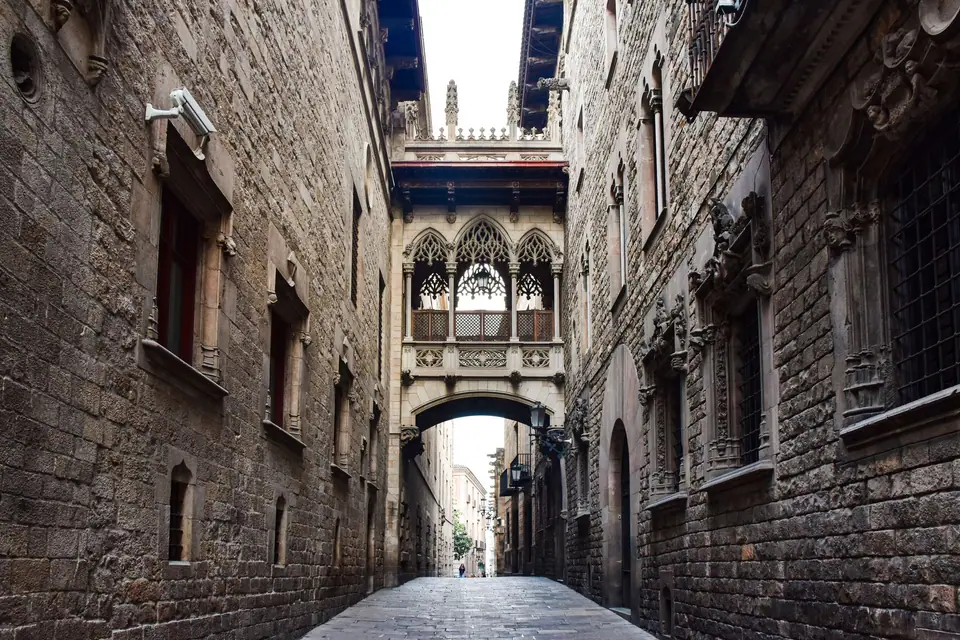
From the square, the Carrer del Bisbe leads towards the cathedral, passing under a delicate stone footbridge, the Pont del Bisbe. It looks medieval, with its carved arches and skull motif, but it was built in 1928, a clear example of the neo-Gothic taste of the time. Photographers love it, especially early in the morning. The lane continues past the courtyard of the Palau de la Generalitat, which opens to visitors on a few days of the year.
Roman Barcino under your feet
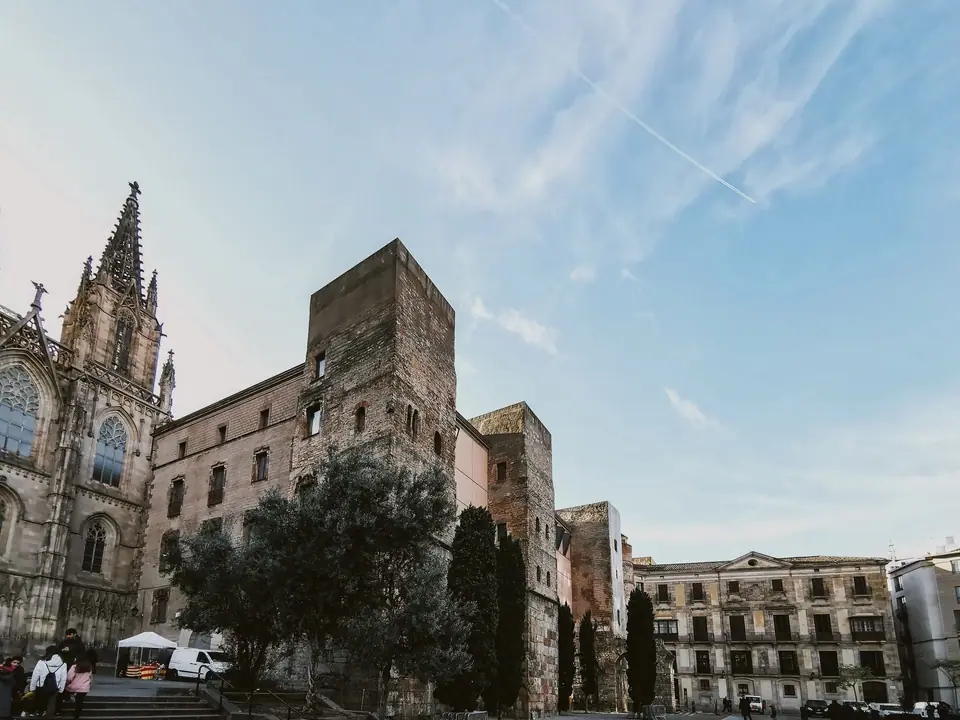
You do not need to be an archaeologist to see Roman Barcelona. Behind the cathedral, on the Carrer del Paradís, four tall columns of the Temple of Augustus stand inside a small courtyard, a surprising survivor of the first century. Near the Plaça Nova, two circular towers of the Roman gate flank the entrance to the old town, and long stretches of the Roman wall are visible in several lanes, built into later houses.
For a deeper look, the History Museum of Barcelona is built on top of a whole Roman quarter. Visitors walk through the excavated streets, laundries, wine presses and fish-salting workshops, then emerge in a medieval palace on the Plaça del Rei. It is a fascinating way to understand how the modern city grew from layers of older ones, and it is much quieter than the big attractions.
The Call and the squares behind the cathedral
Between the cathedral and the Plaça del Pi lies the Call, the medieval Jewish quarter, where narrow lanes still follow their old pattern. The area was home to a large Jewish community until the late fourteenth century, and a small centre explains its history. The lanes are quiet and shaded, with small bookshops, jewellers and craft studios.
Nearby, the Plaça de Sant Felip Neri is a tiny square with a fountain and a church whose walls still carry the pockmarks of a bombing from the Spanish Civil War. It is a quiet, moving spot, and a reminder of the area's recent history. Please keep your voice down here, since it is also next to a school. The Plaça del Pi has a Gothic church and, on certain days, a market of artisan cheese, honey and sweets from Catalan producers.
Plaça Reial and the edge of La Rambla
La Rambla is the famous tree-lined avenue that marks the western edge of the old town. It is interesting to walk once, to see the human statues, the flower stalls and the great market of La Boqueria, but it is crowded and aimed at tourists, so do not expect it to be the soul of Barcelona. The market is best seen in the morning, when the fruit, seafood and ham are at their finest. Pickpockets work the street, so keep your bag in front of you.
Just off the Rambla, the Plaça Reial is an elegant arcaded square with palm trees, a fountain and street lamps designed by a young Antoni Gaudí. Its cafes are pricey, but the square deserves a look, especially in the evening. If you fancy a stroll to the sea, the Rambla ends at the harbour and the Columbus monument.
Santa Maria del Mar and the El Born lanes
Across Via Laietana, the church of Santa Maria del Mar is the finest Gothic building in Barcelona and many people's favourite. It was built in less than sixty years in the fourteenth century by the people of the harbour district, from the stone carried down from the hills by porters, which explains why it feels so harmonious and so plain. Its tall, slender columns and wide nave create a sense of space and light, and the clear windows let the sun in. The building is the setting of a popular novel, Cathedral of the Sea.
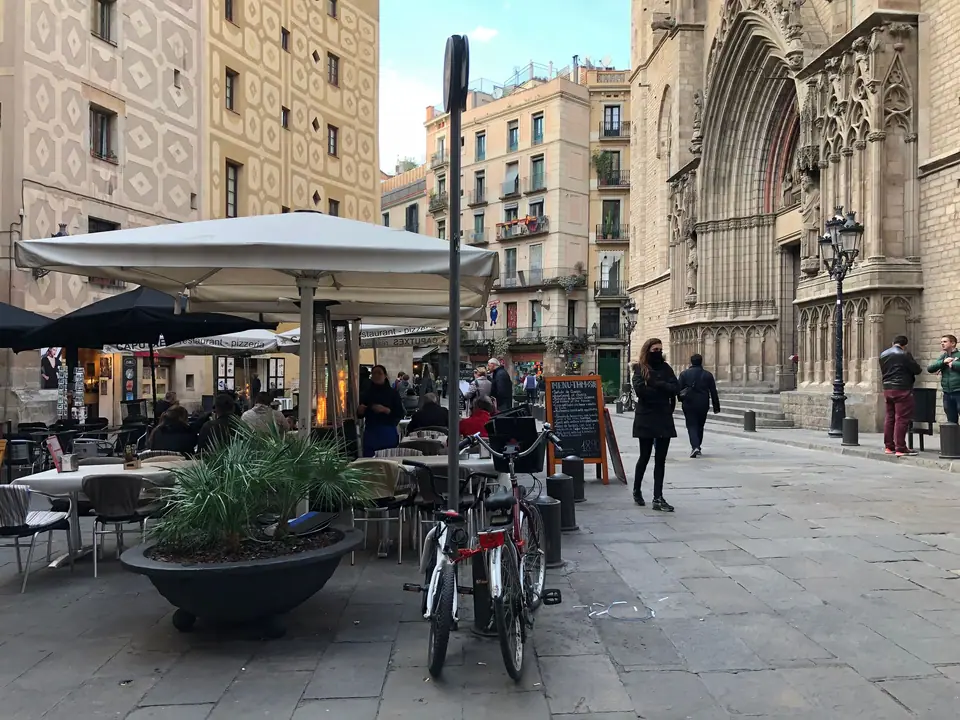
Around it, El Born is a web of lanes lined with design shops, galleries, cocktail bars and restaurants. The old market hall, the Born Centre of Culture and Memory, shelters the excavated streets of a neighbourhood that was demolished after the siege of 1714, and it tells the story of the city's fall and survival. This is the best part of the old town for a long, unplanned wander, especially in the late afternoon.
Carrer Montcada and the Picasso museum
The Carrer Montcada is the most elegant street of the old town, a narrow lane lined with the palaces of medieval merchants. Several of them now house museums, and the best known is the Picasso Museum, which occupies five connected palaces. Its collection concentrates on the artist's early years, when he lived in Barcelona, and shows a young painter learning his trade. The courtyards and stairways are as much a pleasure as the paintings.
Because the museum is among the most popular in the city, book a timed ticket in advance and aim for the first slot. Afterwards, there is a cluster of small galleries on the same street, including one devoted to textiles and another to chocolate, a very Barcelona subject.
Palau de la Música Catalana and Parc de la Ciutadella
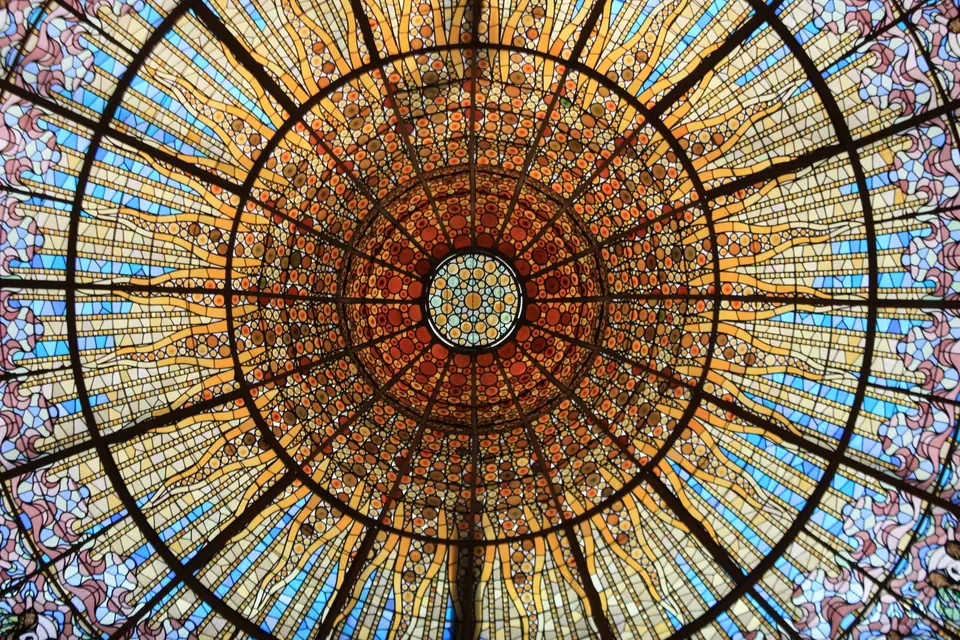
A short walk north brings you to the Palau de la Música Catalana, a concert hall in the Catalan Modernista style that is a World Heritage Site. Its exterior is covered in mosaics and sculpture, and the interior, with a stained-glass skylight shaped like an inverted dome, is dazzling. Guided tours are offered during the day, and there is a concert in the evening nearly every day of the year.
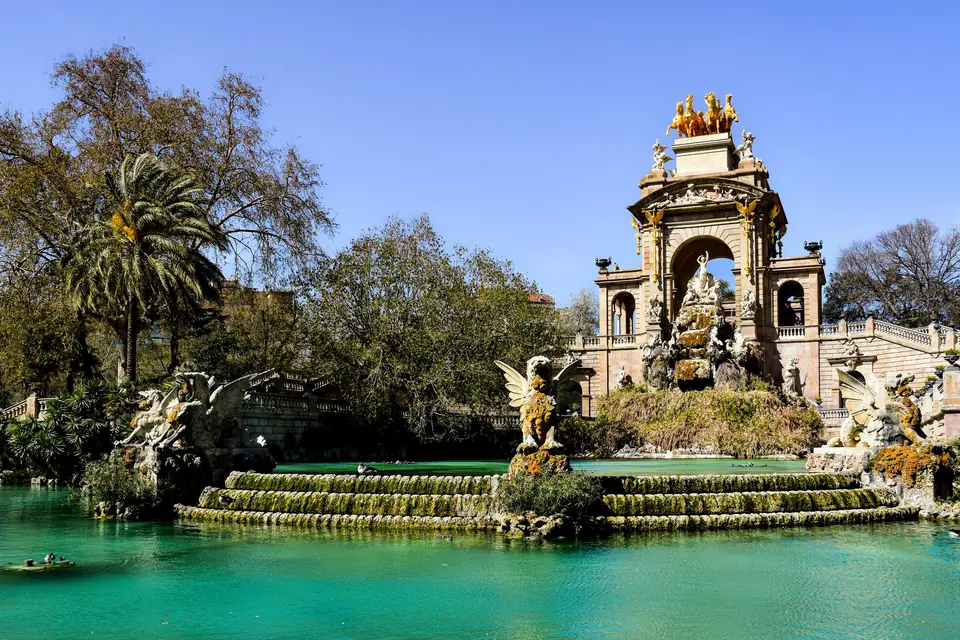
To the east, the Parc de la Ciutadella is the largest green space in the old town, with a lake, a monumental fountain, palm-shaded paths and the city's zoo. It occupies the site of a fortress that the people of Barcelona were happy to see torn down. After a day of lanes and stone, it is a welcome place to sit under a tree, and it leads on towards the Arc de Triomf and the beaches of Barceloneta.
A wandering day from cathedral to park
- Early morning: start at the cathedral and its cloister, then walk along the Carrer del Bisbe.
- Mid-morning: see the Roman columns on the Carrer del Paradís and the Plaça del Rei.
- Late morning: wander the Call and the Plaça de Sant Felip Neri.
- Lunch: eat in a side street, not in the squares, ideally with a set lunch.
- Afternoon: cross to El Born, visit Santa Maria del Mar and the Picasso Museum.
- Late afternoon: explore the Born Centre of Culture and Memory and walk to the Ciutadella park.
- Evening: tapas and vermouth in a small bar in El Born, then dinner.
It is a full day on cobbles, so wear comfortable shoes and leave room for a siesta-length break in the middle.
Stretching it to a second day
With more time, add the Palau de la Música, a tour of the History Museum, or a visit to the Santa Caterina market, an undulating, multicoloured building with a quieter and cheaper atmosphere than La Boqueria. The second day also leaves time for the beach at Barceloneta, a short walk from the park, or for one of the big sights outside the old town. The Sagrada Família guide and the Park Güell guide help you plan those.
Quiet corners when the lanes are packed
Even in high season the old town has calm pockets if you know where to look. The garden of the Sant Pau del Camp monastery, just beyond the Rambla, is a Romanesque cloister that few tourists find. The Plaça de Sant Just, close to the city hall, is a small square with an old fountain and benches. In the northern part of El Born, the lanes around the church of Sant Pere de les Puelles and the Santa Caterina market feel like a local neighbourhood. If the main streets feel suffocating, walk away from the cathedral and up a street with no shops; within five minutes you will usually be alone with the washing lines and the swifts.
Metro stops and walking links
The old town is compact and almost closed to cars, so you will be on foot. The metro serves it well. Jaume I, on line 4, is the closest station to both the cathedral and Santa Maria del Mar. Liceu, on line 3, opens onto La Rambla and the Plaça Reial, and Catalunya, a major interchange, is at the northern edge. From the airport, the aerobus and train lines reach the centre in about half an hour, as we explain in our how to get to Barcelona guide.
Sleeping in the old town
Staying in the Gothic Quarter or El Born puts you at the centre of everything, with cafes and bars on the doorstep and the sights a few steps away. The trade-off is noise. Lanes echo, bars stay open late and some rooms are small. Ask for a room at the back, or higher up, and read recent reviews for comments on noise. For a quieter stay, many visitors choose the Eixample, with its wide avenues and easy metro links. Our Barcelona where to stay guide compares the areas.
Tapas bars, vermouth and chocolate
Eating in the old town can be wonderful if you avoid the obvious traps. In El Born and the lanes near the Santa Caterina market, look for small bars with a short menu written on a board. Typical dishes include pa amb tomàquet, bread rubbed with tomato and olive oil, patatas bravas, fried peppers, grilled prawns and the Barcelona favourite, bombas, fried potato balls with a spicy sauce. Vermouth on tap is a traditional pre-lunch drink, served with an olive and a slice of orange.
For something sweet, the Carrer Petritxol is the home of thick hot chocolate served with churros or sweet bread. Locals usually eat lunch late, and dinner later still, so many kitchens do not open for the evening meal until well into the evening. If you are hungry earlier, snack on tapas or pintxos at the bar.
Small shops and old workshops
The old town is full of the kind of shops that have disappeared elsewhere. Look for espadrille makers, herbalists, hat sellers, candle shops, old pharmacies and cheese stores, many of them in their original wooden-fronted premises. In El Born, small design boutiques and independent fashion labels have taken over the lanes around the Carrer del Rec. For gifts, local food products such as olive oil, almonds, nougat and wine are easy to carry. The Carrer Banys Nous and the lanes near the cathedral are known for antique dealers.
Staying safe among the crowds
The old town is lively and generally safe, but it is the most popular pickpocket area in the city. Thieves operate in crowds on La Rambla, around the cathedral, on the metro and at busy tapas bars. Keep your phone and wallet in a front pocket, never leave a bag hanging on a chair, and be careful with distractions such as strangers who bump into you or offer to help. After dark, stay on lit streets and keep your wits about you in the narrowest lanes. Our what to wear in Barcelona guide has advice on dressing for the heat and for churches.
Festivals and seasons
The old town changes with the calendar. In late September, the Festes de la Mercè, the city's big festival, fills the streets with giant figures, human towers called castells and fire-running devils. On the feast of Saint George in April, the Rambla and the squares are covered in book stalls and roses. In August, the Festa Major de Gràcia is held in a neighbouring district, though it is beloved by all Barcelona. Spring and autumn are the most comfortable seasons for walking, while summer is hot and crowded, and winter is mild and quiet.
Beyond the old town
From here, the rest of Barcelona is easy to reach. Gaudí's masterpieces are covered in our guides to the Sagrada Família and Park Güell, and the Sagrada Família tour is the simplest way to see the church. For an evening out, the flamenco show in Barcelona is a lively option.
Linking the old town to a Spain trip
Barcelona is often the first or last stop of a trip through Spain. Our things to do in Barcelona page lists the other highlights, and our Spain guides help you combine the city with Madrid, Andalusia and the coast.
What first-time visitors ask about the old town
Is half a day enough for the old town?
Half a day is enough for the cathedral and the main squares. For El Born, a museum and a proper lunch, take a full day.
Do I need to book the cathedral or the Picasso Museum?
The cathedral usually does not need a booking, but the Picasso Museum and the Palau de la Música do. Reserve ahead, especially in summer.
Is the Gothic Quarter really Gothic?
Partly. The core is medieval, but many of the facades were restored or rebuilt in the nineteenth and twentieth centuries in the Gothic style, such as the Pont del Bisbe.
Can I visit churches in shorts?
Not comfortably. Shoulders and knees should be covered inside the cathedral and other churches, so carry a light scarf.
Is the old town safe at night?
Mostly yes, with the usual care. The busy streets are lively late, but quiet lanes can feel lonely. Stay alert for pickpockets.
Where should I eat to avoid the tourist traps?
Walk two or three streets away from the cathedral and La Rambla, and choose small bars filled with local customers.
For everything else about planning your stay, our Barcelona travel guide covers money, transport, etiquette and how many days to give the city.