


























Photo: JourneyCities
Park Güell Guide: Monumental Zone Tickets, Serpentine Views, and Hill Approaches
Park Güell crowns Barcelona with Gaudí stonework, hillside panoramas, shaded forest paths, and bright mosaic terraces above Gràcia.
Eusebi Güell originally envisioned this hillside estate as an exclusive residential garden city on the slopes above Barcelona. Antoni Gaudí designed winding stone viaducts, drainage networks, and communal gathering spaces between natural outcrops to support private luxury villas. The housing scheme failed commercially, but the municipal government later acquired the grounds. The city opened them to the public as a shared urban park. Today, the estate blends dressed stonework with wild Mediterranean scrub, offering sweeping perspectives over city rooftops and the open sea.
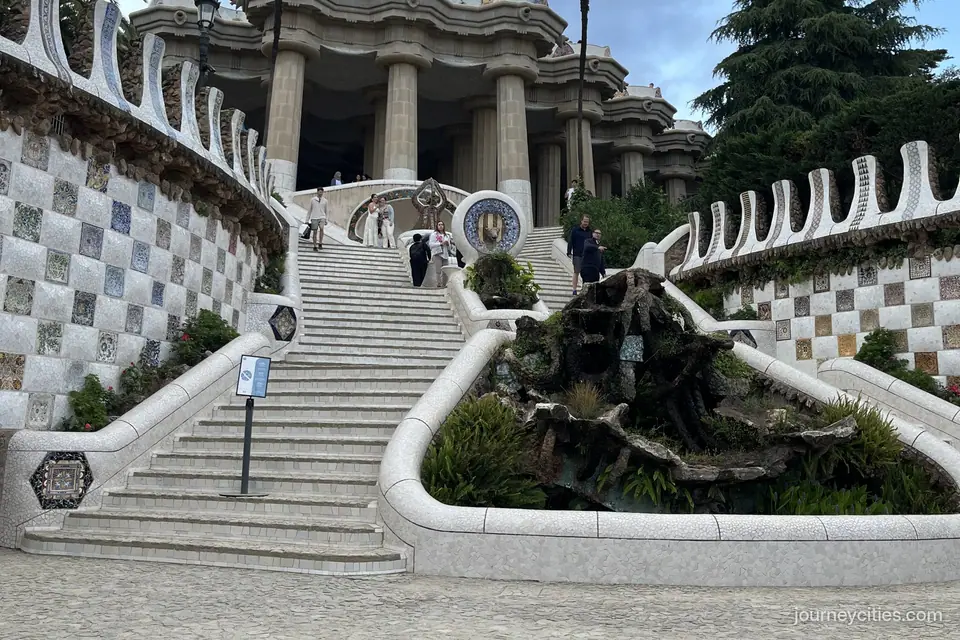
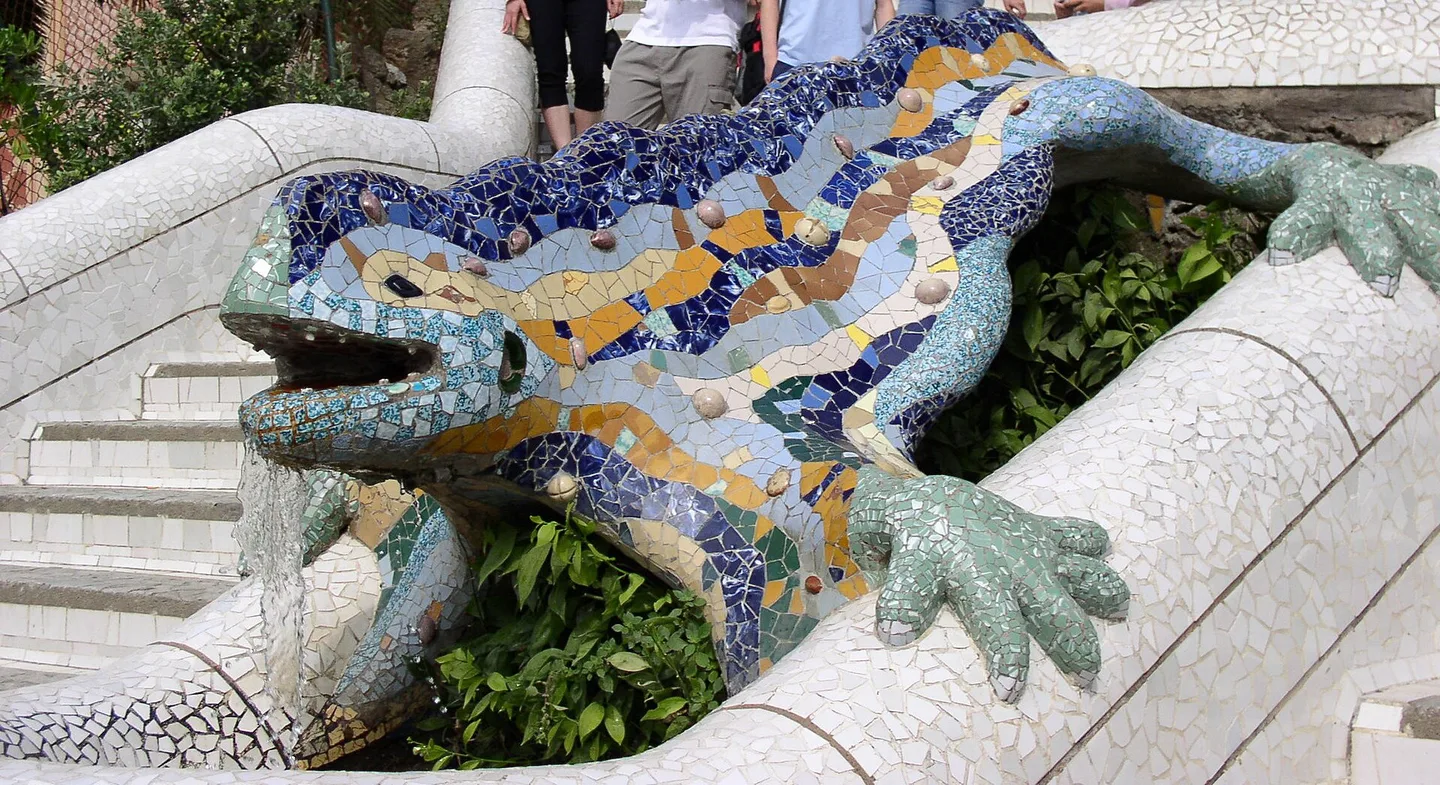
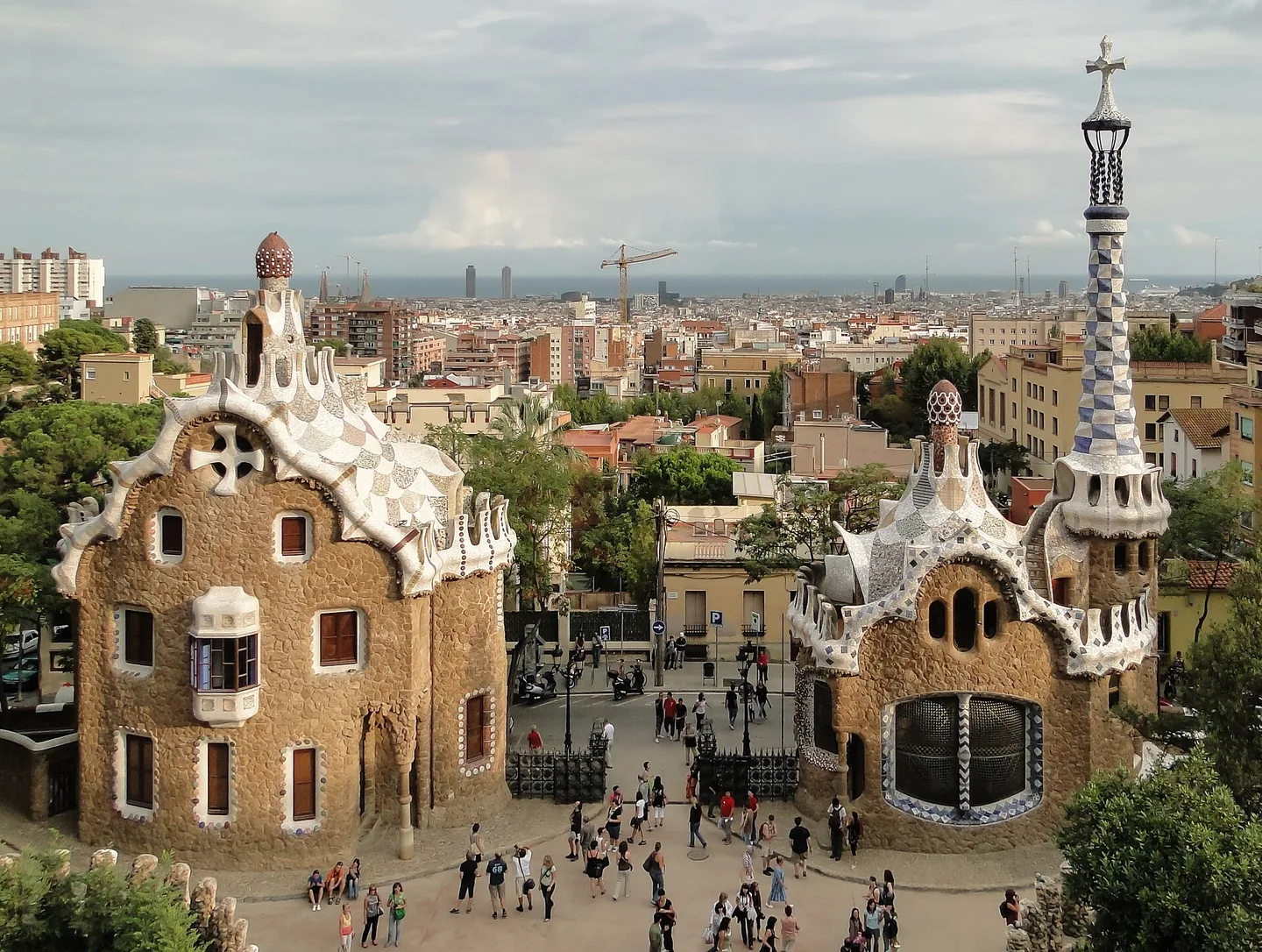
Visitors entering the lower gates encounter Gaudí's whimsical porter lodges, capped with curving roofs and colourful ceramic chimneys. The grand stairway rises past carved stone balustrades, centring on the famous polychrome salamander fountain made with irregular ceramic shards. Above the steps, the Hypostyle Hall supports the immense terrace overhead with dozens of grooved stone columns. Walking across the open gravel square above reveals the long serpentine bench. This bench is tiled in bright patterns that catch coastal sunlight throughout the afternoon.
Exploring the core structures requires careful timing, because entry to the central historic features operates under strict visitor capacity limits. While the outer wooded pathways remain accessible for walking, the designated architectural precinct requires advanced reservation slots. Pair your arrival schedule with an onward wander down through the bohemian squares of our Gràcia neighbourhood route to complete a full day. Taking time to study the stonework reveals how Gaudí integrated natural curves directly into the sloping terrain.
Navigating the Architectural Highlights
The lower entrance plaza establishes the theatrical character of the whole hillside complex. Gaudí created two gatehouses with bulbous contours and stone mosaic cladding that evoke traditional fairy-tale imagery. Passing between these pavilions leads straight toward the double staircase. Water bubbles through decorative mosaic plaques here before reaching the dragon fountain. The entire sequence funnels foot traffic upwards into the vaulted shadow of the massive Hypostyle Hall.
Inside this cavernous hall, heavy columns slant slightly to channel the structural weight of the terrace above. The ceiling features recessed medallions patterned with ceramic remnants, glass fragments, and broken tableware salvaged from local tile workshops. Moving past the hall brings travellers to the outer viaducts, constructed from rough, unhewn stones quarried directly from the hill. These covered stone walkways resemble natural hillside caves. They are supported by tilted stone pillars that mirror the trunks of surrounding pine trees.
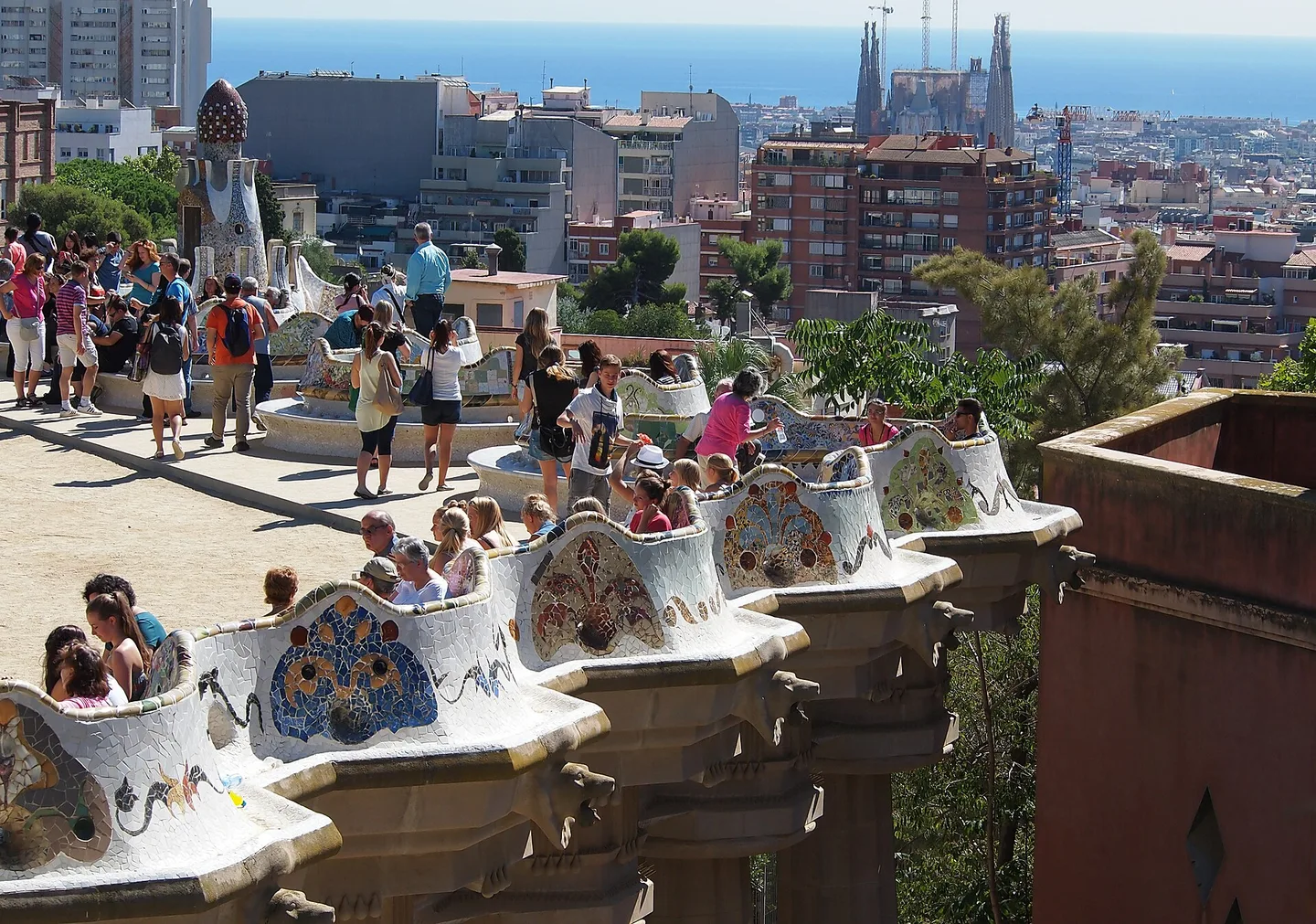
The highest public point of the monumental sector is Nature Square, a broad sandy esplanade bounded by the undulating mosaic bench. The continuous seat was ergonomically shaped by Gaudí's collaborator, Josep Maria Jujol, using plaster casts of the human spine. Sitting along this edge offers clear sightlines across the urban grid, spanning from the towers of the cathedral to the distant coastal waters. It provides one of the finest wide-angle panoramas across the entire urban landscape.
Monumental Core Against Outer Forest Trails
Distinguishing between the ticketed Monumental Zone and the surrounding municipal woodland helps travellers map out their morning efficiently. The ticketed enclosure contains the dense concentration of Gaudí structures, including the serpentine bench, salamander fountain, and Hypostyle Hall. In contrast, the wider outer park spans dirt jogging tracks, native pine woods, and quiet stone belvederes that require no formal booking. Travellers who secure entry passes can freely move between both zones during their allocated visit window.
The following table outlines the essential differences between the two main areas of the park:
| Park Section | Primary Features | Access Requirement | Ideal Focus |
|---|---|---|---|
| Monumental Zone | Serpentine Bench, Dragon Stairway, Hypostyle Hall | Timed entry ticket | Gaudí architecture and photography |
| Outer Forest Perimeter | Wooded dirt tracks, viaduct viewpoints, shaded paths | Free access | Casual walks and city skyline viewpoints |
Walking through the free outer park reveals rustic stone aqueducts and quiet birdwatching groves away from the densest crowds. These hillside trails wind toward the highest ridge, giving alternative angles over the central monumental terrace and the sprawling metropolis below. You can study complete transit passes and ticketing details in our Barcelona ticketing overview before heading up the hillside. Leaving the outer perimeter brings you along quiet residential streets shaded by cypress trees.
Approaching the Hill Without Exhausting Climbs
Reaching the park gates on foot from low-lying metro stations can involve punishing uphill climbs along steep residential streets. Many visitors alight at Lesseps or Alfons X stations without realising the formidable gradient waiting between the platforms and the gates. Choosing the right transit combination spares legs and avoids arriving exhausted before exploring the sloping gravel paths of the grounds. Public buses and specific metro approaches simplify this ascent considerably.
- Boarding bus routes heading directly toward the upper entrance gate at Carretera del Carmel drops travellers near the highest park perimeter.
- Alighting at Vallcarca metro station allows visitors to use outdoor public escalators along the steeper street sections.
- Walking downhill after finishing your visit leads naturally through residential avenues toward the bohemian dining spots of Gràcia.
- Scheduling tickets ahead of your journey prevents long waits outside the perimeter fences during peak midday hours.
Arriving at the upper gate means your initial walk moves comfortably downhill across the park grounds. You drift downwards past stone arches and pine trees before reaching Nature Square and the central staircases. Combining this approach with an afternoon visit to our Sagrada Família guide itinerary makes for an efficient day of Gaudí architecture across the city. Remember to check local gate entry arrangements before planning your journey.
Where it is
- 1Park Güell
- Josep Tarradellas Barcelona-El Prat Airport (BCN) · about 14 km from here in a straight line
- Directions in Google Maps
Stations and taxi ranks: OpenStreetMap. Airports: OurAirports. Distances are in a straight line.
Traveller tips
Real advice from people who have been to Barcelona. Every tip is read by our team before it goes live.
No tips yet. Been here? Yours could be the first.
Thank you! Your tip will appear here after a quick review.
More in Barcelona
Continue exploring Barcelona with related neighbourhood, food, and planning guides
Getting Around Barcelona: Metro Lines, Transit Passes and Taxis
Barcelona, Spain
Barcelona on a Budget: Free Sights, Museum Windows and Smart Meals
Barcelona, Spain
Day Trips from Barcelona by Train: Montserrat, Girona, Sitges and Tarragona
Barcelona, Spain
Barcelona Tickets and Passes: Official Booking Strategy and Transit Rules
Barcelona, Spain
