Photo: JourneyCities
Sagrada Família Guide: Timed Entry, Towers and Interior Light
We explore Antoni Gaudí extraordinary basilica, tracing its architectural history, stained glass colours, stone facades, and upper tower routes.
Standing before the Basilica de la Sagrada Família reveals an architectural feat unlike any other in Europe. Ground broke in the late nineteenth century, and Antoni Gaudí took direction of the project shortly afterwards. He devoted decades of his creative life to the sanctuary, refining organic geometry until his death in the city. His remains rest within the quiet crypt beneath the main altar. The construction continues using his original plaster models and geometric sketches. Craftsmen and stonemasons still carve narrative reliefs on site, keeping traditional building arts alive in central Barcelona.
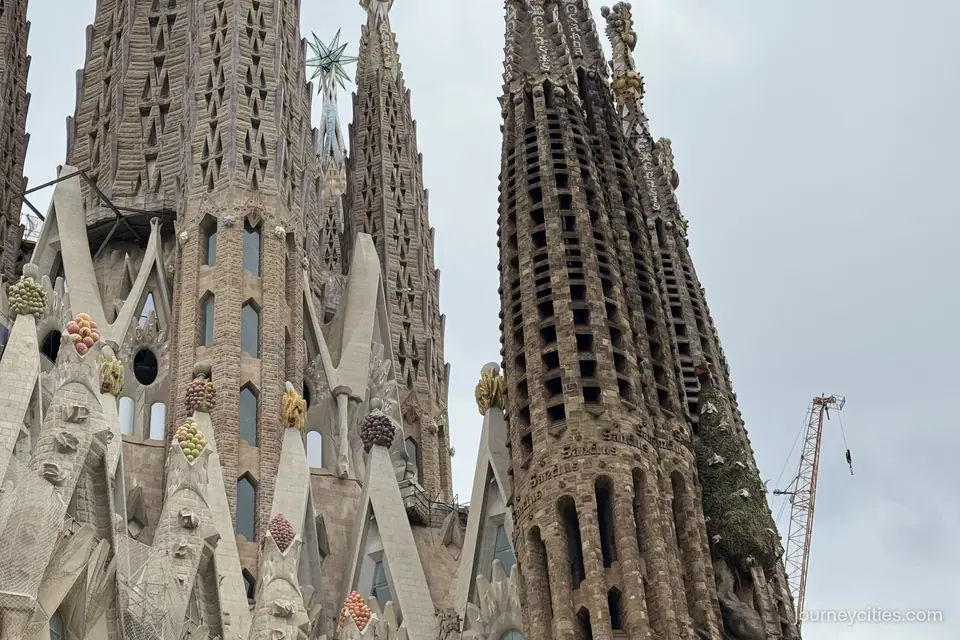
Passing through the security gates brings you into direct contact with Gaudí radical vision of sacred space. The exterior features multiple towering spires that reshape the urban skyline of the Eixample district. Unlike conventional Gothic cathedrals supported by heavy exterior flying buttresses, this basilica balances weight through tilted interior columns. The ongoing assembly of the central spires honours Gaudí precise structural proportions. Exploring the perimeter allows us to appreciate how modern engineering blends with century-old carved granite.
The Contrast of Nativity and Passion Facades
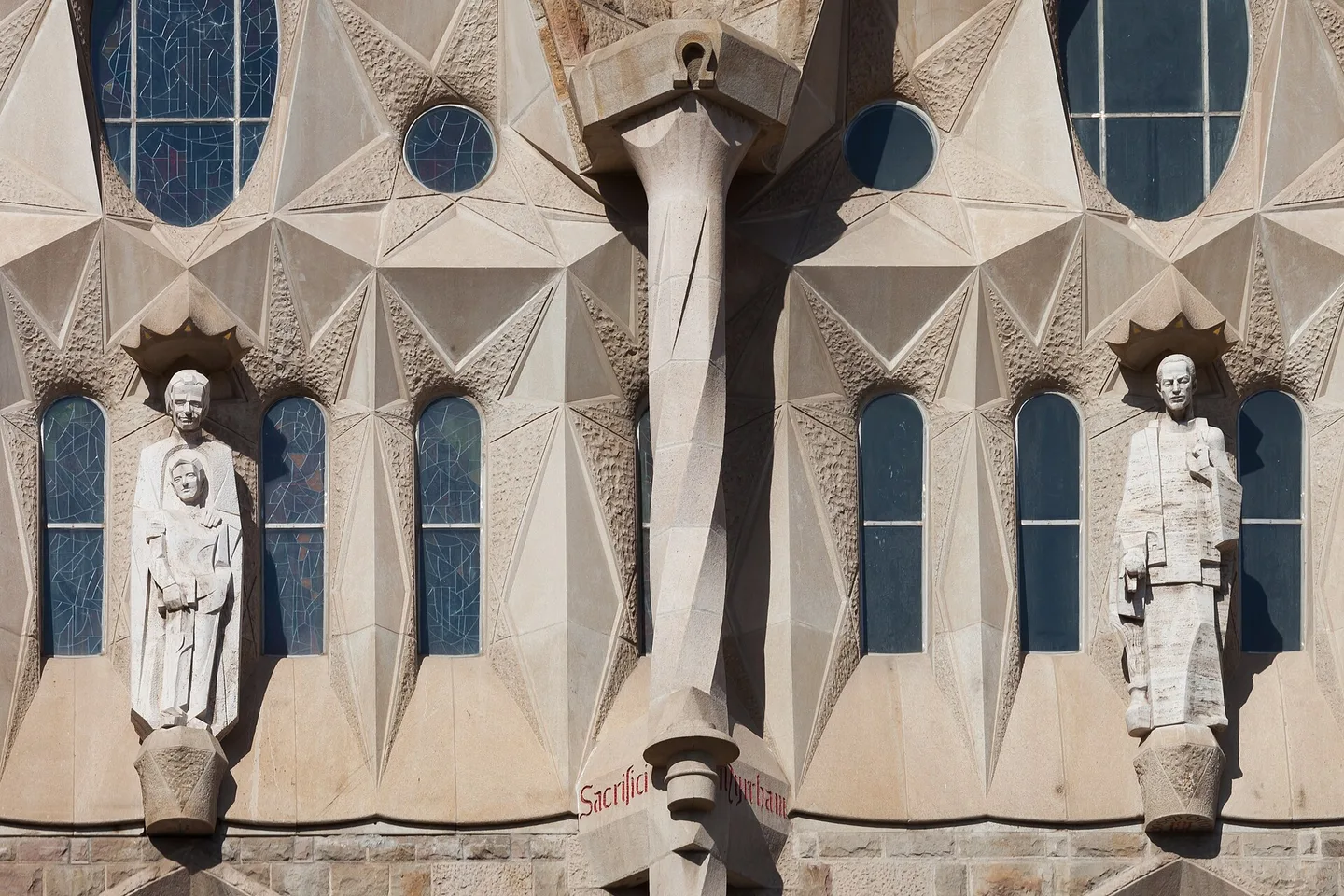
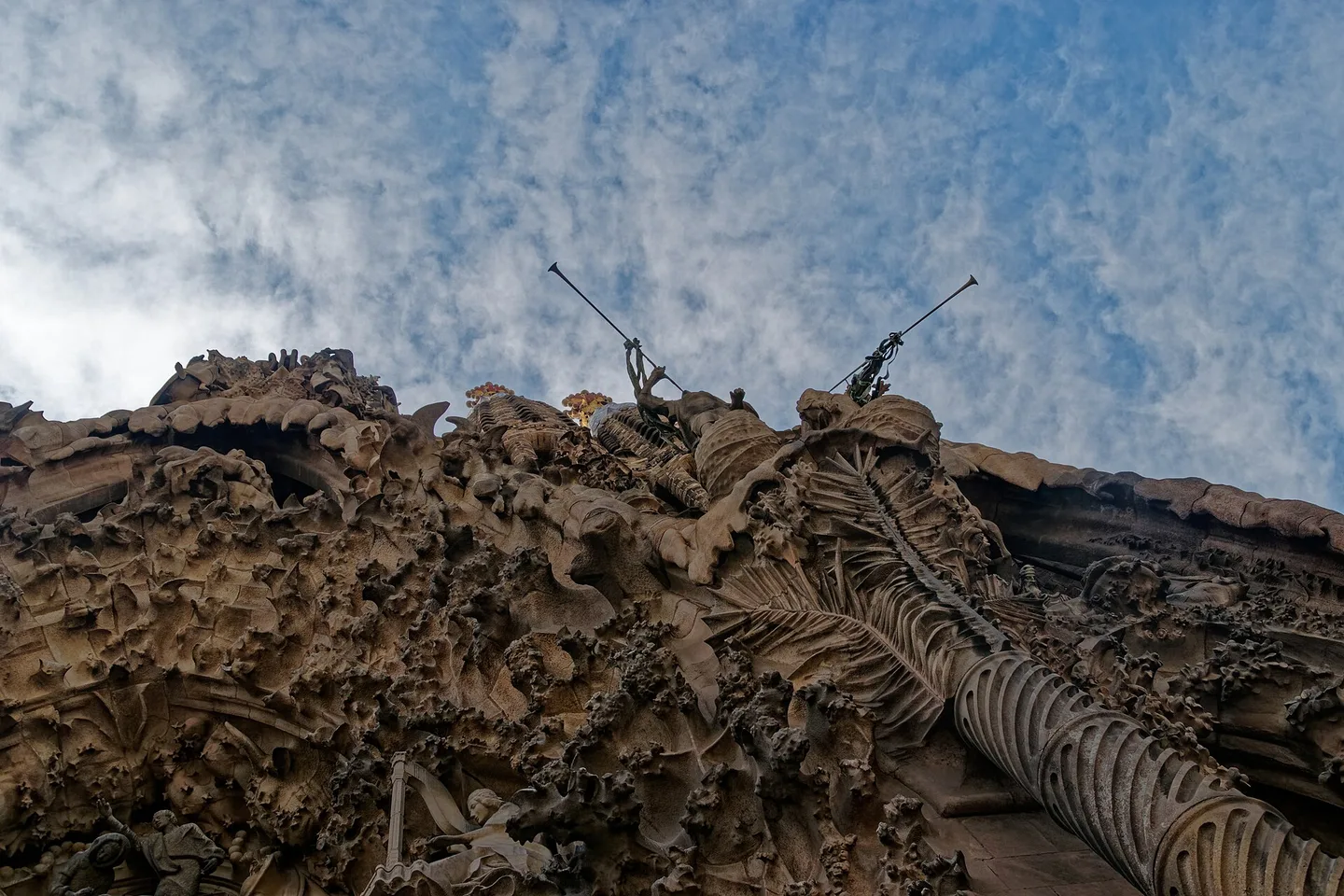
The exterior tells two deeply contrasting stories through its completed monumental portals. Facing east towards the rising morning sun, the Nativity Facade celebrates life and nature. Gaudí supervised much of this work directly, filling the stonework with lush foliage, birds, turtles, and delicate human figures. Three grand porticoes represent hope, faith, and charity, creating a textured surface that resembles molten rock emerging from the earth. Morning light strikes these organic carvings, creating gentle shadows across the figures.
On the opposite side, facing west, the Passion Facade presents a stark emotional reversal. Designed to convey suffering and sacrifice, its angular sculptures feature hard edges and hollow eye sockets. Sculptor Josep Maria Subirachs followed Gaudí intentions by creating bare, austere stone compositions without decorative flora. The supporting inclined columns resemble tightened tendons or bleached bones under the bright sky. Review the two sides carefully to understand this artistic dialogue:
- Nativity Facade: Eastern orientation, morning illumination, lush natural motifs, and detailed figurative groups.
- Passion Facade: Western orientation, afternoon glare, austere bone-like pillars, and dramatic angular figures.
Forest Columns and Stained Glass Daylight
Stepping inside the central nave shifts the experience from carved stone narrative to pure light and space. Gaudí designed the interior to evoke a quiet stone forest. Giant porphyry and granite columns rise from the floor and branch outwards near the vaulting, mimicking tall tree canopies. These bifurcated pillars support hyperbolic vaults, dispersing weight smoothly into the foundations. Looking directly upward reveals geometric patterns pierced by small skylights that distribute indirect illumination.
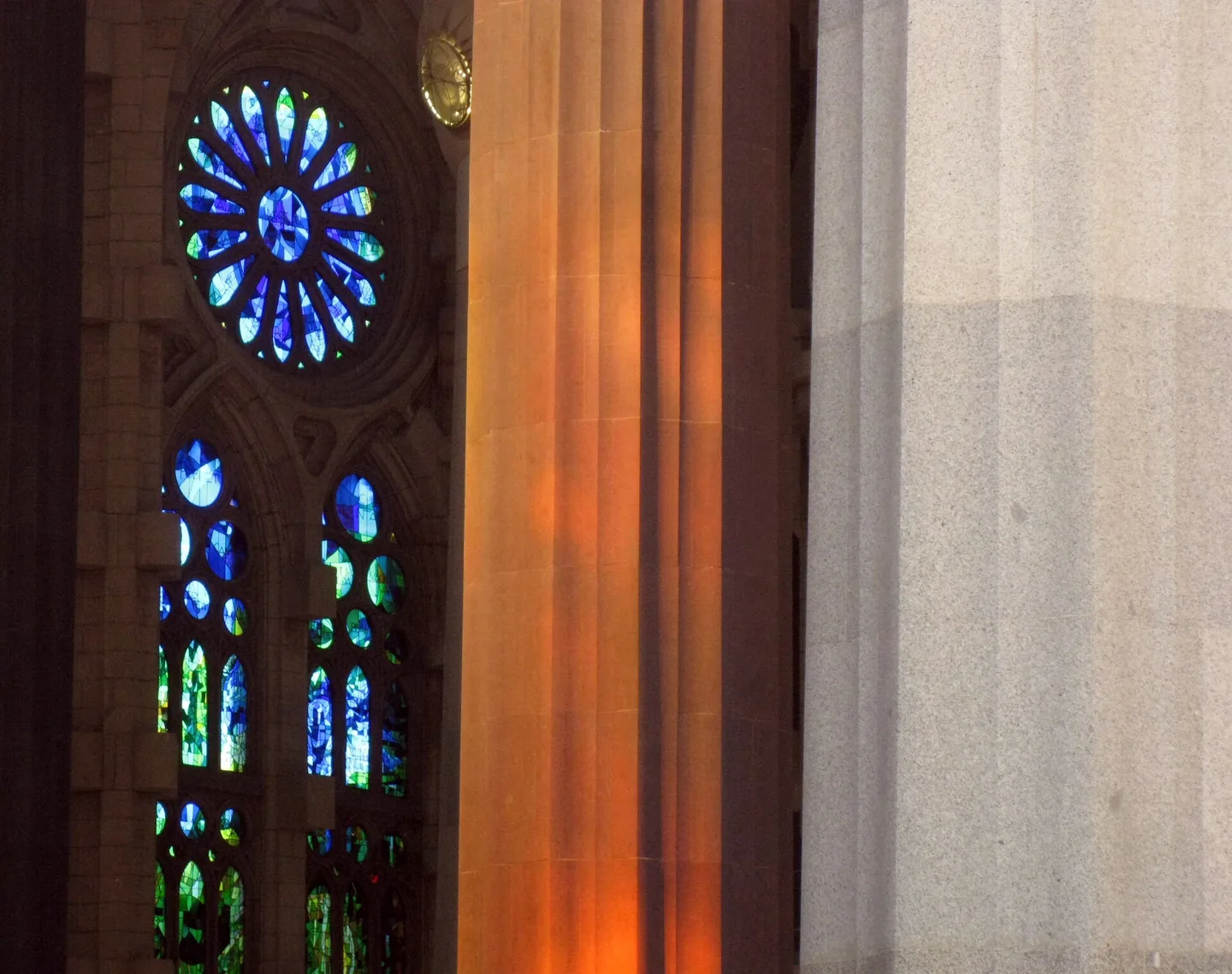
Stained glass windows flood the nave with shifting spectrums throughout the day. The eastern glass features deep blues and cool greens that glow softly in early hours. As the sun moves, western windows ignite in vivid reds, oranges, and warm ambers, casting intense hues across the pale stone pillars. Before booking your morning or afternoon entry, compare options inside our direct monument booking and transit overview. The visual harmony between coloured glass and matte stonework creates an atmosphere of contemplation that changes steadily with the sun.
Tower Ascents, Spiral Stairs and Transit Arrival
Ascending the towers offers aerial vantage points across the Mediterranean coastline and the grid layout of the Eixample. Visitors choose between climbing the Nativity towers or the Passion towers, using an automated lift to reach high footbridges. The descent requires walking down narrow stone spiral staircases that curve inside the hollow spires. Footwear with good grip is essential for these winding stone steps. Children and travellers with reduced mobility face safety restrictions on the stairwells, so consider individual needs before selecting upper tower tickets.
Arriving by public transport remains straightforward because the Sagrada Família station connects directly via metro lines L2 and L5. Ground-level security lanes require airport-style bag screening, and large rucksacks or wheeled suitcases are not allowed inside. Travellers carrying small bags must place them in designated lockers before boarding the tower lifts. After completing your visit, you can link this modernist landmark with Casa Batlló and Casa Milà along Passeig de Gràcia. Review current height rules and security notices on the basilica website before travelling.
Where it is
- 1Sagrada Família
- Josep Tarradellas Barcelona-El Prat Airport (BCN) · about 14 km from here in a straight line
- Directions in Google Maps
Stations and taxi ranks: OpenStreetMap. Airports: OurAirports. Distances are in a straight line.
Traveller tips
Real advice from people who have been to Barcelona. Every tip is read by our team before it goes live.
No tips yet. Been here? Yours could be the first.
Thank you! Your tip will appear here after a quick review.
More in Barcelona
Continue exploring Barcelona with related neighbourhood, food, and planning guides