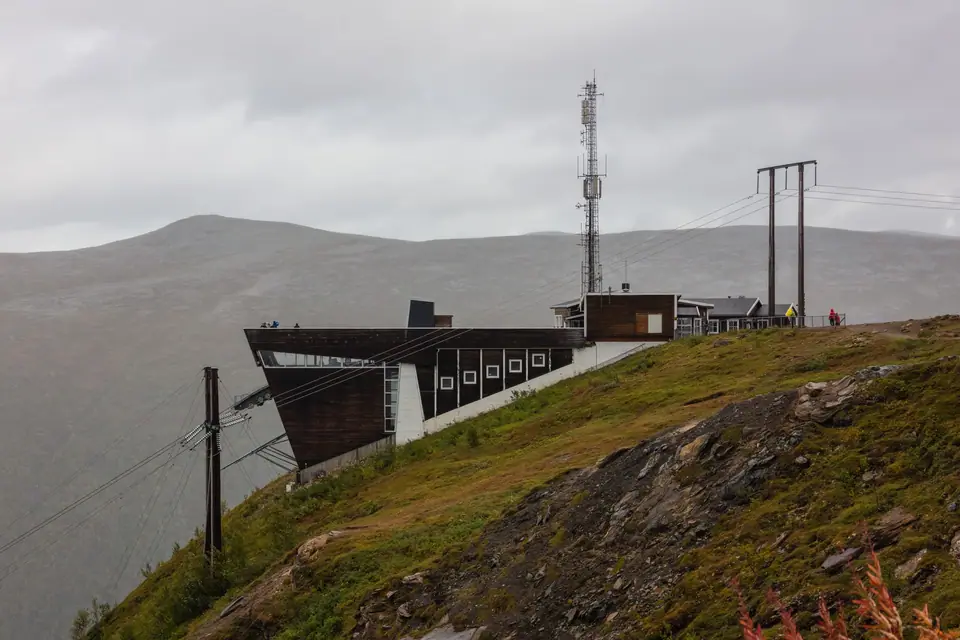
Fjellheisen Cable Car, Storsteinen and Sherpatrappa Guide
Rising from Tromsdalen to the Storsteinen mountain ledge at 421 metres above sea level, the 1961 Fjellheisen cable car and the 1,203-step Sherpatrappa staircase command panoramic views over Tromsøya and Kvaløya.
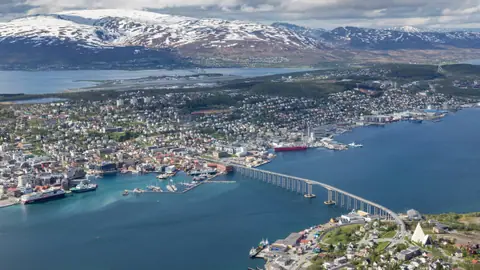
Rising above the mainland suburb of Tromsdalen on the eastern shore of the Tromsøysundet strait, the mountain ledge of Storsteinen (Northern Sami: Bissobákti) at 421 metres above sea level serves as Tromsø's primary alpine lookout. From the viewing platform outside the upper station Fjellstua, visitors look straight down onto the 1,036-metre Tromsø Bridge and Arctic Cathedral, the entire 10-kilometre length of Tromsøya island, and the jagged peaks of Kvaløya across the water. Travellers can reach Storsteinen either in four minutes aboard the Fjellheisen aerial tramway or on foot up the 1,203 stone steps of the Sherpatrappa staircase, making the ridge a year-round magnet for midnight sun and aurora borealis photography.
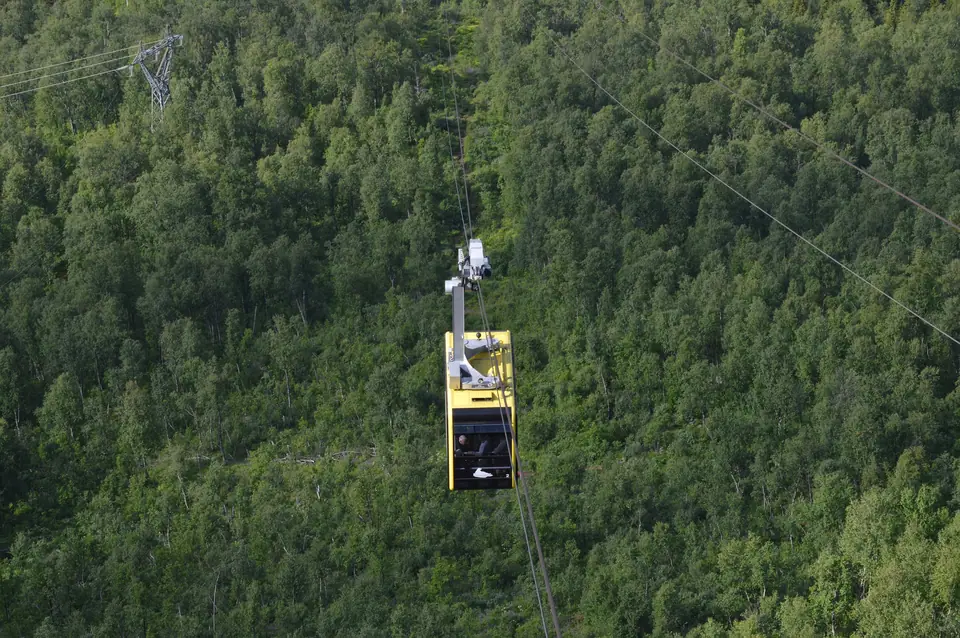
Fjellheisen Aerial Tramway: 1961 Polar Shipping Heritage
The Fjellheisen cable car was built by the local sealing and polar shipping company Brødrene Jakobsens Rederi, which also owned the 1949 sealing vessel MS Polstjerna and co-founded the precursor to Braathens SAFE airline. Constructed with Austrian aerial-tramway engineering and officially opened on 22 February 1961, the line climbs from the lower station at Solliveien in Tromsdalen (50 metres above sea level) to the upper station Fjellstua at 421 metres over a horizontal run of about 765 metres, completing the ascent in four minutes at a maximum speed of 6 metres per second. Its two cabins, marked with polar bear and seal emblems, hold 28 passengers each.
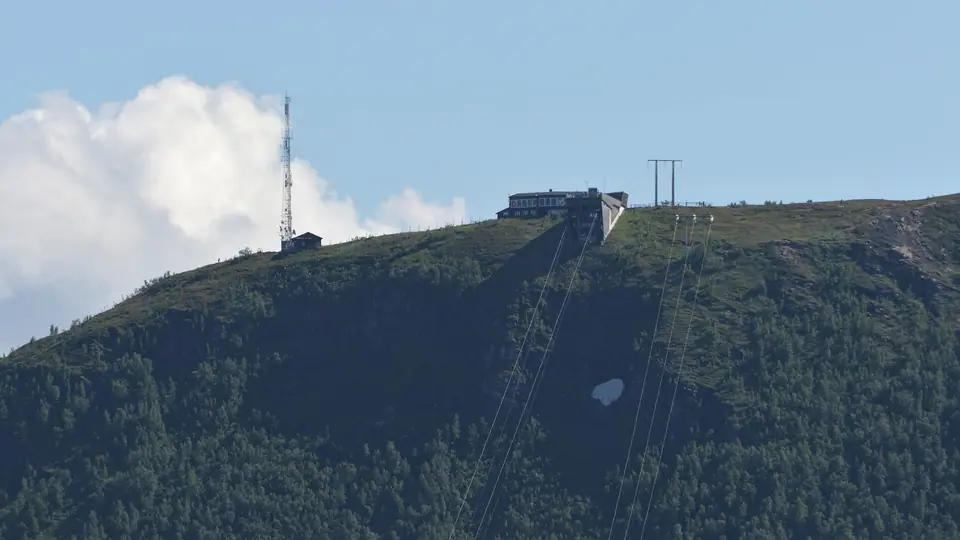
Climbing the 1,203 Stone Steps of the Sherpatrappa
Between 2016 and 2019, stone masons from Nepal's Khumbu region built the Sherpatrappa staircase to prevent hillside erosion. Starting at Fløyvegen in Tromsdalen (around 60 metres elevation) after a brief approach walk from Solliveien, the stone staircase climbs roughly 350 vertical metres over approximately 1 kilometre via 1,203 hand-laid natural stone steps before emerging onto the open plateau just below Fjellstua. Most hikers complete the climb in 45 to 75 minutes during the snow-free summer window from June to October; during winter and spring, deep snowpack and avalanche risk cover the stone steps.
Ridge Walk from Storsteinen (421 m) to Fløya (671 m)
From the Fjellstua restaurant and outdoor deck at Storsteinen (421 metres), a well-trodden alpine trail continues southeast along the open mountain back to the summit cairn and communications mast of Fløya at 671 metres above sea level, adding another 45 to 60 minutes of walking with views toward Balsfjorden.
Tromsdalstinden (1,238 m) Summer Ascent
Experienced summer hikers also use the Storsteinen plateau or the Tromsdalen valley floor as the approach to Tromsdalstinden (Northern Sami: Sálašoaivi), the 1,238-metre peak dominating the eastern skyline across an 18-to-20-kilometre round-trip mountain route.
Bus 26 Access and Walking from the Arctic Cathedral
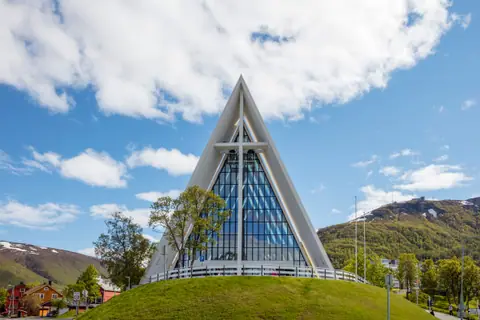
To reach the Fjellheisen lower station or the Sherpatrappa trailhead from central Tromsø, take city bus route 26 directly from Prostneset and Storgata to the Fjellheisen stop in Tromsdalen, or walk 10 minutes uphill from the Arctic Cathedral.
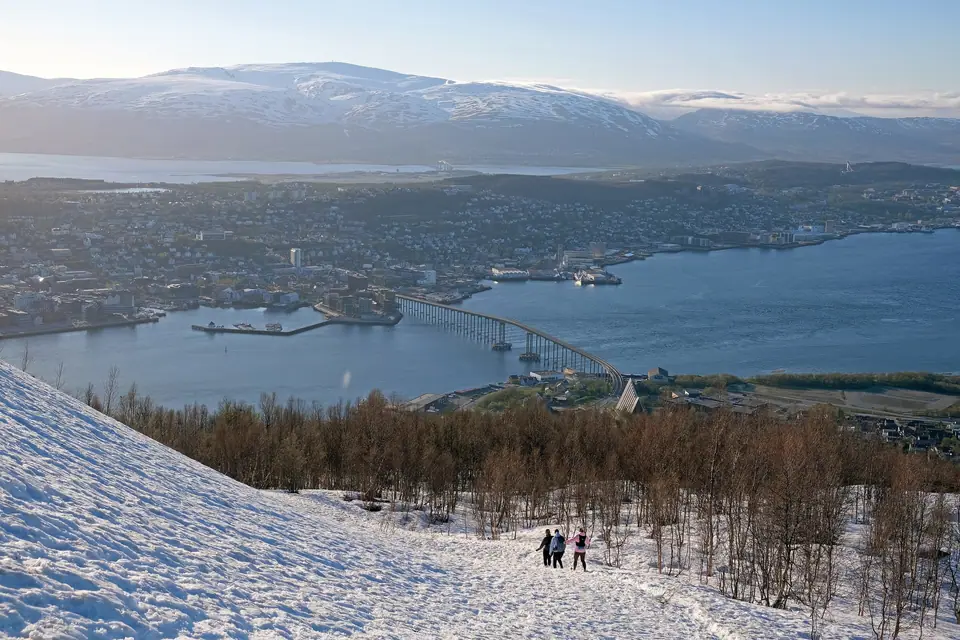
Standing on the western edge of the Storsteinen plateau reveals the entire geographical logic of the Tromsø region in a single sweep. Directly below the cliff-top railing, the houses of Tromsdalen fan out toward the triangular roofline of the parish church and the slender ribbon of the cantilever bridge, while across the sound the entire oblong island of Tromsøya stretches from the northern hills around Varden and the university buildings at Breivika past the wooded basin of Lake Prestvannet to the southern cove of Telegrafbukta. Beyond the western water channel, the snow-streaked granite wall of Kvaløya rises steeply from the sea, framing the sunset and the northern horizon.
At the upper terminal building of Fjellstua, an indoor café and restaurant with floor-to-ceiling panoramic windows sits beside a spacious tiered outdoor viewing terrace. Visitors riding the gondolas in winter or early spring can step out onto the wooden decks to photograph the city lights twinkling against the blue polar twilight or watch green auroral bands arc across the sky, then step back indoors to warm up out of the mountain breeze before taking a descending cabin back to the valley floor.
Before the stone masons from the Khumbu valley laid the staircase of heavy granite slabs up the hillside, decades of summer foot traffic had worn deep, muddy gullies through the fragile sub-arctic heather and birch scrub on the slope below Storsteinen. By fitting flat, stable steps into the natural contours of the terrain without using heavy wheeled machinery, the builders created a durable footpath that protects the surrounding mountain vegetation while giving walkers a steady, well-drained footing all the way from the upper houses of Tromsdalen to the open alpine shelf above the treeline.
Along the climb, wooden benches and natural rock outcrops offer regular spots to catch your breath and look back across the strait as the rooftops of the island shrink below. Even on mild July afternoons, weather on the exposed upper ridge at Storsteinen and along the continuation trail toward Fløya can feel noticeably cooler and windier than down on Storgata, so carrying a windproof shell jacket, drinking water, and grippy hiking shoes is essential for anyone ascending on foot.
Winter Snow Conditions and Safe Mountain Preparation
From late autumn through spring, the mountain environment above Tromsdalen changes completely from a summer walking trail into serious snow-covered alpine terrain. Heavy snowfall and wind-drifted cornices bury the stone steps of the Sherpatrappa beneath deep snowpack, and steep sections of the hillside cross avalanche run-out zones where unprepared walkers should not venture without winter mountaineering experience and proper safety gear. During these snowy months, riding the aerial tramway cabins is the safe and straightforward way to reach the upper viewing deck.
Even when staying near the wooden railings of the Fjellstua terrace in winter, icy gusts across the open plateau make warm hats, windproof mittens, and high-traction winter footwear important. For travellers planning a full day on the mainland side of the strait, the easiest sequence is to walk across the bridge or hop on bus route 26 from the city centre, pause at the Arctic Cathedral near the bridgehead, and then continue up Solliveien to the lower tramway station so you reach the upper terrace as afternoon light softens into evening across the fjords; check seasonal weather patterns in the best time to visit Tromsø guide.
Traveller tips
Real advice from people who have been to Fjellheisen Cable Car, Storsteinen and Sherpatrappa. Every tip is read by our team before it goes live.
No tips yet. Been here? Yours could be the first.
Thank you! Your tip will appear here after a quick review.
More in Tromsø
Continue exploring Tromsø with related neighbourhood, food, and planning guides