


























Storgata, Tromsø Cathedral, Our Lady Church and Mack Brewery
Following the eighteenth-century shoreline path across Tromsøya, pedestrian Storgata links Christian Heinrich Grosch's 1861 wooden cathedral, the world's northernmost Catholic bishopric, and Ludwig Markus Mack's 1877 brewery.
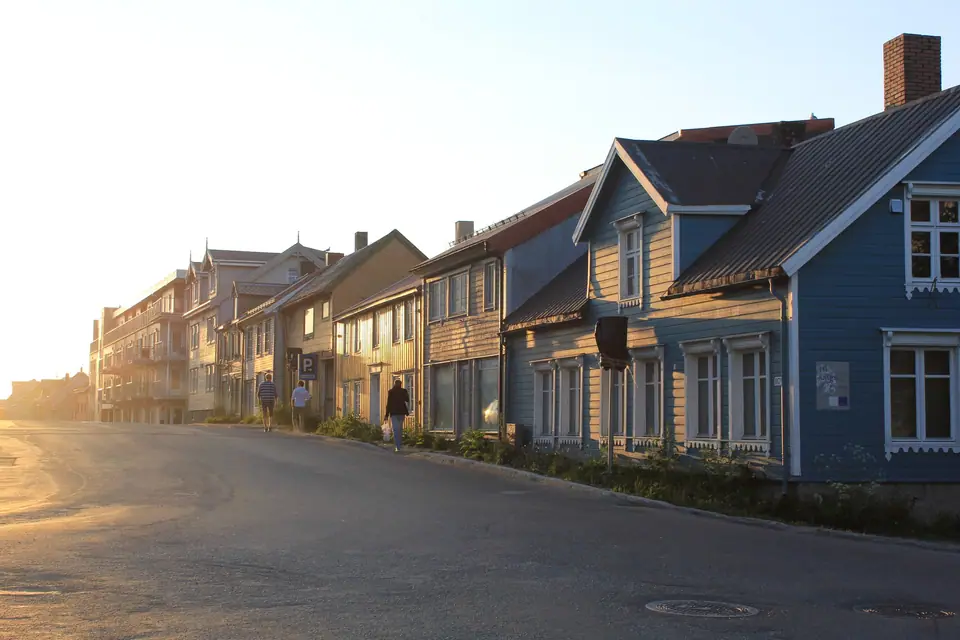
Running north to south along eastern Tromsøya, Storgata ("Main Street") grew from the footpath linking nineteenth-century wharves with the parish church. Because Tromsø escaped both the urban fires of the nineteenth century and the 1944 scorched-earth burning of Finnmark and northern Troms, Storgata and adjacent Sjøgata retain the largest intact ensemble of Empire-style wooden town architecture north of Trondheim. After the 1904 fire in Ålesund prompted a national brick-building law, Art Nouveau masonry landmarks such as Rødbanken (SpareBank 1 Nord-Norge at Storgata 65, built 1909 to 1915) and Mackgården (Storgata 73, built 1912) rose alongside the 1820s and 1830s timber houses. Every summer Storgata hosts the Midnight Sun Marathon, and every February since 2005 its central stretch hosts the Norwegian Reindeer Racing Championship.
Tromsø Cathedral (1861): Norway's Only Wooden Protestant Cathedral
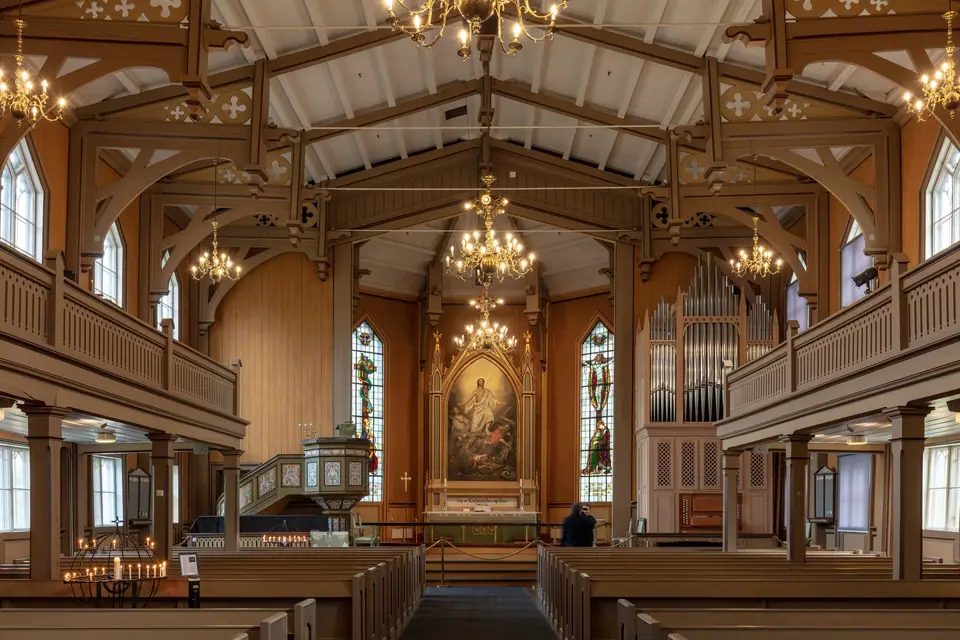
Surrounded by the trees of Kirkeparken on the southern side of Storgata stands Tromsø Cathedral (Tromsø domkirke), the seat of the Diocese of Nord-Hålogaland and the only Norwegian Protestant cathedral built of wood. Designed in the Gothic Revival style by Christian Heinrich Grosch using interlocking cog-jointed timber beams, the yellow church was completed in 1861 on the site where earlier churches had stood since 1252 and where the old Elverhøy church had been moved in 1803. Consecrated on 1 December 1861, the church originally held 984 seats and today seats about 800 people. Its interior houses an 1863 organ built by Claus Jensen (23 voices across two manuals and pedal) and an 1884 altar copy of Adolph Tidemand's painting Resurrection by Christen Brun.
Cathedral of Our Lady (Vår Frue Kirke, 1861)
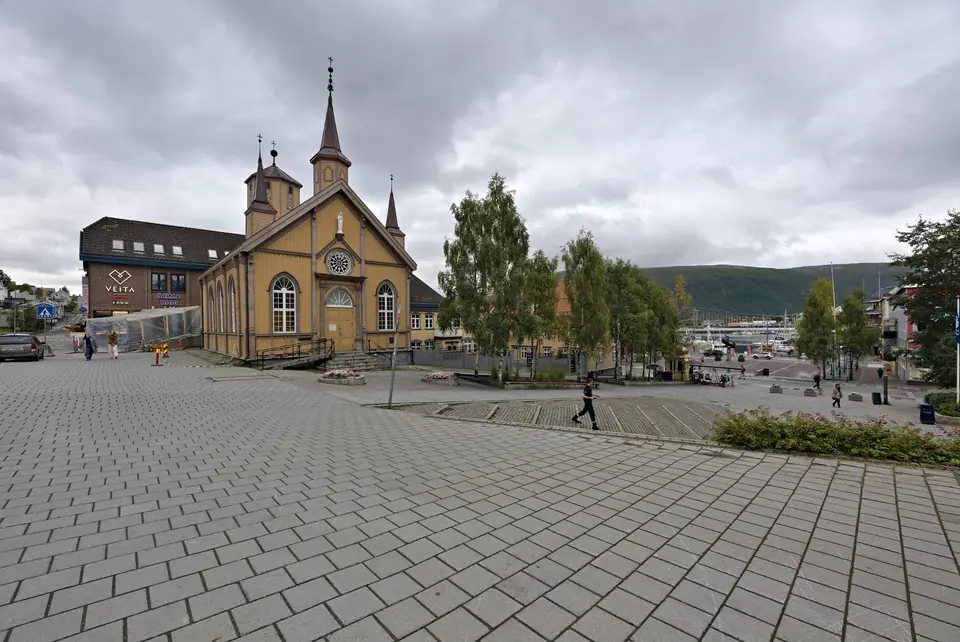
Two blocks north at Erling Bangsunds plass stands the yellow wooden Cathedral of Our Lady (Vår Frue domkirke), also completed in 1861 in Neo-Gothic timber style with around 150 seats as the seat of the Roman Catholic Territorial Prelature of Tromsø, the world's northernmost Catholic bishopric, visited by Pope John Paul II on 2 June 1989.
Perspektivet Museum (1838) and Verdensteatret Cinema (1916)
Continuing north along Storgata, visitors pass Storgata 42 (childhood home of philosopher and mountaineer Peter Wessel Zapffe above his father Fritz G. Zapffe's polar pharmacy), Perspektivet Museum at Storgata 95 (an 1838 Empire merchant mansion built for Johan F. D. Mack where novelist Cora Sandel lived from 1901 and which was protected in 1942), and Verdensteatret at Storgata 93b, designed by architect Peter Arnet Amundsen, opened on 4 June 1916 with 425 seats and frescoes by Ragnhild Kaarbø, and still operating as Northern Europe's oldest cinema in continuous use.
Macks Ølbryggeri (1877) and Ølhallen (1928)
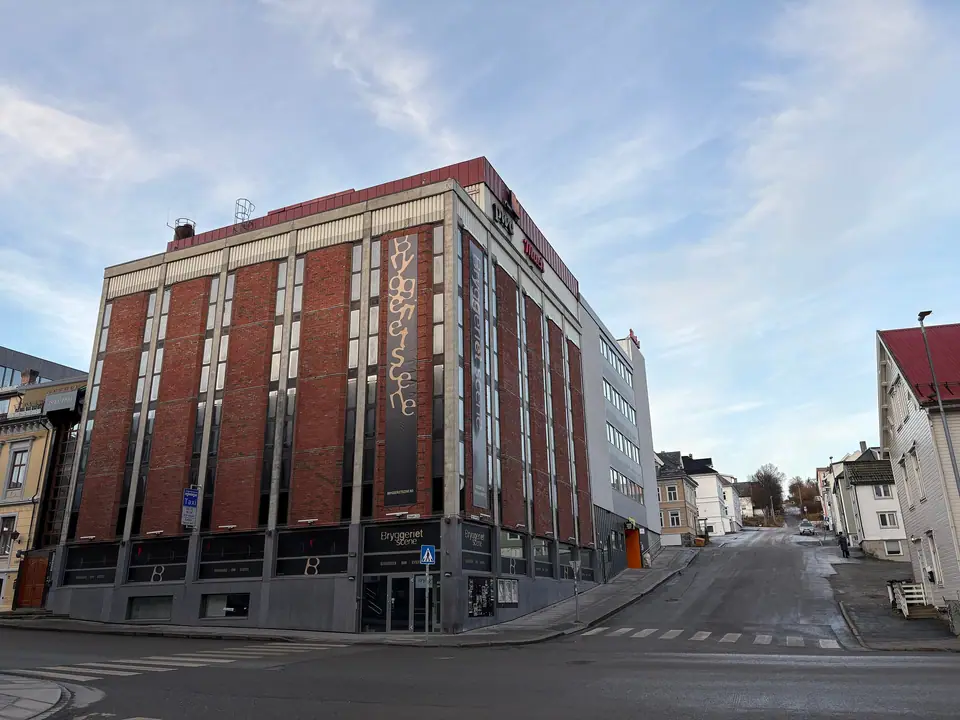
At the southern end of Storgata (Storgata 4 / Peder Hansens gate), Ludwig Markus Mack founded Macks Ølbryggeri in 1877 and launched his first beer in 1878. Until main production moved to Nordkjosbotn in 2012, it was the world's northernmost major brewery. The historic brick complex still houses the Mack Microbrewery, the Kjeller 5 shop, and Ølhallen, Tromsø's oldest pub, opened on 29 February 1928 where 72 taps pour Norwegian craft and Arctic beers; see the what to eat in Tromsø guide.
How Empire Timber Architecture Survived on Storgata
Walking the pedestrian stretch of Storgata and the parallel harbour street of Sjøgata reveals why architectural historians prize central Tromsø as an open-air catalogue of nineteenth-century Norwegian timber building. Constructed during the prosperous decades after the 1794 royal town charter, these two-storey merchant houses combined ground-floor warehouses and retail shops with airy upstairs family salons. Craftsmen clad the interlocking log cores in smooth horizontal wooden panelling painted in ochre yellow, slate grey, muted green, and iron-oxide red, adding symmetrical classical doorways and white-trimmed sash windows inspired by European Empire fashion.
When a catastrophic urban fire destroyed wooden Ålesund in 1904, the Norwegian Parliament passed strict national building codes requiring new structures in town centres to be raised in brick, stone, or concrete. Rather than demolishing its existing wooden streets, Tromsø inserted early-twentieth-century masonry buildings such as the red-brick Rødbanken savings bank and the mercantile Mackgården block directly into the timber grid, creating a varied streetscape that later escaped the 1944 wartime destruction that levelled almost every town further north and east in Troms and Finnmark.
Inside the Wooden Protestant Cathedral and Kirkeparken
Set within the leafy park square of Kirkeparken, Christian Heinrich Grosch's yellow wooden cathedral anchors the southern half of the downtown promenade. Stepping through the western tower portal beneath the pointed Gothic Revival gable reveals a tall, light-filled timber nave supported by slender wooden columns and exposed roof trusses. The 1863 Claus Jensen pipe organ above the entrance gallery still retains its historic nineteenth-century voicing and mechanical craftsmanship, while Christen Brun's painted altarpiece anchors the eastern chancel above the wooden communion rail.
On the northern edge of the cathedral park facing Stortorget and the inner harbour stands the tiny octagonal yellow booth of Raketten Bar & Pølse, operating since 1911 as a beloved street-food landmark where walkers pause year-round for grilled sausages. Just a short stroll west and north brings you to the intimate yellow wooden Cathedral of Our Lady on Erling Bangsunds plass and the striking curved concrete shell of Tromsø Library, built in 1973 by architect Gunnar Bøgeberg Haugen with sweeping glass walls that flood the reading rooms with winter twilight and summer sun.
Historic Cafés, Cinema Screens and the 1928 Beer Hall
The northern end of Storgata pairs literary and cinematic history inside two neighbouring heritage buildings. At Storgata 95, the 1838 Empire mansion housing Perspektivet Museum offers free exhibitions on northern documentary photography and social history in the former residence of writer Cora Sandel, while next door at Storgata 93b the 1916 Verdensteatret building combines an atmospheric historic screening hall adorned with Ragnhild Kaarbø's wall frescoes and a lively café-bar where locals gather from afternoon until late evening.
At the opposite, southern end of the street, descending the stairs beneath the 1877 brick complex of Macks Ølbryggeri leads into Ølhallen, opened on leap day in 1928. Under vaulted ceilings decorated with white polar bear figures and brass brewing kettles, 72 draught taps pour regional lagers, dark porters, and seasonal ales that pair naturally with a walk around central Tromsø or a visit to nearby Polaria.
Traveller tips
Real advice from people who have been to Storgata, Tromsø Cathedral, Our Lady Church and Mack Brewery. Every tip is read by our team before it goes live.
No tips yet. Been here? Yours could be the first.
Thank you! Your tip will appear here after a quick review.
More in Tromsø
Continue exploring Tromsø with related neighbourhood, food, and planning guides
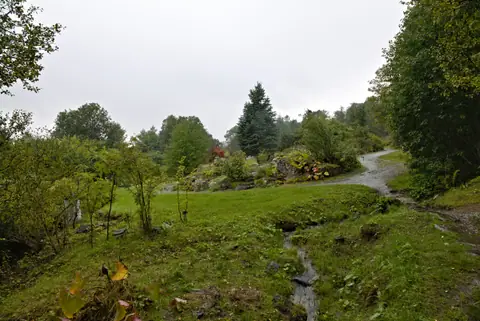
Arctic-Alpine Botanic Garden, Prestvannet and Telegrafbukta Guide
Tromsø, Norway
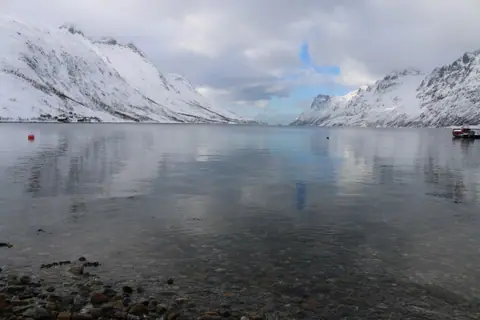
Kvaløya Island, Ersfjordbotn, Sommarøy and Lyngen Alps Day Trips
Tromsø, Norway
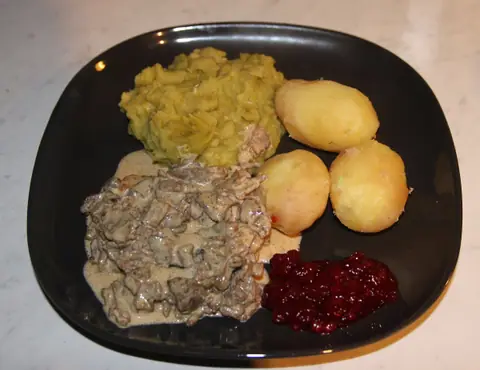
What to Eat in Tromsø: Arctic Cod, Reindeer, Biđus and Mack Beer
Tromsø, Norway
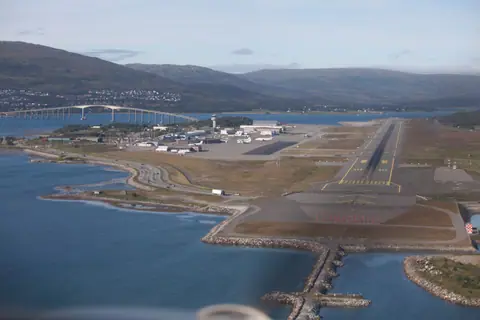
How to Get to Tromsø: Langnes Airport, Hurtigruten and Buses
Tromsø, Norway
