


























How to Get to Tromsø: Langnes Airport, Hurtigruten and Buses
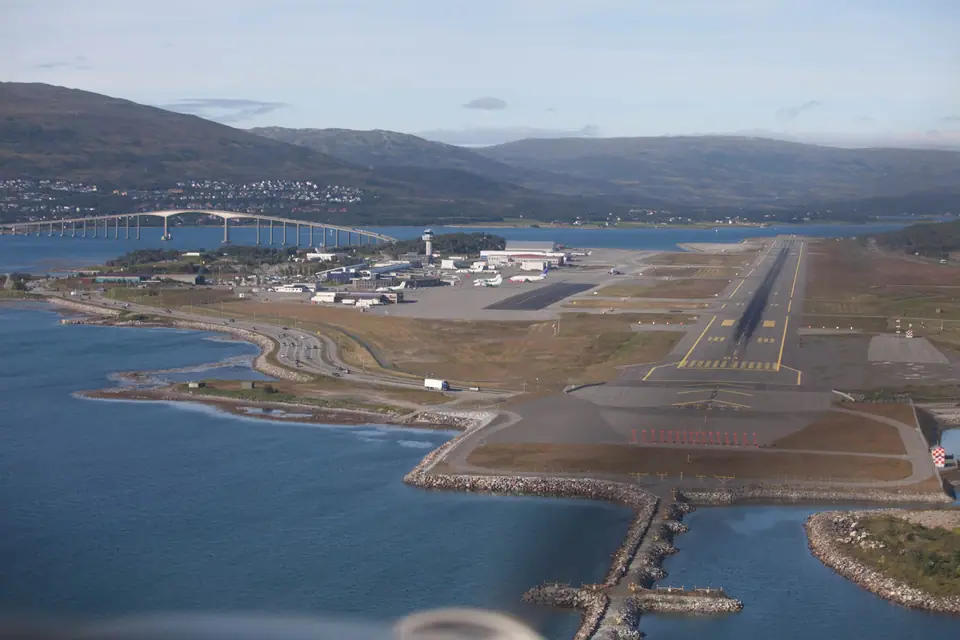
Located on the western shore of Tromsøya just 5 kilometres from Storgata, Tromsø Airport Langnes connects with Oslo, Svalbard, and European hubs, while Hurtigruten ships and regional buses dock at Prostneset.
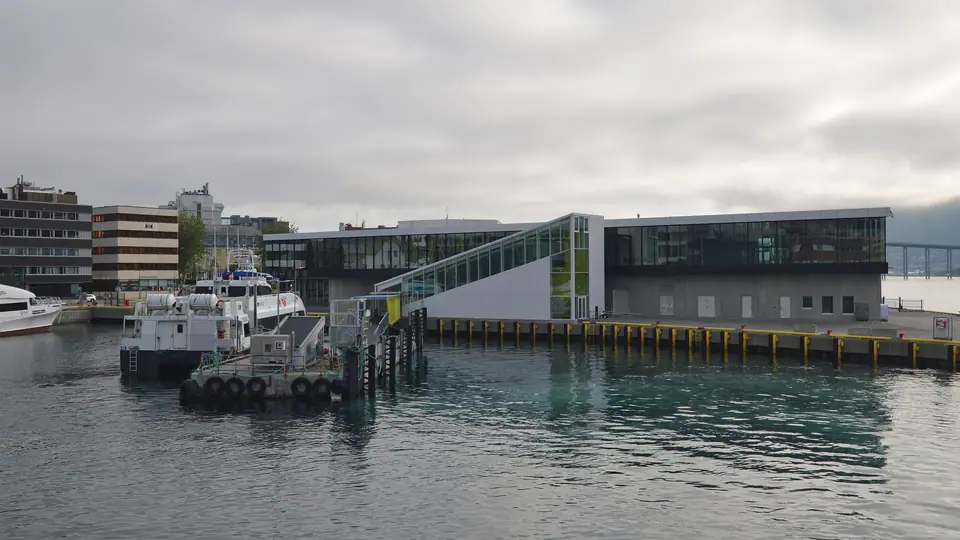
Although Tromsø lies nearly 350 kilometres north of the Arctic Circle and has no railway station, reaching the city is straightforward by air, sea, and road. Tromsø Airport, Langnes (IATA: TOS) sits directly on the western shore of Tromsøya island only 5 kilometres from the historic wooden city centre, while the modern Prostneset Harbour Terminal (opened in 2018) on the eastern waterfront integrates the Hurtigruten and Havila Kystruten coastal steamer quay, the regional express passenger catamaran pier, and the long-distance coach station under one roof. For island orientation once you arrive, consult the Tromsø travel guide.
Tromsø Airport, Langnes (TOS): Flights and 1964 History
Before 1964, Tromsø was served only by seaplanes landing at the Skattøra water aerodrome in North Tromsøya. Construction of an overland airport at Langnes began in 1963, and Tromsø Airport opened on 14 September 1964 with an initial 2,000-metre runway, today extended to 2,447 by 45 metres (runway 01/19, elevation 10 metres). Owned by Avinor, the airport served 2,272,811 passengers in 2019 after receiving a semicircular terminal in 1997 and a new terminal wing in 2024. SAS and Norwegian fly daily non-stop services from Oslo Gardermoen (1 hour 55 minutes), Bergen, Trondheim, Bodø, and Longyearbyen, while Widerøe operates regional Dash 8 flights across Finnmark and northern Troms alongside direct European routes.
Airport Express and Bus Routes 40 and 42 Through the Rock Tunnels
From the Langnes terminal, the Airport Express Bus (run by Bussring) and local Troms Fylkestrafikk bus routes 40 and 42 drive through the Langnestunnelen (1,210 metres) and Sentrumstangenten (1,620 metres) rock tunnels to Storgata and Prostneset in 10 to 15 minutes.
Hurtigruten, Havila Kystruten and Regional Express Boats at Prostneset
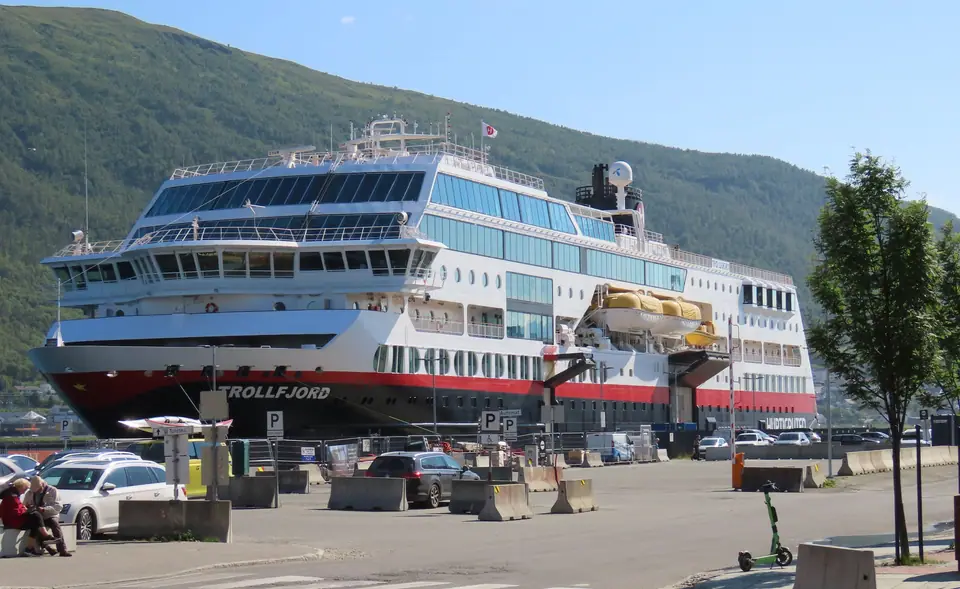
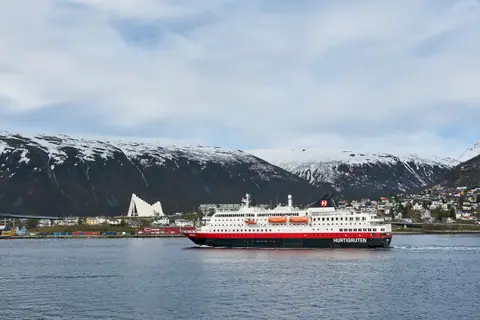
Since Richard With launched the first regular weekly coastal steamer service in 1893, Tromsø has been a flagship port on the Bergen to Kirkenes coastal route operated today by Hurtigruten and Havila Kystruten. Northbound coastal vessels dock at the Prostneset terminal every afternoon for a four-hour port call (giving passengers four hours ashore to visit Polaria or cross to the Arctic Cathedral), while southbound steamers call around midnight for a late-night port call. From the adjacent floating quay at Prostneset (hurtigbåtkai), Troms Fylkestrafikk passenger catamarans run daily services south to Finnsnes and Harstad and north to Skjervøy.
Overland Coach Links from Narvik, Fauske and Finland
Because the Nordland Line terminates at Bodø/Fauske and the Swedish Ofoten Line terminates at Narvik, rail travellers board connecting regional bus route 100 from Narvik to Prostneset (about 4 hours 15 minutes via Nordkjosbotn on the E6 and E8 highways), while coaches along European route E8 link Tromsø through Kilpisjärvi to Rovaniemi.
Local Svipper Buses, Bridges and Undersea Tunnels
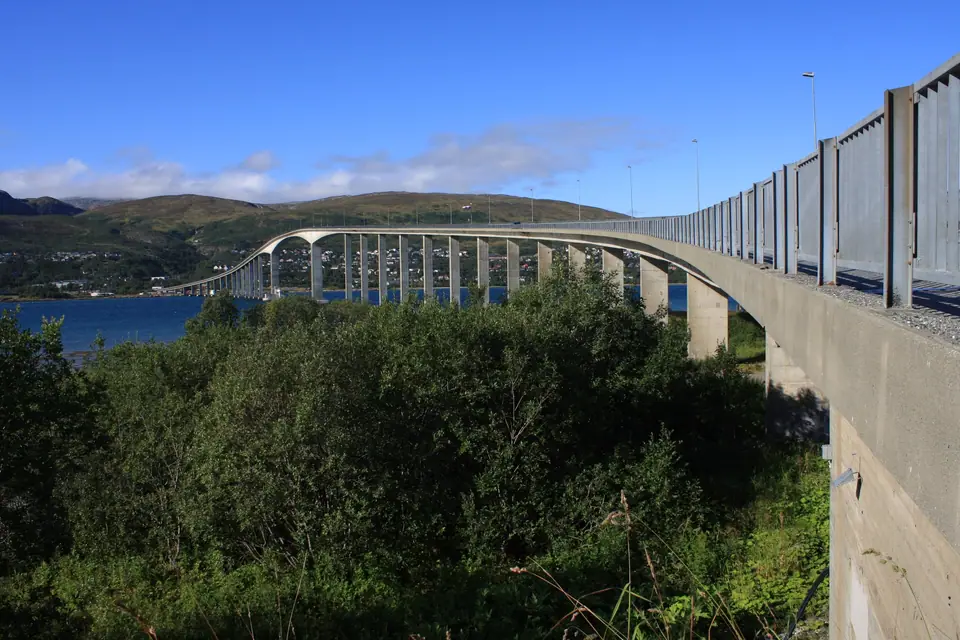
Within Tromsø municipality, Troms Fylkestrafikk city buses (ticketed via the Svipper mobile app) cross the 1,036-metre Tromsø Bridge and 3,500-metre Tromsøysund Tunnel east to Tromsdalen (routes 20, 24, 26, and 28) and the 1,220-metre Sandnessund Bridge west to Kvaløya (routes 42, 420 to Sommarøy, and 425 to Ersfjordbotn).
Walking Distances, Winter Ice Cleats and Underground Parking
Because the historic wooden downtown on the eastern shore of Tromsøya spans roughly 1.5 kilometres between Skansen in the north and Polaria in the south, walking is the simplest way to move between museums, Storgata cafés, and the Prostneset terminal. Heated pavements melt snow along parts of pedestrian Storgata, while the residential side streets climbing westward toward Grønnegata, Vestregata, and Lake Prestvannet remain snow-packed from November through April; slipping removable metal traction cleats (brodder) over your boots keeps winter walks steady on icy slopes.
For travellers crossing the 1,036-metre Tromsø Bridge to the Arctic Cathedral and Fjellheisen in Tromsdalen, sheltered pedestrian walkways run along both sides of the bridge deck (a 15-to-20-minute walk from the harbour), or you can hop on bus route 26 from Prostneset and Storgata. Contactless bank cards and the Svipper mobile ticketing app make single tickets and twenty-four-hour passes easy to buy before boarding, which is cheaper and faster than purchasing paper tickets from the driver. The same Svipper app displays real-time bus departures, route maps, and regional ferry timetables across Troms county so you can coordinate transfers between city buses at Breivika, Prostneset, and Giæverbukta without waiting outdoors in cold weather.
When to Rent a Car vs Joining Guided Fjord Transfers
You do not need a rental car while staying in central Tromsø, where underground parking inside the cliff-cut Fjellet P-hus cavern requires hourly fees and street parking is scarce. If you plan to explore the western fjords of Ersfjordbotn and Sommarøy on Kvaløya or drive east toward the Lyngen Alps, rental desks operate both at Tromsø Airport, Langnes and near the harbour terminal.
Between October and April, all rental vehicles are fitted with winter studded or friction tyres, yet coastal blizzards, black ice, and narrow single-lane bridges require confident winter driving habits; travellers unfamiliar with arctic road conditions can instead use regional bus routes 420 and 425 or seasonal sightseeing coaches departing directly from Prostneset, and check seasonal road weather in the best time to visit Tromsø guide. When driving through the underground rock tunnels on Tromsøya (Sentrumstangenten and Langnestunnelen) or the undersea Tromsøysund Tunnel, follow the illuminated lane signs carefully, as underground roundabouts connect the airport, hospital, harbour, and mainland routes beneath the island surface.
Inside the Prostneset Harbour Terminal itself, heated waiting lounges, luggage storage lockers, tourist information desks, and ticket counters link the ground-floor regional bus bays directly with the upper walkway leading onto the Hurtigruten and Havila Kystruten coastal steamers and the floating express catamaran pier. Arriving passengers can store heavy bags at the terminal while walking out to Storgata, the Polar Museum, or Polaria between ship, coach, and airport connections. Because Prostneset also serves as the main pickup hub for evening northern lights coaches, whale-watching catamarans, and regional buses toward Narvik and Finland, familiarising yourself with the terminal layout on your arrival day makes every subsequent excursion transfer across the archipelago straightforward. Taxis also wait at dedicated ranks right outside the airport arrivals hall and beside Prostneset for late-evening transfers when city bus frequencies taper off after midnight, and step-free lifts inside the terminal connect street level directly to the ship gangways.
Traveller tips
Real advice from people who have been to How to Get to Tromsø: Langnes Airport, Hurtigruten and Buses. Every tip is read by our team before it goes live.
No tips yet. Been here? Yours could be the first.
Thank you! Your tip will appear here after a quick review.
More in Tromsø
Continue exploring Tromsø with related neighbourhood, food, and planning guides
Best Time to Visit Tromsø: Aurora Season, Midnight Sun and Climate
Tromsø, Norway
Tromsø 3-Day Itinerary: Wooden Centre, Fjellheisen and Kvaløya
Tromsø, Norway
Tromsø: Island Layout, Arctic Climate and Essentials
Tromsø, Norway
Things to Do in Tromsø: Top Arctic Landmarks, Museums and Fjords
Tromsø, Norway
