What to Eat in Tromsø: Arctic Cod, Reindeer, Biđus and Mack Beer
Shaped by cold Barents Sea fisheries and inland Sámi reindeer herding, Tromsø's table centres on winter skrei cod, Arctic char, stockfish, finnbiff and biđus reindeer stews, cloudberries, and beer brewed in the city since 1878.
Dining in Tromsø draws from two Arctic ecosystems at 70 degrees north: the cold Norwegian and Barents seas and the Sápmi reindeer pastures. Along the harbour quays of Sjøgata and Prostneset and inside the nineteenth-century wooden houses of Storgata, seafood restaurants such as Store Norske Fiskekompani in the 1912 Mackgården building (Storgata 73), traditional pubs, and street kiosks serve seasonal catches alongside centuries-old dried, cured, and simmered northern dishes.
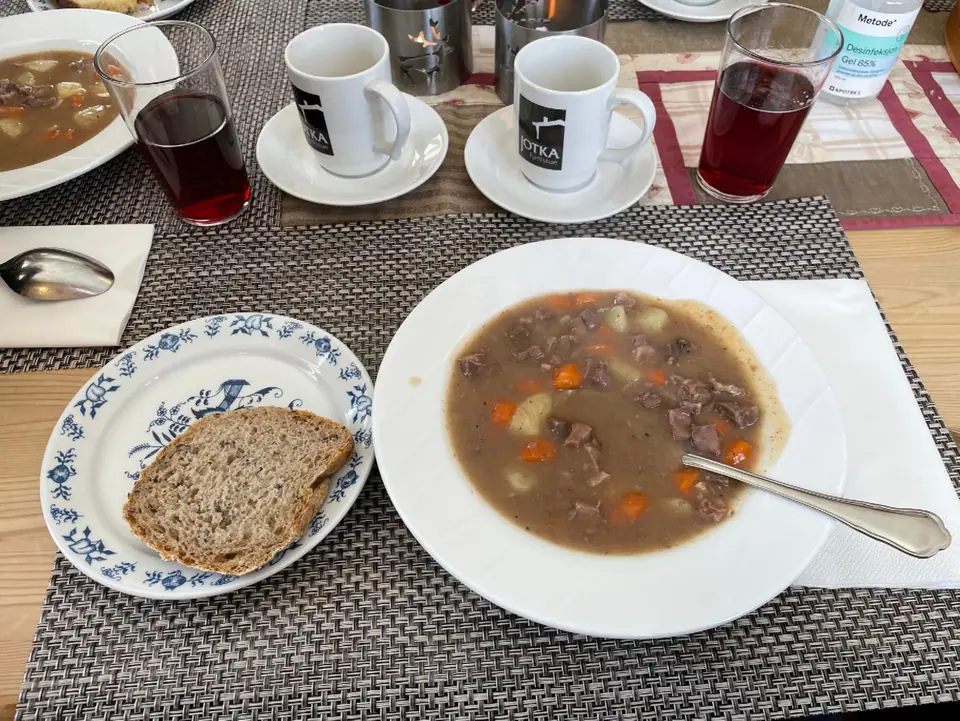
Sámi Reindeer Stew (Biđus) and Sautéed Finnbiff
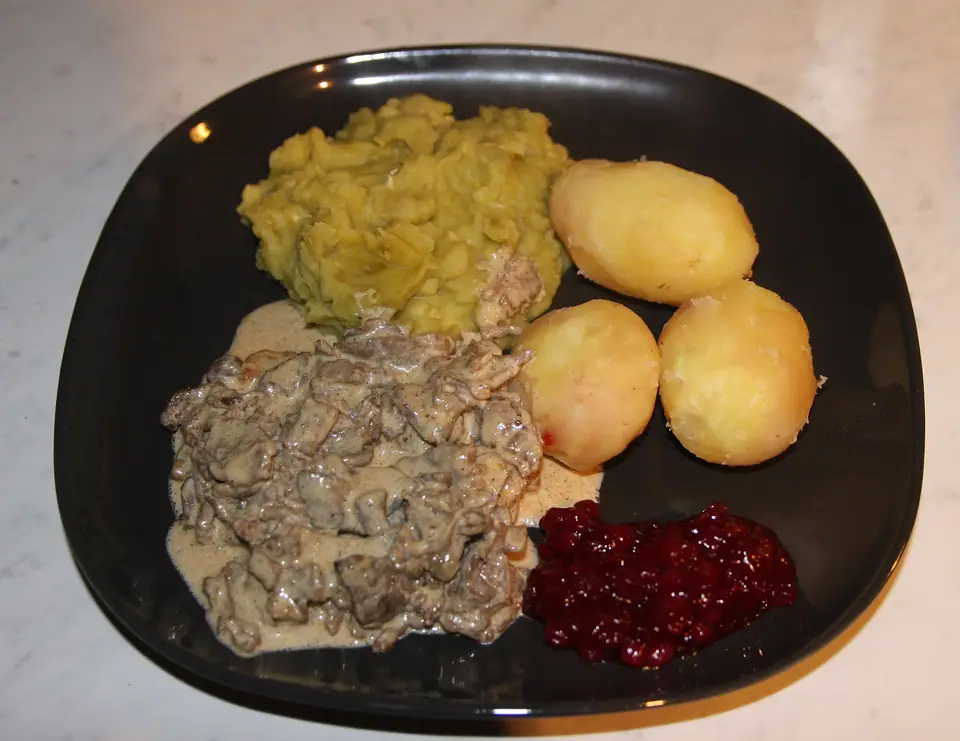
In Sámi and Northern Norwegian cooking, reindeer meat (reinsdyrkjøtt) is the defining inland staple. The classic ceremonial and everyday Sámi dish is biđus (also spelled bidos), a slow-simmered broth stew of diced reindeer meat, potatoes, carrots, and onion thickened slightly with flour and seasoned with salt and black pepper. Equally widespread is finnbiff (sautéed reindeer, Northern Sami: báistebiđus), made by shaving thin slices from frozen reindeer steak or back meat, searing them in butter or fat, and braising the meat in sour cream (rømme), milk, or brown goat cheese, served with mashed or boiled potatoes, stewed peas (ertestuing), and crushed lingonberries (tyttebær).
Raketten Bar & Pølse (1911) on Stortorget
At Tromsø's smallest kiosk, Raketten Bar & Pølse, an octagonal yellow booth opened on Stortorget in 1911 by Margit Løkke, visitors eat grilled reindeer sausages topped with crispy onions and lingonberry dressing outdoors around a fire pit.
Winter Skrei Cod and Skreimølje (January to April)
From January to April, migratory Barents Sea cod (skrei) swim south to spawn along the northern Norwegian coast, appearing on Tromsø menus as skreimølje (poached cod fillets served with cod liver, cod roe, and boiled potatoes) or pan-roasted loins and crispy cod tongues (torsketunger).
Wind-Dried Stockfish (Tørrfisk), Arctic Char and Red King Crab
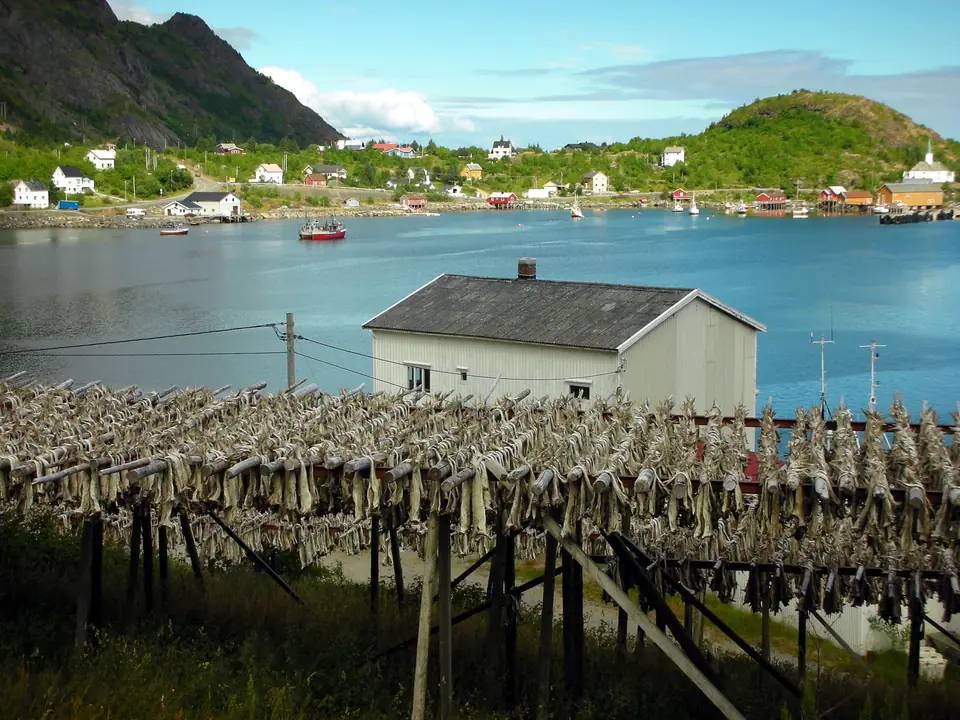
Along the outer islands of Kvaløya and Sommarøy, gutted unsalted cod are hung on outdoor wooden A-frame racks called hjell from February to May to cure in the cold wind into stockfish (tørrfisk), losing about 80 percent of their water content before maturing indoors for another two to three months to be eaten as grilled grillet tørrfisk or soaked for December lutefisk. Waterfront bistros also serve spotted wolffish (steinbit), halibut (kveite), Arctic char (røye), and Barents Sea red king crab (Paralithodes camtschaticus).
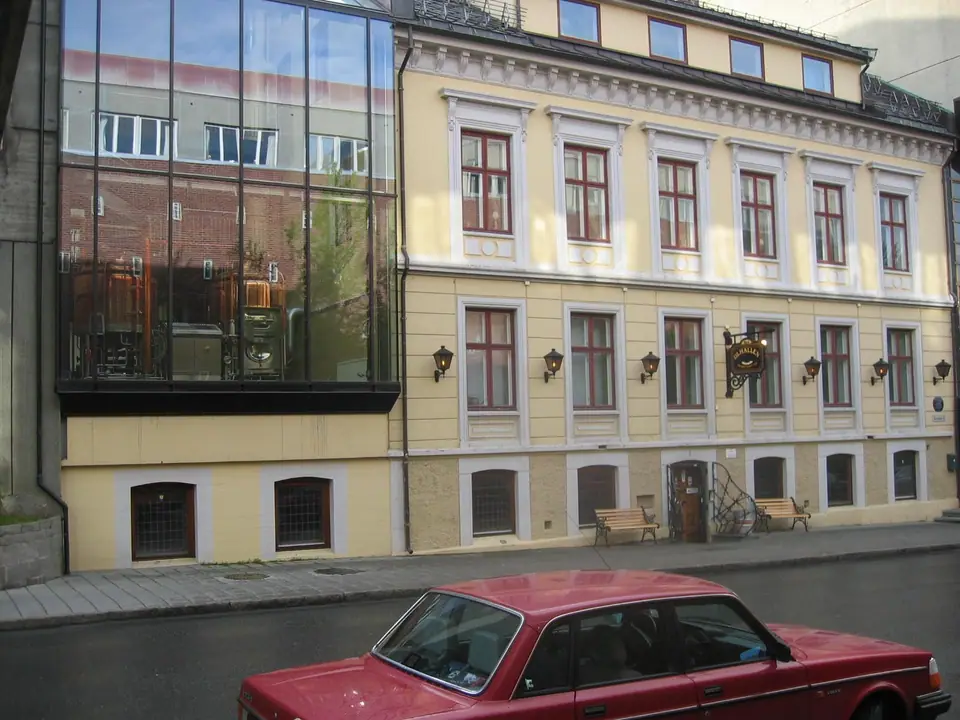
Mackøl og Måsegg at Ølhallen (1928)
Founded by Ludwig Markus Mack in 1877 on southern Storgata, Macks Ølbryggeri shaped Northern Norway's pub traditions, including the springtime expression Mackøl og måsegg (Mack pilsner served alongside hard-boiled gull eggs halved onto buttered flatbrød with salt and pepper, celebrated in Bjørn Jens Kristiansen's 1988 song). Today the 1928 Ølhallen beer hall pours 72 taps of Mack lagers and craft ales.
Cloudberry Cream (Multekrem) from Arctic Bogs
For dessert, look for multekrem, wild golden cloudberries (Rubus chamaemorus), the most prized berry of Sápmi's arctic bogs, folded into whipped cream and served with crisp krumkake wafers.
Because Tromsø grew as the commercial crossroads between the rich fishing banks of the Barents Sea and the inland mountain plateaus of Sápmi, its kitchens rely on seasonal wild harvests rather than imported ingredients. Cold, clean ocean waters slow the growth of fish and shellfish, concentrating natural oils and firming the texture of winter cod, halibut, haddock, spotted wolffish, and cold-water prawns, while short, sunlit Arctic summers fill mountain herbs, wild berries, and lichens with intense flavour that carries into autumn game meats and dairy dishes.
When eating out along Storgata, Sjøgata, and the Prostneset quayside, you can sample these northern staples across several distinct settings: historic timber fish restaurants and modern Nordic tasting-menu rooms along the harbourfront, casual lunch cafés serving creamy fish soup (fiskesuppe) and dark rye bread, and outdoor street stalls grilling reindeer and whale sausages over open braziers during chilly winter afternoons.
Across Northern Norway, semi-domesticated reindeer graze freely on mountain lichens, dwarf birch, and wild mushrooms from spring to autumn before migrating to winter pastures, giving the dark red meat a lean, tender texture and mild game flavour. In traditional Sámi households and lavvu tents, biđus is cooked slowly in a single pot so the marrow and collagen from bone-in cuts enrich the clear broth alongside root vegetables, making it a warming meal served at weddings, Easter gatherings, and February Sámi Week celebrations in Tromsø.
In city bistros and home kitchens alike, finnbiff offers a richer, pan-braised alternative where paper-thin shavings of frozen reindeer meat cook quickly with browned butter, juniper berries, thyme, mushrooms, and a tangy spoonful of brown whey cheese (brunost) stirred into sour cream. Served steaming hot with buttery mashed potatoes and tart red lingonberries, it pairs effortlessly with a dark winter ale or bock beer after an evening spent watching the aurora borealis.
Between January and April, the arrival of migratory skrei cod from the Barents Sea marks the highlight of the winter seafood calendar. Unlike stationary coastal cod, skrei build firm, flaky white muscle during their long southward swim to the spawning grounds, and Tromsø restaurants serve every part of the fish: thick poached loin fillets, creamy poached liver and roe in traditional skreimølje, and pan-fried cod tongues (torsketunger), traditionally cut from the fish by local school-age children working down on the landing quays.
As late winter turns to spring from February through May, wooden A-frame drying racks (hjell) along the outer shores of Kvaløya and Sommarøy fill with pairs of gutted cod tied by the tail to cure in the crisp, salty sea breeze above freezing temperatures. Once the wind-dried stockfish loses 80 percent of its moisture and matures indoors, local chefs grill rehydrated fillets over charcoal as grillet tørrfisk or whip shredded dried fish with potatoes, olive oil, and garlic into creamy klippfisk and boknafisk specialities served alongside local craft beers along the harbourfront. For daytime breaks between museum visits, waterfront fish counters and bakeries also sell freshly peeled cold-water Lyngen prawns on white bread with lemon and mayonnaise, warm fish cakes (fiskekaker) made from haddock and wolfish, and cardamom-scented buns paired with black filter coffee.
Traveller tips
Real advice from people who have been to What to Eat in Tromsø: Arctic Cod, Reindeer, Biđus and Mack Beer. Every tip is read by our team before it goes live.
No tips yet. Been here? Yours could be the first.
Thank you! Your tip will appear here after a quick review.
More in Tromsø
Continue exploring Tromsø with related neighbourhood, food, and planning guides