Best Time to Visit: Monthly Weather, Daylight and Seasons
Plan around Trondheim's 1991 to 2020 Met Norway climate normals, 20-hour summer daylight, May to September Munkholmen boats, and Bymarka ski snow.
Despite lying at 63°25′N, less than three degrees south of the Arctic Circle, Trondheim experiences a milder, less stormy climate than Norway's exposed Atlantic outer coast because the mountainous Fosen peninsula to the northwest shields the Trondheimsfjord basin from the strongest ocean gales. At the Norwegian Meteorological Institute (Met Norway) reference station at Trondheim Voll (127 metres above sea level), the 1991 to 2020 climate normals classify the city as oceanic bordering on humid continental, with distinct four-season contrasts and an annual precipitation total of 871 millimetres.
Summer (June to August): Long White Nights and Fjord Boats
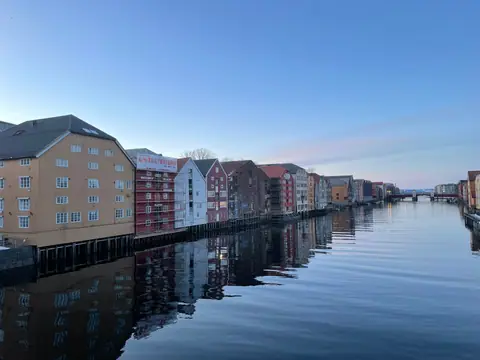
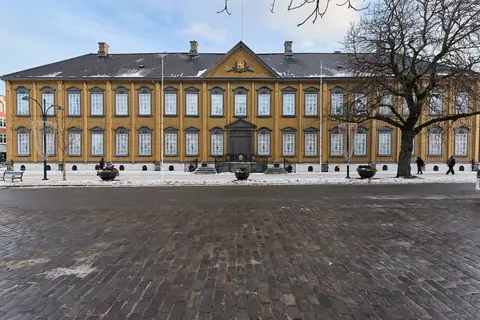
Summer is the warmest and liveliest season to visit Trondheim. Daily high temperatures average 17 °C in June (17.1 °C), 20 °C in July (19.9 °C), and 19 °C in August (18.7 °C), with overnight lows of 9 °C, 12 °C (11.6 °C), and 11 °C (10.9 °C) and daily means of 11.8 °C, 14.8 °C, and 14.1 °C. Around the June solstice, daylight lasts more than 20 hours and true astronomical darkness never falls, bathing the Bryggene warehouses and Gamle Bybro in twilight all night. Between May and September, passenger boats sail regularly from Ravnkloa to Munkholmen, the Fløttmann rowboat crosses the canal, and guided musical tours run inside the 1880s rooms of Ringve Manor House and the royal reception rooms of Stiftsgården. Late July and early August also bring St. Olav's Day (Olsok, 29 July) events around Nidaros Cathedral.
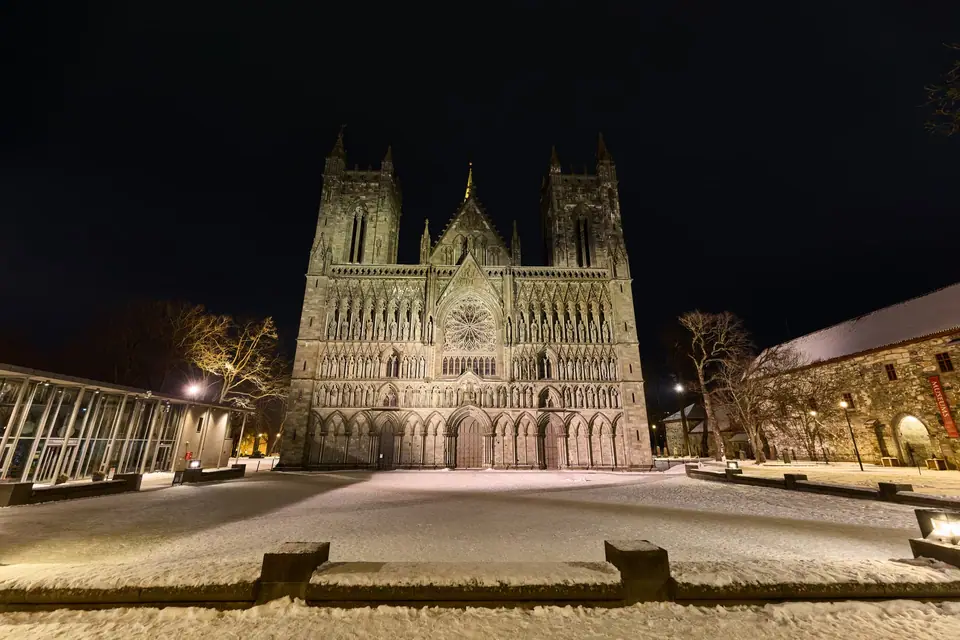
Spring (April to May): The Driest Months of the Year
If you want the driest weather for walking in Midtbyen and Bakklandet, late spring is the statistically driest window of the year: April and May record just 49 mm and 50 mm of precipitation (about 10 rain days per month), while afternoon highs climb from 9 °C in April (8.9 °C) to 14 °C in May (13.7 °C), culminating in Norway's Constitution Day processions down Munkegata on 17 May.
Autumn (September to October): Foliage and Student Return
Early autumn brings golden foliage around Nidaros Cathedral and the return of 42,000 NTNU students, with highs of 15 °C in September (14.5 °C) and 9 °C in October (8.9 °C), though September is the wettest month of the year at 90 mm of rain (followed by August at 84 mm and October at 80 mm).
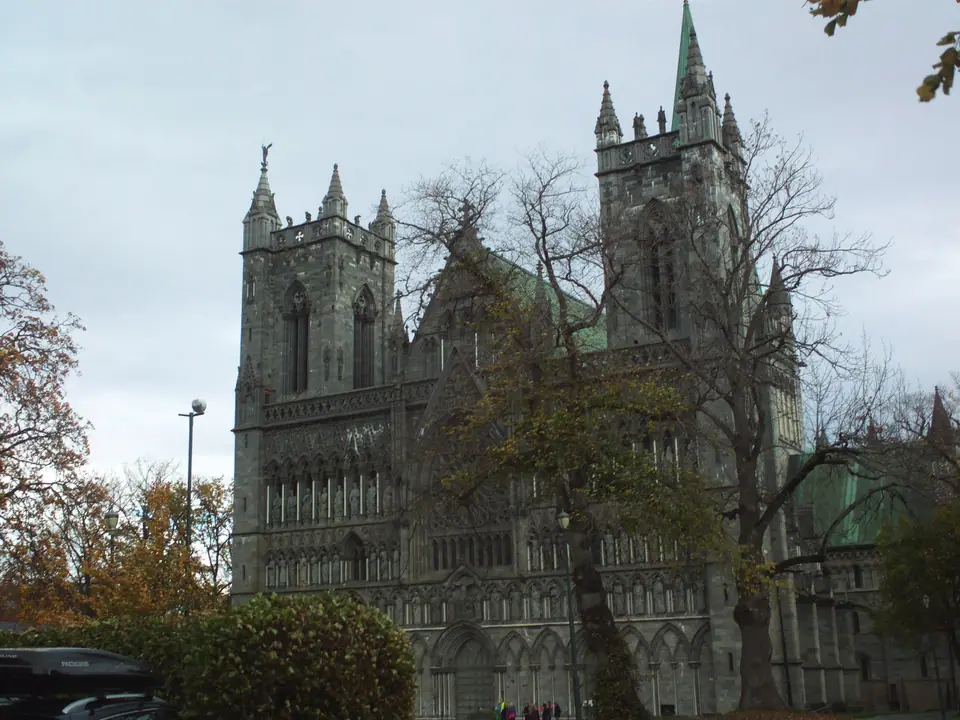
Winter (November to March): Bymarka Ski Trails and Torvet Markets
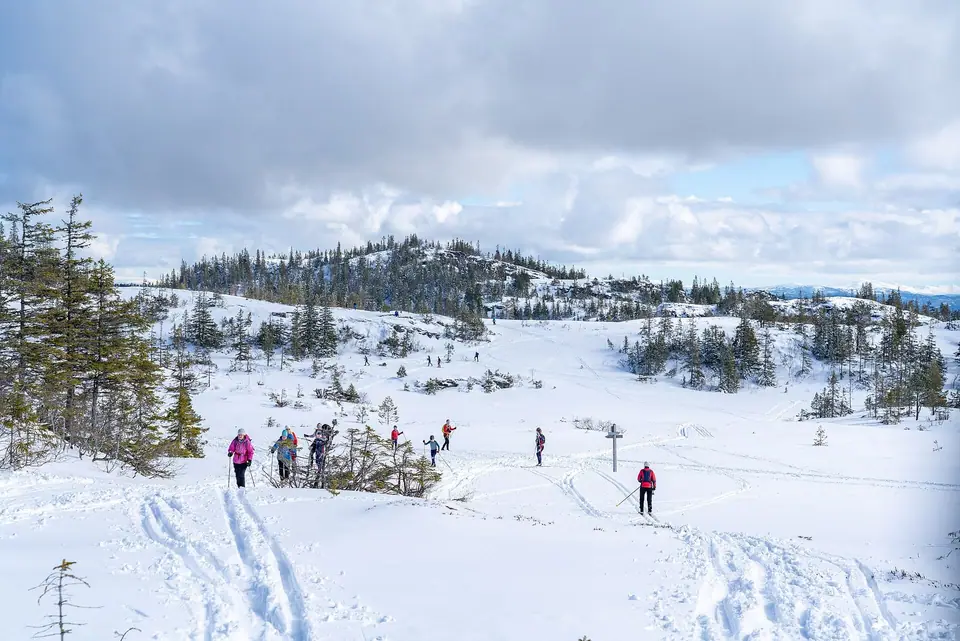
From November through March, average daily temperatures drop near or below freezing: January and February record average highs of 1 °C and 2 °C (1.2 °C and 1.9 °C), daily means of -1.0 °C and -1.2 °C, and average overnight lows of -4 °C (-4.1 °C and -3.6 °C), while December and March average highs of 2 °C and 5 °C with lows of -3 °C and -2 °C. While the lower street grid of Midtbyen alternates between snow and mild coastal spells, the 200 to 565-metre hills of Bymarka hold reliable winter snow across more than 200 kilometres of groomed cross-country ski tracks accessible on the 8.8-kilometre Gråkallbanen tram, and an annual Christmas market fills Torvet every December (held since 2003).
How the Fosen Peninsula Shapes Trondheim's Microclimate and Calendar
Looking at a map of Norway at 63°25′N, many travellers expect Trondheim to share the raw, storm-swept maritime weather of exposed coastal islands or the deep subarctic cold of the interior mountains. In practice, the broad highland ridge of the Fosen peninsula to the northwest acts as a topographical windbreak against North Atlantic low-pressure systems, while the deep, ice-free water mass of the 130-kilometre Trondheimsfjord moderates winter freezes along the shoreline. As a result, Trondheim's annual precipitation normal of 871 millimetres at the Met Norway Trondheim Voll station (127 metres elevation) is substantially drier than western Norwegian fjord cities further south.
At the same time, elevation changes across the municipality create sharp local contrasts within a ride on the 8.8-kilometre Gråkallbanen tram. On a November or March morning when the cobbled streets of Midtbyen and Bakklandet near sea level are damp and snow-free at 1 °C or 2 °C, the upland forest trails around Lian (232 metres), Skistua, and Storheia (565 metres) in Bymarka are frequently blanketed in dry, groomed snow suitable for cross-country skiing.
To match your visit with ferry schedules, museum tours, and outdoor conditions, keep these seasonal windows in mind:
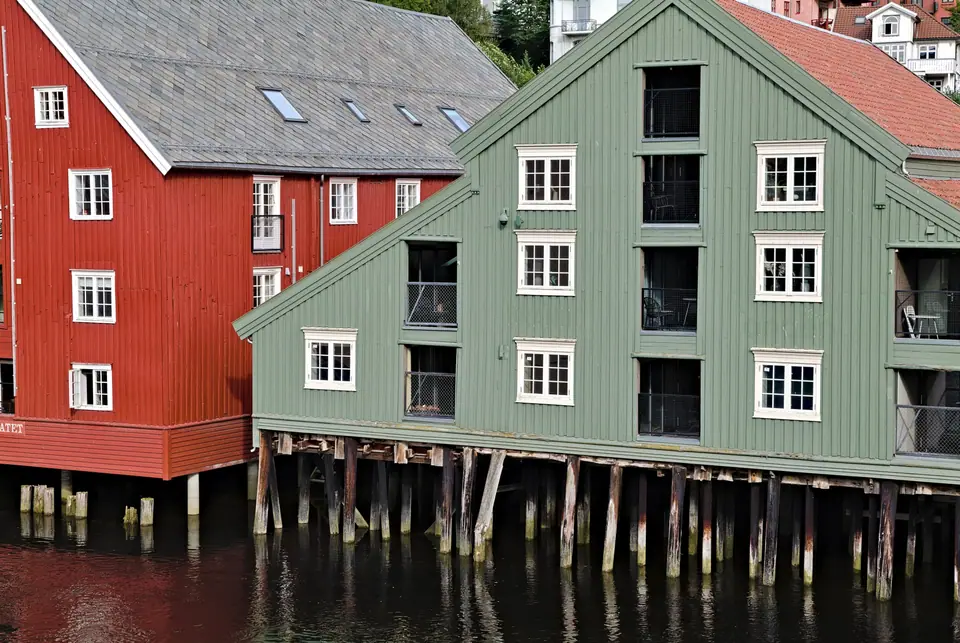
- Late Spring (April and May): Statistically the driest months of the year at 49 mm and 50 mm of rainfall (averaging just 10 precipitation days per month), with crisp spring light on the Bryggene river wharves, blooming beds in the 130-decare Ringve Botanical Garden, the opening of the Ravnkloa to Munkholmen passenger boat in May, and Constitution Day processions down Munkegata on 17 May.
- Peak Summer (June to August): Mild afternoons averaging 17 °C to 20 °C, more than 20 hours of daylight around the June solstice, regular Munkholmen ferry sailings and Fløttmann canal rowboat crossings, live keyboard tours inside Ringve Manor House, royal reception room tours in Stiftsgården, and the late-July Olsok cultural programme at Nidaros Cathedral.
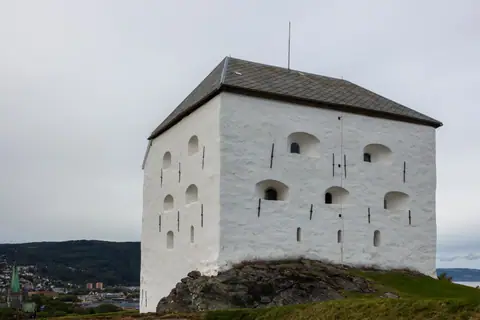
- Autumn (September and October): Clear golden birch and maple foliage along the Nidelva riverbanks and around Kristiansten Fortress, lively university life as 42,000 NTNU students return, and hearty seasonal menus featuring fårikål and Trøndelag sodd.
- Winter (November to March): Short northern days and long atmospheric twilights illuminated by the 13,000 LED lights atop Rockheim, the annual December Christmas market on Torvet (held since 2003), and over 200 kilometres of prepared ski tracks in Bymarka.
Even in July and August, cool breezes off the Trondheimsfjord on the Munkholmen boat or evening walks across Gamle Bybro call for a windproof outer shell and a light wool or fleece mid-layer. In winter, pack insulated waterproof boots with grippy soles (or removable ice cleats) for icy cobbles on Brubakken and Bakklandet, alongside thermal base layers for exploring Bymarka.
Photographers and northern-sky watchers also find rewards outside midsummer. On clear, cold nights between autumn and early spring, looking north across the dark water of the Trondheimsfjord from the Brattøra seawall or from the ridge at Kristiansten Fortress offers an unobstructed northern horizon away from street glare, while midday low-angle winter sunlight casts dramatic long shadows down Munkegata and across the soapstone carvings of Nidaros Cathedral (see our three-day itinerary).
Traveller tips
Real advice from people who have been to Best Time to Visit: Monthly Weather, Daylight and Seasons. Every tip is read by our team before it goes live.
No tips yet. Been here? Yours could be the first.
Thank you! Your tip will appear here after a quick review.
More in Trondheim
Continue exploring Trondheim with related neighbourhood, food, and planning guides