What to Eat in Trondheim: Sodd, Skjenning, Seafood and Dahls
Taste Protected Geographical Indication Festsodd fra Trøndelag with crispy Innherred skjenning flatbread, Ravnkloa seafood, krumkaker, and Dahls beer.
Trondheim sits at the centre of one of Norway's richest agricultural and marine regions, where fertile lowland farms around the Trondheimsfjord meet cold-water fisheries and four major Atlantic salmon rivers. From medieval saga banquets at Lade to centuries of fish trading at Ravnkloa and 19th-century brewing in Kalvskinnet, the city's table blends Trøndelag festive traditions with Nordic seafood.
Trøndersk Sodd and Crispy Skjenning Flatbread
The signature festive dish of Trøndelag, served at weddings, christenings, and confirmations, is sodd, a clear, fragrant broth (sø) with cubed boiled mutton and beef alongside ginger- and nutmeg-spiced meatballs (soddboller). Described in the 13th-century Saga of Haakon the Good in Heimskringla, where King Haakon ate the broth of the sacrificial animal during a feast at Lade in Trondheim, sodd differs from ordinary soup because the potatoes and carrots are boiled separately and placed in the bowl at the table before the hot meat broth is ladled over them. Since 17 October 2012, Festsodd fra Trøndelag has held Protected Geographical Indication status under Norwegian food law (Soddloven), requiring that the meat contain at least one-third mutton (using only sheep and cattle), the meatballs contain at least 50% mutton blended with whole milk, cream, potato starch, salt, ginger, and nutmeg, and each litre of sodd contain at least 250 grams of meatballs and 120 grams of cubed meat. It is eaten with skjenning, a paper-thin triangular flatbread from Innherred baked from at least 75% local potatoes and oat flour with barley and rye, brushed on one side during griddle baking with milk and sugar (3 to 4 tablespoons per litre) so the upper surface shines.
Ravnkloa Seafood, Gravlax, and Fårikål
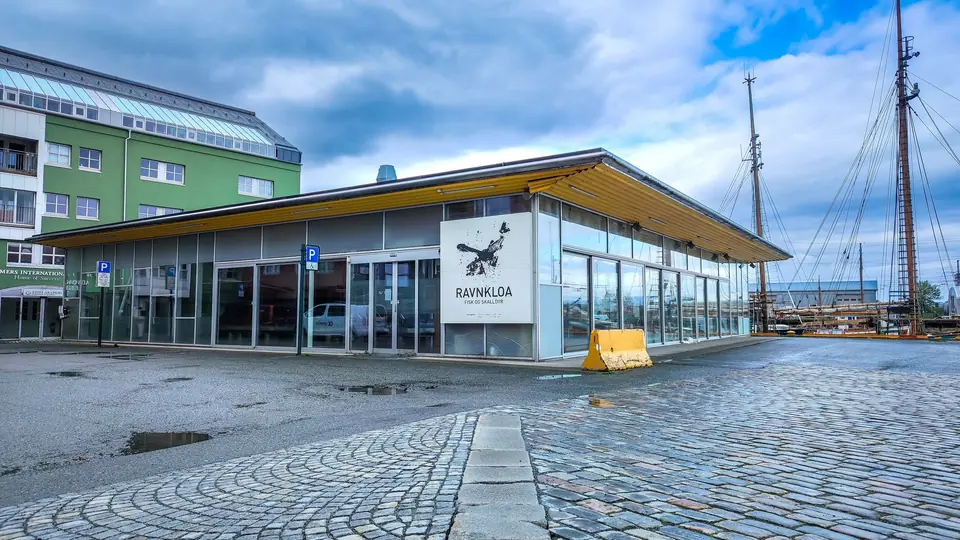
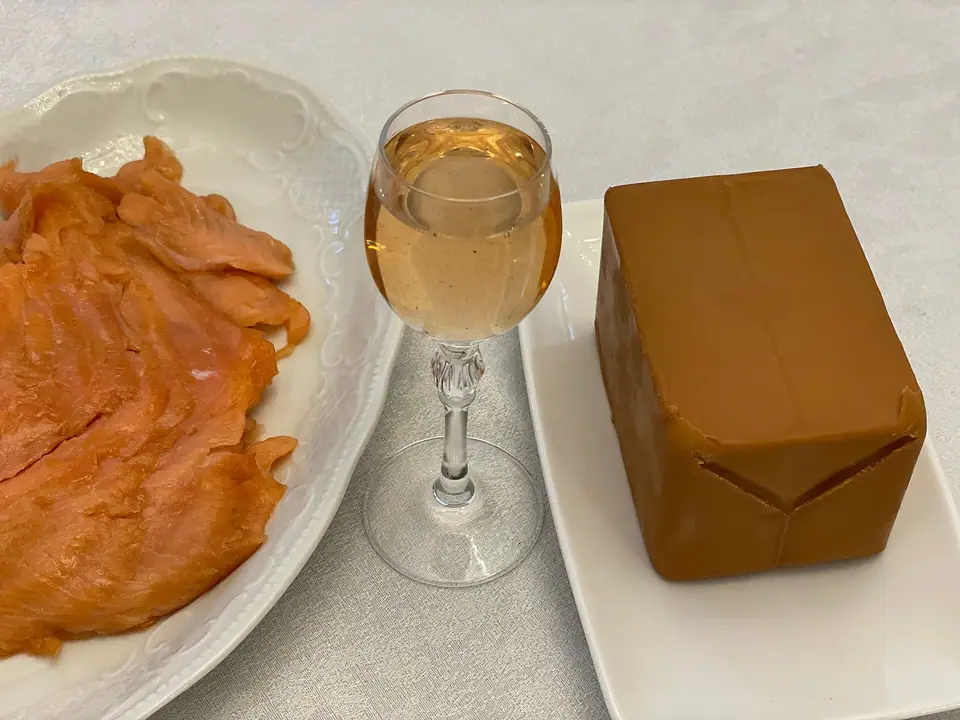
At the northern end of Munkegata, Ravnkloa has anchored Trondheim's fish trade since the 17th century; its indoor fish hall (opened in December 2000) sells fresh fjord prawns (reker), Atlantic salmon, cod, and shellfish to eat along the canal quayside. Across Trondheim menus you will also encounter gravlaks (salmon cured in a dry marinade of salt, sugar, and dill, served with sweet dill-mustard sennepssaus, a tradition recorded in the 1348 Diplomatarium Norvegicum) and fårikål, Norway's national dish of mutton on the bone slow-cooked with cabbage and whole black peppercorns, celebrated on the last Thursday of September.
Bakklandet Cafés, Brunost, Krumkaker, and E. C. Dahls Brewery
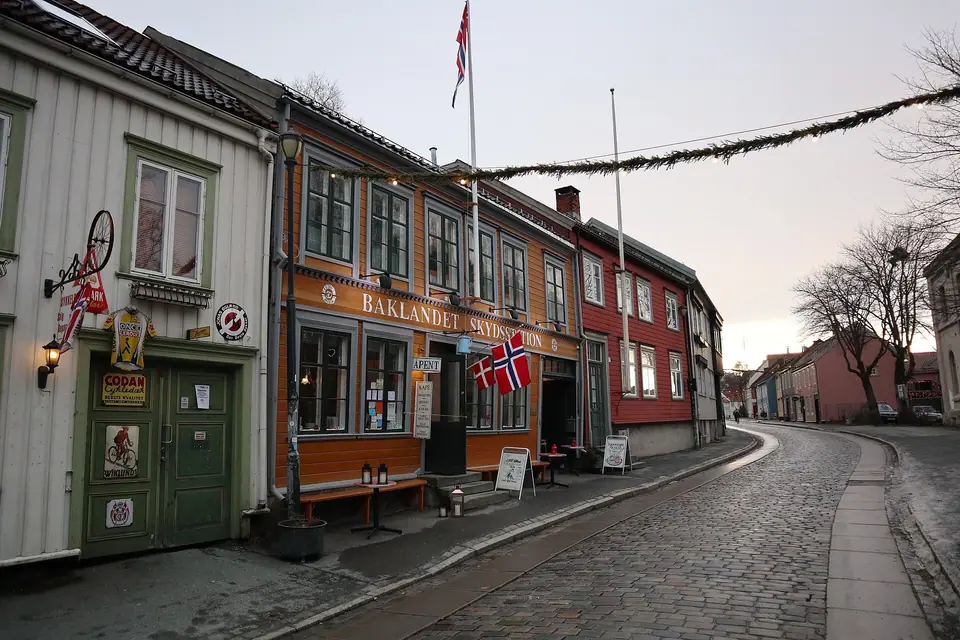
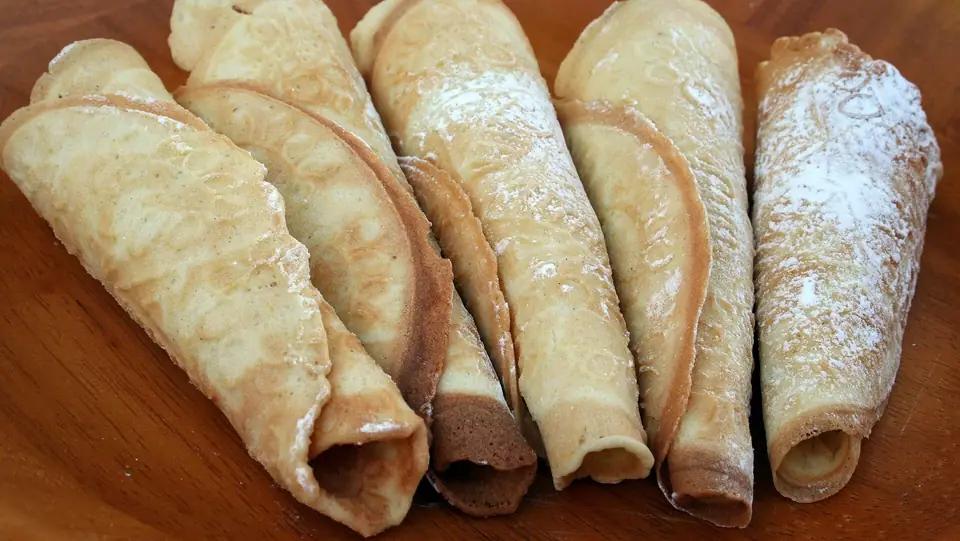
In Bakklandet, including the late-18th-century Baklandet Skydsstation at Øvre Bakklandet 33, and in the Bymarka trail cabins, coffee stops centre on tykklefse (thick soft flatbread rolled with butter, sugar, and cinnamon), cone-shaped iron-baked krumkaker cookies, and slices of sweet caramelised whey cheese (brunost or Gudbrandsdalsost, invented in 1863 by Anne Hov). Trondheim's brewing heritage is led by E. C. Dahls Bryggeri, founded in 1856 by merchant Erich Christian Dahl (1814 to 1882) inside the 1754 Sukkerhuset sugar refinery at Kalvskinnet; after launching its first Bayerøl in 1857 and merging with Aktiebryggeriet (founded 1899) in 1966, the brewery moved to Strandveien at Lade, where it opened to visitors in 2016 with tours and the E. C. Dahls Pub og Kjøkken serving Dahls Pils and craft beers.
How Traditional Sodd and Skjenning Are Served at the Table
Experiencing authentic Trøndersk sodd follows a specific table etiquette rooted in centuries of rural ceremonial feasts across the Trondheimsfjord valleys. Because boiling potatoes and carrots directly in the meat stock would cloud the clear broth (sø), the vegetables are always cooked in a separate pot and placed into deep soup plates at the table before the broth arrives. Once the vegetables are in the bowl, the piping-hot broth, bobbing with tender cubes of mutton and beef and light ginger-and-nutmeg meatballs (soddboller), is ladled over them. Diners hold a crisp, wedge-shaped triangle of Innherred skjenning flatbread in one hand alongside the spoon; the lightly sugared, milk-brushed top surface of the potato flatbread provides a delicate sweet counterpoint to the savoury mutton broth and nutmeg aroma.
When ordering sodd in Trondheim restaurants around Torvet, Bakklandet, or during the December winter market, look for producers carrying the official Protected Geographical Indication seal (Festsodd fra Trøndelag), particularly heritage makers from Inderøy and Innherred whose recipes strictly observe the required mutton-to-beef ratios.
Where to Sample Local Ingredients Across Trondheim
Beyond formal dining rooms, four neighbourhood settings allow visitors to taste Trøndelag's coastal and farm larder throughout the day:
- Ravnkloa Fish Hall (Northern Munkegata): The historic canal-side market square where you can buy paper cones of freshly boiled fjord prawns (reker) to peel on the quayside before boarding the summer boat to Munkholmen, alongside smoked or cured Atlantic salmon, halibut, and warm fish cakes (fiskekaker).
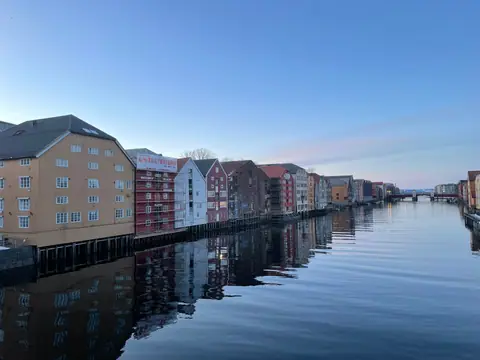
- Nedre and Øvre Bakklandet Cafés: Timber cottages east of Gamle Bybro and the Nidelva wharves, including late-eighteenth-century Baklandet Skydsstation, known for rich fish soup, pickled herring plates, hot chocolate, and plates of tykklefse and krumkaker.
- Solsiden and Brattøra Waterfront: The converted red-brick shipyard halls at Nedre Elvehavn and the fjord promenade near Rockheim, where casual brasseries, seafood bars, and sunny dockside terraces line the marina basin.
- E. C. Dahls Brewery at Lade: Located northeast of the centre near the approach to the Lade peninsula and Ringve, offering guided brewery tastings that pair crisp golden Dahls Pils and seasonal small-batch ales with regional meats and cheeses.
Trondheim's menus shift noticeably with the northern calendar (see our seasonal weather and food calendar). Summer brings cold-water shellfish, fjord salmon, and sweet Trøndelag strawberries ripened by twenty-hour daylight; autumn introduces slow-simmered mutton and cabbage (fårikål), wild berries, and game from the surrounding hills; and December fills Torvet and Midtbyen bakeries with spiced Christmas breads, cured meats, and steaming bowls of sodd. Pair these stops with our three-day Trondheim itinerary.
Travellers who enjoy self-catering or assembling picnic lunches for a ride on the Gråkallbanen tram into Bymarka or the boat to Munkholmen can also pick up vacuum-packed gravlaks, wheels of local farmhouse cheese, freshly baked rye loaves, and triangular packs of Innherred skjenning at the Ravnkloa counter and food shops around Torvet. Eating fresh fjord prawns on the canal steps with a view of the timber wharves remains one of the simplest culinary pleasures in the city.
Traveller tips
Real advice from people who have been to What to Eat in Trondheim: Sodd, Skjenning, Seafood and Dahls. Every tip is read by our team before it goes live.
No tips yet. Been here? Yours could be the first.
Thank you! Your tip will appear here after a quick review.
More in Trondheim
Continue exploring Trondheim with related neighbourhood, food, and planning guides